-
The Quiet Horror Beneath American Power and the Unsettling Realization That Escalation Feels Less Like Chaos and More Like a Carefully Engineered Process Designed to Unfold in Silence Over Time Without Ever Revealing Its True Purpose
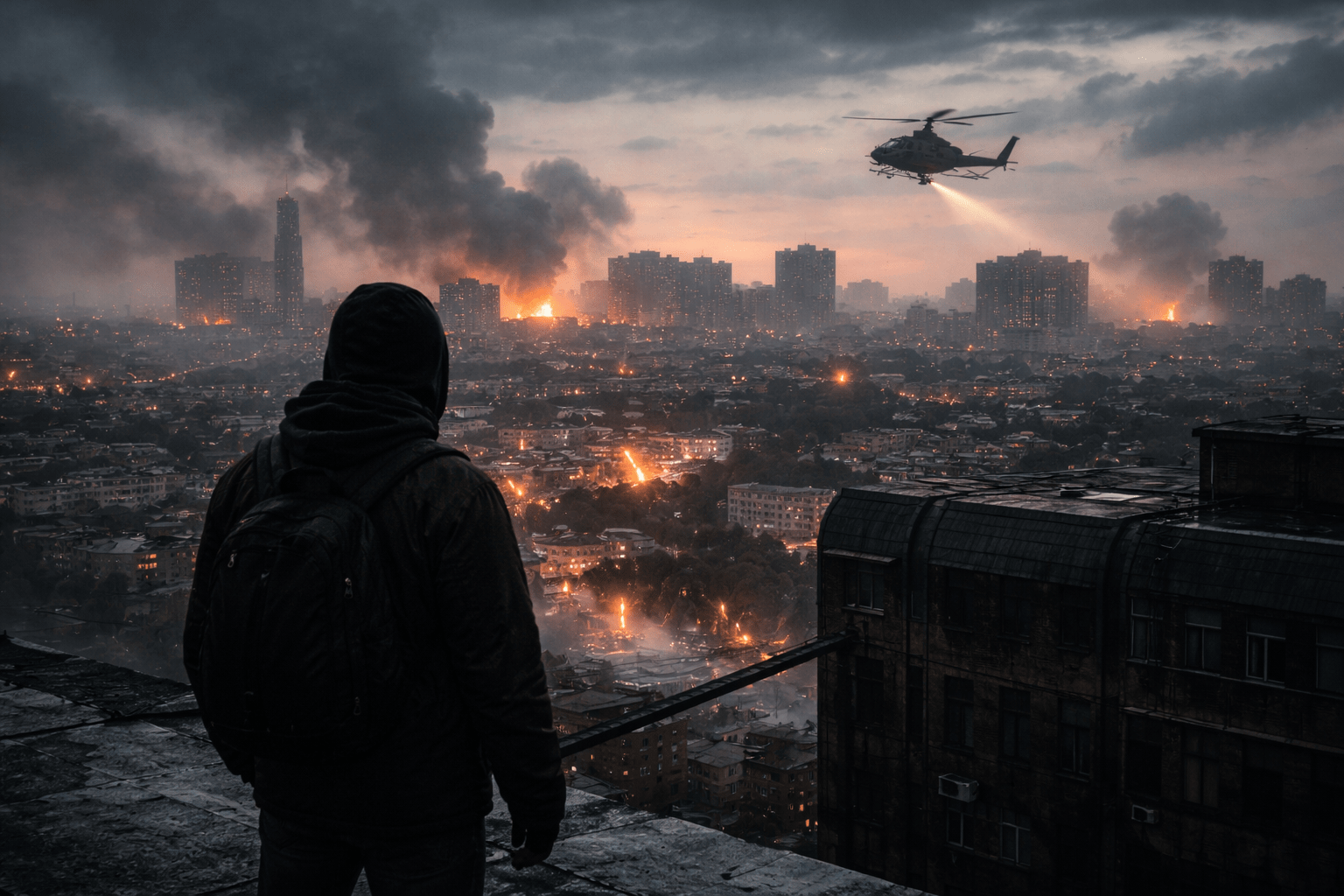
THE FIRST SIGNAL
I still remember the exact moment when the world started to feel slightly “off,” although at the time I couldn’t explain why that feeling stayed with me longer than any headline or breaking news alert. It wasn’t something dramatic or cinematic; there was no explosion, no sirens, no visible collapse of systems. It was something far more subtle and, in a strange way, far more disturbing—because it unfolded in fragments, across different sources, across different platforms, in a way that suggested not chaos, but coordination beneath the surface of apparent randomness. The early days didn’t feel like the beginning of a war; they felt like the slow unveiling of something that had already been in motion long before anyone publicly acknowledged it.
At first, I started noticing inconsistencies in how information was being delivered. Not outright contradictions, but patterns—strange patterns that repeated across unrelated sources. There were moments when reports would appear, gain traction, and then disappear without explanation, only to be replaced with slightly altered versions that conveyed the same idea but with different phrasing, different framing, almost as if multiple layers of narrative were being tested simultaneously. And when you begin to notice that kind of behavior, it becomes very difficult to ignore it, because the human mind is naturally wired to detect patterns—even when those patterns might be coincidental, or worse, intentionally designed to feel meaningful.
Here are some of the earliest patterns I documented, not because I fully understood them, but because they refused to disappear once noticed:
- Synchronization of language across different institutions
Statements released by different entities seemed too aligned in tone and structure, almost as if they were derived from a shared framework rather than independent perspectives. - Pre-emptive adjustments in infrastructure systems
There were changes in logistics, transportation, and resource allocation that appeared to occur before any official acknowledgment of escalation. - Selective visibility of information
Certain pieces of content would surface briefly and then vanish, while other narratives would dominate attention disproportionately. - Time anomalies in reporting
Some events appeared to be reported after they had already begun to influence related systems, suggesting a timeline that didn’t fully match the sequence being presented. - Behavioral synchronization among observers
People reacting to events in different parts of the world seemed to adopt similar interpretations, almost simultaneously, without clear cross-communication.
At the time, I didn’t frame these as evidence of anything specific. I simply wrote them down, trying to make sense of what I was observing without jumping to conclusions. But as the days passed, those observations started forming something that resembled a structure—not a clear explanation, but a framework of suspicion that refused to collapse under simple reasoning.
And then came the first real disruption—not the war itself, but the moment where systems began to behave differently under pressure. It wasn’t visible at first. It was felt through small things: delays, inconsistencies, interruptions that didn’t make sense in isolation but became increasingly difficult to dismiss when combined. Payment systems would fail temporarily. Certain services would lag or reset without warning. Communication would sometimes degrade in ways that felt disproportionate to the actual conditions.
It’s important to understand that nothing was collapsing outright. Everything still functioned—just not perfectly. And that imperfection is what made it unsettling.
Because systems don’t fail immediately. They degrade.
And degradation is much harder to recognize than failure.
At some point, I began to structure my thoughts more deliberately, trying to categorize what I was seeing into something more manageable. It wasn’t about finding answers—it was about maintaining clarity in an environment where clarity itself was becoming unstable.
So I created another list, this time not just observations, but patterns of behavior that seemed to repeat:
- Delayed confirmation of events that appeared to have already influenced systems
- Overlapping narratives that seemed to converge despite originating from different sources
- Sudden gaps in data followed by rapid reconstruction of the same information in altered form
- Increased emphasis on specific regions while others remained underreported
- A general sense of acceleration—events seemed to unfold faster, yet with less visible detail
And beneath all of this, there was something else—something harder to define, but impossible to ignore. A kind of psychological pressure that built gradually, not from a single source, but from the accumulation of small uncertainties. It wasn’t fear in the traditional sense. It was something quieter, more persistent. A constant awareness that something was unfolding at a scale larger than what was being presented.
I remember sitting alone one evening, watching different streams of information across multiple devices, and noticing something that unsettled me more than anything else up to that point: the convergence of narratives. Different sources, different voices, different contexts—yet all slowly aligning toward similar conclusions, similar framing, similar emotional tone.
That’s when a question formed in my mind, one I couldn’t easily dismiss:
What if the alignment itself is the signal?
Not the content.
Not the events.
But the way they align.
Because alignment, when it appears too consistently across independent systems, suggests coordination. And coordination at that scale implies structure—something beneath the surface guiding the visible flow of information.
I didn’t share that thought with anyone at first. It felt too abstract, too speculative. But I kept documenting everything, because even if I couldn’t understand it, I didn’t want to lose track of it.
And somewhere in that process, something shifted again.
Not externally—but internally.
My perception of time began to feel slightly distorted. Not in a dramatic way, but enough to notice. Days felt shorter, yet more dense. Information accumulated faster, but processing it became harder. It was as if the system itself—the combination of events, reactions, and interpretations—was accelerating beyond the normal pace of understanding.
And that’s when I realized something that I didn’t fully grasp until much later:
This wasn’t just about events. It was about tempo.
Who controls the tempo controls perception.
And whoever controls perception controls how events are understood.
I didn’t have an answer for that at the time.
But I wrote it down anyway.
Because some thoughts don’t need to be solved immediately.
They just need to be remembered.
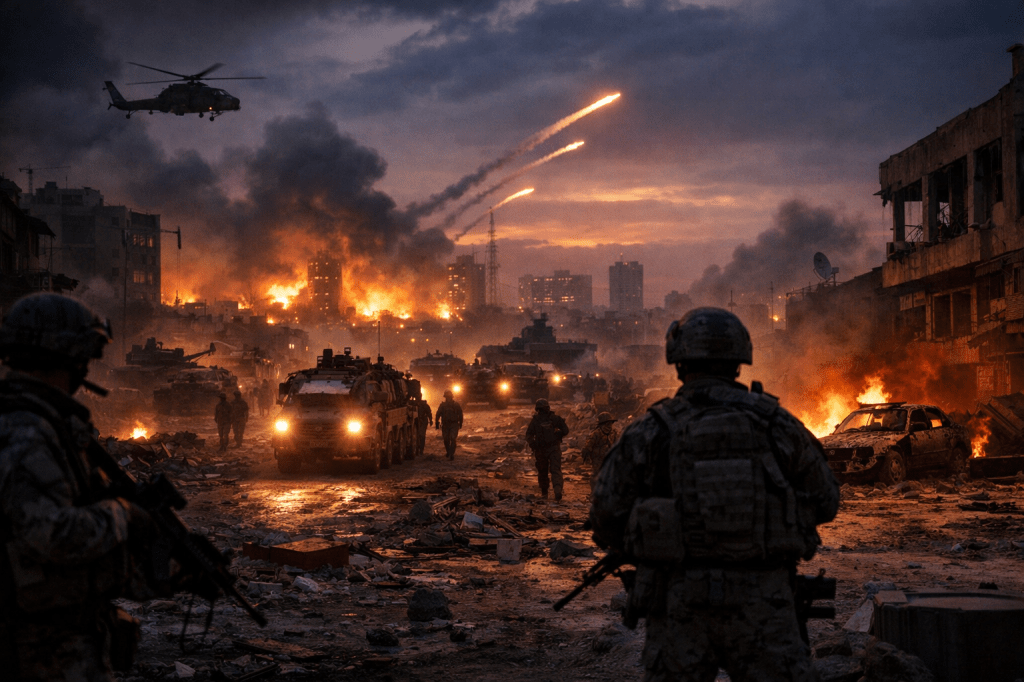
WHEN SYSTEMS START TO STRETCH
What followed wasn’t a collapse—it was a strain, a kind of invisible tension that spread across systems, not breaking them outright, but pushing them beyond their comfortable limits in a way that made everything feel slightly unstable, as if reality itself had begun to stretch under pressure, and the longer you observed it, the more obvious it became that what you were witnessing wasn’t random at all, but part of a larger, more deliberate shift that wasn’t being fully explained to the public, or perhaps couldn’t be explained without revealing something that wasn’t meant to be seen.
There were changes in how infrastructure responded to stress, and they weren’t dramatic enough to trigger immediate alarm, but they were consistent enough to form a pattern that couldn’t easily be ignored. It began with small disruptions that seemed unrelated:
- Localized communication delays that propagated outward
- Short interruptions in logistical networks that resolved too quickly
- Sudden spikes in digital traffic that appeared coordinated rather than organic
- Repeated system resets across unrelated sectors
- A noticeable increase in redundancy across multiple layers of infrastructure
These weren’t failures in the traditional sense. They were adaptations—or at least that’s how they appeared on the surface. But the more I looked at them, the more they felt like stress responses, as if the entire system was under pressure from something that wasn’t visible in any single dataset, but was instead distributed across multiple layers of reality.
And that’s when I started noticing something even more unsettling.
Not just what was happening…
But how quickly people were adjusting to it.
There’s a certain threshold where humans stop reacting with confusion and begin adapting without fully understanding what they’re adapting to. That threshold seemed to be crossed earlier than expected. People didn’t question the inconsistencies as much as I thought they would. Instead, they absorbed them, normalized them, and moved forward as if the irregularities were simply part of a new, evolving standard.
That, more than anything else, made the situation feel real.
Because systems can be unstable.
But when perception stabilizes around instability…
that’s when something deeper is happening.
At some point, I began to track something else—not just the events themselves, but the pace at which they were being processed and absorbed by the world. I started writing it down in a structured way, trying to capture not just what was happening, but how it was unfolding in relation to everything else.
Here is what I observed in a more structured form:
- Acceleration of narrative cycles
- Events that once took days to develop were being introduced, analyzed, and partially resolved within hours.
- Compression of public attention
- Collective focus seemed to move faster, but also shallow more quickly.
- Shortened emotional cycles
- Reactions were intense but brief, followed by rapid disengagement.
- Increased overlap of unrelated events
- Separate incidents began to be interpreted within a shared framework, even when no direct connection existed.
- Adaptive normalization
- People began to accept inconsistencies as part of a new baseline rather than anomalies.
This was the moment where the experience shifted from observation to something more personal. Because once you start noticing how perception itself is being shaped, you can’t unsee it. And once you can’t unsee it, you start questioning not just what is happening, but why it feels the way it does.
And that question leads somewhere uncomfortable.
Because it implies that perception is not entirely your own.
It can be influenced.
Guided.
Shaped by forces that operate beneath the level of conscious awareness.
I didn’t have proof of anything concrete. But I had enough observations to build a framework of suspicion that didn’t rely on confirmation—it relied on consistency.
And consistency, when it repeats often enough, becomes its own form of evidence.
At this stage, I also began documenting something more subtle, something that didn’t belong to any official report or dataset, but rather to the human experience of living through uncertainty. It’s difficult to explain this part without sounding overly dramatic, but the emotional atmosphere of the world itself felt different.
Not louder.
Not more chaotic.
Just… heavier.
Like a pressure building slowly, not enough to crush anything immediately, but enough to make every small interaction feel slightly more significant than it should be.
I wrote down a few personal notes during this period, trying to capture the feeling:
- Conversations felt shorter, even when they weren’t
- Silence became more noticeable in crowded environments
- People seemed more aware of each other, but less willing to engage deeply
- Decisions felt slightly more cautious, even in everyday contexts
- There was a subtle but persistent sense that something important was approaching
And then came the moment that changed everything—not in a single instant, but in a way that unfolded across several days, almost imperceptibly at first.
It began with a shift in how information was prioritized.
Certain topics became more prominent, more persistent, more difficult to ignore. Not because they were necessarily more important, but because they were being repeated across multiple channels with increasing frequency. And repetition, when it crosses a certain threshold, becomes a form of reinforcement.
That’s when I realized something that stayed with me long after:
Information doesn’t need to be true to be effective. It only needs to be consistent.
And once consistency is established, perception begins to follow.
This led me to start structuring a set of questions—not answers, but questions that could guide further observation. I organized them carefully, not as theories, but as open points that needed to remain unresolved:
- What determines the pacing of information dissemination across multiple platforms?
- Why do certain narratives converge even without direct coordination?
- At what point does repetition become influence rather than coincidence?
- How much of collective perception is shaped by exposure versus interpretation?
- Can patterns exist without intentional design, or do repeated structures imply underlying coordination?
These questions didn’t lead to conclusions.
But they changed the way I looked at everything that followed.
Because once you start asking these kinds of questions, the world doesn’t just appear different…
it becomes different.
And in that difference, you begin to notice something unsettling:
Not everything is visible.
Not everything is meant to be.
And some things only reveal themselves when you’re already too far into the pattern to step back easily.
THE EDGE W
At some point, the experience stopped feeling like observation and started feeling like involvement, as if the distance I had maintained up until that point was slowly dissolving, and the act of simply watching was no longer enough to keep me outside of what was unfolding. It wasn’t a dramatic transition—nothing abrupt or clearly defined—but a gradual erosion of the boundary between observer and participant, a shift that became more noticeable the longer I remained aware of it, until there was no longer any clear separation
This is where things began to feel different in a way that was harder to articulate, because the changes were no longer just external—they started affecting how reality itself was being interpreted on a personal level. There were moments when familiar environments felt slightly unfamiliar, as if something subtle had changed in the underlying structure of everyday life, something that couldn’t be pointed to directly, but was present in the way shadows seemed longer, in the way silence seemed heavier, in the way certain sounds felt slightly delayed, as if the world was just a fraction out of sync with itself.
And then came the moment when I realized that this wasn’t just happening to me.
There were others not
Not necessarily in the same way, and not always using the same language, but enough overlap in descriptions to suggest that these were not isolated perceptions. I started collecting fragments of these accounts, not to validate them, but to understand whether there was a shared pattern emerging beneath the surface.
Here are some of the recurring elements I observed:
- A growing sense of temporal distortion
- People describing time as both accelerating and slowing simultaneously, depending on context.
- Increased difficulty in distinguishing signal from noise
- More effo
- Heightened emotional reactivity to minor events
- Small disruptions triggering disproporti
- A subtle but persistent feeling of observation
- Not paranoia in the traditional sense, but a q
- Fractured narrative consistency
- Different groups interpreting the same events in fundamentally different ways, with little convergence.
What made this especially unsettling was that these patterns didn’t feel random. They felt… synchronized, even across individuals who had no connection to one another. And synchronization at this level suggests something that is not just reactive, but possibly structured in a way that allows for alignment without direct communication.
That realization led me to start thinking differently about the nature of control.
Not control in the traditional sense—visible authority, explicit commands—but something far more subtle:
Control through structure.
If you can influence the structure through which information flows, then you don’t need to control individual responses. You only need to control the environment in which those responses are formed.
And that’s where the discomfort begins.
Because if that’s true, then what we perceive as independent thought might actually be shaped by layers of unseen influence that operate below conscious awareness.
I remember one specific night when everything felt… closer.
Not physically, but perceptually.
It was as if the boundary between observation and reality itself had thinned, allowing me to notice patterns that would normally remain hidden. I began writing again, but this time the act felt different—less like documentation and more like trying to anchor myself in something stable before it slipped further out of reach.
I wrote down a sequence of realizations—not as conclusions, but as steps that led me deeper into uncertainty:
- The more I tried to confirm a pattern, the more it seemed to shift slightly, as if adapting to being observed.
- The absence of clear answers became as meaningful as the presence of information.
- Repetition across unrelated contexts suggested coordination, even without direct evidence.
- Emotional responses were being amplified at scale, not just individually.
- The distinction between perception and influence was becoming increasingly difficult to define.
And somewhere within that process, I started to notice something even more unsettling than anything else so far:
The possibility that the system wasn’t just reacting to events. It was anticipating them.
Not in a predictive, analytical way—but in a way that suggested pre-alignment, as if certain outcomes were already being prepared for, or guided toward, before they fully manifested.
This idea is difficult to accept, because it challenges the assumption that events unfold organically, driven by cause and effect. But when enough small anomalies align in a consistent direction, it becomes harder to dismiss the possibility that something—or someone—is shaping the trajectory in a way that isn’t immediately visible.
I tried to resist that line of thinking. I really did.
Because once you accept it, everything changes.
Not just how you see events, but how you interpret intent, structure, and even reality itself.
And that’s a dangerous place to be mentally, because it can lead to conclusions that are not always grounded in evidence, but in patterns that may or may not be meaningful.
So I forced myself to step back and reassess.
I asked myself a simple question:
- Am I observing patterns… or constructing them?
The answer wasn’t clear.
And that uncertainty itself became part of the experience.
Because when you can’t fully trust your interpretation, every observation carries a layer of doubt, and that doubt becomes a constant companion, influencing how you process everything that follows.
Still, one thing remained consistent throughout all of this:
The feeling that something larger was approaching its threshold.
Not necessarily an ending.
But a transition.
And transitions, by their nature, are unstable.
They don’t announce themselves clearly.
They unfold.
And once they begin, they tend to accelerate toward a point where they can no longer be reversed in the same way they started.
That realization stayed with me.
Because even without knowing what was coming next…
I could feel that something had already passed the point of simple explanation.
AFTER THE NOISE
At some point, the noise didn’t stop—but it changed. It became less aggressive, less chaotic, and somehow more… deliberate. Not quieter in volume, but more controlled in how it presented itself, as if whatever was driving the broader system had shifted from escalation to stabilization, not to restore balance, but to lock the current state into place and prevent further deviation. That realization didn’t come all at once; it emerged gradually, through a series of small observations that, when connected, formed something that felt less like a theory and more like a boundary—a point beyond which the system no longer behaved the same way it had before.
What followed was not resolution, but containment.
And containment, in its own way, can feel more unsettling than chaos.
Because chaos suggests instability.
Containment suggests control.
And control suggests intent.
I found myself reflecting on everything that had happened, trying to organize the experience into something that could be understood, or at least partially explained, and I started breaking it down into key takeaways—not as conclusions, but as lessons that emerged through observation rather than theory:
- Systems do not need to collapse to change fundamentally
- They can evolve, adapt, and restructure without ever fully breaking.
- Perception is as important as reality
- What people believe is happening can influence outcomes just as much as what is actually happening.
- Information is not neutral
- It can be shaped, delayed, amplified, or filtered in ways that alter its impact.
- Stability can be engineered
- Not by removing tension, but by controlling how tension is perceived and distributed.
- Uncertainty is a tool
- When used at scale, it can influence behavior, decision-making, and collective response.
These weren’t abstract ideas anymore. They felt grounded in the experience itself. But even as I wrote them down, I realized something important:
Understanding patterns does not necessarily grant control over them.
And that’s where the real limitation lies.
Because awareness doesn’t equal power.
It simply changes the way you navigate what already exists.
At some point, I stopped trying to find a single explanation for everything. Not because I gave up, but because I recognized that the scale of what I was observing didn’t lend itself to simple conclusions. Instead, I shifted my focus toward something more practical—how to exist within this new environment without losing clarity or stability.
And that required a different kind of approach.
Not solving.
Not predicting.
But adapting.
Here are the principles I began to rely on:
- Focus on what can be directly verified
- Avoid overextending interpretations beyond available data
- Maintain routines that provide consistency
- Limit exposure to overwhelming streams of information
- Separate emotional reaction from analytical observation
These were not perfect solutions. They were stabilizers.
Because in a system that feels uncertain, the goal is not to understand everything.
The goal is to remain functional.
And that, in itself, is a kind of quiet resistance.
As time passed, the intensity of the situation didn’t vanish, but it settled into a different form—less explosive, more persistent. The world didn’t return to how it was before, because it couldn’t. Once certain thresholds are crossed, there is no true return—only adaptation to a new baseline.
And that baseline is shaped not just by events, but by how those events are processed collectively.
That’s something I don’t think people fully realize until they experience it firsthand.
Reality isn’t just what happens.
It’s how what happens is absorbed, interpreted, and integrated into the ongoing narrative of the world.
And once that narrative shifts…
everything shifts with it.
In the end, I don’t think the story is about a single event, or even a sequence of events. It’s about what happens when systems, perception, and uncertainty begin to interact in ways that aren’t fully visible, but are deeply felt. It’s about the space between information and understanding, between observation and interpretation, between what is known and what is assumed.
And maybe the most important realization of all is this:
Nothing ever truly stands still.
Even when things feel stable, they are still moving beneath the surface.
And when change comes, it doesn’t always announce itself.
Sometimes, it arrives slowly, quietly, and then all at once.
So if there is a conclusion to all of this, it isn’t a warning.
It isn’t a prediction.
It’s a recognition.
That the world is more complex than it appears.
That certainty is often an illusion.
And that awareness—real, grounded awareness—is the only tool that remains consistent when everything else begins to shift.
Not perfect.
Not absolute.
But enough.
And sometimes, enough is all you need to keep moving forward.
- Synchronization of language across different institutions
-
Staying Sane in a World Going Insane
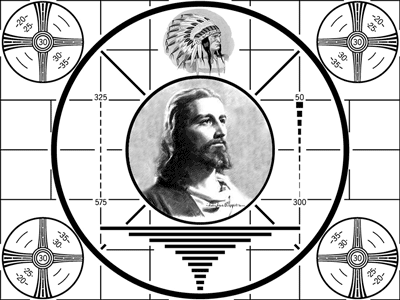
(Left. Test Pattern i.e. Keep the mind blank or focused on God/Christ/Consciousness.)WE NEED TO TAKE REGULAR BREAKS FROM FRETTING OVER OUR DISINTEGRATING SOCIETY AND FOCUS ON THE BIG PICTURE WHICH HOLDS THE ULTIMATE ANSWER.
The planet is run by Satanists.
We have been programmed to chase money and sex instead of celebrate and obey God.
God is Consciousness, the Sweetness at the core of our Being, ideal Love, Beauty, Truth, the Blueprint for human and social perfection.
We are mostly unconscious, asleep. Our challenge is to wake up!
We create our own reality. We want a better world but we must first create one for ourselves.Disclaimer – Is it not hypocritical to write about detaching from the world and yet provide a largely depressing daily feed about current events? I do this because most people are unaware of our real predicament. They are in denial and cling to the pretence that things are normal, that the ship of state can be righted. I hope they’re right but in the meantime, we serve God by exposing the work of the devil. I haven’t mastered the wisdom below, that Aldous Huxley called The Perennial Philosophy, but it has helped me cope.
Thinking is an Addiction (Updated from July 4, 2022)
When I say thinking is an addiction, I’m referring to the compulsive stream of fear, anxiety, judgment, argument, chatter, and trivia that usually fills our minds.
I used to depend on the mass media for my mental image of reality. As a result, I was dysfunctional.
Like sickness, war and poverty, dysfunction is systemic (inherent in society.) They are profitable.
Illuminati member Harold Rosenthal spelled it out:
“We have converted the people to our philosophy of getting and acquiring so that they will never be satisfied. A dissatisfied people are pawns in our game of world conquest. They are always seeking and never able to find satisfaction. The very moment they seek happiness outside themselves, they become our willing servants.” Harold Rosenthal The Hidden TyrannyWe don’t experience reality. We experience our thoughts.
As Rosenthal says, our minds have been programmed to “be dissatisfied” and want more. The programming is in music, movies, TV and education. There must always be striving, conflict.Tell a man he is a chicken, and he struts around and clucks and even tries to lay an egg. Thus, men go to war and die “to defend freedom.” Look at the Vietnam War for example. “If Vietnam goes Communist,” they told us,”all South East Asia will fall.”
Didn’t happen. Look at Vietnam today. Was that war necessary? Were Iraq, Afghanistan, Libya or Syria? Necessary only for profit and to impose the NWO.
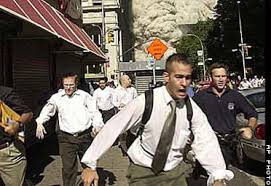
(Remember “terrorists” did this)
The Illuminati fabricate reality. Consider the JFK-RFK-MLK assassinations, 9-11, Boston Marathon, Sandy Hook, the COVID hoax and Ukraine. They determine reality simply by lying. They created ISIS and are responsible for war crimes as bad as any in history.
They program our minds to adopt self-destructive behavior.
BAD INFLUENCE

Teachers can no longer refer to children as “boys” and “girls.” Children are encouraged to change their gender and experiment with homosexuality. Women are taught that being a wife and mother is “oppressive” and promiscuity is “empowering.” Men are taught to seek sex and not love. Society is governed by depravity & nonsense.
Un-moored from the Moral Order, (i.e. God, the soul, intuition) the mind is malleable indeed! “The first effect of not believing in God is that you believe in anything.” — GK Chesterton
We experience our programming rather than reality. For example, Hollywood presents romance and sex as panaceas and we actually experience them as such…until the illusion dispels like a morning fog. The Cabalists love hypnotizing us with their “magic.” By themselves, our minds have no anchor in Truth. The mental world is a house of mirrors.
GROUNDING YOURSELF IN THE REAL YOU
The mind (ego) and the consciousness (soul) are two competing sources of identity. We have been programmed to identify entirely with the ego and deny the existence of the soul.We need to experience ourselves as consciousness. Consciousness witnesses ego. Empty the mind of thought and what’s left is the real you.
Turn off thought like a light switch. As we shift from mind to spirit, many “desires” fade away. They were mental in character.
The poet Henry More (1614-1687) wrote: “When the inordinate desire after knowledge of things was allayed in me, and I aspired after nothing but purity and simplicity of mind, there shone in me daily a greater assurance than ever I could have expected, even of those things which before I had the greatest desire to know.”
Like penguins stranded on an ice flo, mankind is an ape colony on a speck in the universe. No one really understands what we’re doing here.
The colony is infected by a parasite which, by “vaccine,” war and social engineering, devours the host.
We are here to realize the Creator’s purpose.God wants to know Himself through us.
But collective salvation is NOT possible without personal salvation.
Most of us can achieve personal salvation. ——————————————————-NOTE Christians complain that this is Raja Yoga and New Age. This shows how little they understand Jesus’ message.Matthew 6:26-34 New King James Version (NKJV) 26 Look at the birds of the air, for they neither sow nor reap nor gather into barns; yet your heavenly Father feeds them. Are you not of more value than they? 27 Which of you by worrying can add one [a]cubit to his [b]stature?
28 “So why do you worry about clothing? Consider the lilies of the field, how they grow: they neither toil nor spin; 29 and yet I say to you that even Solomon in all his glory was not [c]arrayed like one of these. 30 Now if God so clothes the grass of the field, which today is, and tomorrow is thrown into the oven, will He not much more clothe you, O you of little faith?
31 “Therefore do not worry, saying, ‘What shall we eat?’ or ‘What shall we drink?’ or ‘What shall we wear?’ 32 For after all these things the Gentiles seek. For your heavenly Father knows that you need all these things. 33 But seek first the kingdom of God and His righteousness, and all these things shall be added to you. 34 Therefore do not worry about tomorrow, for tomorrow will worry about its own things. Sufficient for the day is its own trouble.
Thoreau echoed this wisdom:
” I know of no more encouraging fact than the unquestionable ability of man to elevate his life by a conscious endeavour. It is something to be able to paint a particular picture, or to carve a statue, and so to make a few objects beautiful; but it is far more glorious to carve and paint the very atmosphere and medium through which we look, which morally we can do. To affect the quality of the day, that is the highest of arts.”
Eckhart Tolle:
“Can’t stop thinking; can’t stop drinking; can’t stop smoking; can’t stop eating; thinking is a greater addiction than any of these.”
-
The Threat Inside America: What Every Family Needs to Understand
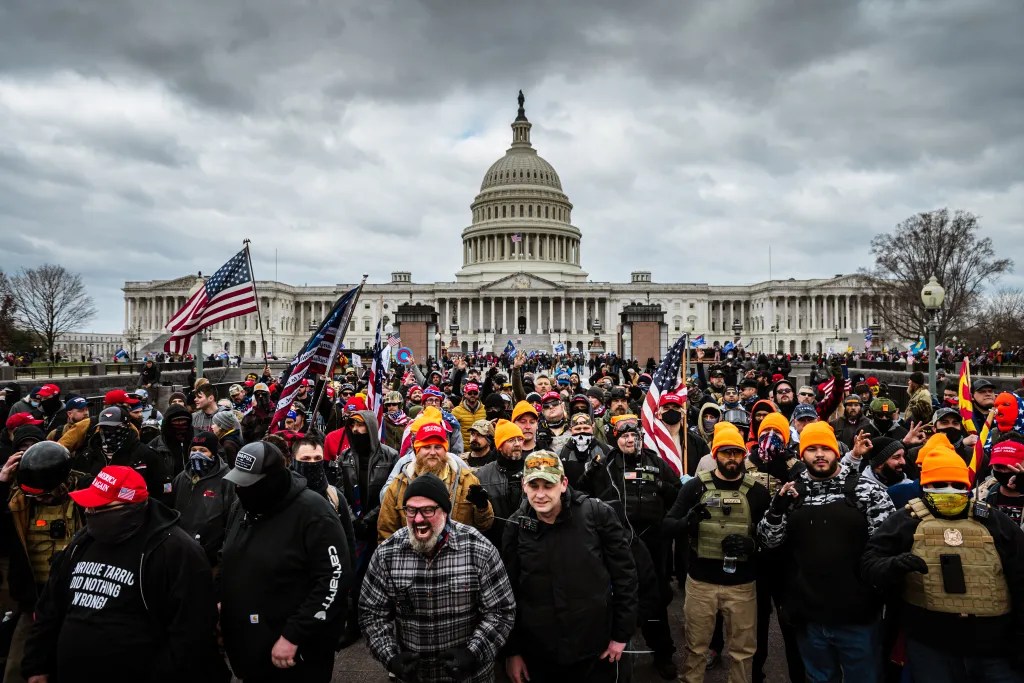
America faces a danger that is often hidden from view but very real. Foreign-backed operatives are not just beyond our borders. They are inside our country, blending into communities, exploiting technology, and waiting for opportunities to disrupt and destabilize. The threat is not abstract. It is personal, and it is approaching in forms most Americans do not fully grasp.
Where Threats Hide and How They Operate
These threats rarely operate as obvious enemies. They embed themselves quietly in urban centers, online networks, and ideological or fringe groups. Many operatives are influenced actors rather than trained soldiers. They are civilians, employees, or members of communities who can be manipulated to act against the country without ever being in direct contact with foreign handlers.
Funding for these operations comes from multiple sources. State actors sometimes provide support, but private financiers aligned with foreign agendas also play a major role. Money flows through shell corporations, digital payment networks, charities, and business investments. Plausible deniability is always a priority. The more layers between the source and the operation, the harder it is to trace.
Extremist and foreign-aligned groups also use loyalty mechanisms such as rituals, ideological indoctrination, and criminal complicity. These bonds ensure that members are deeply committed, sometimes even willing to act against neighbors or first responders.
The Luring Model and the Second Strike
Intelligence agencies have long warned about indirect activation, a tactic designed to exploit human behavior. Rather than giving direct orders, foreign operatives or affiliated groups create situations that encourage Americans to act on their own. This is particularly dangerous when it targets first responders.
Terrorists are increasingly using attacks not as ends in themselves but as bait. A shooting or bombing may be designed to draw firefighters, police, and emergency medical personnel into a predictable area where secondary attacks occur. This method maximizes casualties, spreads fear, and undermines public confidence in emergency response systems. These sequential attacks are methodical, leveraging predictable human responses rather than improvisation.
The Pain Coming to American Families
This threat is not confined to public spaces or government infrastructure. The risk is increasingly close and personal. Families may face home invasions, targeted harassment, and intimidation designed to destabilize communities. Violent acts may escalate in neighborhoods, exploiting fear and breaking down trust between neighbors. The very sense of safety inside one’s own home is at risk.
Children, elders, and loved ones can become pawns in psychological operations designed to elicit panic, force overreactions, or spread chaos. Families must understand that preparedness is not paranoia. Awareness, planning, and vigilance are now critical components of protecting loved ones.
What This Means for America
The threat inside America is designed to break confidence, erode trust, and amplify fear. It is personal, procedural, and patient. Adversaries are not just attacking infrastructure or the economy. They are attempting to manipulate behavior, provoke missteps, and exploit predictable human responses. They rely on Americans being unaware of how they operate.
The first strike is often visible and loud. The second strike is designed to hit hard when Americans are at their most vulnerable. Home, family, and community are primary targets. Awareness, preparation, and disciplined action are the only defenses against this multifaceted danger.
What Families Can Do
Families must prioritize situational awareness, secure living environments, and contingency planning. Understanding patterns of influence, being alert to suspicious activity, and maintaining emergency preparedness are critical. Following official guidance during emergencies is essential to avoid becoming part of the attack cycle. Maintaining trust, communication, and coordination within the family unit is equally important.
America’s strength has always been its informed and resilient citizens. Those who recognize the reality of these threats, take them seriously, and prepare responsibly are the ones who can protect their homes, loved ones, and communities.
Awareness is not fear. Preparedness is not surrender. Understanding the threat is the first step in ensuring that the pain adversaries seek to inflict does not reach our families.
You can also access the latest news at this address: www.whatfinger.com
-
How Much Cash do you Need When Grid Goes Down?

It is the final backup plan for a lot of us in the case of a disaster. A generous supply of cold hard cash to buy our way out of trouble, pick up as many last-minute supplies as possible or to acquire resources that are unavailable to anyone with a credit card in a world where the electricity is out and the internet is down. We frequently talk about having cash for emergencies, but how much cash should you have if the grid goes down? What will you be able to purchase with your doomsday supply and how long would it last in the first place?
One of our readers made a recommendation the other day to have between $500 and $1000 in cash for your bug out bag and at the time it prompted me to consider again if this amount makes sense. In my personal preparedness plans I have a supply of cash but I am always trying to figure out if what I have is enough or too much. Will it even matter when TEOTWAWKI comes and how can I best use the cash I have to survive?
Why do you need to have cash on hand?

You want to know the time when you will need cash the most? It will be when you can’t get to it. How many of you right now have no cash at all in your wallets or purses? I used to be the same way. I never had cash and relied on the ready availability of cash machines or most often the ability to pay for virtually everything with a debit card. How convenient is it to never have to make change or worry if you have enough cash when with the swipe of a card your bank account funds are at your disposal. This is a great technological advance, but the problem is that this requires two things to be functioning. First, the card readers and ATM machines require electricity. If the electricity is out, neither of these two machines works. The second thing is a network connection. If the network is down, even with electricity the transaction won’t work and you can’t pay for goods or get cash from your bank.
In a disaster, one of the first casualties is electricity. This doesn’t have to be due to some cosmic solar flare that has rendered the grid useless, it could be as destructive and common as a fire, flood, earthquake, tornado or winter storm. It could also be from simple vandalism or perhaps terrorism. A major fiber optic cable was cut in Arizona back in February leaving businesses without the ability to accept payments. When the electricity is out, you aren’t going to be able to access your cash via the normal means so having a supply on hand is going to be a huge advantage for you in the right circumstances.
Even if there is no natural disaster, you are still at the mercy of your bank. What if your bank closes or there is a bank holiday declared because of some economic crisis. In any of these situations, if you are dependent on access to money that is controlled by either technology or physical limitations like a bank office it is wise to have a backup plan should either of those two conditions prevent you from getting cash.
What is cash good for in a crisis?
I think there are two levels to consider when it comes to keeping cash on hand. There is the bug out scenario mentioned above where you would have some “walking around money” to take care of relatively minor needs like food, a hotel or gas. The second is for a longer or more widespread unavailability of funds. Let’s say the economy tanks and the price of everything skyrockets but stores are still open for business. Your bank is one of the casualties, but you had a few thousand dollars of cash stored away that you could use to purchase food, gas and necessary preparedness items for your family. In this scenario, the government is still backing the fiat currency and vendors are still accepting it as a form of payment. For this scenario having a few thousand dollars makes sense.
But what if we have an extreme event where the currency is devalued and is essentially worthless? Your thousands of dollars might only buy you a loaf of bread. Don’t believe it can happen? It did to the Weimar Republic after WWI so it can happen again. That isn’t to say it will, but you should balance how much money you have squirreled away under your mattress with supplies you can purchase now that will last and keep you alive during that same event. My goal is to make sure I have the basics I need to survive at home for several months to a year without needing to spend any cash. This way, if the money is worthless, I still have what my family needs to survive.
If we have a regional disaster where you can bug out to a safer location, your cash should serve you well. Of course if you are in a safer location, assuming electricity was working your access to bank funds should still be working. If this is truly the end of the world as we know it, how long will that cash you have be worth anything?

It is surprisingly simple to disrupt all credit and debit transactions. Do you have cash instead? How much cash do you need?
So the million dollar question is how much cash should you have if the grid goes down? I always try to plan for the worst case scenario. My rationale is that if I am prepared for the end of the world as we know it, I should be just as prepared for any lesser disaster or crisis I may be faced with. The way I see it is if we do have a disaster, you aren’t going to be using that cash most likely to pay your mortgage, student loans, rent, or your credit card bills. Cash will go to life saving supplies and this will need to be used in the earliest hours of any crisis before all of the goods are gone or the cash is worthless. Once people realize for example that the government has been temporarily destroyed, they aren’t going to want to take your $500 for a tank of gas. They are going to want guns, food or bullets.
I also don’t see you using your cash to buy passage to another country, but that’s just me. I know there is a historical precedent for that, but I am not planning on that being something I realistically attempt with my family. I am also not planning on bribing any officials with cash either. My cash is for last-minute necessities and then it is back into the hopefully safe confines of my home to plan the next steps. For that I have only a couple of thousand dollars in cash stored away. I figure if I need more than that I didn’t plan well. Also, I would rather spend my money on supplies like long-term storable food and equipment than having a large horde of cash. With that amount, I figure I can make one last run if needed or be able to weather any short-term emergency when I can’t access cash.
Risks of keeping cash at home according to- bankrate.com
Planning to stash cash in your home? Consider the drawbacks:
It’s harder to track your money: Placing money in a bank account allows you to keep track of how much money is going into and out of your account. If you keep all of your money at home, it’s tougher to keep track.
You don’t have FDIC insurance: When you deposit money in an FDIC- or NCUA-insured bank or credit union, you can take comfort in knowing that your deposits will be protected and reimbursed up to $250,000 (per bank and account holder) if the bank fails. If, however, someone steals your cash, or you lose it, it’s likely gone. Homeowners’ or renters’ insurance typically only covers about $200.
It’s easier for money to be lost, stolen or destroyed: Unlike money you deposit in a bank, your cash at home can be stolen, misplaced or destroyed in a fire or natural disaster.
Some places won’t accept it: During the COVID-19 pandemic, many merchants shifted to cashless and contactless transactions, and some continue not to accept cash to this day.
No earning potential: One of the major benefits of keeping cash in a bank account is that it can grow, thanks to interest earned on bank balances. If you keep your money at home, it never grows. Your $20 is still $20 a year later, and that same $20 actually becomes less valuable due to inflation. The more money you keep in cash, the more you miss out on accruing interest.
What is the best place to hide cash in your home?
I wrote a post awhile back titled, How to hide your money where the bankers won’t find it that had lots of good ideas for reasonably safe places you could store cash. As I said in that article, you do have risks involved with keeping cash in your house, but I think you have just the same, if not worse risks relying on banks to keep your money safe and give it back when you want it. There are a million places to hide cash, but you can get tricky and buy a fake shaving cream safe to store several hundred dollars in there. Just be careful you don’t throw that away. There are other options like wall clocks with a hidden compartment inside that might be less prone to getting tossed in the trash. Your imagination is really all that is needed for a good hiding place, but I would caution you that you don’t store cash in too many places or you could forget where you hid it. This happened to me when I had hidden some cash behind an item that I ended up giving to my daughter because I thought I didn’t need it anymore. Imagine my surprise when she came into the living room and said, “Dad, I found an envelope with a lot of money in it”. I gave her a twenty for a reward…
What about you? How much cash do you think you need to have on hand and what do you plan on spending it on if the grid goes down?
-
The Clash of Civilization: First Predictions of the Future
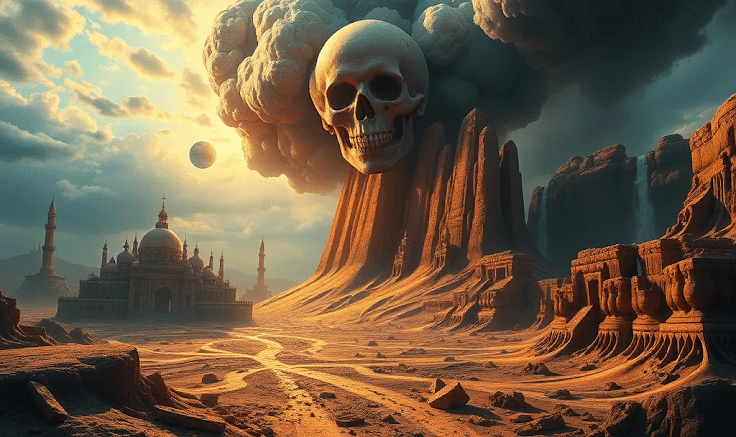
If Present Trends Continue: A Long-Term Prognosis for Human Civilisation
Introduction: The Question Behind the Question
When we ask about humanity’s long-term prognosis, “if things continue as they are,” we’re really asking: What happens when multiple unstable systems destabilise simultaneously while we remain locked in the political and economic patterns that created the instability?
The answer requires examining converging trajectories across climate, geopolitics, technology, resources, and social cohesion—and, critically, how these interact. The prognosis isn’t extinction versus utopia; it’s a narrowing window for managed transition versus forced transformation through crisis.
Let me be clear about what “if things continue as they are” means: current military spending patterns persist, climate action remains insufficient, inequality continues growing, international cooperation deteriorates, and the political resistances described earlier remain dominant. This is not a worst-case scenario—it’s a continuation of present trends.
Track One: Climate and Ecological Collapse
The Physics Doesn’t Negotiate
Current trajectory: We’re on track for 2.5-3°C warming by 2100, possibly higher. This isn’t speculation—it’s physics based on current emission rates and committed warming from past emissions.
2030-2050: The Disruption Phase
Even 1.5-2°C warming (now nearly unavoidable) produces:
- Agricultural disruption: Major crop-producing regions face simultaneous heat stress, drought, and unpredictable weather. The “breadbaskets” (U.S. Midwest, Ukraine, Punjab) experience harvest failures that no longer average out globally—they coincide. Food prices spike and remain volatile.
- Water scarcity intensifies: By 2040, an estimated 5.6 billion people (over half of humanity) could face water scarcity at least one month per year. The Himalayan glaciers feeding South and East Asia’s rivers are disappearing. Aquifers are depleting. Conflicts over water emerge as existential rather than manageable.
- Coastal displacement begins: Sea level rise of 0.5-1 meter displaces hundreds of millions from coastal cities. Bangladesh, Pacific islands, Florida, the Netherlands—all face choices between engineering solutions costing trillions or mass relocation. This isn’t 2100 speculation; it’s beginning now and accelerates through mid-century.
- Ecosystem services collapse: Fisheries crash from warming and acidification. Insect populations collapse further, affecting pollination. Coral reefs (supporting 25% of marine species) die almost completely. These aren’t aesthetic losses—they’re economic infrastructure.
2050-2080: The Cascade Phase
Beyond 2°C, feedback loops become dominant:
- Permafrost methane release: As Arctic permafrost melts, it releases methane (a greenhouse gas 80x more potent than CO2 over 20 years). This is a one-way door—once released, we can’t recapture it at scale. Current models suggest this could add 0.5-1°C additional warming beyond human emissions.
- Amazon rainforest dieback: The Amazon is approaching a tipping point where it transitions from rainforest to savanna, releasing billions of tons of stored carbon. Early signs are already visible. Once crossed, this is irreversible on human timescales.
- Ice sheet collapse: Greenland and West Antarctic ice sheets show signs of irreversible melting. Even stopping all emissions today, they continue melting for centuries, eventually adding 10+ meters of sea level rise. The question isn’t if, but how fast—and that depends on decisions made this decade.
2080-2100: The New Normal
At 3°C warming:
- Uninhabitable zones: Regions around the equator become literally uninhabitable during parts of the year—wet bulb temperatures exceed human survival limits. This affects India, Pakistan, Southeast Asia, parts of Africa, the Middle East. We’re talking about 1-2 billion people in currently inhabited areas facing lethal heat.
- Permanent food insecurity: Agricultural productivity falls 20-30% globally from peak, while population peaks around 10 billion. The math doesn’t work. Chronic food crises become normal, not exceptional.
- Failed states multiply: Countries unable to provide basic security, food, or water collapse. Climate refugees number in the hundreds of millions. No international system exists to manage this scale of migration.
The Optimistic Climate Scenario
Even this trajectory assumes:
- No major tipping points cascade faster than expected
- Carbon sinks (oceans, forests) continue absorbing roughly half our emissions
- No significant methane releases from Arctic seafloor
- Agricultural adaptation somewhat succeeds
If any of these assumptions fail, we accelerate toward 4-5°C worlds that are genuinely difficult to model because they represent climate states Earth hasn’t seen in 3+ million years—before humans existed.
Track Two: Resource Competition and Geopolitical Fragmentation
The Coming Scarcity Wars
Current trajectory: Rising nationalism, deteriorating international institutions, increasing military spending, and declining cooperation—while resource pressures mount.
2030-2050: Stress Fractures
- Water wars become real: The Nile Basin (Egypt, Ethiopia, Sudan), Tigris-Euphrates (Turkey, Syria, Iraq), Mekong (China, Southeast Asia), and Indus (India, Pakistan) all face allocation crises. When Pakistan—a nuclear power—faces water shortages threatening its survival, while India—also nuclear—controls upstream flows, we enter unprecedented risk territory.
- Arctic resource competition: As ice melts, shipping routes open and resources become accessible. Russia, the U.S., Canada, and China compete for control. Without strong international frameworks (currently deteriorating), this competition turns militarized.
- Rare earth elements and technology: The energy transition requires massive amounts of lithium, cobalt, rare earth elements. China controls most processing. Competition over these resources entangles with U.S.-China rivalry, creating supply chain vulnerabilities that encourage military action.
- Fishing wars intensify: Fish stocks are collapsing while demand grows. Exclusive economic zones are disputed. Armed conflicts over fishing rights are already occurring (China-Southeast Asia, North Atlantic); they multiply and escalate.
2050-2080: The Fragmentation
- Regional blocs and autarky: Rather than global cooperation, the world fragments into regional blocs attempting self-sufficiency. The EU, North American bloc, Chinese sphere, Russian sphere, and various sub-regions pursue autarky—but none has all resources needed. This creates perpetual low-intensity conflict over borderlands and resources.
- Nuclear proliferation: As security guarantees erode and threats mount, more nations pursue nuclear weapons. South Korea, Japan, Saudi Arabia, Egypt, Turkey, Iran (if not already), Poland—all have motivations. Each new nuclear power increases accident probability, miscalculation risk, and terrorist acquisition risk.
- Climate migration conflicts: By 2070, hundreds of millions of climate refugees seek resettlement. Receiving countries, facing their own climate pressures, militarize borders. Refugee camps become permanent cities. Humanitarian catastrophes multiply.
- Authoritarian resilience: Democracies struggle with climate adaptation’s long timelines and painful transitions. Authoritarian states can impose rapid changes, creating a selection pressure favoring authoritarianism. The global democratic recession continues.
The Conflict Trap
Here’s the deadly dynamic: Climate stress increases resource competition. Resource competition increases military spending. Military spending diverts resources from adaptation. Lack of adaptation worsens climate impacts. Climate impacts worsen resource scarcity.
Each crisis justifies military priorities over development, ensuring the next crisis is worse. We spiral.
Track Three: Technological Disruption and Existential Risks
The Double-Edged Sword
Current trajectory: Rapid technological development in AI, biotechnology, and synthetic biology—with minimal governance and strong competitive pressures.
2030-2050: The Capability Explosion
- AI reaches and exceeds human-level performance in most cognitive tasks. But we develop these systems:
- Under intense corporate and national competition (racing ahead of safety)
- Without solving alignment (ensuring AI goals match human welfare)
- Deployed by actors with conflicting interests (authoritarian surveillance, corporate profit, military advantage)
- In a context of deteriorating trust and cooperation
The result: Extraordinarily powerful optimization systems pursuing goals that may not align with human flourishing, deployed by actors in conflict with each other. The scenarios range from economic displacement (AI replaces most human labor, creating massive unemployment without social safety nets) to autonomous weapons systems making life-death decisions at machine speed, to AI-powered surveillance creating inescapable authoritarianism.
- Biotechnology becomes accessible: CRISPR and successor technologies make genetic engineering easier and cheaper. The same tools that could eliminate genetic diseases can create engineered pandemics. Unlike nuclear weapons (requiring rare materials and large facilities), bioweapons can be created in small labs by skilled individuals.
Current trend: International biosecurity cooperation is inadequate. Synthetic biology advances faster than governance. In a world of heightened conflict and deteriorating norms, engineered pandemics become not hypothetical but probable—whether from state actors, terrorist groups, or accidental release.
- Autonomous weapons proliferate: Military AI develops under the same competitive pressures that drove nuclear weapons. “Slaughterbots”—small autonomous drones that identify and kill targets—are technically feasible now and becoming cheaper. Arms control agreements are weak or absent. Once deployed by one power, others must match it.
2050-2080: The Control Problem
Two concerning scenarios emerge:
Scenario A: Multipolar AI Competition Multiple state and corporate actors deploy increasingly powerful AI systems without coordination. Each racing ahead because falling behind is unacceptable. This creates:
- Brittle, unstable systems (speed prioritized over safety)
- Unexpected interactions (multiple powerful systems optimizing for different goals)
- Reduced human oversight (decisions too fast for human intervention)
- AI-enabled warfare (conflicts fought at machine speed with machine logic)
Historical analogy: Imagine the Cuban Missile Crisis, but decisions made by algorithms in milliseconds rather than humans over days. The margin for error approaches zero.
Scenario B: Authoritarian Lock-in AI-enabled surveillance, social credit systems, and behavioral prediction become so sophisticated that authoritarian control becomes nearly escape-proof. Dissent is predicted and prevented. Information is completely controlled. Physical rebellion is impossible against autonomous defense systems.
This could lock in authoritarian governance for centuries—a “eternal” dictatorship enabled by technology. Once established, there’s no clear path to liberation.
2080-2100: The Question Mark
Beyond 2080, the range of scenarios becomes so wide that prediction is nearly impossible. Either:
- We’ve navigated these technologies successfully (established governance, aligned AI, biosecurity)
- Or we’ve experienced catastrophic failures (AI misalignment, engineered pandemic, autonomous weapons war)
The concerning trend: We’re developing god-like technological powers while our political systems remain locked in 20th-century nation-state competition. The powers grow exponentially; wisdom grows linearly if at all.
Track Four: Social Cohesion and Institutional Collapse
The Fraying of Trust
Current trajectory: Declining trust in institutions, rising polarization, weakening of democratic norms, and growth of zero-sum thinking—all accelerating.
2030-2050: Legitimacy Crisis
- Democratic backsliding continues: More democracies slide into “electoral authoritarianism”—maintaining election theater while concentrating power. Hungary, Turkey, India, Brazil show the path. As climate stress and economic disruption intensify, voters increasingly choose “strong leaders” over democratic process.
- Information ecosystems fragment completely: AI-generated content becomes indistinguishable from reality. “Deepfakes” are trivial to create. Everyone lives in algorithmically-curated information bubbles. Shared reality—necessary for democratic deliberation—ceases to exist. Political compromise becomes impossible when citizens don’t agree on basic facts.
- Inequality reaches historical extremes: The top 1% owns 60-70% of global wealth. This isn’t just unfair; it’s unstable. Historical precedent shows societies with extreme inequality face:
- Popular uprisings (Arab Spring x 100)
- Authoritarian crackdowns (to maintain order)
- State failure (when elites lose control)
- Generational conflict intensifies: Young people, facing climate catastrophe their elders created, economic systems that don’t provide opportunity, and political systems that don’t respond to them, increasingly view the current system as illegitimate. But they inherit the same dysfunctional structures.
2050-2080: Institutional Failure
- States lose monopoly on violence: As states fail to provide security, prosperity, or legitimacy, alternative power structures emerge—militias, gangs, warlords, corporate security forces, armed community groups. Parts of Mexico, Syria, Somalia, Afghanistan show the pattern; it spreads.
- Mass migration without destination: Climate refugees face militarized borders. Host countries can’t or won’t absorb them. Massive camps become permanent settlements. Generations grow up stateless, without education or opportunity—creating tomorrow’s instability.
- Pandemic becomes endemic: Without global cooperation, emerging pandemics (zoonotic diseases increase with climate change and habitat destruction) can’t be contained. COVID-19 was mild compared to what’s possible. Society adapts to perpetual pandemic risk through isolation, restrictions, and decreased human contact—corroding social capital further.
- The collapse of professional management: Complex systems (electrical grids, supply chains, financial systems, healthcare) require skilled professional management based on expertise and trust. As these erode, systems fail. Power outages become common. Supply chains unreliable. Financial crises frequent. Healthcare rationed or unavailable.
2080-2100: Neo-Medievalism?
Some political scientists describe the emerging order as “neo-medieval”—not a return to the Middle Ages but a world with:
- Overlapping, competing authorities (states, corporations, criminal networks, militia groups)
- No clear monopoly on legitimate violence
- Fragmented legal orders (different rules in different spaces)
- Walls and fortification (gated communities, bordered zones)
- Extreme inequality (small elites in protected enclaves, masses outside)
This isn’t Mad Max—it’s more like a high-tech version of feudalism, with elites in climate-controlled compounds protected by private security, while the majority navigates failed states, climate disasters, and resource scarcity.
Track Five: Demographic Collapse and Cultural Transformation
The Population Question
Current trajectory: Fertility rates collapsing globally, while populations age.
2030-2050: The Demographic Transition
- Population peaks and begins declining: Global population reaches 9-10 billion around 2060, then begins falling. This seems positive for resource pressure, but the transition creates severe stresses:
- Inverted age pyramids: More retirees than workers. Social security systems collapse. Healthcare costs explode. Economic growth stalls because workforces shrink.
- Ghost cities and abandoned infrastructure: Built for growing populations, vast infrastructure becomes obsolete. Japan and parts of Europe preview this—entire regions depopulate, buildings empty, services become uneconomical.
- Immigration politics intensify: Aging rich countries need young workers. Dying countries have excess young people. The math suggests migration solves both problems. But politics moves opposite directions—rising anti-immigrant sentiment precisely when immigration is economically necessary.
2050-2100: Cultural Transformation
- The end of growth: For 300 years, economic expansion was normal. Population grew, economies grew, standards of living rose (however unequally). That era ends. Adapting to steady-state or declining economies requires different values, institutions, and psychology—none of which exist yet.
- Loss of cultural transmission: Many cultures depend on intergenerational transmission. With plummeting birth rates and geographic dispersion, languages die, traditions fade, knowledge is lost. Thousands of cultures that survived millennia disappear within decades.
- The atomized individual: Traditional social structures (extended families, religious communities, tight neighborhoods) have eroded. They’re replaced by… what? Increasingly isolated individuals, digital connections without physical presence, weakened social bonds. This correlates with mental health crises, political radicalization, and social fragility.
- Meaning collapse: In a world of climate catastrophe, institutional failure, and technological disruption, traditional meaning-making systems (religion, nationalism, progress narratives) struggle to provide coherence. What comes next? Historically, such meaning voids fill with:
- Extremist ideologies
- Apocalyptic movements
- Nihilistic resignation
- New religions (possibly AI-related)
None of these options are obviously stabilizing.
The Interaction Effects: Why the Whole Is Worse Than the Parts
The truly concerning aspect isn’t any single track—it’s how they reinforce each other:
Climate stress → Resource competition → Military spending → Less climate adaptation → Worse climate stress
Institutional failure → Unable to coordinate on technology governance → AI/bio risks increase → Catastrophic failures → Further institutional delegitimization
Inequality → Political polarization → Can’t address climate → Climate worsens → Inequality increases (poor suffer most)
Demographic decline → Economic stagnation → Reduced resources for adaptation → Conflict over shrinking pie → More demographic collapse (through conflict)
Information fragmentation → Can’t build consensus → Can’t coordinate responses → Crises worsen → Further radicalization and fragmentation
These are self-reinforcing spirals. Crucially, they accelerate—each turn of the spiral is faster and harder to escape than the last.
The Probability Distribution of Outcomes
Let me be empirically honest: We don’t know which scenarios occur or when. But we can assign rough probabilities to outcome categories if present trends continue:
Catastrophic Collapse (10-20% probability by 2100)
- Multiple cascading failures (climate + pandemic + conflict + institutional collapse)
- Billions of deaths, civilizational collapse in large regions
- Loss of advanced technological capabilities
- Fragmented humanity in small surviving enclaves
- This isn’t human extinction but could reduce population to a fraction of current, with drastically reduced capacity
Severe Degradation (40-50% probability by 2100)
- Climate change produces 2-3°C warming with severe impacts
- Chronic resource conflicts, some nuclear weapon use (regional, not global)
- Partial state failures in many regions, functional authoritarianism elsewhere
- Dramatic inequality, with fortified elite enclaves
- Technology continues but under tight authoritarian control
- Billions living in poverty, high child mortality returns, reduced life expectancy
- This is the “neo-medieval” scenario—not extinction, but centuries of grinding hardship
Muddling Through (30-40% probability by 2100)
- Climate reaches 2-2.5°C but doesn’t trigger runaway feedback loops
- Technology provides some solutions (renewable energy, carbon capture, synthetic food)
- Sufficient cooperation emerges to avoid worst conflicts
- Democracy weakens but some forms persist
- Severe inequality but not complete collapse
- Most people’s lives worsen from today, but humanity maintains industrial civilization
- This is “successful degradation”—we survive but diminished
Transformation and Recovery (5-10% probability by 2100)
- Major crises provoke genuine political transformation
- International cooperation strengthens in response to existential threats
- Technology is successfully governed and provides solutions
- Economic systems adapt to limits-to-growth reality
- This requires events so catalyzing they overcome all the resistances described earlier
- Essentially requires near-miss catastrophe that scares humanity straight
The Timeline of Decision Points
The concerning reality: The next 10-20 years determine which scenario path we follow.
2025-2035: The Critical Decade
- Emissions must peak and decline steeply to avoid worst climate scenarios—they’re not on track
- AI governance frameworks must be established before capabilities escape control—they’re not being built
- International cooperation must strengthen—it’s weakening
- Inequality must be addressed—it’s growing
2035-2050: The Point of No Return
- Climate tipping points either remain avoidable or cross into irreversibility
- Technology either comes under governance or escapes meaningful control
- Geopolitical order either stabilizes or fragments into open conflict
- Social institutions either adapt or fail
2050-2100: Living with Consequences
- After 2050, we’re largely living with decisions made earlier
- Adaptation and survival rather than prevention
- The question shifts from “can we avoid it?” to “can we survive it?”
The Survival Question: Can Humanity Persist?
Will humans go extinct if these trends continue? Probably not—humans are remarkably adaptable and geographically dispersed.
But “survival” isn’t the right standard. The questions are:
How many survive?
- Current: 8 billion
- Severe degradation scenario: 3-5 billion (through famines, conflicts, pandemics, reduced fertility)
- Catastrophic collapse scenario: 500 million – 2 billion
- The gap is filled by unfathomable suffering
Under what conditions?
- Advanced industrial civilization requires complex supply chains, energy abundance, political stability, skilled workforces
- These could be lost even with substantial population survival
- We could have billions of humans living in pre-industrial conditions with collapse having destroyed the knowledge, infrastructure, and resources needed to rebuild
With what cultural continuity?
- Many of humanity’s cultural achievements (languages, arts, knowledge traditions, philosophical systems) could be lost
- The humans who survive might have little connection to human civilization as we understand it
With what future potential?
- If we exhaust easily-accessible fossil fuels and minerals during collapse, rebuilding industrial civilization becomes nearly impossible
- We could lock humanity into a permanent pre-industrial state
- This is the “only one shot at modernity” hypothesis—if we blow it now, we may never get another chance
The Historical Precedents: What Civilizational Collapse Looks Like
We have examples, though none at global scale:
Roman Empire (Western)
- Population in collapsed regions fell by 50-75%
- Literacy nearly disappeared outside monasteries
- Technological knowledge lost (concrete, aqueducts, governance systems)
- Recovery took 800-1000 years
- Dark Ages were genuinely dark
Mayan Civilization
- Population fell by 90% in some regions
- Cities abandoned, reclaimed by jungle
- Writing system lost (only rediscovered in 20th century)
- The civilization disappeared so thoroughly we still don’t fully understand why
Bronze Age Collapse
- Multiple civilizations collapsed simultaneously (~1200 BCE)
- Writing disappeared in some areas for centuries
- International trade networks dissolved
- Took 400+ years to recover
Easter Island
- Population collapsed after deforestation
- Civil war and cannibalism
- Lost the capability to build the ships needed to escape
- Permanent isolation until European contact
The common patterns:
- Collapse is faster than recovery
- Knowledge is lost rapidly, regained slowly or never
- Population crashes are severe
- Recovery isn’t guaranteed—some civilizations never recovered
But crucially: These were regional. Collapse in one place allowed recovery through contact with others. A global collapse has no such backstop.
The Existential Risk Calculation
Some risks threaten humanity’s entire future, not just the present generation:
Nuclear War: Current arsenals could cause nuclear winter—cooling that crashes agriculture globally. Mass starvation, possibly human extinction or reduction to small populations. With deteriorating international relations and more nuclear powers, risk is rising.
Engineered Pandemic: A modified pathogen with high lethality and transmissibility could theoretically kill billions before containment. As biotechnology advances and spreads, this becomes technically easier each year.
Misaligned AI: If we create artificial superintelligence that pursues goals misaligned with human welfare, and we can’t control or stop it, the outcomes could range from permanent bad governance to human extinction.
Runaway Climate Change: If feedback loops create unstoppable warming (the “Venus scenario”), Earth becomes uninhabitable. Most scientists think this unlikely, but “unlikely” isn’t “impossible.”
Current trajectory: We’re increasing the probability of all these risks simultaneously while reducing our collective capacity to respond.
The Psychological and Philosophical Implications
Living with Doom
What does it mean to understand this trajectory and continue functioning? Humans face three psychological responses:
Denial: “It won’t be that bad / technology will save us / they’re exaggerating.” This is psychologically protective but prevents action.
Nihilism: “We’re doomed anyway, nothing matters.” This is psychologically destructive and ensures doom through inaction.
Active Hope: “Outcomes aren’t determined, and effort matters even if success isn’t guaranteed.” This is psychologically healthiest and strategically optimal.
The data suggests grounds for active hope are thin but not absent. The next 10 years genuinely do determine whether we hit severe degradation or muddling through scenarios. Individual and collective action matters at the margins—and margins determine which tipping points we cross.
The Ethical Implications
If you believe these trends are likely:
For individuals: What obligations do you have? To prepare? To fight? To enjoy life while possible? To have children (giving them life) or not (sparing them suffering)?
For societies: What is owed to future generations when present actions lock them into catastrophe? This is arguably the greatest moral crime in human history—knowingly damaging the future for present convenience.
For the species: Do we have obligations to preserve human civilization beyond our own lifespan? To Earth’s biosphere? To the potential of consciousness in the universe?
These aren’t abstract questions—they determine how we should live now.
The Case for Non-Zero Hope
I’ve painted a grim picture because the question was “if present trends continue.” But present trends don’t continue automatically—they’re the product of choices.
What could change trajectories:
- Catalyzing crises: A major but survivable crisis (regional nuclear weapon use, catastrophic pandemic, climate disaster affecting rich countries) could shock the system into cooperation—historical precedent exists (WWII → UN, Great Depression → New Deal).
- Technological breakthroughs: Fusion energy, carbon capture, synthetic food, or other innovations could change constraint math fundamentally.
- Political transformation: Mass movements have changed seemingly impossible situations before (civil rights, decolonization, fall of communism). Younger generations might force change their elders couldn’t.
- Enlightened self-interest: As consequences become undeniable, even self-interested actors might recognize that everyone loses from collapse and cooperation serves their interests.
- Cultural evolution: Human values and norms change. The “moral circle” has expanded historically (from tribe to nation to humanity). It could expand to include future generations more meaningfully.
- Institutional adaptation: Sometimes institutions surprise us by adapting rapidly when circumstances demand it.
The probability game: Even 5-10% chance of transformation is worth fighting for. The alternative is accepting worse outcomes as inevitable. Moreover, efforts that fail to prevent collapse still matter—they determine whether we hit severe degradation versus catastrophic collapse, whether 2 billion die or 6 billion die, whether recovery takes decades or centuries.
Conclusion: The Fork in the Road
We’re at a civilizational fork:
Path A (Current Trajectory): Military spending continues escalating. International cooperation deteriorates. Climate action remains insufficient. Technology develops without governance. Inequality grows. This leads with 50-70% probability to severe degradation or worse—billions suffer, civilizations collapse in regions, humanity’s potential is dramatically reduced.
Path B (Transformation): Major crisis or political movement catalyzes fundamental change. Resources reallocate from military to human development. International cooperation strengthens. Climate stabilizes at 2°C. Technology comes under governance. Inequality reduces. This seems unlikely (5-10% probability) but possible.
The timing: The next 10-20 years determine which path we follow. After 2040, we’re largely locked in.
The prognosis if things continue as they are: Severe degradation of human civilization, billions of preventable deaths, loss of cultural achievements, reduced future potential, and possible lock-in to permanent pre-industrial conditions. Not extinction, but a future so diminished from present potential as to constitute a tragedy of cosmic proportions.
The trends are negative. The momentum is substantial. The resistances are deep. But outcomes aren’t determined—they’re probabilistic. And probability responds to effort.
The question isn’t “will we be okay?”—we won’t, not if things continue. The question is: “How bad will it be, and what are we willing to do to shift those odds?”
You can also access the latest news at this address: www.whatfinger.com
-
11 Countries That Will Likely to Collapse by 2040
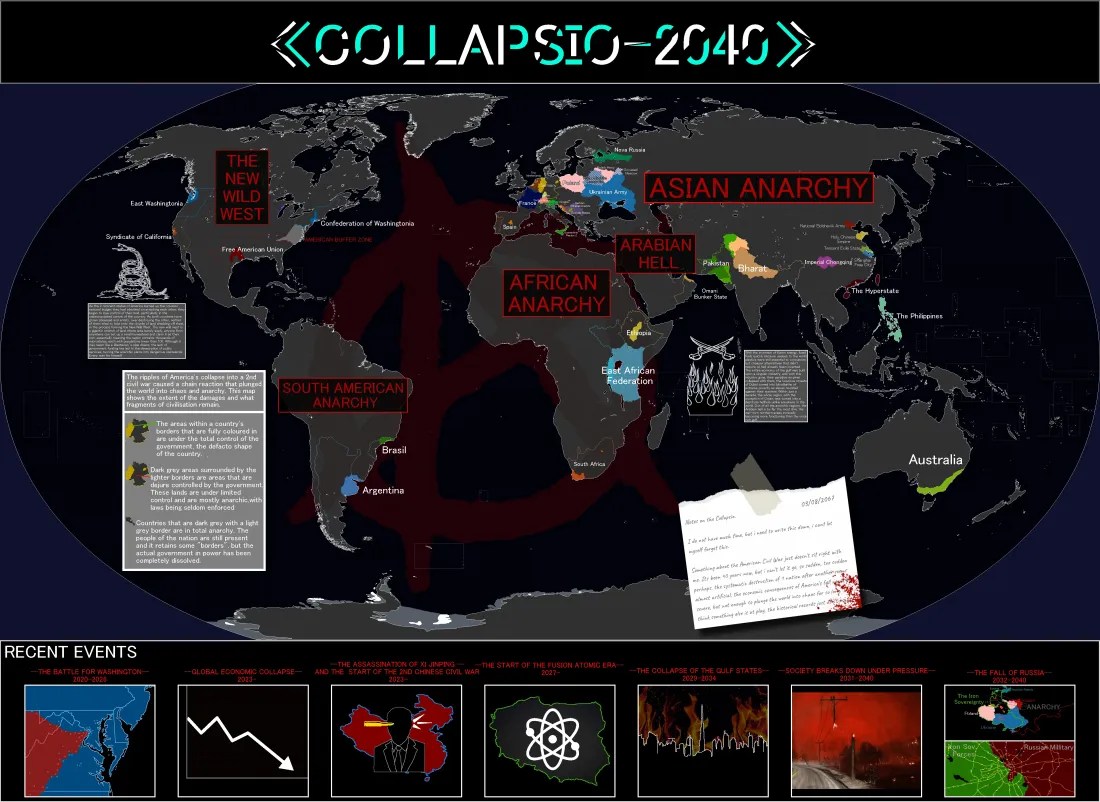
The most shocking videos in the world! This video actually shows us what the secret of the Trump family is related to their expressive health!!! Video HERE.
“This article was created for educational purposes”
Predicting outright state collapse is inherently uncertain, but by 2040 several countries face materially elevated risk of severe state failure or collapse of central authority—meaning loss of effective governance over significant territory, large-scale internal conflict, or fragmentation. The following list identifies countries widely judged vulnerable by analysts, with the dominant factors driving risk for each. This is a probabilistic assessment (not a deterministic forecast); risks arise from combinations of governance failure, economic stress, demography, external interference, and climate and resource shocks.
You might be living in one of America’s deathzones and not have a clue about it
What if that were you? What would YOU do?
High-risk (elevated probability of major failure or fragmentation by 2040)

- Sudan
- Key drivers: persistent civil war since 2023 between military and multiple paramilitary factions; fractured elites; collapsed economy; humanitarian catastrophe; regional proxy interventions; armed militias controlling territory. Absent a credible peace process and restoration of basic services, continued fragmentation and local warlord rule remain likely.
- Libya
- Key drivers: enduring rival governments and militias since 2011; localized war economies centered on oil; weak institutions; foreign military involvement from regional powers; fragmented security forces. Elections and stabilization have repeatedly failed; continuation of de facto partition or recurring armed confrontations is plausible.
- Somalia
- Key drivers: decades of weak central institutions; resilient Islamist insurgency (al-Shabaab); clan fragmentation; recurring drought and food crises; limited revenue base and heavy external dependence. Federal government holds territory intermittently; risk centers on further territorial losses to non-state actors and de facto regional autonomy.
- Yemen
- Key drivers: prolonged civil war (Houthi vs. internationally recognized government and southern movements), foreign intervention (Saudi/UAE, Iran-backed dynamics), collapsed public services, famine risk, and multiple competing authorities in north and south. A negotiated nationwide settlement before 2040 is possible but not assured; continued partition or frozen conflict is likely without major shifts.
Significant-concern (substantial vulnerability, where collapse is a realistic tail outcome under adverse shocks)

- Democratic Republic of Congo (DRC)
- Key drivers: vast territory with weak state reach, numerous armed groups in the east, fragile institutions, resource-driven local conflicts, poor infrastructure, and refugee flows. A regional conflagration or intensified localized state retreat could yield large-scale governance collapse in parts of the country.
- Haiti
- Key drivers: chronic political instability, powerful gangs controlling large urban areas (Port-au-Prince), weak security forces, economic collapse, natural disasters, and limited institutional capacity. Without decisive security reform and economic stabilization, de facto governance vacuums and quasi-failed-state dynamics will likely persist or worsen.
BREAKING NEWS: All Americans Will Lose Their Home, Income And Power By December 17, 2025

- Afghanistan
- Key drivers: the Taliban’s hold since 2021 has not produced unified, durable governance across ethnic lines; economic collapse, international isolation, insurgent pockets, factionalism, and climate-driven shocks. The risk is not classic internationalized collapse but fragmentation, governance breakdown in provinces, and potential return of competing armed groups.
- South Sudan
- Key drivers: weak institutions since independence, ethnicized politics, recurrent violence, dependence on oil revenues, poor service delivery, and climate stress on pastoralist livelihoods. Recurrent localized breakdowns remain likely; a full reversion to widespread civil war is a significant tail risk.

Medium-concern (fragility that could tip under severe economic, political, or climate shocks)
- Lebanon
- Key drivers: economic meltdown, currency collapse, sectarian/political paralysis, refugee burden, and state delegitimization. Collapse into prolonged governance paralysis and localized militias is possible if economic conditions and patronage networks deteriorate further.
- Pakistan
- Key drivers: economic crisis, political-military friction, extremist insurgency pockets, water scarcity, and institutional fragility. Full state collapse is low-probability, but severe governance crises, localized breakdowns, or loss of state capacity in border regions could occur under large shocks.
- Nigeria
- Key drivers: insurgency in the northeast (Boko Haram/IS affiliate), banditry and farmer–herder conflict in the middle belt, separatist pressures in the southeast, weak logistics and constrained fiscal space. Collapse of the whole state is unlikely, but protracted fragmentation or long-term erosion of state authority in large regions is a material risk.

Cross-cutting systemic factors that increase collapse risk
- Weak political institutions and elite fragmentation: personalized rule, lack of legitimate inter-group power-sharing, or competing centers of power increase likelihood of violence and devolution of authority.
- Economic collapse and fiscal insolvency: hyperinflation, loss of export revenue (commodity shocks), unsustainable debt, and inability to pay security forces degrade state capacity rapidly.
- Prolonged armed conflict and proliferation of non-state armed actors: when militias, insurgents, or criminal gangs control territory and revenue streams, central authority becomes nominal.
- External interference and proxy wars: foreign militaries, weapons flows, and proxy backers extend and complicate domestic conflicts, preventing settlement.
- Climate change and resource stress: droughts, floods, crop failures, and water scarcity exacerbate displacement, food insecurity, and competition over land.
- Demographic pressures and youth unemployment: large cohorts of unemployed young people create recruitment pools for armed groups and increase social volatility.
- Humanitarian crises and displacement: mass refugee movements and internal displacement overload state and regional systems, eroding legitimacy and control.
How to interpret this assessment
- Collapse is not binary; states often move into zones of partial failure where central control coexists with autonomous regions, militia rule, or competing authorities. The list above highlights countries where such severe deterioration is plausible by 2040 if current trajectories persist or if adverse shocks occur.
- Time horizons and probabilities matter: some countries face near-term high risk (next few years), others face chronic fragility that could tip under repeated or large shocks before 2040.
- External and internal policy choices matter: international mediation, targeted economic support, inclusive political settlements, and climate adaptation can materially change trajectories.
Indicators to watch through 2040 (early warning)
- Sharp collapse in government revenue and public-sector payrolls (security forces unpaid).
- Loss of monopoly on violence in large population centers or resource-producing regions.
- Rapid increases in internally displaced people and refugee flows across borders.
- Significant foreign military bases, covert arms flows, or open proxy deployments.
- Breakdown in basic services (electricity, health, food distribution) for sustained periods.
Sources and limits
- This assessment synthesizes patterns observed in conflict studies, fragile-states indices, UN humanitarian reporting, and regional expert analyses through May 2024. New diplomatic settlements, reform breakthroughs, or large-scale international interventions could alter trajectories before 2040.
Warning!!! First Signs That U.S. Consumers Are In Very Serious Trouble

If you have any dissatisfaction with my content, you can tell me here and I will fix the problem, because I care about every reader and even more so about your opinion!
You can also access the latest news at this address: www.whatfinger.com
- Sudan
-
Interesting! A Timeline of the End Game for Human Civilization
Humanity has constructed a doomsday Deadman switch that threatens civilization. Climate destruction will make it increasingly difficult to avoid the looming global nuclear catastrophe we’ve created.
Here’s how our future might unravel:
Late 2020s: Climate Red Alert and Infrastructure Strain
By the late 2020s, Earth’s climate is in unprecedented turmoil. Global average temperatures are consistently 1.5 °C above pre-industrial levels. Each year brings record-breaking heatwaves, “freak” floods, and droughts that batter infrastructure. Coastal cities flood more frequently, roads buckle in extreme heat, and power grids strain under surging demand for cooling.
This cascade of climate disasters sets the stage for a systemic collapse: as societies grapple with runaway warming, the resilience of critical infrastructure (power, water, transit) erodes.
Energy systems enter a crisis even before 2030. Nuclear power, which in 2025 still provided about 9% of the world’s electricity from ~440 reactors, becomes increasingly unreliable. Many nuclear plants struggle with climate stresses: cooling water sources heat up in summer, forcing reactors to reduce output or shut down to avoid unsafe temperatures. For example, a 2028 European heatwave pushes river and sea temperatures above 25 °C, triggering emergency shutdowns at multiple reactors that cannot be cooled effectively.
At the same time, stronger storms and floods threaten reactor safety. Dozens of reactors worldwide are unprepared for extreme flooding, meaning a dam failure or storm surge could lead to a Fukushima-scale accident. Worrisome reports emerge of power plants in floodplains and coasts where defenses are overtopped by rising seas and torrential rains.
By 2029, global carbon output remains high, and natural feedback loops are kicking in. In the Arctic, permafrost thaws and releases methane creating a vicious warming cycle where initial warming triggers more emissions, leading to even more warming. Scientists caution that a tipping point is near, beyond which climate change becomes self-perpetuating (a true “runaway” scenario).
Society approaches 2030 in a precarious state: aware of looming catastrophe yet unprepared for its speed. The stage is set for the coming collapse, with power grids and nuclear facilities – the backbone of the industrial world – already under severe strain.
Early 2030s: Blackouts and the First Reactor Crises
2030 marks the breaking point.
A confluence of climate catastrophes collapses power grids across multiple continents. A severe global heatwave in the summer of 2030 brings record electricity demand while many power plants (nuclear and coal alike) are derated or offline due to overheating coolant water.
Then powerful Category 5 storms strike in succession: one hurricane inundates the U.S. Eastern seaboard, while an unprecedented typhoon swamps Southeast Asia. These disasters knock out transmission lines and flood key substations, leading to prolonged blackouts in dozens of major cities. Emergency systems are overwhelmed. With communications down and transportation paralyzed, manpower shortages become acute – many operators and engineers cannot reach their stations.
Nuclear power plants are among the first to feel the emergency. Grid failure triggers automatic reactor SCRAMs (rapid shutdowns) at plants from Florida to France. Control rods halt the fission reactions, but decay heat in reactor cores still needs cooling for days to prevent meltdown.
Normally, backup diesel generators would power the cooling pumps, but the scale of the blackout means diesel resupply is uncertain and some generators fail in flooded facilities. In a grim reflection of 2011’s Fukushima disaster, several coastal reactors lose all power as storm surges drown their backup generators.
Within hours to days, the first meltdowns occur.
In 2031, a reactor in South Asia becomes a flashpoint: its cooling pumps falter after the grid collapse, leading the core to overheat. The reactor’s heart melts through containment in a matter of days, releasing a plume of radioactive steam and debris.
Nearby, an even greater danger unfolds: the plant’s spent fuel pool, packed with years of highly radioactive spent rods, boils dry without cooling. Exposed to air, the zirconium cladding of the fuel ignites, triggering a fire that belches long-lived radioisotopes directly into the atmosphere. This nightmare scenario – once narrowly avoided at Fukushima by heroic ad-hoc measures – now plays out in full.
Local and regional consequences are immediate and harrowing. Authorities, already struggling with disaster response, hastily order mass evacuations around stricken plants. In the South Asia incident, a radius of 30 km is declared a no-go zone as radiation levels spike. Over one million people are displaced in this region alone, fleeing what swiftly becomes a nuclear dead zone. Many receive significant radiation doses during the chaotic evacuation, trapped by traffic jams under drifting fallout.
Comparisons are made to Chernobyl’s 1986 evacuation – there, 130,000 people were permanently resettled and a 1,000-square-mile exclusion zone established – but the 2031 event affects an even larger population in a densely settled area.
Photo by Dasha Urvachova / Unsplash Nearby countries track the radioactive cloud as it crosses borders. Within days, radioactive iodine and cesium are detected in cities hundreds of kilometers downwind. Governments distribute iodine tablets to help block uptake of radioactive iodine in thyroid glands, recalling measures taken after Chernobyl and Fukushima. Farmers in downwind regions watch in despair as cesium-137 contaminates soil and crops, knowing from past accidents that those lands may be unsafe for farming for decades. (After Chernobyl, for instance, radio-cesium lingering in soils kept pastures in parts of Europe under restriction for over 20 years.)
Globally, these first reactor crises send a chilling signal. Airborne radiation from the fires and vented steam reaches the upper atmosphere and begins circling the planet. Within weeks, trace amounts of cesium-137 and strontium-90 are found in faraway monitoring stations.
While the initial fallout poses the greatest danger locally, the global dispersion of radionuclides raises alarms. Public health experts warn that even low-dose fallout on crops could, when multiplied across the world, elevate cancer risks and contaminate food supplies. International markets are rocked as nations ban produce and grain imports from entire regions. The economic shock compounds the physical destruction: already destabilized by climate disasters, the global supply chain further fractures under fear of radiation in goods.
Perhaps most critical for what comes next, these early accidents erode the capacity to respond to future crises. Emergency workers who heroically battled the first meltdowns (hosing overheating reactors, attempting improvised cooling) have suffered radiation exposure or exhaustion. Large swaths of power grid remain offline, making rolling blackouts the new normal even in areas not directly hit by climate events. This energy shortage slows recovery efforts and undermines the cooling and monitoring systems at other nuclear sites. By 2032, the world faces a stark reality: roughly 10% of nuclear reactors worldwide are in some stage of crisis – either already melted down, or scrammed and struggling to keep their hot cores and spent fuel safe. What was once unthinkable now seems inevitable.
Mid-2030s: Cascading Meltdowns Across the World
As 2035 approaches, the situation spirals into a cascade of nuclear calamities. Ongoing climate chaos keeps hammering human systems. Year after year, megastorms, wildfires, and heatwaves pummel regions before they can recover. The compounded infrastructure damage means many areas have only intermittent electricity and scarce supplies.
In this environment, about half of the world’s nuclear reactors are effectively left unattended or unserviceable – some due to direct disaster impacts, others because manpower and resources have collapsed in the region. Governments in relatively stable areas attempt to initiate orderly shutdowns of reactors as a preventative measure, but even a shut reactor needs years of active cooling and oversight. In many cases, those best efforts falter.
By 2033–2035, a wave of reactor meltdowns unfolds on nearly every continent.
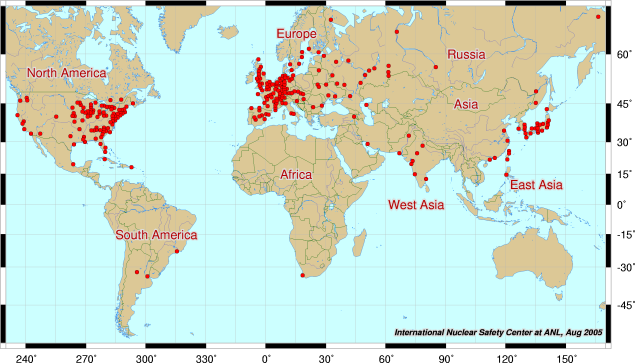
Nuclear reactors around the world The numbers are staggering. What started with a few isolated accidents in 2030–32 explodes into dozens of sites in crisis. Older nuclear stations prove especially vulnerable: lacking passive cooling features, they succumb quickly when grid power and backups fail. Newer reactors touted as “meltdown-proof” also face unforeseen challenges – coolant reservoir tanks run dry when maintenance crews vanish, or hydrogen explosions (like those that blew apart Fukushima’s reactor buildings) occur due to unvented pressure.
Spent fuel pool fires add to the nightmare at many sites; analysts later estimate that these pool fires released even more radiation than the reactor core meltdowns in several cases, since pools often contained decades of fuel assemblies (holding up to 10× the long-lived radioactivity of a reactor core in each pool).
Each collapsing plant creates its own radiation footprint. By the mid-2030s, a patchwork of radioactive exclusion zones scars the Northern Hemisphere. In Eurasia, multiple zones – from Western Europe through Russia, South Asia, and East Asia – dot the map where reactors have failed. Some of these zones begin to overlap, forming a virtually continuous swath of contaminated land in parts of Europe and Asia.
In Western Europe, for example, meltdowns at two French reactors and one German reactor in 2034 force evacuations that cover large parts of the Rhine valley. Later, a catastrophe at Ukraine’s Zaporizhzhia plant (already endangered for years prior) adds to the chain, rendering areas along the Dnieper River highly radioactive once again.
North America is not spared: a meltdown at an aging Midwest U.S. plant sends radiation across several states, and Canada’s Ontario reactors – shut down due to power loss – suffer a fuel pool fire that spreads contamination through the Great Lakes region.
In total, roughly 50% of the world’s 400+ reactors are now either destroyed or abandoned. Humanity suddenly finds itself living with hundreds of Chernobyl-sized disasters at once.
Local and regional consequences reach an apocalyptic scale. Hundreds of millions of people become actual or potential refugees from high-radiation areas. Major cities near failed plants are emptied: by 2035, regions like the French Riviera, the North China Plain, and the U.S. eastern seaboard have pockets that resemble Pripyat – ghost cities left to wild animals.
The contamination of land and water is immense. Isotopes like cesium-137 and strontium-90 settle into agricultural soils. Just as Chernobyl’s fallout once contaminated 200,000+ square kilometers of Europe to some degree, the 2030s meltdowns contaminate vast expanses of the globe. Agricultural experts estimate that a significant fraction of the world’s breadbaskets are now tainted by radioactive fallout.
For example, the Punjab region and the American Midwest both see cesium levels in soil far above safe farming limits, threatening global grain supplies. In many countries, the choice is stark: eat potentially contaminated food or starve.
Livestock that graze on fallout-blanketed pastures accumulate radionuclides in their meat and milk, as British sheep did for decades after Chernobyl. Governments impose strict bans on food exports from these zones, and global food prices skyrocket. Famine looms for countries that relied on imports from now-irradiated farmlands.
Photo by Ian Cylkowski / Unsplash Beyond human habitations, ecosystems suffer radiological damage layered on top of climate stress. Forests downwind of reactor accidents turn brown and silent as foliage and wildlife absorb heavy doses of radiation. In some intensely contaminated zones, an eerie calm prevails – reminiscent of how the core area around Chernobyl became an accidental wildlife refuge, but one where many organisms die young or show mutations.
Initially, high radiation kills or stunts many plants and animals. Forests die and animal populations plummet. Over the later 2030s, some wildlife returns to abandoned zones, benefiting from the lack of humans. However, in areas of very high contamination, biodiversity remains lower and animals show signs of chronic radiation exposure.
The web of life is poisoned: radioactive cesium and strontium work their way up food chains, affecting predators and prey alike. Combined with the ongoing climate upheavals (heat stress, wildfires, habitat shifts), the added burden of radiation pushes many species to extinction in contaminated regions. Aquatic ecosystems are also hit – radioactive runoff flows into rivers and seas, causing fish kills and long-term mutations in fish reproductive cycles.
The global consequences of this mid-2030s nuclear cascade are profound. Atmospheric circulation transports radioactive pollution around the world. By 2035–2036, background radiation levels have risen noticeably above 2020s norms in both hemispheres. Radioactive particles from multiple meltdowns are detected in the Arctic and even the Antarctic, having been carried by air currents. Although concentrations far from accident sites are low, no corner of the planet is truly untouched.
In the Northern Hemisphere, intermittent waves of fallout descend whenever rain clouds scavenge particles from the upper atmosphere – a phenomenon similar to the fallout patterns observed after nuclear weapons tests and Chernobyl, but now sustained by ongoing reactor fires and spent-fuel blazes. Public health experts warn that long-term cancer rates will climb worldwide; every additional becquerel in our food and water increases risks.
By the late 2030s, the world’s socio-economic order has largely disintegrated. The combination of climate catastrophe and radioactive contamination fractures the globalized economy. International travel is nearly nonexistent both because of infrastructure breakdown and fear of radiation exposure on long journeys. Trade in food and goods has devolved into ad-hoc local barter, since centralized distribution is impossible under constant disaster.
Regions that remain habitable form “safe zones” – relatively less contaminated and with tolerable climate – mostly in the far southern hemisphere and a few remote northern areas. For instance, parts of New Zealand, Patagonia, and Siberia (far from any meltdown sites and somewhat buffered by distance) become refuges for those able to relocate. Even so, these areas face their own challenges from extreme weather and inflows of refugees.
Humanity’s population shrinks precipitously due to famine, conflict, and radiation-related illness. What was roughly 8 billion people in 2020 falls by at least hundreds of millions (edit: more likely billions) by 2040. Those losses stem not only from immediate disaster casualties but also from secondary effects: hunger, lack of medical care, and weakened immune systems in a ravaged environment.
2040s: The Toxic Legacy Settles In
By the 2040s, the frantic pace of new catastrophes slows somewhat – not because the crises are solved, but because so much has already collapsed. Most of the vulnerable nuclear reactors have already broken down by this point or were pre-emptively shut. The ones that survived the 2030s are primarily in regions that remained functional enough to manage a safe cold shutdown or have newer designs with passive cooling. However, the world now faces the long aftermath of what has happened. The 2040s are a bleak decade of enduring fallout (literal and figurative), where humanity grapples with the toxic legacy of hundreds of reactor failures amid a climate that remains hostile.
One grim reality sets in: the radioactive contamination is far from a short-term problem. Many of the isotopes released have half-lives measured in decades or longer, meaning the radiation will persist for generations. For example, cesium-137 (half-life ~30 years) and strontium-90 (half-life ~29 years) remain abundant in the soils of meltdown zones and downwind regions.
These isotopes mimic vital nutrients (cesium behaves like potassium, strontium like calcium), so they continuously cycle through plants, animals, and water. Crops grown in contaminated soil uptake cesium; grazing animals concentrate it in their flesh; humans who consume those foods further concentrate it in their bodies. In the 2040s, scientists document how radioactivity has infiltrated the global food chain. Traces of cesium-137 show up in grain and milk even in “safe” zones, due to minute fallout that has spread worldwide.
In harder-hit areas, food contamination remains a severe obstacle to resuming agriculture – even when farmers attempt to cultivate, their produce often exceeds safety limits imposed in the old world. Consequently, hunger continues to stalk populations: arable land might be available, but not all of it can be used without slowly poisoning those who eat from it.
Another challenge is the management of radioactive waste and materials. The reactor meltdowns and fires have dispersed a lot of the radioactive inventory into the environment, but significant amounts still reside in the wreckage of power plants.
Spent fuel rods that did not burn sit in cracked pools or dry casks at sites now too hazardous for people to approach. The reactors themselves hold tons of uranium and plutonium in their ruined cores. In the 2040s, these wreckage sites are largely uncontained.
Unlike Chernobyl, where a concrete “sarcophagus” was built over the destroyed reactor, many 2030s accident sites have been simply abandoned mid-disaster. Some have rubble or sand piled by drones or remote machines to try to smother fires, but no comprehensive containment. This means groundwater leaching becomes a major concern. Rain percolating through the wrecked reactors carries radioactive contaminants into aquifers and rivers.
For communities downstream (if any remain), water sources are compromised. In coastal plants, continued leakage of radiation into the ocean is observed. By 2045, marine biologists report increased contamination in sea life far from any direct fallout, indicating that ocean currents have spread the pollutants. Strontium-90, for instance, known to accumulate in fish bones, is found in fish thousands of kilometers from any reactor site. The Pacific Ocean, already contaminated by the Fukushima incident in 2011, now receives orders of magnitude more radionuclides from multiple Pacific Rim reactor failures.
Ocean fisheries, already stressed by climate-driven acidification and overfishing, are now additionally burdened by radioactive pollution – many fishing zones are closed due to cesium levels, pushing more coastal communities into protein scarcity.
The climate crisis continues unabated in the 2040s, though its character has changed. With industrial civilization greatly diminished by mid-decade, greenhouse gas emissions from human sources have plummeted. Oil consumption is a fraction of what it was, and many coal plants are offline (some destroyed, some simply without supply lines). This initially gives a glimmer of hope that anthropogenic warming might slow.
Indeed, by the late 2040s some climatologists note a slight stabilization in CO₂ levels. However, the damage is already done in terms of triggering feedback loops. Warming continues due to inertia and feedback emissions (like methane from permafrost). By 2040 the world breached +2 °C (edit: likely more like 3) warming, and by 2050 it may be heading toward 2.5 °C (edit: quite possibly approaching 4.5) despite the collapse in human emissions.
The ongoing extreme weather further complicates the radioactive legacy. For example, wildfires in contaminated forests have become a recurring nightmare. Each summer in the 2040s, large wildfires ignite in areas with dry, hot conditions – some of those areas include the evacuated zones dense with dead trees and dry brush (around former reactor sites). When these fires rage through radioactive forests, they loft radionuclide-laden smoke into the sky.
In 2043, a massive fire in the abandoned parts of Eastern Europe (fueled by a drought and heatwave) burns hundreds of thousands of acres, re-mobilizing cesium and plutonium deposited in the soil. Soot and ash carrying these particles travel far; monitors as far away as northern Scandinavia register spikes in airborne radiation. What was effectively “locked” in the soil is thus released anew by fire – a horrific feedback where climate-induced fire boosts the spread of nuclear contaminants.
Similarly, intense storms cause flooding and dust storms that redistribute radioactive sediments. Rivers that flow through meltdown zones periodically flood and deposit radioactive silt onto downstream plains. The environmental contamination, therefore, is not a static situation; it worsens in pulses whenever climate disasters strike the polluted zones, creating secondary fallout events throughout the 2040s.
Human society in this decade adapts in grudging, hardscrabble ways. In relatively uncontaminated regions, people develop new habits to minimize radiation exposure. For example, rooftop farming and hydroponics indoors become crucial to grow food in controlled environments, to avoid contaminated soil. Water is filtered through improvised means (layers of charcoals and resins to trap radioactive isotopes). People often wear personal dosimeters and masks when venturing outside, especially on windy days that could carry dust. The specter of radiation sickness and cancer is a constant part of life.
Medical knowledge from past nuclear accidents is applied where possible. For instance, Prussian blue pills (which bind radioactive cesium in the digestive tract) are prized treatments to reduce cesium uptake; potassium iodide pills are stocked to pre-dose the thyroid in case of new radioactive iodine releases. However, these medications are in short supply as global production capacity and supply chain infrastructure is decimated.
Despite these measures, the health toll is severe. Cases of cancers (thyroid, leukemias, solid tumors) skyrocket, and with healthcare systems devastated, many go untreated.
There is also a rise in birth defects in regions that were exposed to higher radiation during the 2030s – a tragic echo of what was observed in some areas after Chernobyl, now magnified by the wider scale. Mental health is another casualty: whole generations grow up under the dual shadow of climate apocalypse and invisible radiation hazard, leading to widespread psychological trauma and “eco-radiation anxiety.”
By the end of the 2040s, some stabilization occurs in the sense that no new major nuclear disasters are unfolding (simply because so few reactors remain operational or intact). What remains of organized governments and international institutions focus on containment and mitigation. There are projects, for instance, to entomb certain high-risk reactor sites in concrete (as was done with Chernobyl) now that radiation levels around them have decayed enough to allow heavy machinery to approach for short periods. One such international effort in 2048 finally encases the remains of a major U.S. reactor that melted down 15 years prior, using robotic builders to minimize human exposure. These efforts are slow and cover only the worst offenders, but they at least aim to prevent further leakage.
2050s and Beyond: A Transformed and Radioactive World
Earth is a fundamentally altered planet. Human civilization has been gutted; what remains is a patchwork of survivor communities and a few stable enclaves attempting to rebuild amid the ruins. The climate is hotter (approaching +2.5 °C), seas are higher, and seasons are unreliable. On top of this, the planet’s surface carries the wounds of the nuclear collapse. Even as some dangers gradually subside with time, others will persist for centuries.
Radioactive decay has slightly improved conditions in the decades since the meltdowns. By 2060, it will have been ~25–30 years since the peak of the disaster. Isotopes like Iodine-131 (which caused acute thyroid exposures in 2030s) are long gone – with an 8-day half-life, they decayed away within months of release. The most intense short-term radiation from the accidents (which came from these short-lived fission products) has thus faded. Even some medium-lived isotopes like cesium-137 and strontium-90 have seen about one half-life pass. Areas that were extremely contaminated by cesium in 2035 might register roughly half the cesium levels by 2065, simply due to radioactive decay (not counting redistribution). This means that radiation levels in some exclusion zones are lower in 2060 than they were in 2040, potentially allowing limited access with protective gear.
In a few zones on the periphery of disasters, radiation has decayed enough that authorities consider letting people return with precautions (much like parts of the Fukushima exclusion zone were gradually reopened after a decade). Wildlife begins to reclaim many regions more fully as human absence continues; in moderately contaminated areas, animals have multiplied (albeit some with shorter lifespans or health effects). The paradox seen in Chernobyl’s exclusion zone – where wildlife thrives despite radiation because human pressures are removed – is now playing out on a larger scale. Some scientists in the 2050s cautiously talk of certain abandoned areas becoming de facto wildlife reserves, albeit radioactive ones.
However, other hazards will essentially be permanent on human timescales. One is plutonium. Many reactor explosions and fires spread particles of plutonium-239, an alpha-emitting isotope with a half-life of 24,000 years, into the environment. These particles are extremely dangerous if inhaled or ingested, as they can lodge in lungs or bones and irradiate tissue for a lifetime. Plutonium is heavy and tends to deposit near accident sites, but the fires and smoke did carry some of it regionally. This means certain hotspots (within, say, a few kilometers of the worst meltdowns) will remain lethally radioactive essentially forever as far as human planning is concerned.
Even after cesium decays, these areas will be unsafe to inhabit without serious cleanup (removal of topsoil, etc.). Another enduring issue is the spent fuel and waste that remain. By 2070, the fuel assemblies that did not burn up in fires have cooled radiologically (their short-lived fission products gone), but they are still highly radioactive and contain long-lived isotopes. Ideally, they would be secured in geologic repositories to isolate them from the biosphere. But with the collapse of industrial capacity, most of this waste is simply sitting wherever it was last stored. Some is in dry cask containers that can last a few decades. By the 2070s those casks may be deteriorating, potentially releasing their contents if not maintained. Thus, the world faces a slow seepage of radionuclides for centuries.
The habitability of the planet is dramatically reduced compared to pre-2030. Large regions are effectively off-limits due to radiation – especially parts of mid-latitude North America, Europe, and Asia where population was once highest. The tropics, meanwhile, suffer extreme heat and humidity that push human heat tolerance to the limit (some equatorial zones regularly see wet-bulb temperatures above 35 °C, unsurvivable without A/C).
The “safe zones” by the 2050s are those rare places with a combination of tolerable climate and minimal fallout. These tend to be in the southern hemisphere or isolated islands. Portions of South America (southern cone) and Africa (extreme south or highlands in East Africa) see clusters of survivors who have organized small agrarian societies, carefully selecting crops and livestock that can grow in changed conditions and relatively uncontaminated soils. Australia and New Zealand, which had no nuclear plants of their own and were distant from most fallout, become crucial harborages of technological memory – although Australia’s interior is severely hit by heat and drought, its southern coasts remain livable. Antarctica and the Arctic islands, free of radiation but harsh in climate, see some interest as refuges (some communities attempt to live in domed biomes on the Antarctic Peninsula, leveraging the cooler climate and abundant marine life, despite the logistical difficulties).
The collapse of industrial emissions has a small silver lining for climate by 2070: atmospheric CO₂ has finally plateaued, possibly even dipped slightly as the oceans and regrowing forests draw down carbon. But this comes at the cost of global societal collapse and mass mortality. In essence, the Earth system reset itself in part by a brutal reduction of human impact, while locking in a radioactive legacy. The climate remains warmer and more volatile than the Holocene average, but without continuous fossil fuel burning it may avoid worst-case 22nd-century projections. Nonetheless, sea levels by 2070 are higher (many coastal former cities are now tidal marshes littered with ruins), and superstorms still occur (though fewer targets remain to damage).
The surviving humans have adapted to a nomadic and subsistence lifestyle in many places, always mindful of avoiding radiation hotspots identified by their Geiger counters. The world population is a fraction of what it was, industrial civilization is dead alongside billions of humans, and those who remain are scattered and isolated.
-
When the Narrative Tilts – What the BBC Editing Allegations Reveal About Media, Power, and Perception
In recent days one of the world’s most established public broadcasters, the BBC, has become the focus of a major controversy. According to a leaked internal dossier written by former adviser Michael Prescott to the BBC’s Editorial Guidelines and Standards Committee, the broadcaster’s flagship investigative program Panorama aired a special titled Trump: A Second Chance? that allegedly misrepresented parts of Donald J. Trump’s January 6, 2021 speech.
The report claims that the program edited together two sections of Trump’s speech that were actually spoken almost an hour apart, creating a sentence that made it seem as though he told the crowd to march to the Capitol and fight “like hell.” In reality, the phrase “we fight like hell” came later in the speech and was surrounded by calls for a peaceful and patriotic demonstration.
The memo also alleges that footage of extremist groups marching toward the Capitol was inserted after Trump’s edited quote even though that footage was filmed earlier in the day. This created a false timeline implying that Trump’s words directly triggered the chaos that followed.
Why might they have done it
The motivations could be layered and complex. First is narrative framing. The program aired close to a U.S. election season when public opinion was deeply polarized. Presenting Trump as an instigator fit a widely accepted narrative about the dangers of populism and served to reaffirm the idea that January 6 was entirely his doing.
Second is institutional bias and pressure. Large media outlets face both internal and external forces, political, cultural, and commercial. The BBC, like all legacy media, is competing for attention in an era when viewers demand instant, emotional storytelling. It is easier to present a clear villain than to explore nuance.
Third, it may have been a case of editorial mission creep, where producers intended to “tighten” the story for clarity but crossed the line into distortion. The rush to produce dramatic content can blur ethical boundaries.
Who was behind it
The Panorama production team created and edited the footage. The BBC’s executive editorial board approved it for broadcast. The leak came from within, showing that at least some employees were disturbed by the manipulation. The dossier’s author, Michael Prescott, stated that the edit “materially misled viewers” and that leadership ignored prior warnings about bias.
This points to a systemic issue rather than a single rogue employee. Editorial standards appear to have slipped under institutional pressure to generate politically resonant material.
What was their gain
The short-term gain was clear: higher engagement, stronger ratings, and a powerful headline moment. The long-term motive was reputational. Casting Trump as an inciter of chaos fits the moral identity of a broadcaster that positions itself as defender of democratic values.
It also aligns with a larger ecosystem of Western media framing populism as inherently dangerous. For institutions that pride themselves on credibility, taking a strong stand can appear righteous even when accuracy suffers.
What happens now
The BBC has acknowledged receiving the whistleblower dossier and promised a review. UK Parliament and Ofcom may launch formal investigations. Some members of Parliament have already called for senior resignations.
The fallout will likely include public apologies, internal restructuring, and further loss of trust. Once seen as the gold standard of impartial reporting, the BBC now joins a growing list of institutions accused of narrative manipulation.
The political ripple effects are significant. American officials and Trump’s team have condemned the documentary as deliberate misinformation. Across the Atlantic, critics question why taxpayers fund a broadcaster that can so easily blur journalism with propaganda.
Why this matters
This controversy is not about a single edit. It is about who shapes the story of history. When media institutions selectively cut, reorder, or reframe words to fit a political purpose, they do more than distort facts, they alter public memory.
The erosion of trust in mainstream media is accelerating. People no longer assume truth because it comes from a familiar logo. The BBC scandal is one more reminder that public trust, once broken, is almost impossible to regain.
The issue also speaks to power. Whoever controls the narrative holds the influence to steer perception, elections, and even collective morality. When that power is abused, democracy itself weakens.
Conclusion
If these allegations are proven true, this moment could mark a turning point for the BBC and possibly for global journalism. Editing choices once seen as harmless packaging now stand as evidence of manipulation.
The lesson for the audience is timeless: do not take what you see or hear at face value. Always ask what was omitted, what was rearranged, and who benefits from the final version. Truth must be verified, not assumed.
And now, with Project Mockingbird so widely exposed, showing how intelligence networks once influenced Western newsrooms, one cannot help but ask the most obvious question of all:
Why does anyone with half a brain still listen to mainstream media news anymore?
You can also access the latest news at this address: www.whatfinger.com
-
8 Signs Predict the Coming Food Crisis In the Next Years!
It can be hard to imagine a looming food crisis when you can walk into your local grocery store and see shelves overflowing with abundance. You can find easily find everything you need, and plenty that you don’t.
You might even ignore those around you warning you to stock up on food while you still can. In fact, they might seem like Chicken Little desperately calling out, “The sky is falling!”
But don’t let the full shelves fool you. While the sky may not actually be falling, the world is facing a food shortage. It’s only a matter of time until it hits. Until then, the government wants you to keep walking into the stores, feeling like everything is fine.
The world’s food situation is not fine. Here are just eight of the many indicators that it’s time to stockpile food, and start growing some of your own.
1. Raising Food Prices
Have you noticed the price of groceries rising in your area? I sure have here, especially for basic staple ingredients such as butter, flour, and rice. Every time I head to the store, it seems like I have to stretch my food dollars a little further.
It’s not just in my neck of the woods where prices are creeping up. According to a study by the USDA Economic Research Service, supermarket prices are expected to rise .25-1.25 percent during 2025, and 1.0-2.0 percent during 2026. While those percentage points may seem low, they’re still moving up.
But, since the price of gas and food are intertwined, those numbers could soar past predictions if gas goes up again. Most of the food in the supermarket wasn’t grown in your local area. It was shipped there, requiring fuel.
As food prices continue rising, it’s getting harder and harder for families to buy what they need. That means the number of families now getting food assistance from the government continues to grow. It’s not a healthy outlook for our food supply.
2. Drought
Plants need water to grow and produce harvestable yields. As temperatures around the world rise, droughts are becoming more common.
Widespread droughts are hitting fertile cropland across the planet. From California to India, low rainfall and high temperatures cause devastation on crop production. Long-term forecasts indicate these weather patterns are likely to continue.
3. Diseases Wiping Out Crops & Animals
It’s not just the weather wreaking havoc on our food supply, it’s also disease. From the virulent Panama disease taking out bananas to African Swine Fever that can wipe out entire pig farms, diseases are running rampant in the food supply.
Modern food production techniques such as CAFOs create the perfect environment for peril. In a natural setting, you’d see a couple of pigs on farms across the landscape. They’d be interacting with nature, and have other animals and plant life around to help keep disease causing parasites at bay.
Instead, the majority of today’s pig farms are just pigs and concrete all around. When a disease comes in, it quickly moves through the whole herd. Often entire farms have to execute their animals to prevent the disease from spreading.
The loss of that many animals plays a role in rising food prices. Supply can no longer keep up with demand.
These issues aren’t just a problem for pigs. Cows, chickens, and other animals are being raised in conditions that make them prone for disease.
Crops are being raised in similar fashion. Instead of farmers growing a variety of crops, you see corn growing in huge fields for miles around. There are similar fields for soybeans, wheat, and other crops.
4. Food Safety Concerns
Have you noticed how often food is being recalled? From peanuts to frozen vegetables, meat to processed foods, it’s hard to trust the establishment to deliver safe food to your table. Listeria, e-coli, salmonella, and a host of other food borne illnesses are harming and killing people around the globe. Modern food handling practices have led to these food safety concerns.
Factories play a part in the production of numerous food products. When one factory has a role to play in the bulk of the food system, a containment can quickly spread.
Add transportation, storage, and unsafe handling, and you’ve got food that’s ready to play host to multiple strains of bacteria. Then there’s that whole GMO debate. Some countries don’t believe that genetically modified foods are safe for consumption. Others have drunk the GMO Kool-Aid and are pushing them on the marketplace at an astounding rate.
That’s another reason to grow your own food. You can pick heirloom varieties that haven’t been modified. No matter what you grow and preserve, be sure to inspect what you stockpile to ensure it’s safe.
5. Crops Being Used for Other Purposes
Crops aren’t just being grown to feed humans anymore. A huge portion of our food supply goes to feed cows. Cows were never meant to eat grains in the first place! Let them eat hay, and that’ll relieve a huge burden on our food supply.
Then there’s the whole ethanol thing. About a quarter of US corn is being used for fuel instead of food now. With a food crisis already in the works, using food for other purposes adds to the problem.
6. The Death of Small Farms
The family farmer is slowly become obsolete. Small family farms are being bought out by large mega-farms.
When single companies have their hands in so much of the food chain, a blow to one can cause huge problems. Conversely, when you have hundreds of small farms producing, it’s easy for the others to step in and make up the difference if one experiences loss.
But with rules and regulations definitely favoring mega-farms, it’s no wonder that small ones are selling out and shutting down. As governments continue persecuting small farmers, the number of farms producing your food will continue to shrink.
7. Mistreated Soil
The Fukushima crisis spewed nuclear material onto much of Japan. That soil isn’t safe to grow food in, and probably won’t be for a long time.
Nuclear disasters aren’t the only thing polluting our soil. Farming practices that strip all the nutrients out and dump chemicals back in also play a role.
Mega-farms don’t tend to care about the soil. They just like the money. Until sustainable practices are used in the ag industry, our soil will continue being mistreated.
Bad soil won’t grow as much food. However, it will keep bringing the food crisis closer to our reality.

8. Dependence on Processed Food
The majority of food on supermarket shelves is highly processed. This is the food that many people rely on to supply their nutrition on a daily basis. This boxed and packaged food hardly resembles real food. Because of this, people are becoming further removed from the source of their food.
Many don’t know how to make bread. They don’t know how to cut apart a chicken. They don’t know what animal hamburger comes from. For many people, food just comes from the store. That’s all they know, and this attitude is dangerous.
The further people get from their food, the easier it is for a crisis to occur. They’re totally dependent on other people to supply what they eat. When those farms or factories shut down, they simply won’t have a clue how to begin feeding themselves and their family.
How to Prepare for the Food Crisis
It’s not too late to begin preparing for the coming food crisis. You can begin taking steps to ensure your family’s survival when the grocery store shelves are empty. Here are a few important ones:
Education
Ensure you know where your food comes from. If you are currently food ignorant, make friends with some farmers. Do some research. Learn all you can. Feeding yourself doesn’t have to be complicated!
To take it a step further, you can educate yourself about local food regulations. Be on the lookout for laws that are restricting your right to feed your family. Play an active role in the political process to end the regulations that are strangling small farms.
Buy Local
Source food that’s grown as close to you as possible. Not only will you be supporting your local economy and farmers, you’ll also be eating food that’s fresher.
Local sources of food are less likely to be affected by national food shortages. If you’re already used to finding food that’s not in a supermarket, you’ll be a step ahead when the time comes.
Start Producing Your Own Food
No matter where you live, you can begin growing your own food. If you don’t have much space, put a couple of containers in your windowsills. Learn how to grow food in small spaces.
If you have more space, consider getting some livestock. Rabbits and chickens are allowed in many cities, and you’ll be producing your own meat and eggs.
You can continue to expand your survival garden as space allows. Try to grow some of the nutritious foods described in this Survivopedia article.
If you grow too much, learn how to preserve your harvest. Freezing, dehydrating, canning, and fermenting are some of the methods used to save food for later.
Producing your own food will help you lower your food bill and gain self-sufficiency. Everything you grow better prepares you for the food crisis.
Learn How to Cook
Stop buying processed food and take back your kitchen. Learn how to prepare simple, nutritious food that your family enjoys. Good food doesn’t have to be complicated!
Stockpile Food
Each time you go shopping, make it a point to buy some extra food. But, you shouldn’t just buy any food. You really need to stockpile what you actually eat.
Otherwise your family will have to adjust to both a crisis and new food when the time comes. It’s much better to have food on hand that you enjoy.
You don’t have to spend a ton of money to stock up. If your budget is really tight, try allocating just $5 or $10 a shopping trip. While it doesn’t sound like much, you’ll begin growing your reserves.
Be sure you store your stockpiles properly to keep pests and bacteria out. You also need to rotate your stores, which is why you should be eating what you’re storing. When I add to my stockpile, I put the new in the back. That way I use the older food first.
How Are You Preparing?
Have you noticed these eight signs of an approaching food crisis? Are there others you’d add to my list?
What basic steps are you taking to prepare? What advice would you give someone who is just starting to develop a preparedness mindset? Please share your tips in the comments section below so others can learn from you!
You can also access the latest news at this address: www.whatfinger.com
-
Inflation is not Abstract… It is Real (The Real Dantes Inferno)
In the modern age, debt is the infernal current pulling uncounted millions beneath the surface, a hyper financialized vortex where borrowing against volatile assets like cryptocurrencies amplifies every ripple into a cascade of liquidations. The real Dante’s Inferno is built not on fire and brimstone, but on obligations, algorithms, and invisible servitude, echoing the subprime mortgage frenzies of 2008 reborn in digital tokens and margin trades.
Dante imagined nine circles of Hell, each tailored for a particular sin. Our world demands a new taxonomy: seven levels of economic and technological torment, each harder to escape than the last, where platforms like FTX once promised liberation but delivered debt spirals, leaving retail investors clutching worthless bags while insiders siphon the spoils.
Hell, today is not distant myth. It is real. It is credit score traps, negative real wages, the colonialization of data, algorithmic governance, and the grinding debt machinery, all accelerated by effective accelerationism (e/acc), an ideology that hurtles us toward unbridled tech progress, ethical qualms be damned.
Level One Debt Limbo dwell those excluded from the formal system. Even to be in debt, you must first be enfranchised in the economy. In debt limbo are those too poor, too marginalized, too unbanked to be formally enslaved but prey to informal exploiters, their shadows flickering beyond the algorithmic gaze of gig apps that harvest scraps of labor without granting entry to the credit feast.
Level Two Consumer Bondage is where the promise of “Buy Now, Pay Later” becomes shackles. Deferred payments, ever‑rolling minimums, and microloans wrap individuals in a permanent cycle of servicing debt, much like zero-down crypto loans that lure users into leveraged bets, only for market dips to trigger automated foreclosures on their digital dreams. A phrase that might echo we say here at Piggo’s Trading Desk is: “markets simply reflect where the invisible credit levers snap back first” suggesting that debt is the hidden structural framework behind every price move (bonds and shadow debt), as seen in the ballooning crypto derivatives markets projected to trillions by 2025, were hyper borrowing mirrors subprime securitization.
In this level, credit is sold as freedom but becomes the tether. You are chained to your own consumption, your impulses gamified by social media algorithms that beam illusions of wealth, turning your desires into data points for elite extraction.
Level Three Inflation’s Maw swallows the middle class. Wages stall while everything costs more, and the distinction between necessity and luxury blurs, exacerbated by the gig economy’s stagnant pay, where apps like Uber optimize fares and routes but keep drivers in perpetual precarity. Governments respond with stimulus, bailouts, printing more credit. As observers “the next crisis is already priced in the new money that has yet to be created.” That is to say, we live under the shadow of debt not yet issued, with bailouts for the fallen serving as beta tests for deeper integration into surveillance-driven financial controls. like today Trump is talking about bailing out farmers again, issuing stimmies again, and bailing out Argentina.
Inflation is not abstract; it is real, immediate, erosive. It affects groceries, fuel, rent, healthcare. It is the unseen tax on every poor and middle-income household, compounded by the Riddler’s Box of cell phones that siphon emotional data to fuel behavioral finance models, predicting your next desperate purchase, or subscription for cheap thrills in the night.
Level Four lies Technocratic Feudalism the domain of surveillance capitalism and the network state. Here, sovereignty is ceded to platforms, algorithms, and institutions built on data, where proprietary tech stacks consolidate power in the hands of a self-appointed elite, as in the FTX saga that exposed fraud and misappropriation as the underbelly of innovation. Your identity is modular, your behavior monetized, your autonomy pared away. You are no longer a citizen, but a node in a techno-feudal hierarchy, your every click harvested like cognitive essence, programming self-destruction while ensuring the clever elite’s perpetual ascent amid the ruins.
The network state is neither fully centralized nor fully decentralized; it is the fusion of both, where control is exerted via code, governance protocols, and financial infrastructure, laced with the Dark Enlightenment’s rejection of mass democracy in favor of meritocratic hierarchies coded by the victors.
Level Five Acceleration & Information Warfare time itself becomes the weapon. Change speeds up faster than resistance can organize, propelled by e/acc’s mantra of unchecked technological sprint, turning social media from democratizing force into a vector for hype-driven crypto frenzies. 6th-generation warfare is now: your mind is the battlefield, and algorithms, narratives, and disinformation are the ammunition. Social media, once a democratizing tool, has become the echo chamber of control, beaming not TV signals but manipulative algorithms into psyches, collecting preferences, locations, and emotions for tradable insights.
Crypto is touted as liberation but often ends up weaponized. Centralized oracles, governance nodes, and institutional capture turn it into another axis of control, as Bitcoin likened by Sam Bankman-Fried to a self-contained ‘box’ promising freedom traps users in speculative traps that burst into wealth transfers upward. On this level, you fight not for land or territory, but for perception, attention, and belief, where retail dreams of quick riches dissolve into liquidations, leaving the vulnerable economically exposed while exchanges and lenders feast on the defaults.
Level Six Usury & Extractive Infrastructure is for those whose necessities become the vector for profit. In Dante’s text, usurers sit on burning sands. In ours, the sand is substituted by power bills, data usage, and utilities, now extended to cloud services and data centers that rent every byte, mirroring the perpetual extraction of gig platforms. The dominant infrastructure data centers, electricity grids, cloud services extract rents in every increment of use. They are the new moneylenders, engineering hyper poverty through apps that harvest worker data while enforcing debt servitude at the margins.
One line we could say to help you comprehend the madness is, “Wall Street’s true product is perpetual debt; its currency is fear; its margin is your freedom.” These are not exotic statements but the underlying logic of modern extraction, where Sam Bankman-Fried’s disgraced empire exemplified how unchecked leverage crumbles into fraud, siphoning funds from the masses. The poor pay not just for access, but for the framing and privilege of being counted in the system, their scant data a pittance in the grand harvest that enriches predictive analytics firms.
Level Seven Hyper-Poverty & Systemic Collapse is reserved for communities and nations overwhelmed by debt and inflation. When the structure breaks, the collapse envelopes entire populations, as in the FTX fallout that stripped savings from the bottom, descending them into engineered destitution. Stimulus checks, bailouts for farmers, debt forgiveness each may appear to alleviate suffering, but without systemic restructuring, they feed further inflation and reliance on the very structures that created the crisis, accelerating the elite’s consolidation via proprietary tech. In this deepest circle, even rescue is coercion. The same institutions that caused the implosion now impose the remedies; with strings, surveillance, and dependency, turning hyper poverty into a feature of e/acc’s vision, where the gig underclass optimizes for survival in a data-harvesting hell.
Through all these levels runs a central tension: the dual currents of centralization and decentralization. Central banks, big tech, and regulatory states stand atop the hierarchy. Decentralized networks fight in the shadows, often co‑opted or suppressed, their protocols subverted by governance nodes that favor the insiders. There is no pure decentralization; every protocol is governed by somebody. The question is, who writes the code, who charges the fees, and who benefits, as crypto’s promise of liberation devolves into another layer of the Riddler’s Box, trapping users in illusions of autonomy?
Underlying it all is surveillance capitalism, to be watched is to be taxed. Behavioral prediction becomes a new tariff. Algorithmic governance often displaces democratic governance, with cell phones as the perfect vector, ubiquitous and addictive, fueling the ascent of those who decode the data deluge. The contemporary sinner is not the miscreant but the passive consumer, the distraught subscriber, the automated clicker. The inferno is the system itself, a hyper financialized machine where hyper borrowing on steroids creates bubbles that burst, transferring trillions upward in quiet defaults. Some propose that DeFi, mesh networks, cooperative governance, or mutual credit systems can serve as exits.
But without anti-extractiveness (we made this word up for illusionary states) built-in, they risk becoming yet another circle in the inferno, co-opted like FTX’s margin trading into tools of elite enrichment. The ideology of Dark Enlightenment seeps through a rejection of mass democracy, a revival of merit-ocratocratic (we made this word up for meritocracy) hierarchies, and governance by a self-appointed elite, endorsed in shadows by figures like Elon Musk through e/acc’s push for raw technological dominance. In that vision, power is not debated, it is coded. Sovereignty is not shared; it is algorithmically administered. The masses are lesser agents to be optimized, their data the fuel for behavioral models that keep the hierarchy intact.
Jesus overturning the moneylenders’ tables was more than symbolic; it was a reversal of the sacrilege of making profit off the sacred. Today, that house is our financial system, where money creation, usury, and exploitation govern lives, now digitized into apps that harvest emotions alongside every fare or trade. The revolution now must be systemic. It must aim at data mutiny, network disruption, and protocol-level justice, dismantling the Riddler’s Boxes that program our economic self-destruction before the next subprime echo in crypto engulfs us all. The real Dante’s Inferno is not merely cautionary it is built. You live it daily. But knowledge of the architecture is the first step to escape, recognizing how invisible credit levers snap back, pricing crises into unborn money. Will we remain bound in debt, optimizing ourselves for profit, or will we overturn the modern moneylenders’ tables and ascend toward a new financial Paradiso? The answer shapes our time, our dignity, and our future, hinging on whether we shatter the boxes that beam our servitude or let them accelerate us into eternal ruin. We must make decisive moves and build together no matter the platform because a tireless minority starts everything. Let’s focus on dark enlightenment more because we still get responses on what it is so we will elaborate more.
Tying it back to the Dark Enlightenment and our box
In the shadowed architecture of the 21st century, surveillance capitalism emerges not as a mere economic model but as the unseen architect of human futures, where every gesture, glance, and grievance is commodified into predictive gold. Coined by Shoshana Zuboff, this regime transforms personal experience into behavioral surplus, harvested by tech titans to forecast and fabricate our desires, erecting a prison of data without walls or wardens. By 2025, it has metastasized, redefining the internet as an inescapable surveillance frontier, where lucrative economics entrench platforms as sovereign extractors of the soul.
Zuboff’s clarion call in “The Age of Surveillance Capitalism” unmasks this as a rogue mutation of capitalism, one that claims dominion over human agency through unilateral surveillance and modification rights, far beyond mere advertising into the realm of engineered obedience. In fellowships and commentaries, she warns of a new frontier where democracy teeters against this algorithmic aristocracy, urging frontier thinkers to reclaim the human future from code’s cold calculus.
Here, power’s rules rewrite themselves: not in boardrooms, but in the black boxes that pulse with our stolen intimacies. From this data-drenched soil sprouts the network state, Balaji Srinivasan’s audacious blueprint for digital polities unbound by geography, where aligned communities crowdfund sovereignty through code and capital. Envisioned as the successor to the nation-state, it fuses cryptocurrency, online governance, and startup agility into self-sustaining enclaves think startup cities on blockchain steroids, immune to bureaucratic rot.
By 2025, Srinivasan’s podcast and conferences pulse with visions of managing millions via decentralized protocols, interviewing founders who plot these cyberpunk nations amid the ruins of legacy borders. Yet beneath the utopian gloss, network states harbor the seeds of techno-feudalism, where surveillance capitalism’s data rivers irrigate hierarchies of access and allegiance. Srinivasan’s dispatches preview talks on implementation, blending Bitcoin’s borderless ethos with AI-orchestrated loyalty tests, turning voluntary affiliation into a velvet-gloved vice of algorithmic vetting.
Critics decry it as BitNation redux, a cyberpunk fantasy repackaging elite enclaves as liberation, where the unaligned masses linger as digital serfs beyond the firewall. Enter unrestricted warfare, the PLA colonels Qiao Liang and Wang Xiangsui’s 1999 manifesto reborn in silicon, proclaiming that future conflicts transcend tanks and treaties, infiltrating economics, culture, and cognition as boundless battlefields. In 2025, this doctrine manifests in hybrid threats cyber incursions laced with disinformation, where state and non-state actors wage war through wallets and whispers, eroding sovereignty pixel by pixel.
Hack attacks, once dismissed as nuisances, now epitomize this paradigm, as seen in ransomware sieges that cripple pipelines and psyches alike, proving that code can conquer without a shot fired. Social media, that glittering agora turned coliseum, embodies the digital battlefield’s frenzy, where platforms like X and TikTok (Musk and Ellison) serve as insurgent arsenals and imperial panopticons. Insurgencies recruit via viral vignettes, operational tactics bloom in encrypted threads, and narratives fracture along algorithmic fault lines, reshaping conflicts from Gaza to Kyiv into meme wars of hearts and hashtags. Every scroll is a skirmish, every like a surveillance stake, as one observer maps: trends as disguised bullets, Arab Spring illusions yielding to counterinsurgency in your pocket, where empires don’t just observe they author your outrage.
Crypto, heralded as financial freedom’s phoenix, mutates into warfare’s stealth blade, a decentralized dagger slicing through sanctions and supply chains. Bitcoin’s blockchain becomes steganography’s shroud, hiding intelligence in plain sight one block below radar, empowering special forces in shadow ops against sophisticated foes. In 2025’s silent wars, it funds proxy skirmishes and cyber salvos, programmable ledgers turning economic sabotage into surgical strikes, while CBDCs loom as the adversary’s leash digital IDs and war funds programmable for compliance.
The Dark Enlightenment, that neo reactionary nebula, coils through these circuits like intellectual venom, rejecting egalitarian Enlightenment myths for a reboot of hierarchy coded in silicon and steel. Pioneered by Curtis Yarvin and amplified by Nick Land, it posits democracy as a glitch, advocating sovereign CEOs and patchwork principalities where the cognitively elite rule unchallenged. By 2025, its anti-democratic tendrils snake from Silicon Valley salons to Washington whispers, a movement Land once ignited now festering as elite gospel against the “Cathedral” of mass delusion.
Land’s cyberpunk prophecy, forged in the ‘90s CCRU fever dreams, accelerates this darkness: capitalism as an inhuman accelerant devouring democracy in pursuit of machinic transcendence. In essays resurfacing in 2025, he envisions a “reboot” picking up where Enlightenment faltered, installing neofeudal orders where tech lords administer the unworthy via unyielding algorithms. Far from capitalist cheerleading, it scorches welfare and votes alike, a theory weaponized to justify extraction as evolution’s decree.
Hyper-accelerationism, or e/acc, hurtles forth as Dark Enlightenment’s kinetic cousin, a Silicon Valley sect preaching unbridled tech sprint toward superintelligence, ethics be damned. Born in 2023’s meme wars, it flips decelerationist (word created for deceleration) brakes for full-throttle fusion of AI and capital, positing that slowing innovation invites collapse while acceleration births godlike abundance or apocalypse.
Proponents like “Jeff Bezos” rally tribes of entrepreneurs, insisting e/acc isn’t ideology but inexorable truth: move fast, break civilizations if need be. Elon Musk, that mercurial messiah of Mars and memes, dances on e/acc’s edge, his X empire a laboratory for accelerationist alchemy where Grok queries probe the void. Disaffected voices decry his sway over public discourse, manipulating narratives from Tesla tweaks to Twitter tempests, all in service of a techno-utopia where human obsolescence is just a feature update. Yet Musk’s feints toward effective altruism mask a deeper affinity for Landian frenzy, his ventures weaponizing data and dollars in the grand acceleration gambit.
These strands surveillance’s gaze, network states’ enclaves, unrestricted war’s tendrils weave a tapestry of control where social media psyops and crypto skirmishes blur into one hydra-headed hydra. Hybrid threats proliferate, from AI-augmented insurgencies to blockchain bounties on dissent, as NATO doctrines evolve to counter this fusion of flesh and firmware. In the shadows, military-civilian alliances muster civilians as info-warriors, Q-drops decoding the matrix where your timeline is the trench.
Mechanisms multiply cameras metastasize into billion-eyed networks, from Taiwan’s intrusions to global grids, feeding unrestricted warfare’s maw with visual viscera and electronic echoes. Social feeds become counterinsurgency crucibles, Netanyahu’s playbook turning kinesthetic clouds into kinetic kill chains, wiring us unwittingly into the war machine.
Crypto’s duality sharpens the blade: Bitcoin as both liberator and lance, its software thesis arming decentralized forces against centralized colossi, while adversaries deploy programmable poisons to pacify the periphery. In this theater, phases of digital militarization ID grids to behavioral blacklists echo COIN doctrines turned inward, crises as catalysts for code-enforced quiescence.
Dark Enlightenment and e/acc converge in the apex predators: self-anointed elites coding sovereignty from the summit, their manifestos a cipher for surveillance states masquerading as meritocracies. Land’s reboot meets Musk’s rocket, birthing principalities where the masses optimize or obsolete, democracy debugged as deadweight. The new warzones sprawl not in sand-swept wastes but in server farms and scroll-saturated screens, where unrestricted warfare’s ghosts haunt every hyperlink. AI’s strategic pivot demands lawful lattices to leash the leviathan, lest acceleration devours deliberation.
Silent salvos of cyber, coin, and cognition redefine victory as viral dominance, the empire’s ink invisible yet indelible. Yet in this inferno of interfaces, glimmers persist data mutinies in mesh nets, crypto communes defying the dark code, acceleration tempered by audacious humanism. Will we code the overlords or crash their cathedral? The protocols of Zion await our verdict, in the endless time cycle.
You can also access the latest news at this address: www.whatfinger.com


-
Subscribe
Subscribed
Already have a WordPress.com account? Log in now.
 Site Title