-
More Signs Emerge Of ‘Dark Days Ahead’ (GOD HAS A PLAN TO PRESERVE HIS PEOPLE WHEN THE WORLD IS TURNED UPSIDE DOWN)

The prophet Isaiah warns us that in the last days God is going to “turn the world upside down.” He declares, “Behold, the Lord maketh the earth empty, and maketh it waste, and turneth it upside down” (Isaiah 24:1).
According to this prophecy, sudden judgment is coming upon the earth, and it will change everything in a single hour. Within that short span, the whole world will witness fast-falling destruction upon a city and a nation, and the world will never be the same.
If you are attached to material things — if you love this world and the things of it — you won’t want to hear what Isaiah has prophesied. In fact, even to the most righteous of God’s people, what Isaiah says might seem unthinkable. Many would surely ask, “How can an entire world be stricken in one hour?”
If we didn’t believe the Bible is God’s pure Word, few of us would take Isaiah’s prophecy seriously. But Scripture makes it clear: in a single hour, the world is going to change. The church is going to change. And every individual on earth is going to change.
The apostle John gives a similar warning in Revelation. He speaks of destructive judgment coming upon a city and nation: “In one day, death, and mourning, and famine; and she shall be utterly burned with fire: for strong is the Lord God who judgeth her…. For in one hour so great riches is come to nought” (Revelation 18:8, 17).
In Isaiah’s prophecy, the city under judgment is cast into confusion. Every house is shut up, with no one coming or going. “The city of confusion is broken down: every house is shut up, that no man may come in” (Isaiah 24:10). The entire city is left desolate: “In the city is left desolation, and the gate is smitten with destruction” (24:12). All entrances and exits to the city are gone. The passage indicates that a fire has come, a blast that has shaken the very foundations of the earth (see 24:6).
We who live in New York City know something about this kind of scene. When the Twin Towers were attacked, the ominous fires and smoke could be seen ascending to heaven for miles. Recently, New Yorkers panicked as a mass of steam erupted from below a city street. People ran in all directions screaming, “Is this it? Is this the end-all attack?”
Today, multitudes of secular prophets are saying a nuclear attack is inevitable. The target they mention most often is New York, but it could happen in any major city: London, Paris, Tel Aviv, Washington. Neither Isaiah nor John names the city upon which destructive judgment falls.I don’t intend this message to frighten anyone.
Let me make clear at this point: I don’t intend this message to frighten anyone. Paul tells us that as disciples of Jesus Christ, we have already passed from death into life. We who call on Jesus as Lord should be confident that no matter what happens in this world, his shed blood saves and redeems us.
Therefore, we are not to fear any newscast, but rather to be attentive to what the Lord is doing in the world. Like many people, I hear grievous reports that make me want to tune everything out. But the truth is, God moves in the midst of such times, and through them he speaks warnings to all who would hear his voice.Isaiah’s prophecy points clearly to our generation.
I believe, along with many eminent Bible scholars, that Isaiah’s prophecy points to the last days. By that, I mean our present time. In short, sudden judgment is coming, and Scripture strongly indicates it is now at the door.
At this point you may be wondering: “How can we be sure we’re the generation this prophecy points to?” We can know by two reasons that such judgments are imminent:
1.A growing number of prophets warn of an apocalyptic disaster at the door. When I use the word “prophets,” I speak not just of those in the church. I’m talking also about “secular prophets.”
There are several precedents for secular prophets in Scripture. God used Assyria as his rod of correction with Israel. And he appointed King Cyrus as his servant to assist Israel: “(The Lord) saith of Cyrus, He is my shepherd, and shall perform all my pleasure” (Isaiah 44:28).
Likewise today, God uses secular prophets to send warnings. These become “his prophets” for a season. And their prophecies can be harder than those delivered by believers. The message I’m writing here is mild compared to the prophecies being delivered by all manner of secular voices. Just check your newspaper or radio reports.
“Surely the Lord God will do nothing, but he revealeth his secret unto his servants the prophets” (Amos 3:7).
2.Sudden destruction comes when the cup of violence overflows. Sensuality, perversion and greed are running rampant throughout our society. Yet, when God sent the Flood upon the earth, it was because of a worldwide eruption of violence: “The earth also was corrupt before God, and the earth was filled with violence” (Genesis 6:11).
Right now, there are numerous wars and bloody uprisings taking place around the globe. Yet foremost in my mind is the violence being waged against children worldwide:
- I think of the sexual violence of pedophiles. Children all over the world are being raped, kidnapped and forced into enslavement in the global sex trade. Recently, a pedophile in the U.S. was discovered running a web site that advises other pedophiles on the easiest places to pick up children. There is no law in place to stop this man. The world’s largest church denomination has spent hundreds of millions of dollars to settle the claims of those who were molested in childhood by clergy. Tell me, how long will God endure the pitiful cries of children who are molested by those who would represent Christ?
- Thousands of children in Africa are being slaughtered in tribal wars, hacked to death by machetes. Young boys — even those under ten years of age — are enlisted into tribal militias and forced to murder men in initiation rites.
- Here in the U.S., the blood of millions of aborted babies cries out from the ground.
- Reports of school murders no longer shock many of us but continue to terrorize our children. We may grow hardened to such reports, but God’s heart is grieved by them.
I tell you, there is no worse violence than the brutalizing of children. Heaven is crying out, “Woe, woe! Your judgments have no cure.”1. In one hour, God is going to change the whole world.
A sudden cataclysmic event will strike, the first of the final judgments of God. This great event will cause the earth to reel. And Isaiah says that when it hits, there will be no place to escape: “The lofty [proud] city, he layeth it low…even to the ground; he bringeth it even to the dust” (Isaiah 26:5). “The inhabitants of the earth are burned” (24:6).
Once this happens, utter chaos will erupt. All civic activities will stop, and society will descend into massive disorder. Government agencies will be helpless to restore any kind of sanity. No state troopers, no national guard, no army will be able to bring order to the upheaval.
You well remember that when the Twin Towers were destroyed, help poured into New York from all over the world. An army of people came to assist in whatever way they could. But the scene in Isaiah’s prophecy is different: this calamity is clearly beyond humankind’s capacity to respond.
Once this judgment strikes, it will devastate the economy. Rich merchants will stand by watching in torment, weeping and mourning, as they face bankruptcy. In an instant, all the wealth they amassed will be reduced to nothing. John describes the scene: “The merchants of these things, which were made rich by her, shall stand afar off for the fear of her torment, weeping and wailing, saying, Alas, alas that great city… For in one hour so great riches is come to nought” (Revelation 18:15–17).
Overnight, all buying and selling will cease. Every restaurant and bar will be shut down, and all drinking and music making will end. Indeed, every trace of mirth and delight, joy and gladness, will vanish: “All the merryhearted do sigh. The mirth of tabrets ceaseth, the noise of them that rejoice endeth, the joy of the harp ceaseth. They shall not drink wine with a song…. The mirth of the land is gone” (Isaiah 24:7–9, 11).
Yes, this is a picture of gloom and doom. But it is not my prophecy. This word was given by the Holy Spirit of Almighty God, to be delivered by his righteous prophet Isaiah. Even the secular world is preparing for it to happen. Billions are being spent on homeland security in the U.S., England, Europe and Israel. Why? Military experts warn that a world-impacting terrorist attack is sure to come.
You may ask: “Why would the whole world change, if a nuclear attack occurs in just one city?” It will happen because of the fear of retaliation. If a rogue nation sends such an attack, you can be sure that within hours that nation will be wiped out. Consider the plan Israel has in place, known as the Samson Option. The moment a nuclear warhead is launched against them, within moments Israel will unleash nuclear missiles to devastate the capital cities of all enemy states.
The world has become a ticking bomb, and time is quickly running out.2. In one hour, God is going to change the church.
This hour of devastation will suddenly change churches, whether they are alive or dead. Isaiah writes, “There shall be the shaking as of an olive tree” (Isaiah 24:13). The image is of God shaking an olive tree after it has been picked of fruit. In short, he’s going to shake everything that can be shaken, sparing nothing. It will be a time of cataclysmic destruction and overwhelming darkness.
So, you ask, “What about God’s people in the midst of all this? What will happen to the church?” Isaiah gives us an incredible word about what will happen with believers.
In the midst of the terrible shaking, a song will be heard, and its sound will grow steadily stronger. Suddenly, in that darkest of hours, a worldwide chorus of voices will sing praises to the majesty of God: “They shall lift up their voice, they shall sing for the majesty of the Lord, they shall cry aloud from the sea” (24:14).
Do you get the picture? There will be panic everywhere. Men’s hearts will fail them for fear, as fires belch smoke seen for hundreds of miles. Disorder and chaos will reign on all sides. Yet amid the devastating fires and calamity, the world will hear a glorious song being sung: “Glorify ye the Lord in the fires, even the name of the Lord God of Israel… From the uttermost part of the earth have we heard songs, even glory to the righteous [One]” (Isaiah 24:15–16).
A holy remnant is going to awaken, and a song will be born in the fire. Instead of panicking, the people of God will be praising his awesome majesty. Imagine it: in the darkest hour of all time, a collective voice will rise by the millions out of every nation, not in fear or agony, but in joyful praise to the Lord.
How will this happen, you ask? In one hour, God is going to regenerate and restore his church. Dry bones will shake and rattle, and the righteous will be awakened, as the Holy Spirit calls multitudes of lukewarm believers back to their first love. In his mercy, he’s going to rouse those who have neglected him, ignoring his Word, avoiding prayer, perhaps even contemplating divorce. Suddenly, their souls will be flooded with pangs of remorse and godly sorrow. And many will fall on their knees, crying out in repentance.
There will be a revival of glorifying God’s majesty. And the song of this revival will be heard from the uttermost parts of the earth. East, west, north and south — from Arab lands to China, Indonesia, Africa and all parts of the earth — a glorious song will rise up from the midst of the fires. In one day’s time, those who survived the fires are going to be singing a new song throughout the world.Isaiah 25 tells us wonderful miracles will come in this time, as “God makes all things new.”
All around the world, the Lord’s people are going to “feast” on his Word: “In this mountain shall the Lord of hosts make unto all people a feast of fat things, a feast of wines on the lees, of fat things full of marrow, of wines on the lees well refined” (Isaiah 25:6).
“And he will destroy in this mountain the face of the covering cast over all people, and the veil that is spread over all nations” (25:7). Right now, in this time of prosperity, the world’s masses seem to be covered with a veil, unable to see the truth of Jesus Christ. But when God rises up to shake the world through judgment, the shrouds covering the minds of billions will be cast aside. The veil of darkness will be removed, and many will see the Lord in his glory. The Holy Spirit won’t force Christ upon these opened eyes and hearts; rather, a remnant is going to rise up from among them.
I believe the darkest shroud-coverings today are over the eyes and hearts of youth worldwide. This is especially true of college-age students, whose faith has been bombarded for up to four years. Over that time their minds have been indoctrinated by godless professors in classrooms where belief is attacked, mocked and scorned. Now these young men’s and women’s faith has been shipwrecked. They leave college convinced God is dead.
But in one hour of devastation — nuclear, economic and social — all such hypocritical veils are going to fall away. Those same professors who mocked them will realize, as they face the possibility of death, a choice must be made: “What about eternity? Is there life after death?” They’re going to look for someone to explain to them all that’s happening.
When the song is sung, it’s going to be heard by young people from every walk of life, from every nation under the sun. Many will harden their hearts and curse God at the sound of this song, but multitudes of others will join in singing of his majesty.3. In one hour, God is going to change us as individuals.
In a single hour, the focus of our lives will be changed. We’ll no longer obsess about our own adversities and troubles. Suddenly, so many things that we held dear will no longer be of any value to us. Why? In that hour, everyone will be in the same boat:
“It shall be, as with the people, so with the priest; as with the servant, so with his master; as with the maid, so with her mistress; as with the buyer, so with the seller; as with the lender, so with the borrower; as with the taker of usury, so with the giver of usury to him” (Isaiah 24:2).
The sudden judgment that comes will not be a respecter of anyone. Rather, it is going to touch all who are within the realm of its fury. Presidents, kings, the world’s richest and most famous — all will tremble just like the poorest of the earth. And this cataclysmic event will bring to naught every idol, purging iniquity and tearing down all false altars:
“By this [the calamity] therefore shall the iniquity of Jacob be purged; and this is all the fruit to take away his sin; when he maketh all the stones of the altar as chalkstones that are beaten in sunder, the groves and images shall not stand up [be left standing]” (Isaiah 27:9).
The world’s most prominent idol is money, and right now America is facing a monstrous financial disaster. Investors are scrambling to move their money out of high-risk funds, and mortgage companies are going bankrupt. One recent financial headline read, “Abandon Ship!” Everyone is selling and nobody is buying. Many households are in a panic, as overnight their lives are changing. I think of the president of a multi-billion-dollar hedge fund, who recently put up for sale his 142-foot yacht and his sixteen-bedroom mansion in Aspen, Colorado. His fund had dried up virtually overnight.
The day is coming when sports will be the last thing on people’s minds. I have nothing against sports, but soon there will be no more 250-million-dollar deals for athletes, when so much of the world is starving. All idols will come crashing down, crushed to dust, and the playing field will be leveled. The richest and the poorest alike will face the same conditions.
It will all happen within a day. “When they shall say, Peace and safety; then sudden destruction cometh upon them, as travail upon a woman with child; and they shall not escape” (1 Thessalonians 5:3).Why such apocalyptic warnings?
You may wonder: what good can come of these prophetic messages? Why should anyone have to live under such anxiety?
I remind you, Jesus warned Jerusalem of sudden devastation to come upon that city. It was going to be burned to the ground, with over a million people murdered. Christ explained his warning: “I have told you before it come to pass, that, when it is come to pass, ye might believe” (John 14:29). He was saying, in essence, “When it happens, you’ll know there is a God who loves you and forewarned you.”
Paul calls such warnings “light,” insights that expel darkness. He says, in short: “You are children of light, because you know what’s coming in the future. So, when destruction comes, and there’s panic all around, you will have the calm of the Holy Spirit. Something will quicken inside you, and you’ll remember, ‘God warned me.’ This prophecy isn’t a message of wrath to God’s people, but a wakeup call to begin preparing.”
“God hath not appointed us to wrath, but to obtain salvation by our Lord Jesus Christ, who died for us, that, whether we wake or sleep, we should live together with him” (1 Thessalonians 5:9–10). Paul is speaking here of a time of possible destruction. Therefore, he says, “Comfort yourselves together, and edify one another, even as also ye do” (5:11).
In this day of prosperity, nobody wants to hear a message like Isaiah’s. I certainly don’t want to hear it. But we cannot ignore it, because it is here at our door. In such times, Paul says, when we have knowledge that sudden destruction is coming, we are not to tremble or sorrow as the world does. Instead, we are to comfort one another in faith, knowing that God rules over every aspect of our lives.
“Be sober, putting on the breastplate of faith and love; and for an helmet, the hope of salvation” (5:8). Paul instructs, “Arm yourself with faith. Build up your belief now, before the day comes. Learn your song, and you’ll be able to sing it in your fire.” “Glorify ye the Lord in the fires, even the name of the Lord God of Israel” (Isaiah 24:15).
This is the hope of our most holy faith: our Lord causes a song to come out of the darkest of times. Start now to build up your holy faith in him, and learn to praise his majesty quietly in your heart. When you sing your song, it will strengthen and encourage your brothers and sisters. And it will testify to the world: “Our Lord reigns over the Flood!” ■
You can also access the latest news at this address: www.whatfinger.com
-
Hell Is Coming, And Death Is Coming With It: The Warnings Continue To Go Out. The Situation Continues To Deteriorate. The Mass Of Humanity Continues To Go About Its Normal
What does it take to make you sit up and take notice of the problems surrounding society today? What will it take to make you respond to the many crises taking place today? You have eyes so you can see and ears so you can hear but for many people any negative news is a reason to tune out the world and only think good thoughts.
The problems we face continue to pile up and doing nothing is not an option if you expect to survive the next few years in tact. Prior planning and execution of a plan is now required to stay out of the flood zone when the dam breaks and everyone starts to drown. It does not matter what kind of person you are. You have to be able to save yourself before you have the ability to help others including your own family.
You cannot protect your family if you cannot protect yourself from dangerous situations or people. You cannot protect your family if you are too weak from lack of water or food to get others to safety. You cannot protect your family from the elements if you have no cover for them due to sudden loss of your shelter.
You have car insurance just in case you have an automobile accident. You have health insurance just in case you get sick. You have life insurance to help your family just in case you die. You have homeowners insurance just in case your home is destroyed. There is unemployment insurance just in case you lose your job.
So where is your food insurance just in case you cannot find any food in the store? Where is your personal protection insurance just in case you are threatened and cannot depend on the police? Where is your water insurance just in case your water supply is shut off or becomes contaminated? Where is your communication insurance just in case the power is out and normal systems do not work? Where is your energy insurance just in case energy supplies are cut off and you need to drive to safety, cook your food or stay warm?
People think that the types of insurance for cars, health, home and life are just fine to have but the other ones listed are crazy and paranoid to think about. Even in the first case, your insurance policies depend on other people to fulfill them and those people depend on a system that is still functioning such as the banks, communications and the insurance company itself. So what happens to all those other types of insurance when the insurers themselves are no longer functioning. Any crisis that takes down the stock market, power grid or the banks will also take down all of the insurance companies.
The events of the past few weeks should have been a warning shot across the bow for many. Our financial and distribution systems are in a delicate balancing act right now and any sudden shifts could send them tumbling off the cliff rendering the services they perform extinct in a matter of hours. When that happens it will be too late to think about what you should have done when you still had the opportunity.
You cannot get your money out of the bank after the doors are shut, the ATM is empty and the POS systems are no longer working. You cannot get the food you need after the stores have been cleaned out and the distribution system has stopped functioning. You cannot get fuel for your car after the gas stations are empty and deliveries have been suspended. You cannot get police help when everyone calls 911 at the same time and most of the police have gone home to protect their own families.
If your alarm bells have not gone off already what will it take for you to realize you are in serious trouble? When that finally happens what do you plan to do to protect and care for your family? Having no plan means having a plan to suffer and persist through unpleasant situations for no good reason. Not knowing something is excusable but you have been warned many times in the past few years and to have to suffer in the future because you did not know what was coming is no longer an excuse. Failure to prepare at this time will not only cost you but it will likely put an unnecessary burden on those that will have to help you in the future.
The warnings continue to go out. The situation continues to deteriorate. The mass of humanity continues to go about its normal daily business. The Earth continues to rotate with no chance of going back from here. The early warning alarms have sounded advising people to take a defensive stance just in case. Do you hear the alarms yet or have you hit the snooze button for a few more minutes of sleep?
So far in this plot to subdue and take over humanity, much has been lost. There is little freedom left, and what there is has been restricted and is constantly monitored, because any act of individuality or independence is now viewed as an uprising and is a bane to the state. Mass censorship of any opinion or truth concerning this scam is rampant. Everything of value is being destroyed, and speech has in most cases literally been disappeared. When the government and its fascist partnered henchmen hide or erase all free speech, what is left is tyranny. Families are being systematically decimated, and the purposeful spread of hatred is promoted at every level of society by the controlled media and the governing gang of criminals. The entirety of this government can only be described as organized crime, but is much more sinister and criminal than any mafia. This is what this pathetic population has created for itself, and blame should be placed on all those that continue to worship this nation-state and adhere to its evil demands.
Human nature is on trial today, and for very good reason. It is the human that controls his own fate. It is the human that allows others to control his thought and actions. It is the human that cowers in the face of adversity. It is the human that worships the state as God. It is the human that acquiesces to the demands of tyrants. It is the human that fails to protect the innocent. It is the human that applauds war. It is the human that causes his own and all other’s misery.
In conclusion, you may take this to heart, or you may ignore the warnings. You may continue to wallow in indifference. You may run and hide. You may cover your emotionless face with a mask. You may watch your family die in seclusion. You may turn in your neighbors to ‘authorities.’ You may follow every rule. You may in fact die at the hands of this heinous state.
Or you may curse this writer. This rant is for all or none; I care not anymore about those that have chosen to harm freedom!
You can also access the latest news at this address: www.whatfinger.com
-
Subsidies Corrupt Economies, China, A Cautionary Tale
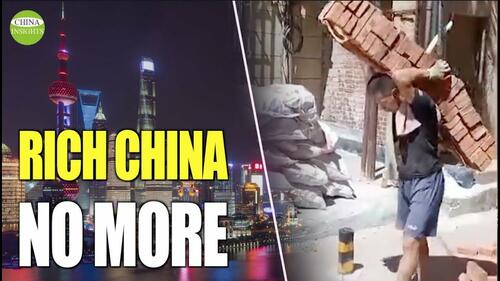
China’s economy is in trouble. After seeing a video claiming much of China’s Electric Vehicle industry was built on subsidies that are now gone, I’m forced to ponder the legacy of these policies. It showed a factory in Chongqing, China, where a huge number of clean energy vans sit abandoned, covered in a thick layer of dust. This rendered their original appearances unrecognizable. Recently, aerial footage has also surfaced of vast grassy fields in Hangzhou littered with thousands of clean energy vehicles. This brings into question how this occurred.
Subsidies are more direct and worse than creating incentives or giving encouragement. Subsidies are a transfer of wealth. Without a doubt, many “false booms” are the result of scams created through subsidies. While it could be argued subsidies have moved the production and innovation in the EV industry forward, it brings up other issues. A huge question is whether this has created a situation where other governments have strayed down the same wrong path in an effort to spur growth. This possibility should not be discounted. Consider for a moment that maybe EVs are not the answer to a more sustainable world.
The immense waste and the environmental problems and pollution resulting from improperly placed subsidies and regulations should be addressed. The big problem China now faces is that advanced economies are complex. When they start to shut down reversing the trend becomes difficult due to contagion. It is hard to build a machine when even a few parts are unavailable. This means the trend in China will not be easy to reverse.China is now seeing the result of subsidies backfiring and the toll of reverse leverage is devastating both investors and its economy. After looking at the mess China has made out of building ghost cities, we must turn our attention to population control and demographics. China’s poorly thought-out policies on these subjects feed into its current problems. The ramifications we are seeing play out are often referred to as unintended consequences. This is something we see far too much of.
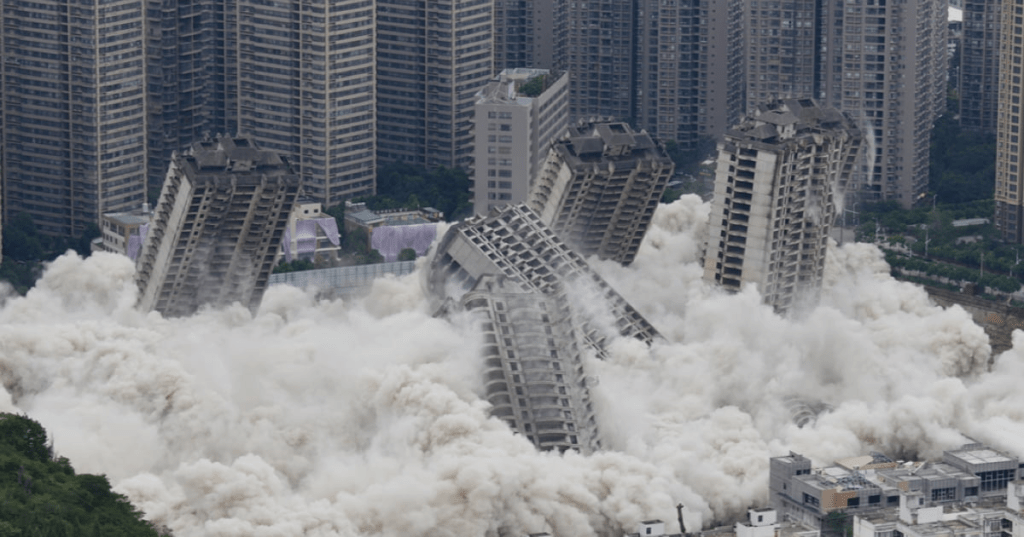
China can no longer hide its growing problem of misallocating capital. This is coming back to haunt them. This is why many economists tout capitalism as the best economic system, it has proven to be more responsive to demand than planned economies which tend to go off track. The magnitude of China’s problems is seen when viewing an ABC News In-depth piece covering the demolition of a huge number of large unfinished residential buildings in China. This has revealed two issues, first, China was building residential buildings for “expanding future generations” that simply do not exist. The second was this resulted in rampant speculation driving prices through the roof. Now those prices are plummeting. So, let’s circle back to the question of whether this has created a situation where other governments have strayed down the same wrong path. Just becauseanother government does something does not mean it would be good for us. Big governments are stupid and big companies are predatory. The thing they have in common is both want more control and power. In truth, we are the underdog in this ongoing struggle for control of our lives. This results in subsidies that tend to corrupt the direction capitalism takes if left alone. Unfortunately, the government is influenced by big company lobbyists that bend regulations strongly in their favor often at the expense of society at large.
The energy sector and important decisions about our future have been hijacked by this trend. An example of how twisted things have become can be seen on America’s roadways. Today millions of drivers zip down the road, the only occupant in oversized four-door trucks that get poor gas mileage. This is the answer lobbyists for the big auto companies and politicians arrived at to sidestep America’s fuel efficiency standards enacted to save gas. Still, considering the political climate, China is crazy if it thinks the EU or America will throw open their borders to import Chinese-made cars. Both have their own auto industries to protect.
Subsidies have led to many preposterous decisions, these include replacing all our current vehicles with EVs. It has resulted in America dropping tariffs on solar panels from China and spending billions of taxpayer dollars on them with the goal of rapidly reaching clean energy goals. even the rise of Amazon and its negative impact on the environment with its delivery to your door and high rate of returns or simply throw-away mentality falls into this category. Without subsidies such as the USPS delivering at a discount, even on Sundays and holidays, Amazon would not have become the giant force and destroyer of businesses it is today.
The energy sector and important decisions about our future have been hijacked by subsidies and regulations that have little basis. This trend does not bode well for creating a more productive future. China is growing proof that once a deep-seated fear of the future becomes ingrained in society people lose faith in the government’s ability to turn things around. this is a lesson America learned during the Great Depression. One of the answers to forming better policies that benefit society is not to subsidize the projects of big businesses and politicians at the expense of organically grown solutions to our problems.
You can also access the latest news at this address: www.whatfinger.com
-
The Best Guns To Buy Before The Upcoming Gun Ban- Now the calls for a renewed gun ban have been expanded to include the functional classification of almost all semi-automatic firearms.

For those of you starting out in prepping or looking to purchase a gun for home defense best prepper guns. Before we get into the list, I like to share the thought process that went into these decisions.
Since I started prepping back in 2007, my days to varying degrees are filled with a sense of expectation that wanes or increases with current events and trends. My reason for prepping was and remains to be able to protect my family from disasters whether man-made or natural in origin and it is that goal that causes me to look to the future for warning signs. Some days I see problems just over the horizon and on others, the risk is further away. The sense of something in our future never leaves but the intensity changes.
If you consider yourself a prepper you may have had similar thoughts. In the beginning, there was for me a greater sense of urgency to get ready, but as I have learned and gathered supplies, that urgency has relaxed a good bit. I chalk that up to actually being prepared at some level and the comfort I gain from knowing if something does happen, I have a lot of bases covered already. It seems that I start each year with a reasonable belief that it is all going to tank “this year” only to be sitting at my home at the end of the year with my family safe from any disastrous EMP, a pandemic that ravages the planet or an economic collapse that destroys our wealth and throws everyone into a second great depression. I am not depressed or disappointed in this fact, don’t get me wrong but time passing does have a way of making me recheck my priorities and reevaluate my personal prepping plans.
I think there are 4 key survival concepts that every prepper should work on at all times to place you in the best possible position to survive anything that happens. These are Water, Food, Shelter, and Security. If you have these four bases covered, you will be so much better prepared to survive anything from a flood, hurricane, or Global pandemic. We talk about all of these survival concepts, but there is one topic that comes around frequently that generates a substantial amount of debate so I wanted to write an article that focuses on Security.
There are a lot of opinions on firearms as defensive weapons. There are also numerous laws and regulations that govern what you may be able to legally purchase. I believe that all things being equal, the best defensive weapons you can own are firearms and with that, I mind I want to discuss what I recommend everyone have if you are considering a firearm as part of your preparedness strategy.

AR-15 always makes the list for one of the best prepper guns What are the best prepper guns?

A shotgun makes a great first firearm for a prepper. If you can legally own firearms I believe that there are 5 firearms that make up a well-rounded prepper battery of arms. With these 5 firearms, you will be able to deal with situations that we routinely talk about in a breakdown in society. Even if you never go through any disaster, having these firearms will benefit you in terms of security and firearms generally do not lose value, only appreciate so they are an investment that pays off in multiple ways.
I have listed the weapons below in priority order. If you can only afford one weapon, you should buy the first one on the list and add it to your arsenal as your budget/resources allow.
- Shotgun – If you can only have one single weapon for home defense in a collapse scenario, I recommend a shotgun. Shotguns are easy to use, the ammunition is reasonably cheap and they can pull double duty as both defensive weapons and hunting firearms. In terms of price, shotguns are cheaper than pistols (generally) and can be purchased a lot of times without the same license requirements that you have purchasing a handgun for instance.
- Semi-Automatic Rifle – Also known as “Assault rifles” by anyone trying to demonize guns. A semi-automatic rifle is simply one that automatically chambers another round when you pull the trigger. For the weapon to fire again, you would need to pull the trigger again. Civilians, unless they have their FFL cannot buy fully automatic weapons so to compare these semi-automatic rifles to what the police or military has is not accurate on one side. They do have many advantages though and when we think of a semi-automatic rifle for a prepper there are two that are the most common. Those two options are the AK47 and the AR-15. When it comes down to choosing which one to go with like anything on this subject there is a lot of debate, but for me personally, I believe the AR-15 is the better of the two for a variety of reasons including the interchangeability of parts and accessories. Either one will work fine and you should have one.
- Full-size pistol – Again, another topic that causes a lot of arguments but for the sake of inclusion I will say a 9mm, .40, or .45 would work equally well as your main defensive pistol. I am not talking about a concealed carry firearm here as I deal with that in another article. This is the nightstand gun that can also be used as your backup weapon in the event your main battle rifle (semi-automatic) is unavailable for some reason. I do not recommend only having a pistol but I think they are great to have and compliment the other firearms nicely.
- Long Range Rifle – The shotgun is perfect for close range. The AR-15 will definitely reach out to several hundred yards, but you likely won’t be engaging anyone at that distance. To go further 400-600 yards or to take large game animals I would go with a .308 or a .30-.06. Some will say you can simply purchase an AR chambered in .308 and kill two birds with one stone. That is one solution but it comes down to preference and who is shooting the rifle. .308 certainly has more of a kick than a .556 or .223 round.
- Small game Rifle – For me, this is a .22 rifle. I would not buy a .22 pistol unless I was purchasing this for a younger child or for plinking (practice). A .22 will actually kill larger game and even humans as many will argue but I would not count on that as my main weapon for defense. It is great at taking small game though and the ammo is still much cheaper than any of the other options.
Is there a best gun for home defense?
There are arguments for shotguns, pistols, and even Semi-automatic rifles as your home defensive weapon and it really comes down to what you have, what the threat is, and where you are in your home at the time in relation to the weapon. I have all of the items above but my home defense plan is different if I am in bed as opposed to out in the kitchen. It also depends on whether we are in a normal situation like now or in the middle of widespread riots and looting.
If I am in bed and someone breaks in, I won’t grab the shotgun or the rifle, I would go for the pistol. Now, that is because I have one in close proximity and I am comfortable using and firing this particular firearm. If I didn’t have any weapons at all, I would still purchase a shotgun first and that would be my home defense weapon.
Shotguns are more forgiving with aim and this could help you in a high-stress situation. Now, before anyone starts beating me up on that comment let me clarify. A shotgun is going to shoot what you are aiming at so I am not trying to say that you can just wave it in the general direction and actually hit someone, but shotgun pellets spread. If you aim at a person, the spread of the shot will more likely hit them even if your aim is a little off. Naturally, you need to practice with any firearm you have that you are planning to shoot. If you have in mind the potential for shooting someone who has entered your home you need to know exactly how this deadly tool works and become proficient in hitting what you are aiming at.
There are always considerations for penetration in a home since our walls are made from sheetrock and not concrete, but this applies to any firearm.
How much ammo do I need?
How much do you plan on shooting and how confident you will be able to purchase more ammunition when you need it? We are starting to see a return to normal on ammunition availability and cost but any upcoming legislation could change that again. When the last ammo shortage hit you were not able to easily find many of the most common calibers and what you were able to find was much more expensive. I had the benefit of having plenty of ammo stored up so I didn’t need to purchase anymore. Had the end of the world happened, I would already have a full stock of ammo for each of my weapons, but I started stocking up years ago. I have recommended ammo storage amounts listed in another article.
You should also consider an inventory system and we have a free ammo inventory spreadsheet available for download that you can use to set targets and track your own personal ammo storage amounts. This will help with budgeting as well as give you a clear idea of what you need to purchase if you have some extra money.
Now it’s your turn! What do you think are the best prepper guns to own?
This guide below can help you in a survival situation
A lot of the popularity of firearms is due to the fact that anyone can use them effectively, not only the strong and agile. The young, the old, men, women and child can take up firearms in defense of home and family and do so effectively.
But what do you do if you can’t use a gun – or if you don’t have a gun — to protect yourself?

You can also access the latest news at this address: www.whatfinger.com
-
The last chance is gone! What Is America’s Tipping Point and What are You Prepared to Do When it comes? (Our government has stated that they can imprison anyone without cause for an indefinite amount of time.)

Have you ever wondered what makes a person snap? What causes a normal, quiet, everyday citizen, loving mother, or doting father to lose it all and fight like a caged animal? What can cause a small village to rise up and rebel against an oppressive police force and start killing them? What is the switch that gets flipped that causes a city to pour two million people into the streets, chanting and demanding to be heard by their government?
Lately it feels more and more as though we are on standing on the edge of some yawning precipice peering over the crest into darkness. What is more troubling to me is that we have been down this path before. The sense of unease is almost palpable to me sometimes; it is more evident if you are paying attention. If you are able to eliminate the white noise of the world for a minute; hit the pause button on the playlist of daily life for a while and look around, listen, you may start to recognize that you too are caught up in events that will soon change all our lives.
For several years I have felt an unsettling sense that we need to be prepared, that life is going to throw us a big, fat, greasy curve ball soon and we better not be caught napping. To try and proactively address that warning voice I started planning and taking steps to prepare my family to be able to weather events in the future. I am certainly not alone in this concern as you can easily see by the tremendous growth of the prepper movement. In the spectrum of probable events, there are a lot of potential scenarios. Natural disasters and emergencies occur every day all over the world, but you have to broaden your gaze and look to current events and history as well. One of the things that I think is a valid potential event to consider is a collapse of our way of life which leads to an authoritarian oppressive government.
Are we reaching a tipping point?

SS soldiers guarding the column of captive Jews in the Warsaw ghetto. We have seen in recent events, by now almost too numerous to mention, the effects of a rising frustration with the way things are. It isn’t necessary to go into all of the individual reasons, but as a society there are more and more outpourings of frustration on a global scale. There are increasingly tightening restrictions against people. There is a manipulation of markets and the economy. There is a great increase in the loss of freedom and there is a more open antagonism and almost outright animosity by Government towards their people.
Governments exist either because they have come to power through force and violence or they have been elected and given power by the people. The force and violence crowd usually have their roots in the military and we like to call them Dictators. There have been a ton of them throughout history; Hitler, Stalin, Mao, Kim Jong iL and now his son, Saddam, Gaddafi, the list goes on and on. Dictators don’t care about the people and usually kill anyone who gets in their way. It is a fact that government has killed more people than any other cause, disease or reason.
The other side of the coin is what is usually called Democracies. I am lumping a lot of governments in here I know, but the democracies are usually elected and formed with the consent of the people with the noble goal of securing rights or protecting the people over whom they govern. Almost without fail however, Democratic Governments eventually do not want to answer to the people and at some point they most certainly will not be told what to do by the people to the point of ignoring the will of the people (for the people’s own good of course). Now these governments that are supposed to secure the liberties of their people are becoming more openly hostile to the same people they have sworn to defend. Funnily enough the democratically elected governments now seem to want to hang on to power with the same methods of force and violence as dictators. How else can you explain arming themselves with ammo, ignoring the constitution, purchasing assault vehicles and preparing to confiscate firearms?
When governments will steal money outright from the citizens in order to pay bills that were not incurred by the people we have a problem. When government spies on its people and uses that information against them punitively we have a problem. When Government uses the force of the military that was supposed to defend the people that was paid for by the people, for the purposes of killing the people, we have a big problem. When someone brings to light crimes by the government and is labeled as the one who is a danger, we have a problem.
The problem is that governments around the world are viewing their people as the problem and there really seems to be only one way throughout history that this is ever rectified. My fear is that we are already set on a course that won’t be changed with laws, great political leaders, or a return to the values of a golden age in time long past.
The Fine Line – The Straw that breaks the camel’s back
The fine line between someone who is a law-abiding citizen and a murderer is one that exists purely in our souls. There is nothing physical that is different from a person who follows the rules and someone who breaks them. The urge to pull the trigger isn’t something you can see and it isn’t a trait to test for, so it must be our own individual sense of right and wrong. Of good and evil.
I know that some will argue that a psychopath is definitely recognizable by character traits and maybe even brainwaves or chemistry. That may be true, but you can be a psychopath (clinically) without ever hurting anyone. By the same token, you can take a life while being perfectly “sane”.
If you hold a knife in your hand, you are just as capable of using that to stab or cut someone as the murderer in the next town, but that thought never enters the mind of an overwhelming majority of people. A baseball bat in your hands can easily be swung with great force connecting it to the back of a skull, but this thought never appears in our heads; that is unless we are forced into a corner. When a person is in desperate fear for their lives, the unspoken rules of right and wrong are broken. The processes that we follow every day are overridden in the cause of rage or self-preservation. What was unthinkable before is now very real, necessary and even righteous with the right circumstances.
When the right buttons are pushed, anyone can lose it. When the fear of dying or of losing someone you love is so overpowering, the “fine line” that has been keeping us sane, law-abiding and good is easily shattered. When this happens, all bets are off.
We as a people, a country are still rather firmly attached on the good side of this line. We have not yet completely been driven to abandon all hope and lash out. We have not yet been so harmed, have not gotten to the point that we have nothing to lose and are ready to lose it, but this may be coming in the future.
The force and violence that is being used now to quell the dissatisfaction of people globally is increasing. The methods to cease the complaining of the rabble has been relatively minor with some exceptions. Tear gas, rubber bullets, mace and batons only work up to a point though. When the time comes that people can no longer abide, there won’t be enough police to stop them using riot control techniques. The military doesn’t have enough people to stop the entire population unless those people peacefully agree to surrender, so what will they do? Do you believe any government will quietly step down and admit that they are obviously not speaking for the people anymore? No. They will resort to more force and violence and people will die. Either that or you have a coup like they had in Egypt and guess who took over to “restore order”? Yep, the Military.
What will be the inevitable response by the authorities?
The Chinese people who started to revolt against the police in their town did so because the authorities were “placing restrictions on their culture, language and religion”. China is no picnic compared to America and we clearly know they have lived through far worse oppression than we have, but this was the straw that broke the camel’s back for them?
The protests which turned into an estimated two million citizens of Brazil had started simply enough with a protest over a rise in the rates of public transportation.
In America, what will be the trigger that causes people to rise up and say we aren’t going to take this anymore and more importantly what will happen when/if we do?
What will happen if we don’t change the path we are on?

The execution of the last Jew in Vinnytsia, made by an officer of the German Einsatzgruppen There is a quote that has always struck me as very sad and telling from Aleksandr Solzhenitsyn in his book The Gulag Archipelago. Solzhenitsyn was a Russian who was sentenced to 8 years in a Soviet prison camp for essentially writing things about Stalin that the government didn’t like. During this time in Soviet Russia, to stifle dissent, millions were killed or sent to prison camps. In this passage Solzhenitsyn is talking about regret that everyone felt because they simply went along with this tyranny and didn’t oppose it.
“AND HOW WE BURNED IN THE CAMPS LATER, THINKING: WHAT WOULD THINGS HAVE BEEN LIKE IF EVERY SECURITY OPERATIVE, WHEN HE WENT OUT AT NIGHT TO MAKE AN ARREST, HAD BEEN UNCERTAIN WHETHER HE WOULD RETURN ALIVE AND HAD TO SAY GOOD-BYE TO HIS FAMILY? OR IF, DURING PERIODS OF MASS ARRESTS, AS FOR EXAMPLE IN LENINGRAD, WHEN THEY ARRESTED A QUARTER OF THE ENTIRE CITY, PEOPLE HAD NOT SIMPLY SAT THERE IN THEIR LAIRS, PALING WITH TERROR AT EVERY BANG OF THE DOWNSTAIRS DOOR AND AT EVERY STEP ON THE STAIRCASE, BUT HAD UNDERSTOOD THEY HAD NOTHING LEFT TO LOSE AND HAD BOLDLY SET UP IN THE DOWNSTAIRS HALL AN AMBUSH OF HALF A DOZEN PEOPLE WITH AXES, HAMMERS, POKERS, OR WHATEVER ELSE WAS AT HAND?… THE ORGANS WOULD VERY QUICKLY HAVE SUFFERED A SHORTAGE OF OFFICERS AND TRANSPORT AND, NOTWITHSTANDING ALL OF STALIN’S THIRST, THE CURSED MACHINE WOULD HAVE GROUND TO A HALT! IF…IF…WE DIDN’T LOVE FREEDOM ENOUGH. AND EVEN MORE – WE HAD NO AWARENESS OF THE REAL SITUATION…. WE PURELY AND SIMPLY DESERVED EVERYTHING THAT HAPPENED AFTERWARD.” – ALEKSANDR SOLZHENITSYN
Will this be our fate too? Will we slowly be conditioned to accept atrocities like this and to be completely defanged so that we can be herded into camps without so much as a whimper as well? That’s crazy you say! Is it? Right now, our government is hunting down someone who simply exposed how they (government) were illegally spying on all of us. Our government is buying arms and stockpiling weapons for use domestically not in some war. Our government has the IRS actively harassing a single political/opposition party. Our government has shown that they will lock down a town and go door to door while making the citizens stay cowered inside. Our government has stated that they can imprison anyone without cause for an indefinite amount of time.
Can you seriously argue that we aren’t headed down the same path as others have in our not too distant past?
This is not a call to armed Revolution, but I do think we should all be very wary of this course we are on and the echos of history. We should not be silent in the face of increasing oppression. We should not simply go along quietly because of the fear that we may get in trouble, or worse that we believe the government is only looking out for our best interests. You only need to look at the people in Poland who quietly went into the Warsaw ghettos. You don’t have to look any further than the Holocaust to see what quietly going along will get you.
This is not a fate that I will be bringing on my family.
You can also access the latest news at this address: www.whatfinger.com
-
A Prediction Suggests That Everything Will End Badly… Humanity Has Avoided A Global Reset In The Past, But Now It Seems to Have Reached The End.

While the economy and financial system chug forward, the idea we have charted a course that will end in ruin remains. Looking down the road the numbers do not work. When they are not jockeyed, jerked around, and falsified numbers tend to tell the truth. This was the message voiced by the late, Allen Meltzer. Born in 1928, Meltzer was viewed by many economists as America’s foremost expert in monetary policy even though he was little known by the masses.
Recognized for his wisdom and achievements in economics, Meltzer was a professor of political economy at Carnegie Mellon University and a visiting fellow at the Hoover Institution. He authored the three-volume “A History of the Federal Reserve” and for over 25 years he chaired the Shadow Open Market Committee, a group that meets regularly to discuss the policy of the Federal Reserve.
To say Meltzer was not a fan of the economic policies that unfolded since 2008 is an understatement. “We’re in the biggest mess we’ve been in since the 1930s,” he was quoted as saying, before he went on to claim that, “We’ve never had a more problematic future.”

In a Wall Street Journal opinion piece on June 30, 2010, titled “Why Obamanomics Has Failed” Meltzer wrote about some of the biggest enemies facing future economic growth. He went on to say that the administration’s stimulus program failed. Two overreaching reasons explain the failure of Obamanomics. First, administration economists and their outside supporters neglected the longer-term costs and consequences of their actions. Second, the administration and Congress have through their deeds and words heightened uncertainty about the economic future.
A few years later, in May of 2014, Allen Meltzer penned a piece that appeared in the Wall Street Journal. His opinion was highly valued, not only because it is based on his long-developed work and studies, but because of his age, he had far less motivation to lie than many of those currently involved in forming policies today. In the article, which is copied below, Meltzer gave his take on where the economy was headed. The fact he died in 2017 does not lessen his insight. Meltzer wrote;
The U.S. Department of Agriculture forecasts that food prices will rise as much as 3.5% this year, the biggest annual increase in three years. Over the past 12 months from March, the consumer-price index increased 1.5% before seasonal adjustment. These are warnings. Never in history has a country that financed big budget deficits with large amounts of central-bank money avoided inflation. Yet the U.S. has been printing money—and in a reckless fashion—for years.
The Obama administration has run huge budget deficits every year, which, together with the Bush administration, amounted to $6.7 trillion from 2006 to 2013. The Federal Reserve financed almost $3 trillion of these deficits by purchasing Treasury bonds and notes. The Fed has also purchased massive amounts of mortgage-backed securities. Today, with more than $2.5 trillion of idle reserves on bank balance sheets, there is enormous fuel for greater inflation once lending and money growth rise.
To avoid the kind of damaging inflation the U.S. experienced in the 1970s and early ’80s, the Fed could raise interest rates, including the interest it pays banks on reserves, inducing banks to hold most of the $2.5 trillion of reserves idle. But interest rates high enough to discourage borrowing and lending would likely send the economy into another damaging recession.
Fed Chairwoman Janet Yellen recently admitted that the central bank doesn’t have a good model of inflation. It relies on the Phillips Curve, which charts what economist Alban William Phillips in the late 1950s saw as a tendency for inflation to rise when unemployment is low and to fall when unemployment is high. Two of the most successful Fed chairmen, Paul Volcker and Alan Greenspan, considered the Phillips Curve unreliable. The Fed’s forecasts of inflation ignore Milton Friedman’s dictum that “inflation is always and everywhere” a result of excessive money growth relative to the growth of real output.

The Fed focuses far too much attention on distracting monthly and quarterly data while ignoring the longer-term effects of money growth. The country’s present dilemma originated in 2008 when the Fed properly and forcefully prevented a collapse of the payments system. But long before idle reserves reached $2.5 trillion, the Fed didn’t ask itself: What can we do by adding more reserves that banks cannot do by using their massive idle reserves? The fact that the reserves sat idle to earn one-quarter of a percent a year should have been a clear signal that banks didn’t see demand to borrow by prudent borrowers.
The Fed’s unprecedented quantitative easing since 2008 failed to lead to a robust recovery. The unemployment rate has gradually declined, but the main reason is that workers have withdrawn from the labor force. The stock market boomed, bringing support from traders, but the rise in asset prices of equities didn’t stimulate growth by inducing investment in new capital. Investment continues to be sluggish.
And some side effects of the Fed policies have had ugly consequences. One of the worst is that ultra-low interest rates induced retired citizens to take substantially greater risks than the bank CDs that many of them relied on in the past. Decisions of this kind end in tears. Another is the loss that bondholders cannot avoid when interest rates rise, as they have started to do.
Accumulating data from the sluggish loan market and the weak responses of employment and investment should have alerted the Fed that the growth of reserves and the low interest rates haven’t been achieving much. Similarly, the Fed should have noticed in recent years that instead of a strong housing-market recovery, not many individuals were taking out first mortgages. Many of the sales were to real-estate speculators who financed their purchases without mortgages and are now renting the houses, planning to resell them later.
Most of all the Fed years ago should have recognized that the country’s economic problems weren’t arising from monetary factors. Instead of keeping interest rates low to finance deficits, the Fed should have explained that costly regulation, increased health-care costs, wasteful spending, and repeated threats to raise tax rates were holding back the recovery.
Broadly speaking, the Obama administration has pursued a course the opposite of that taken by the Kennedy and Johnson administrations in the 1960s (and the Reagan administration in the 1980s). Kennedy-Johnson enacted across-the-board tax cuts: Promoting growth came first, redistribution later. By putting redistribution first and sacrificing growth, the Obama administration got neither. Ironically, despite often repeated demands for increased redistribution to favor middle- and lower-income groups, the policies pursued by the Obama administration and supported by the Federal Reserve have accomplished the opposite.

When the president campaigns in the midterm election, he will talk about the relative gains by the 1%. Voters should recognize that goosing the stock market through very low interest rates, not to mention the subsidies and handouts to cronies, have contributed to that result. We are now left with the overhang. Inflation is in our future. Food prices are leading off, as they did in the mid-1960s before the “stagflation” of the 1970s. Other prices will follow.The point of this post is to clarify that just because we have muddled along putting band-aids on our economy does not mean that we have accomplished a great deal. The Trump economy was a continuation of deficit spending and the Biden economy has been even worse. Both have postponed the day of reckoning but most likely made it far worse. Allen Meltzer was a true old-school economist who understood this.
The time the Federal Reserve bought for the country to come to terms with its many problems post-2008 has been squandered at a great cost. While many people claim the American economy was great before covid-19 hit, others like me who work on Main Street beg to differ. For years, an ugly reality has been masked by easy money and deficit spending.
Rather than being trapped in the here and now, economists might be wise to reflect more on history. We can learn much from the failings of those who lived before us. If Meltzer was still with us it is very likely he would be appalled at the state of things today.While it is difficult to time when our false economy will finally give up the ghost, it is clear this will all end badly. Today, the biggest question before us is when.
-
Many Economic Comparisons Are Now Obsolete – EVEN FOR THOSE CHRISTIANS THINKING CLEARLY, UNDERSTAND THAT THIS IS A WORLD WITHOUT CONTEXT THAT HAS NEVER BEEN SEEN BEFORE!

A great deal has changed over the last two hundred years. The financial system has entered uncharted waters and it would be wise to take nothing for granted. The fact that things are so different due to the economic evolution that has taken place has turned many economical comparisons obsolete. To assume the economy will move forward without a glitch in such an environment is extremely optimistic.
One man that has proven he knows what he is talking about is Charlie Munger. He is well aware of how fast things can change. As a vice chairman of Berkshire Hathaway and the right-hand man of Warren Buffett, Charles T. Munger has a net worth of around $2 billion. He is worth listening to when it comes to investing, the psychology of wealthy people, rationality, and life experience. Munger recently warned we may be about to experience the biggest inflationary bubble in world history and shared his thoughts on how it is going to unfold. Munger also elaborated on the difficulty of building wealth for the young generation of today compared to his.
Having seen a lot of twists and turns in the economy over the years, Munger reminds us the recent past is far from normal. With time, things change and evolve, this transformation can be seen in both society and the economy. We are constantly bombarded with charts showing where things are going based on historical references but a question we must ask is just how relevant today’s comparisons are with prior economic cycles.
Over the decades we have moved from an agricultural-based society to an industrial-centered economy where manufacturing and services have become the dominant way of making a living. As we rapidly move towards technology becoming the main driver of the economy a huge cultural change is taking place. The economy is again undergoing a metamorphosis. Over time, we tend to forget or minimize in our minds that throughout history the growing pains flowing from such a change tend to batter society from every direction. These transformations also create a great deal of noise making it difficult to understand what is happening.
Please consider the possibility the important adjustments the economy must make are lagging far behind our current “financial culture” or that the economy has evolved in a way that simply no longer works. Much of this has yet to become apparent to the masses and is masked by institutions papering over problems. A tradition of optimism has served mankind well, however, it has become clear something seems to be broken or out of kilter.
Adding to the distortions we are witnessing are things like stock buybacks and outright fraud. These have created a situation that could at any minute spin out of control. Making matters worse is that the general population is oblivious to this. they have been conditioned to accept whatever they are told. To many people, this is the new normal. The elephant in the room is that when we look behind the curtain it is difficult to ignore the numbers simply do not work going forward.
Ignoring the warning signs on the horizon can only delay the inevitable for so long.Many of the comments I read concerning the current stock market and companies such as Tesla and Amazon remind me of the following statement, “Not even God himself could sink this ship,” that an employee of the White Star Line made during the launch of the Titanicon May 31, 1911. The truth is as we move forward we are in uncharted waters and at any time a surprise event might shock us into reality.
Much of the economic distortions we are experiencing today are tied to President Richard Nixon’s decision on August 15, 1971, to close the gold window. It changed everything. While US citizens had been forbidden from owning gold or from redeeming their gold certificates for gold coins since the early 1930s, foreign governments still had the privilege of redeeming their dollars for gold. Nixon’s decision untethered the dollar from gold and released it from the promise dollars could be redeemed in gold, this resulted in opening the floodgates and allowed credit to explode from $1.7 trillion to $65.5 trillion at the end of 2015.
During Covid-19, we broke many of the financial system’s ties with the past. We cast aside all budgetary and money supply restraints. The situation today is in many ways “historically unique” due to the rampant expansion of credit. This expansion has ramped up in recent decades. How do you even begin to compare or factor in the amount of stimulus America’s “trillion-dollar-plus” deficits have added to the economy? These amounts boggle the mind and are hundreds of times larger than what we were seeing before 2008.
It could be argued that much of what we are witnessing today is rooted in Nixon’s decision to close the gold window. That move unleashed many forces that are greatly responsible for the rising income inequality that has occurred in recent decades. After inflation soared in the late 70s America found the cost inflation in goods could be reduced by buying these things from low-cost producers located in other countries. This means imports soared. Adding to the problem is that America has adopted a de facto policy of placing no restraints on trade deficits.
Nixon’s actions coupled with America’s decision decades ago to make China into a formidable ally that would act as a counterbalance against Russia and the Kremlin have shaped the world. Back then, we offered economic incentives to help China’s economy, looking back this was a watershed event that changed the way American companies conducted business. It has resulted in American companies outsourcing production and the mass exodus of manufacturing jobs from America to distant lands where labor was both cheap and abundant.
Our free trade policy was sold to America’s middle class as a “win-win situation” by Republican and Democratic Presidents alike. We were told the American worker would move up the economic food chain towards better-paying jobs that would be more fulfilling and require less toil. This did not happen, the large companies that shape legislation have indeed benefited to a great extent while the average American has not.
Returning to the main theme of this article, the massive expansion of the financial system has rendered many comparisons with the past obsolete. It has also resulted in the economy embarking on a roller-coaster-like experience where it encountered a series of events such as the dot-com bubble, which burst in 2001. In reaction, the Greenspan Fed stepped on the gas blowing the biggest housing bubble on record. In response to that asset bubble popping, we saw the Fed bail out the banks, the asset holders, and the wealthy.
The sorry fact is that this chain of events left the average American worse off than before. During all this time debt has grown, and toservice that growing pile of debt the Fed had to keep slashing interest rates. Instead of allowing consumers to benefit from technological advances that tend to be inherently deflationary, the Fed has sought to increase inflation by declaring inflation in the range of 2% to be in our best interest. This has benefited the banks and those already wealthy while at the same time massively increasing inequality.
Recently I found myself pondering the line, “outwit and outlast” that is often used during the popular hit television show Survivor. It occurred to me the winners in both life and investing often reflect these qualities and that this game is far from over.
In 2022 the total global debt passed the 300 trillion dollar mark. While investors are often urged to be cautious the excesses of today are in many ways not as “sector” oriented as those experienced during certain periods we have seen in the past. The everything bubble makes staying anchored more difficult. It seems everything is encouraging and causing both savers and investors to take far more risk than they should in the quest for higher returns and yields. The “fear of missing” out is again running rampant and with the strategy of buying the dip having proven successful over almost a decade, investors have become far too complacent about the risk they face.
You can also access the latest news at this address: www.whatfinger.com
-
While The Mainstream Media Propagandists Continue to Push The Lie Of A Robust Recovering Economy, The Fact Is, We Are In Some Serious Fiscal Trouble.
While the mainstream media propagandists continue to push the lie of a robust recovering economy, the fact is, we are in some serious fiscal trouble. Economies around the world are crashing, countries are drowning in record amounts of debt, and governments continue to pile on new debt like there’s no tomorrow.
What is an Economic Collapse?
Economic collapse, in its simplest definition, means a sudden and severe drop in currency value, leading to a financial crisis. It usually happens when the country’s economic activities are mismanaged or when an unexpected event throws the country into chaos. Some examples of such events are terrorist attacks, natural disasters, political upheaval, severe social unrest, financial bubbles , a collapse in government, and pandemics.
A look at Prior Economic Disasters, Depressions and Market Collapses
Throughout the history of the world, there have been many instances where countries have experienced an economic collapse, leading to severe consequences such as hyperinflation, high unemployment rates, and poverty. In extreme cases, economic collapse can even lead to a societal breakdown, with people experiencing shortages, social unrest, and struggling to survive.
The earliest recorded economic collapse occurred in 176 BC when the Roman Republic experienced a severe financial crisis that eventually led to massive inflation and debasement of the currency. The government’s response to this crisis was to issue more coins with decreased silver content, resulting in worsening hyperinflation and a sharp decline in the purchasing power of its citizens. This eventually led to social unrest and political instability, eroding the strength of the Roman Empire over time.
Another significant economic collapse occurred during the Great Depression of the 1930s, triggered by the stock market crash of 1929. During this period, businesses failed, banks collapsed, and unemployment soared to unprecedented levels worldwide. The depression had far-reaching negative consequences, some of which ultimately led to World War II.
In 1997, the Asian Financial Crisis rocked Southeast Asia, causing widespread economic instability and social unrest. The crisis began with the devaluation of the Thai baht, leading to investors withdrawing their capital from other Southeast Asian countries. This, in turn, led to a sharp decline in the value of their currencies and an economic recession. As a result, millions lost their jobs, and poverty rates rose steeply. Some nations recovered relatively quickly, while others, such as Indonesia, suffered profound economic and political upheaval for several years.The most recent collapse occurred in 2008 when the subprime mortgage crisis shook the global financial markets. The crisis began with predatory lending practices by mortgage lenders, high-risk borrowing by homeowners, and the buying and selling of risky loans between financial institutions. When homeowners began to default on their mortgages, banks and insurance companies suffered huge losses, and trust in the financial system evaporated almost overnight. As a result, governments worldwide were forced to intervene to avoid a total collapse of the financial system.
As history shows, it’s not if but when! Therefore, preparing for an economic collapse is vital to your survival, especially in today’s world, where the global economy is interdependent. Any event, even those in other parts of the world, can have a ripple effect on other countries. This article will provide tips on how to prepare for economic collapse.
Are we heading towards an Economic Collapse?
At some point this debt train is going to come to a screeching halt; when that happens we are going to see panic and chaos like nothing we’ve ever seen before.
As we’ve been covering for some time now, a look at the numbers and data shows we are heading for a potential disaster. From a series of high profile banks going bust to record inflation combined with major supply chain shortages, our economy seems to be heading right off the cliff.
The world, especially the United States, is drowning in debt.
The United States, once the world’s shining example of fiscal security and responsibility, has become shackled by a record amount of debt. We are literally drowning in debt.
Over the next ten years, experts think that debt could balloon to over $50 trillion. While that might seem like an insurmountable amount of debt to recover from, the fact is, we have already surpassed that number many times over.
When factoring in unfunded liabilities like Social Security, Medicare, government pension plans and Obamacare, the true debt number is actually much higher. Estimates put the real number somewhere between $222 trillion to $250 trillion.
- Household debt increased at the fastest pace in 15 years, partially due to huge increases in credit card usage and mortgage balances.
- Credit card balances rose more than 15% from 2021, the largest annual jump in more than 20 years.
- Total Consumer Debt is now over $2.36 Trillion, an increase of 7.3 per cent in Q3 2023 compared to last year.
The overall Economic numbers are downright Scary!
- Silicon Valley Bank Collapse causing fears of market contagion and Bank Runs
- Stock & crypto markets crash, U.S. debt to soar past $50 trillion within 10 years as Biden to Raise Taxes
- Commercial Real Estate Collapse Latest Warning Sign to Prepare for Major Economic Troubles
- Food Shortages: American Food Supply in Real Danger, expected to get worse in 2023
- US inflation surges as economy becomes top preparedness threat
- U.S. money supply, which measures safe assets households and businesses can use to make payments, has fallen abruptly since March and is negative on a yearly basis for the first time since 2006.
- Mortgage payments as a share of income have doubled from 13% to 26%, and the savings rate has plummeted to almost zero.
- Total household debt increased by 8.5% in 2022 and now stands at a record $16.9 trillion. That’s $2.75 trillion higher than it was pre-pandemic.
- Sales of commercial mortgage bonds have taken a nose dive, plummeting about 85% year-over-year as commercial real estate investors are bracing for what looks like a wave of defaults throughout the commercial real estate industry.
What can you expect during a major Economic Collapse?
- A Run on the Banks: One of the first things you will see is a run on the banks. People are going to be panicking, and they will be doing everything they can to get their hands on cash to buy extra supplies.
- Chaos in the Streets: Once the banks run dry, you will see people turn desperate. The moment they realize the money is gone is the moment you will see widespread chaos sweep throughout the country. Riots, looting, and widespread violence will break out, making self-defense one of your primary concerns.
- Martial Law: When things start to go bad, I believe you will see the government declare a state of emergency or Martial Law. When this happens you will see things like travel restrictions, mandatory curfews, and the suspension of Constitutional rights.
So what should you do to prepare for an economic collapse?
- Are you prepared to survive a total economic collapse?
- If you haven’t already, it’s time to put together a plan of action. The fact is, the writing has been on the wall for some time now, and we probably don’t have much time left.
- If and when things go bad, and money starts to become scarce, do you have a plan? What if we suffer a complete meltdown and collapse of the economy?
I devoted an entire section to financial preparedness and the coming collapse of the economy in my book, The Ultimate Situational Survival Guide; because I firmly believe it’s one of the most serious threats we face.
The first thing you need to do is Develop a Plan of Action.
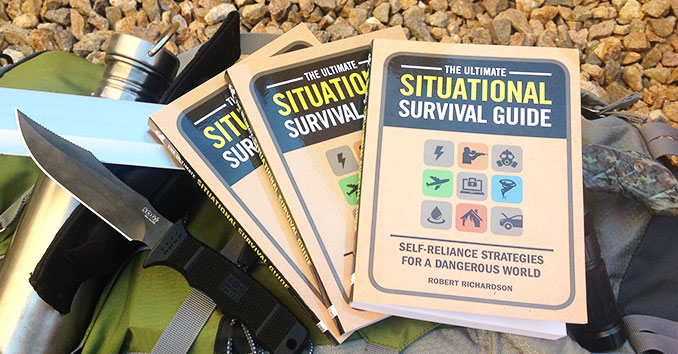
The first step in preparing for an economic collapse is to have a plan. You should have a clear idea of what to do in case of a financial crisis. This plan should include steps you would take to protect yourself and your family.
A good starting point would be to have some emergency savings. These savings should be enough to cover your living expenses for at least six months. This could be in cash, precious metals, or other assets that can hold value during a financial crisis.
Another important aspect of your plan should be to have a source of income not affected by the collapse. This could be through investing in assets that will not lose value during a crisis, such as gold or silver (or good ol beans and bullets!). Alternatively, you could start a side business that provides a steady income stream.
If things go bad, having a plan of action will help increase your chances of surviving the chaos. Check out my list of Essential Preparedness Tips, Skills, and Resources to Prepare for Disasters & Threats.
Start being Smart with your Money
During the 2008 financial collapse, millions of Americans lost their homes, cars and personal possessions because they saddled with debt. Since the so-called COVID pandemic, that trend has begun again with millions of people who now owe more on their property than they are worth, a vehicle repo market that is exploding, and consumer dent that is at record highs.
- If you can get out of debt, do it now. Start cutting all non-essential expenses, and use that money to pay down your debt. During an economic collapse, the likelihood of losing your home to debt collectors is a very real prospect.
- Start an Emergency Fund: Just like all areas of preparedness, there are steps you can take to insulate yourself from problems. Having an emergency fund is one way to prepare for financial troubles. It will give you a bit of a cushion during hard times, and can provide you with a fund to buy last minute supplies once things start to go bad.
- Always have Cash on Hand: Once things start to go bad, there is a very real possibility that the banks may freeze or seize your accounts. Should there be a run on the banks; people are going to be desperate to get their hands on some cash. Even during a total economic collapse, paper currency will still play a major role in how people buy and sell during the initial phases of the crisis – especially if a bank holiday is declared.
Start Prepping for Problems NOW.
Now is the time to really start taking a serious look at your overall level of preparedness. The economy has been teetering on the edge of collapse for quite some time, throw in inflation that has almost doubled the price of staple goods and the growing social unrest that’s sweeping the country and you have yourself a real recipe for disaster.
- Put together an emergency kit that includes extra food & water, clothing, a portable shelter (tents, tarps, sleeping bags.), and a way to defend yourself.
- Think about what things are unique to your situation; items like medications, or supplies that you would be hard pressed to live without, should be stockpiled in preparation for economic troubles.
- For more information on prepping, check out our article on the top ten prepping tips for every SHTF situation. Every one of those tips can help prepare you to deal with an economic crisis.
Start stocking up on Survival Supplies.
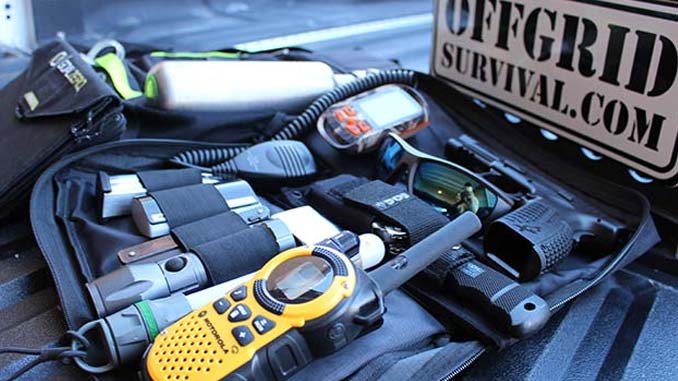
During an economic collapse, supply chain disruptions and shortages of essential supplies are possible. Therefore, it is essential to stockpile some essential supplies to tide you over during the crisis. Now is the time to buy the things you need! I’m not talking about T.Vs or IPads; but instead, long-term supplies that you will need in order to survive in the future.
- Start stockpiling food and long-term consumables. During any type of crisis, food, water and long-term consumables are going to be worth their weight in gold. During an economic collapse, you will likely see major supply chain shortages and problems, making these types of supplies one of your most important pre-collapse considerations.
- Put together a Bug Out Bag: Should this country face an economic collapse, chances are pretty good it will be followed by riots, violence and something much uglier than the initial collapse of the economy. You should have a Bugout bag filled with everything you need to survive a prolonged emergency situation.
- Keep a good supply of First-Aid & Medical Supplies on Hand. Medical and personal hygiene supplies are going to be hard to come by when things go bad. Make sure you have everything you need to deal with medical emergencies.
- Some of the critical supplies you should consider stockpiling include food, water, medicine, and toiletries. You should also have a backup power source, such as a generator or solar panels, in case of power outages and infrastructure breakdowns.
Grocery Options that ship right to your Home:
- Amazon Fresh
- Bulk Emergency Foods
- Amazon Grocery
Pay Off Debt
One of the biggest challenges during an economic collapse is debt. High levels of debt can be a significant burden during a financial crisis, especially if you lose your source of income.
Therefore, paying off any high-interest debt before a financial crisis hits is essential. This will help reduce your monthly expenses and free up money you can use for other essential things.
If you have a mortgage, it may be wise to consider refinancing to a fixed-rate mortgage, which can provide some stability during the crisis.
Start Stocking up on Survival Knowledge.
Even more important than supplies, is survival knowledge. Knowledge is the key to your survival, and now is the time to get some. During any kind of disaster, including an economic collapse, knowledge is going to be your most powerful ally.
During a crisis, the skills that are in demand may change, and having a wide range of skills can increase your chances of finding employment or starting a new business. Some valuable skills to learn are gardening, carpentry, welding, and plumbing. These skills can help you make repairs or grow your food, saving you money and keeping you self-sufficient during a crisis.
Additionally, learning new skills can also increase your current earning potential, which can help you build your emergency savings or invest in assets that will hold value during a crisis.
- Start reading books on survival and start collecting information on how to live a more self-reliant lifestyle.
- Subscribe to our RSS feed to stay up-to-date on all the latest economic threats and preparedness information.
- Start doing your own Research. I don’t rely on government spun stories, or skillfully crafted press releases; I do my own research and you should too!
Take a serious look at your Self-Defense.
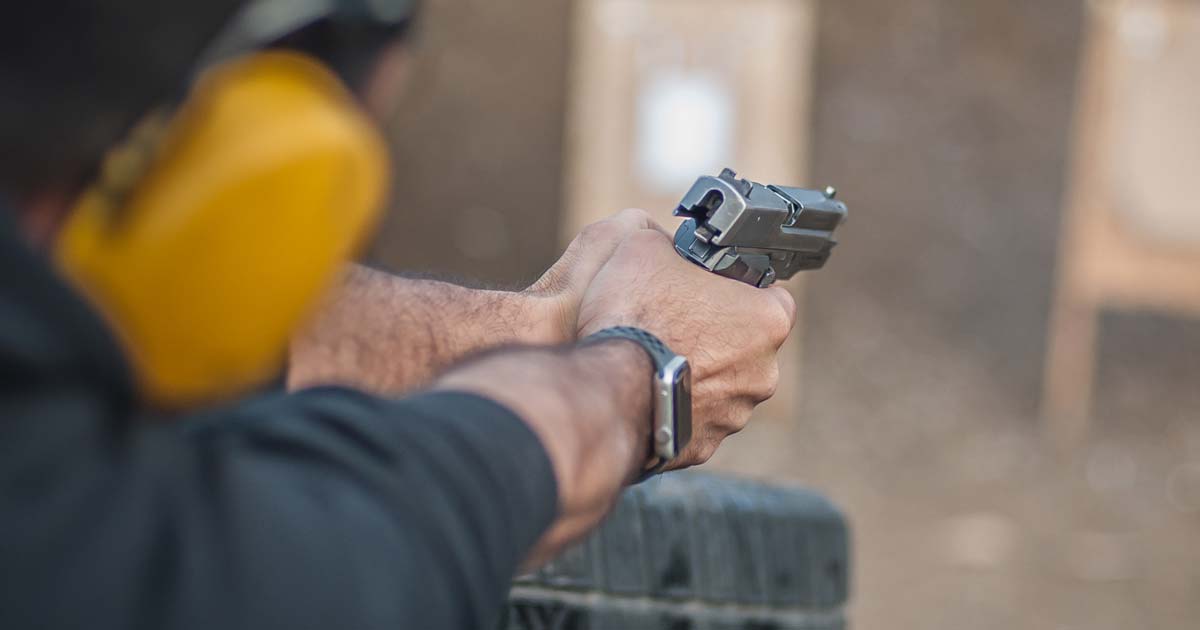
One of the biggest threats you’re going to face during an economic crisis is the threat posed by people. The social unrest and riots we’ve witnessed over the last couple of years are going to pale in comparison to what we’ll see during a full-scale economic collapse.
- Take a serious look at gun ownership, and learn everything you can about self-defense. When things go bad, you are going to need a way to protect yourself and those you love.
- Watch for signs of social unrest, and stay alert to what’s going on in your neighborhood and throughout the world.
- During an economic collapse, problems like home invasions and burglaries are going to become a real problem. Start looking into ways to strengthen your home’s security.
Preparing for an economic collapse can be challenging, but it is essential in today’s uncertain world. By having a plan, diversifying your investments, stockpiling essential supplies, learning new skills, and paying off debt, you can increase your chances of surviving and thriving during a financial crisis.
An economic collapse is a very real threat, one that has far-reaching consequences that you must take seriously. If you haven’t put together a game plan, what are you waiting for?
While nobody here is making any specific predictions, and I certainly can’t tell you that it’s going to happen on this date, in this year; I can tell you that the possibility is very real, and the reality of the situation is our politicians and leaders continue to put policies in place that ensure some very real future problems.
You can also access the latest news at this address: www.whatfinger.com
-
Day of Reckoning and the preparing for his coming! (They want to replace God’s creations with their own creations. In essence, they want to become gods themselves.)

Revelations 18:23 states: “For the merchants were the great men of the earth; for by thy sorceries were all nations deceived.”
Look up the word “sorceries” in Strong’s Concordance, a reference book which lists the Hebrew and Greek translation of every word in the Bible, and you’ll find the original Greek meaning for sorceries is pharmakeia or pharmacy. In other words, drug medications. So what that line from Revelations is really saying is: “For thy merchants were the great men of the earth; for by thy drug medications were all nations deceived.”Revelations 13:16-18: “And he causeth all, both small and great, rich and poor, free and bond, to receive a mark in their right hand, or in their character in their foreheads: And that no man might buy or sell, save he that had the mark, or the name of the beast, or the number of his name. Here is wisdom. Let him that hath understanding, count the number of the beast: for it is the number of a man, and his number is six hundred threescore and six.”
Does that sound like anything we’re going through now?
France has mandated a country-wide vaccine passport. In other words, it’s required to buy or sell. Without it, you cannot buy food. Without it, you will starve.
The mayor of Lapu-Lapu in the Philippines is not allowing anyone who is unvaccinated to buy food or groceries.
Australia is close behind and initial trials of a vaccine mandate are currently underway in Los Angeles, San Francisco and New York.
Revelations 18:23 states: “For the merchants were the great men of the earth; for by thy sorceries were all nations deceived.”
Look up the word “sorceries” in Strong’s Concordance, a reference book which lists the Hebrew and Greek translation of every word in the Bible, and you’ll find the original Greek meaning for sorceries is pharmakeia or pharmacy. In other words, drug medications. So what that line from Revelations is really saying is: “For thy merchants were the great men of the earth; for by thy drug medications were all nations deceived.”
Does that sound like anything we’re going through now?Have you heard of H.R. Bill 6666? If you receive a positive test for the imaginary virus–and the testing protocol is riddled with false positives–you can be hauled away in a “mobile health unit” to an internment camp and locked up for life. Do you think it’s a coincidence that the bill is numbered 6666?
Remember Bill Gates? He’s the guy who said in 2010, “The world today has 6.8 billion people. That’s headed up to about 9 billion. Now if we do a really great job on new vaccines, health care, reproductive health services, we could lower that by perhaps 10 or 15 percent.”
To lower the human population by means of vaccines can have only two meanings: sterilization or death.
In 2019, Gates filed a patent application entitled Crypto Currency System Using Human Body Activity Data, a system designed to eliminate cash. And just how will this “human body activity data” be transmitted and processed in order to buy and sell? By an embedded microchip, of course.
Can you guess what this patent application number is? It’s WO/2020/060606.
This is the same Bill Gates whose company partnered with “spirit cooking” artist Marina Abramovic, an alleged Satanist, and released a commercial starring her on Good Friday. And this is the same Marina Abramovic who proudly posed with Jacob Rothschild before a painting titled Satan Summoning His Legions.
But I guess those are all just coincidences too.
Are you familiar with Klaus Schwab? He is the founder and chairman of the World Economic Forum in Davos, Switzerland, which annually brings together the heads of state of the world’s major countries to discuss the future of world affairs. In other words, Schwab is a major player on the world stage and one of the most influential men on earth. When he says, “Jump,” presidents of major countries say, “How high?”
In an interview with Swiss channel RTS on January 10, 2016, a full four years before our current “pandemic,” Schwab explained how every human being on earth will soon be micro-chipped in order to merge with the digital world.
Schwab and others like him envision a future in which natural humans with God-implanted DNA no longer exist, replaced by a population of micro-chipped trans-humanist creatures. This is their future and they can’t wait for it to happen.
They want to replace God’s creations with their own creations. In essence, they want to become gods themselves.
At this point in time, nothing else matters in the world. This issue is the dividing point between all peoples, between all races and between all political affiliations. You either submit to the jab or you don’t.
And for those who don’t submit, a sea of tribulations await.
You can also access the latest news at this address: www.whatfinger.com
-
The Day When Banks Run Out Of Cash Within Hours And ATMs Dry Up
Money plays such an important role in our lives that most of us could not imagine surviving without it. Yet that is exactly what you need to do if you want to prepare for an economic condition called deflation.
Deflation is the term economists use to describe a “general decline in prices, often caused by a reduction in the supply of money or credit.” A good way to think of deflation is as the opposite of inflation. Inflation occurs when there is too much money in circulation, which destroys its value and raises prices. When deflation occurs, there is too little money available, which often causes prices to collapse and the economy to shut down.
In severe cases of deflation there can be no money available at all not — even at the banks. This nightmare actually occurred during the Great Depression of the 1930s, when there were places in the United States where there was no cash available at all. More recently, it has happened in Greece, where ATMs ran out of cash and where banks placed limits on the amount of money that could be withdrawn.
People had no money to pay bills or buy food for their families. Employers had no money to pay employees, customers had no money to buy goods, and many people were reduced to bartering to survive. During the Great Depression, farmers would pay professionals such as mechanics and doctors with food because they had no money and no credit.
The situation got so bad that in some areas of the country, local governments, chambers of commerce and businesses issued their own currencies — the so-called depression scrip. The scrip often took the form of pieces of paper that people used as money because there was no government currency available. The scrip was used to pay workers or buy goods.
At one point during the Great Depression, the money shortage got so severe that the US government considered issuing a national scrip as an alternative to the dollar. That plan was eventually dropped and the government solved the crisis by simply printing more dollars.
Many people have known survivors of the Great Depression who liked to keep large amounts of cash on hand. Others would hoard food and other items. Those people developed that habit because they remembered what life without money was like. The fear of the deflation that occurred in the 1930s haunted them all of their lives.
The frightening reality is that the threat of deflation is still real. Some knowledgeable individuals, such as wealth preservation experts Will and Bill Bonner, believe that a sudden deflation leading to a national or international money shortage is still possible today.
The Bonners, who have studied some of the world’s knowledgeable investors such as George Soros, believe that the next financial crisis will begin with a “violent monetary shock” similar to the one that occurred during the Great Depression. They predict that money could suddenly disappear overnight, causing the economy to come to a grinding halt.
What Happens When Money Vanishes
Historical accounts of the Great Depression show us some of the possible effects of such a violent monetary shock. The damage caused by such a violent deflation can include:
The sudden collapse of prices. The Great Depression began with the collapse of stock market prices in 1929. That was preceded by the collapse of agricultural prices in the United States during the 1920s. During that crisis, land prices in rural areas collapsed, causing large numbers of rural banks to fail. When the banks failed, the government liquidated them and their assets, which included lots of foreclosed farmland, an action that further drove prices and made the crisis worse.
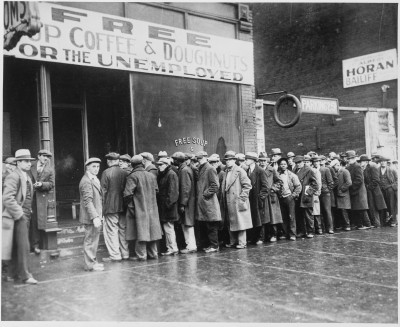
Everything you have — your investments, your home and your possessions — could suddenly lose all of its value. We saw this happen during the mortgage bubble of 2007-2008, when many people found themselves “underwater.” That occurs when the amount a home is mortgaged for exceeds the property’s value.
The collapse in prices during the Great Depression particularly hurt farmers who relied on commodity prices. Newsreels from the early 1930s show farmers dumping grain on the ground and pouring out milk because they could not sell them.
Bank runs and the collapse of financial institutions. A bank run or banking panic occurs when all of a bank’s depositors try to take their money out at once. Bank runs often trigger the collapse of financial institutions, which prompts even more bank runs. Between 1930 and 1933 nearly 10,000 banks failed or were suspended. The panic got so bad that President Franklin D. Roosevelt actually suspended all bank transactions in the US between March 6 and March 10, 1933 to prevent further runs in his so-called “bank holiday.”
During the banking crisis of the 1930s, many Americans lost their life savings simply because they were not able to get to the bank fast enough and withdraw their money. Even some wealthy individuals ended up on the streets and in bread lines because they could not get money from the bank.
Massive unemployment. It is a simple and obvious fact that when there is no money, there are no jobs. At the height of the Great Depression in 1933, 24.75 percent of the nation’s labor force, or one in four workers, were unemployed. Around 12.83 million people were out of work at a time when America’s total population was only around 93 million people. That unemployment persisted for years, with 8.1 million Americans still out of work in 1940 in the 11th year of the Great Depression. The unemployment created by the Depression only ended when World War II created “jobs” in the form of the draft and war production.
Hunger and Starvation. Not surprisingly, hunger and in some cases death from starvation can become a problem after deflation. Historians disagree on the number of people who died during the Great Depression.

Massive expansion of government and its power. In his first 100 days in office in 1933, Roosevelt signed 15 major pieces of legislation, several of which established massive new bureaucracies. During the 1920s there were 553,000 civilian employees of the federal government, but by 1940 the federal government had more than 1 million civilian employees. For the first time in American history, the federal government even tried to set prices for products under the National Recovery Act. The government also told farmers what to grow under the Agricultural Adjustment Act. Those laws were so blatantly unconstitutional that the US Supreme Court struck them down in 1935 and 1936.
Increased taxation. When money disappears government gets desperate and imposes more and taxes in an attempt to squeeze more money out of the economy. During the Depression, the maximum income tax rate was raised from 20 percent to 55 percent, gift taxes were increased from .75 percent to 33.5 percent, and new taxes were levied on automobiles, gasoline, telegrams, telephone calls and even checks. By 1934, the United States had the highest tax rates in the world. In 1935 taxes were raised again. Historian Murray Rothbard estimates that the effective tax rate in the United States increased from 16 percent to 29 percent during the Depression.
Why it Could Be Worse Today
If such an event were to occur in today’s world, it could be far worse than the Great Depression.
People were far more self-sufficient in the 1930s, as large numbers of families lived on farms and grew their own food. Even many Americans who lived in town maintained gardens and chicken coops. In those days people also hunted for meat, canned and preserved their own food and baked their own bread. People also sewed their own clothes and fixed their own cars, which gave them a high level of self-sufficiency.
Today, most Americans rely solely on supermarkets for food, and many families no longer even cook. Few people bother to sew, and most of us do not even change the oil in our cars. If our money were to disappear, we would be as helpless as children.
It’s time that we learn the lessons of the Americans who survived the Great Depression. That lesson was to be as self-sufficient as possible so you can survive, no matter what.
You can also access the latest news at this address: www.whatfinger.com
-
Subscribe
Subscribed
Already have a WordPress.com account? Log in now.
 Site Title