-
END TIME WARNING- The Prophet Isaiah Warns us That In One Hour Everything is Going to Change

The prophet Isaiah warns us that in the last days God is going to “turn the world upside down.” He declares, “Behold, the Lord maketh the earth empty, and maketh it waste, and turneth it upside down” (Isaiah 24:1).
According to this prophecy, sudden judgment is coming upon the earth, and it will change everything in a single hour. Within that short span, the whole world will witness fast-falling destruction upon a city and a nation, and the world will never be the same.
If you are attached to material things — if you love this world and the things of it — you won’t want to hear what Isaiah has prophesied. In fact, even to the most righteous of God’s people, what Isaiah says might seem unthinkable. Many would surely ask, “How can an entire world be stricken in one hour?”
If we didn’t believe the Bible is God’s pure Word, few of us would take Isaiah’s prophecy seriously. But Scripture makes it clear: in a single hour, the world is going to change. The church is going to change. And every individual on earth is going to change.
The apostle John gives a similar warning in Revelation. He speaks of destructive judgment coming upon a city and nation: “In one day, death, and mourning, and famine; and she shall be utterly burned with fire: for strong is the Lord God who judgeth her…. For in one hour so great riches is come to nought” (Revelation 18:8, 17).
In Isaiah’s prophecy, the city under judgment is cast into confusion. Every house is shut up, with no one coming or going. “The city of confusion is broken down: every house is shut up, that no man may come in” (Isaiah 24:10). The entire city is left desolate: “In the city is left desolation, and the gate is smitten with destruction” (24:12). All entrances and exits to the city are gone. The passage indicates that a fire has come, a blast that has shaken the very foundations of the earth (see 24:6).
We who live in New York City know something about this kind of scene. When the Twin Towers were attacked, the ominous fires and smoke could be seen ascending to heaven for miles. Recently, New Yorkers panicked as a mass of steam erupted from below a city street. People ran in all directions screaming, “Is this it? Is this the end-all attack?”
Today, multitudes of secular prophets are saying a nuclear attack is inevitable. The target they mention most often is New York, but it could happen in any major city: London, Paris, Tel Aviv, Washington. Neither Isaiah nor John names the city upon which destructive judgment falls.I don’t intend this message to frighten anyone.
Let me make clear at this point: I don’t intend this message to frighten anyone. Paul tells us that as disciples of Jesus Christ, we have already passed from death into life. We who call on Jesus as Lord should be confident that no matter what happens in this world, his shed blood saves and redeems us.
Therefore, we are not to fear any newscast, but rather to be attentive to what the Lord is doing in the world. Like many people, I hear grievous reports that make me want to tune everything out. But the truth is, God moves in the midst of such times, and through them he speaks warnings to all who would hear his voice.Isaiah’s prophecy points clearly to our generation.
I believe, along with many eminent Bible scholars, that Isaiah’s prophecy points to the last days. By that, I mean our present time. In short, sudden judgment is coming, and Scripture strongly indicates it is now at the door.
At this point you may be wondering: “How can we be sure we’re the generation this prophecy points to?” We can know by two reasons that such judgments are imminent:
1.A growing number of prophets warn of an apocalyptic disaster at the door. When I use the word “prophets,” I speak not just of those in the church. I’m talking also about “secular prophets.”
There are several precedents for secular prophets in Scripture. God used Assyria as his rod of correction with Israel. And he appointed King Cyrus as his servant to assist Israel: “(The Lord) saith of Cyrus, He is my shepherd, and shall perform all my pleasure” (Isaiah 44:28).
Likewise today, God uses secular prophets to send warnings. These become “his prophets” for a season. And their prophecies can be harder than those delivered by believers. The message I’m writing here is mild compared to the prophecies being delivered by all manner of secular voices. Just check your newspaper or radio reports.
“Surely the Lord God will do nothing, but he revealeth his secret unto his servants the prophets” (Amos 3:7).
2.Sudden destruction comes when the cup of violence overflows. Sensuality, perversion and greed are running rampant throughout our society. Yet, when God sent the Flood upon the earth, it was because of a worldwide eruption of violence: “The earth also was corrupt before God, and the earth was filled with violence” (Genesis 6:11).
Right now, there are numerous wars and bloody uprisings taking place around the globe. Yet foremost in my mind is the violence being waged against children worldwide:
- I think of the sexual violence of pedophiles. Children all over the world are being raped, kidnapped and forced into enslavement in the global sex trade. Recently, a pedophile in the U.S. was discovered running a web site that advises other pedophiles on the easiest places to pick up children. There is no law in place to stop this man. The world’s largest church denomination has spent hundreds of millions of dollars to settle the claims of those who were molested in childhood by clergy. Tell me, how long will God endure the pitiful cries of children who are molested by those who would represent Christ?
- Thousands of children in Africa are being slaughtered in tribal wars, hacked to death by machetes. Young boys — even those under ten years of age — are enlisted into tribal militias and forced to murder men in initiation rites.
- Here in the U.S., the blood of millions of aborted babies cries out from the ground.
- Reports of school murders no longer shock many of us but continue to terrorize our children. We may grow hardened to such reports, but God’s heart is grieved by them.
I tell you, there is no worse violence than the brutalizing of children. Heaven is crying out, “Woe, woe! Your judgments have no cure.”1. In one hour, God is going to change the whole world.
A sudden cataclysmic event will strike, the first of the final judgments of God. This great event will cause the earth to reel. And Isaiah says that when it hits, there will be no place to escape: “The lofty [proud] city, he layeth it low…even to the ground; he bringeth it even to the dust” (Isaiah 26:5). “The inhabitants of the earth are burned” (24:6).
Once this happens, utter chaos will erupt. All civic activities will stop, and society will descend into massive disorder. Government agencies will be helpless to restore any kind of sanity. No state troopers, no national guard, no army will be able to bring order to the upheaval.
You well remember that when the Twin Towers were destroyed, help poured into New York from all over the world. An army of people came to assist in whatever way they could. But the scene in Isaiah’s prophecy is different: this calamity is clearly beyond humankind’s capacity to respond.
Once this judgment strikes, it will devastate the economy. Rich merchants will stand by watching in torment, weeping and mourning, as they face bankruptcy. In an instant, all the wealth they amassed will be reduced to nothing. John describes the scene: “The merchants of these things, which were made rich by her, shall stand afar off for the fear of her torment, weeping and wailing, saying, Alas, alas that great city… For in one hour so great riches is come to nought” (Revelation 18:15–17).
Overnight, all buying and selling will cease. Every restaurant and bar will be shut down, and all drinking and music making will end. Indeed, every trace of mirth and delight, joy and gladness, will vanish: “All the merryhearted do sigh. The mirth of tabrets ceaseth, the noise of them that rejoice endeth, the joy of the harp ceaseth. They shall not drink wine with a song…. The mirth of the land is gone” (Isaiah 24:7–9, 11).
Yes, this is a picture of gloom and doom. But it is not my prophecy. This word was given by the Holy Spirit of Almighty God, to be delivered by his righteous prophet Isaiah. Even the secular world is preparing for it to happen. Billions are being spent on homeland security in the U.S., England, Europe and Israel. Why? Military experts warn that a world-impacting terrorist attack is sure to come.
You may ask: “Why would the whole world change, if a nuclear attack occurs in just one city?” It will happen because of the fear of retaliation. If a rogue nation sends such an attack, you can be sure that within hours that nation will be wiped out. Consider the plan Israel has in place, known as the Samson Option. The moment a nuclear warhead is launched against them, within moments Israel will unleash nuclear missiles to devastate the capital cities of all enemy states.
The world has become a ticking bomb, and time is quickly running out.2. In one hour, God is going to change the church.
This hour of devastation will suddenly change churches, whether they are alive or dead. Isaiah writes, “There shall be the shaking as of an olive tree” (Isaiah 24:13). The image is of God shaking an olive tree after it has been picked of fruit. In short, he’s going to shake everything that can be shaken, sparing nothing. It will be a time of cataclysmic destruction and overwhelming darkness.
So, you ask, “What about God’s people in the midst of all this? What will happen to the church?” Isaiah gives us an incredible word about what will happen with believers.
In the midst of the terrible shaking, a song will be heard, and its sound will grow steadily stronger. Suddenly, in that darkest of hours, a worldwide chorus of voices will sing praises to the majesty of God: “They shall lift up their voice, they shall sing for the majesty of the Lord, they shall cry aloud from the sea” (24:14).
Do you get the picture? There will be panic everywhere. Men’s hearts will fail them for fear, as fires belch smoke seen for hundreds of miles. Disorder and chaos will reign on all sides. Yet amid the devastating fires and calamity, the world will hear a glorious song being sung: “Glorify ye the Lord in the fires, even the name of the Lord God of Israel… From the uttermost part of the earth have we heard songs, even glory to the righteous [One]” (Isaiah 24:15–16).
A holy remnant is going to awaken, and a song will be born in the fire. Instead of panicking, the people of God will be praising his awesome majesty. Imagine it: in the darkest hour of all time, a collective voice will rise by the millions out of every nation, not in fear or agony, but in joyful praise to the Lord.
How will this happen, you ask? In one hour, God is going to regenerate and restore his church. Dry bones will shake and rattle, and the righteous will be awakened, as the Holy Spirit calls multitudes of lukewarm believers back to their first love. In his mercy, he’s going to rouse those who have neglected him, ignoring his Word, avoiding prayer, perhaps even contemplating divorce. Suddenly, their souls will be flooded with pangs of remorse and godly sorrow. And many will fall on their knees, crying out in repentance.
There will be a revival of glorifying God’s majesty. And the song of this revival will be heard from the uttermost parts of the earth. East, west, north and south — from Arab lands to China, Indonesia, Africa and all parts of the earth — a glorious song will rise up from the midst of the fires. In one day’s time, those who survived the fires are going to be singing a new song throughout the world.Isaiah 25 tells us wonderful miracles will come in this time, as “God makes all things new.”
All around the world, the Lord’s people are going to “feast” on his Word: “In this mountain shall the Lord of hosts make unto all people a feast of fat things, a feast of wines on the lees, of fat things full of marrow, of wines on the lees well refined” (Isaiah 25:6).
“And he will destroy in this mountain the face of the covering cast over all people, and the veil that is spread over all nations” (25:7). Right now, in this time of prosperity, the world’s masses seem to be covered with a veil, unable to see the truth of Jesus Christ. But when God rises up to shake the world through judgment, the shrouds covering the minds of billions will be cast aside. The veil of darkness will be removed, and many will see the Lord in his glory. The Holy Spirit won’t force Christ upon these opened eyes and hearts; rather, a remnant is going to rise up from among them.
I believe the darkest shroud-coverings today are over the eyes and hearts of youth worldwide. This is especially true of college-age students, whose faith has been bombarded for up to four years. Over that time their minds have been indoctrinated by godless professors in classrooms where belief is attacked, mocked and scorned. Now these young men’s and women’s faith has been shipwrecked. They leave college convinced God is dead.
But in one hour of devastation — nuclear, economic and social — all such hypocritical veils are going to fall away. Those same professors who mocked them will realize, as they face the possibility of death, a choice must be made: “What about eternity? Is there life after death?” They’re going to look for someone to explain to them all that’s happening.
When the song is sung, it’s going to be heard by young people from every walk of life, from every nation under the sun. Many will harden their hearts and curse God at the sound of this song, but multitudes of others will join in singing of his majesty.3. In one hour, God is going to change us as individuals.
In a single hour, the focus of our lives will be changed. We’ll no longer obsess about our own adversities and troubles. Suddenly, so many things that we held dear will no longer be of any value to us. Why? In that hour, everyone will be in the same boat:
“It shall be, as with the people, so with the priest; as with the servant, so with his master; as with the maid, so with her mistress; as with the buyer, so with the seller; as with the lender, so with the borrower; as with the taker of usury, so with the giver of usury to him” (Isaiah 24:2).
The sudden judgment that comes will not be a respecter of anyone. Rather, it is going to touch all who are within the realm of its fury. Presidents, kings, the world’s richest and most famous — all will tremble just like the poorest of the earth. And this cataclysmic event will bring to naught every idol, purging iniquity and tearing down all false altars:
“By this [the calamity] therefore shall the iniquity of Jacob be purged; and this is all the fruit to take away his sin; when he maketh all the stones of the altar as chalkstones that are beaten in sunder, the groves and images shall not stand up [be left standing]” (Isaiah 27:9).
The world’s most prominent idol is money, and right now America is facing a monstrous financial disaster. Investors are scrambling to move their money out of high-risk funds, and mortgage companies are going bankrupt. One recent financial headline read, “Abandon Ship!” Everyone is selling and nobody is buying. Many households are in a panic, as overnight their lives are changing. I think of the president of a multi-billion-dollar hedge fund, who recently put up for sale his 142-foot yacht and his sixteen-bedroom mansion in Aspen, Colorado. His fund had dried up virtually overnight.
The day is coming when sports will be the last thing on people’s minds. I have nothing against sports, but soon there will be no more 250-million-dollar deals for athletes, when so much of the world is starving. All idols will come crashing down, crushed to dust, and the playing field will be leveled. The richest and the poorest alike will face the same conditions.
It will all happen within a day. “When they shall say, Peace and safety; then sudden destruction cometh upon them, as travail upon a woman with child; and they shall not escape” (1 Thessalonians 5:3).Why such apocalyptic warnings?
You may wonder: what good can come of these prophetic messages? Why should anyone have to live under such anxiety?
I remind you, Jesus warned Jerusalem of sudden devastation to come upon that city. It was going to be burned to the ground, with over a million people murdered. Christ explained his warning: “I have told you before it come to pass, that, when it is come to pass, ye might believe” (John 14:29). He was saying, in essence, “When it happens, you’ll know there is a God who loves you and forewarned you.”
Paul calls such warnings “light,” insights that expel darkness. He says, in short: “You are children of light, because you know what’s coming in the future. So, when destruction comes, and there’s panic all around, you will have the calm of the Holy Spirit. Something will quicken inside you, and you’ll remember, ‘God warned me.’ This prophecy isn’t a message of wrath to God’s people, but a wakeup call to begin preparing.”
“God hath not appointed us to wrath, but to obtain salvation by our Lord Jesus Christ, who died for us, that, whether we wake or sleep, we should live together with him” (1 Thessalonians 5:9–10). Paul is speaking here of a time of possible destruction. Therefore, he says, “Comfort yourselves together, and edify one another, even as also ye do” (5:11).
In this day of prosperity, nobody wants to hear a message like Isaiah’s. I certainly don’t want to hear it. But we cannot ignore it, because it is here at our door. In such times, Paul says, when we have knowledge that sudden destruction is coming, we are not to tremble or sorrow as the world does. Instead, we are to comfort one another in faith, knowing that God rules over every aspect of our lives.
“Be sober, putting on the breastplate of faith and love; and for an helmet, the hope of salvation” (5:8). Paul instructs, “Arm yourself with faith. Build up your belief now, before the day comes. Learn your song, and you’ll be able to sing it in your fire.” “Glorify ye the Lord in the fires, even the name of the Lord God of Israel” (Isaiah 24:15).
This is the hope of our most holy faith: our Lord causes a song to come out of the darkest of times. Start now to build up your holy faith in him, and learn to praise his majesty quietly in your heart. When you sing your song, it will strengthen and encourage your brothers and sisters. And it will testify to the world: “Our Lord reigns over the Flood!” ■
-
Experts Confirmed 2040 Global Collapse Coming- Here’s What The Analysts Who Confirmed It Says

Will Society Collapse? Civilization seems to be lurching. A study suggests that there is a possibility that society will collapse in 2040. In this blog post, let’s explore why society might collapse and how we can prevent it.
We’ve all seen the movies where society collapses, and it’s every man for himself. The reality is that most people won’t know how to survive when this happens. Many things have been happening in the world lately. In light of all this, it’s vital to start thinking about surviving the collapse of society.
Many believe that it’s only a matter of time before something big happens. That could leave us without power or essential services for an extended time.
Will Society Collapse in 2040? The Reality of Our Societal Decline
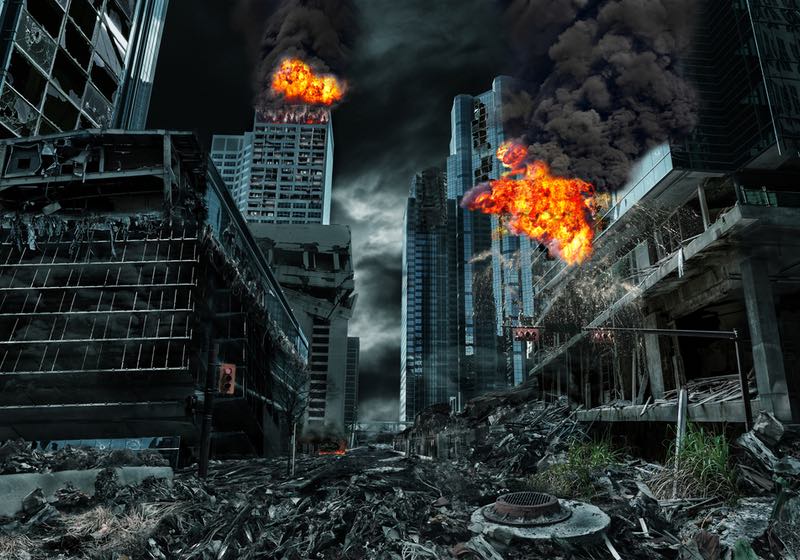
Many factors could lead to society collapsing in 2040. Some of the most likely reasons include:
- Economic Collapse
- Natural Disasters and Climate Change
- Foreign Invasions and Mass Migration
- Famine, Economic Depression, and Internal Strife
- Disease Outbreaks
- Demographic Dynamics
- Pandemics
- Social Unrest
- Water Scarcity
If any of these events happen, it could lead to a cascading effect that causes society to collapse. An economic collapse could lead to social unrest and a pandemic. These are possible reasons why society might collapse. Many other scenarios could play out.
Is Society Collapsing?
A new study is raising red flags about the future of society. The report finds that human society is right on track for a collapse.
Based on a 1970’s report reassessment, Society Collapse 2040 prediction is most likely. It warns that we are on track for disaster if we do not change our ways. So far, it seems like we haven’t heeded that warning. Society Collapse 2040 is right on track if there is no shift in global priorities.
The world population is booming, and the quality of life is declining. It’s looking more and more likely that society will collapse by 2040.
We’re on the brink of disaster, and we need to do something about it. If we don’t change our ways, society is collapsing. It’s time for us to wake up and take action. We need to find a way to save this world before it’s too late. We’re running out of time. We need to find a way to turn things around and save this world before it’s too late. The future of humanity is at stake.
When Will Society Collapse?

When will society collapse? Many people are asking, and new research has some disturbing answers.
A recent climate change analysis predicts that human civilization will collapse by 2050.
The analysis concludes that climate change poses a current existential national security risk. Not addressing the threat of climate change could lead to the extinction of humanity. Or the permanent destruction of our potential for future development.
In other words, the world is on a path to disaster, and we need to take urgent action before it’s too late!
The Crisis is the New Normal – Can Society Survive the Current Crises?
Any catastrophe on a global scale will almost result in a pandemic. The world might flip upside down in only a few days! The harsh fact is that many people would not survive a week without stored food, let alone 90 days.
Societies or advanced civilizations as we know them have existed for around 10,000 years. During this era of earth’s history, many rose to great power. Many collapsed as well, leaving only residues of their territories. Historians tried to analyze specific reasons leading to the collapse of civilizations. While most details remain unknown, we do see repeating patterns.
There is a timeline for every calamity. Even so, there is usually a pattern. Knowing this pattern can help you avoid the chaos and stay safe through it.
Society is a delicate thing. It’s something that we often take for granted until it’s gone. But, that doesn’t mean that we shouldn’t prepare for it. Knowing what happens when society collapses – is a must to survive the societal collapse.
To prepare for societal collapse, learn what happens when it collapses.
What Happens When Society Collapses?

Many think about societal collapse as a world where law and order have broken down. Gangs are running the streets. While this may be one possible outcome, it’s not the only one. Many different things could happen when society collapses. Many different scenarios could play out. But, here are some of the most common ones:
Infrastructure & Communication Breakdown
When society collapses, the systems that we rely on will likely go with it. Electricity and Internet will be no longer.
Water Scarcity
Water scarcity is a global crisis. It already affects every continent.
It affects around 2.8 billion people at least one month out of every year. This number is only going to increase as water resources become limited.
Because of global warming, water-related dangers are on the rise. Floods and droughts are two examples of water-related dangers.
You can expect water scarcity to increase because of population growth. Add to that decreasing water availability.
Food Shortage
Food shortage is one of the biggest concerns during a societal collapse.
Food and water shortage could happen due to a natural disaster. It could happen due to disruptions in food production and distribution too.
Without anyone growing or distributing food, there will be shortages. Without food or water, people will die.
Crime Rise
As we mentioned before, one of the most common outcomes of a societal collapse is the rise of crime. With no one to enforce the law, criminals will have free reign over the population.
Disease Outbreak
When society collapses, there is no longer any sanitation or healthcare. No sanitation or healthcare could lead to widespread disease and death.
Social Order Collapses
When the government collapses, law and order break down. Social order collapse could lead to looting, violence, and anarchy.
Economic Collapse
When society collapses, the economy goes with it.
An economic collapse could lead to mass unemployment and poverty.
Martial Law
In some cases, the government may declare martial law to restore order. Martial law could lead to restrictions on freedom (of movement and speech). Arbitrary arrests could result too.
How to Survive the Collapse of Civilization
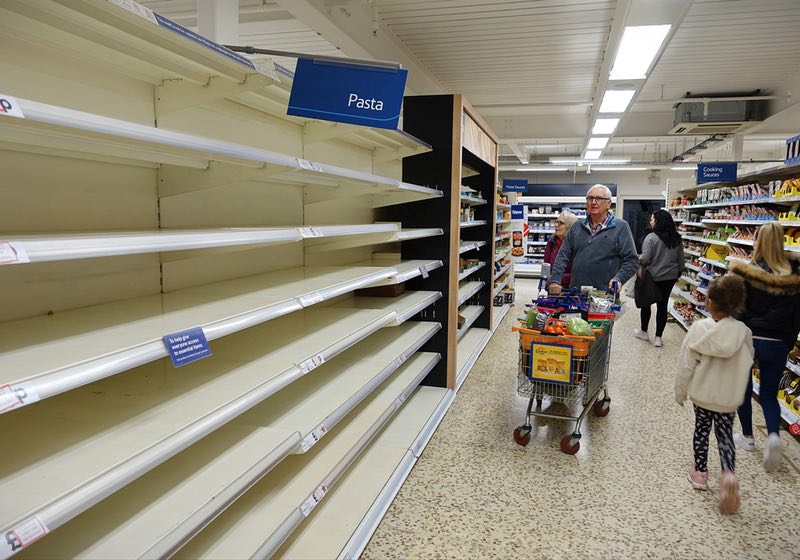
As a prepper and survivalist, surviving the collapse of society is a must skill to get.
A person can survive a week max without food or water. How can you expect to live three months without food or water? How do you plan for what might occur if something goes wrong?
If you want to survive a societal collapse, you need to:
Be Prepared
Be prepared for these things. That means having food, water, and medical supplies stored up.
Have a Plan for how you will survive.
- Find safe places to stay.
- Form alliances with like-minded people.
Learn primitive medical diagnosing.
Do not panic.
Surviving the collapse of society is something that we can all do if we prepare.
So, start thinking about what you would do if it happened and get started on your preparations today.Stockpile food and water
Stockpiling is one of the most crucial things to do to prepare for a societal collapse.
Stockpile enough food and water to last you at least three months.
Have a backup plan
If the worst happens and society collapses, don’t rely on your stockpile to keep you alive.
Make sure to have other means of survival, such as a bug-out bag or safe house.Stay informed
One of the best ways to prepare for a societal collapse is to stay informed about the potential risks.
Follow reliable news sources and keep up with what’s happening.While we can’t predict when or how society will collapse, it doesn’t mean that we shouldn’t prepare for it. Learn to survive the societal collapse to ensure that you and your family will be safe. No matter what happens.
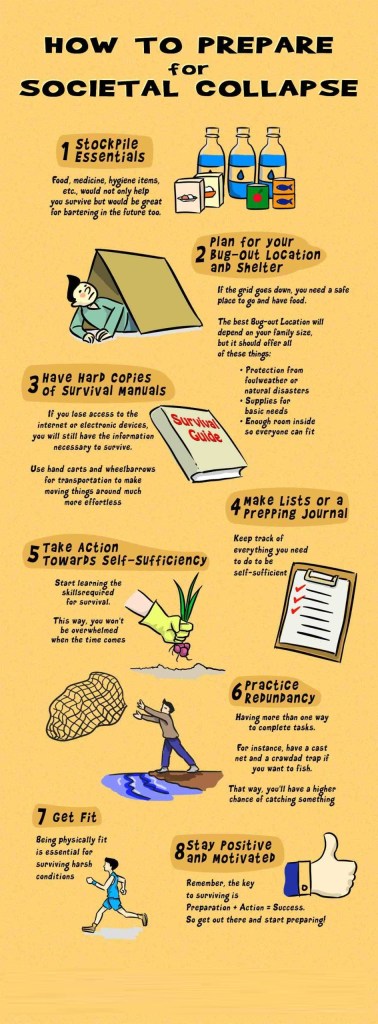
Here’s an infographic guide that you can use. Feel free to download, save and share it with your loved ones:
Is Society on the Verge of Collapse? 2040 Predictions
In 1972 a group of researchers at MIT concluded that society was on its way to a complete collapse. It predicted that by 2040, today’s modern world would end in absolute failure.
Watch this video of MHFIN about Society Collapse 2040:
Society Collapse 2030
KPMG made a follow-up study on MIT’s prediction. Instead of finding evidence to dismiss the previous findings. The study declares the world is ahead of schedule.
It’s time for us to face the facts and take action. We need to find a way to save society before it’s too late. To prevent societal collapse, we need to make changes fast! The future of the world is at stake.
-
5 Things That Will Happen if The Debt Ceiling Isn’t Lifted

The debt ceiling is in the news again, and like all things in our mainstream media, there’s a spin depending on where you get your information. This alone can make it all the more confusing as to what exactly is going on. In this video, I will explain the five major things that will happen as this fight intensifies and we edge closer to the government not being able to pay its bills. Spoiler alert: if no resolution is found before the closely approaching deadline arrives on what Janet Yellen advises will be on June 1st of next year, it could propel us headlong, and I don’t say this lightly, into a depression or give a shot in the arm to a BRICS-based currency that could dethrone the dollar as a reserve currency. So before we jump into the specifics of what could happen, let me explain as quickly and unbiasedly as I can a little bit about what the debt ceiling is, what it is not, and why it should matter to you.
WHAT IS THE DEBT CEILING?
Almost every year, the government spends more than it collects in taxes — that’s the deficit. To make up the difference, it borrows money, which accumulates over time. That’s the debt. The debt limit is a legislative limit that caps the total amount of allowable outstanding U.S. federal debt. It was introduced in 1917 when Congress voted to give the Treasury the right to issue bonds for financing America participating in World War I. In other words, the Treasury can borrow money to pay for federal expenditures—but only as much as Congress lets it. Lifting the debt ceiling was once a fairly routine vote. Since 1960, Congress has raised the ceiling 78 times.
Since 2009, America’s national debt has nearly tripled, with annual federal deficits averaging nearly $1 trillion since 2001. The National Debt is sometimes driven by legislative or world actions which require the government’s response, including tax cuts under Presidents Bush and Trump, wars in Iraq and Afghanistan, entitlements like Medicare Part D, and spending in response to the Great Recession and the COVID-19 pandemic.
The debt ceiling is the budgeted limit of what the government can spend for every program, contract, person employed, building, road, or whatever. As we approach that limit, the Treasury takes measures to make sure we stay within that limit. With such deep divisions in government now, instead of simple passage, the arguments begin. The finger-pointing starts when each political party tries to paint the other as wanting to tax, spend, or cut programs. As the Treasury does its calculations, the actual point at which we cross the debt ceiling and can no longer authorize payments tends to move up. As we get closer to the exact dates, several things happen, each of which will affect you negatively.
On January 19, 2023, the United States hit its debt ceiling, beginning an ongoing debt-ceiling crisis. In response, Janet Yellen, the treasury secretary, began enacting various accounting maneuvers known as “extraordinary measures.” On May 1, 2024, Janet Yellen warned that the United States may run out of measures to pay its debt obligations by June 1, 2024. There have been debt-ceiling crises in 2011 & 2013, so we have a glimmer of what will occur with this 2024 crisis. Unfortunately, this current debt-ceiling crisis may be far worse than in previous years. This year, we find ourselves supplying a war overseas, still not recovered from a global economic downturn, suffering through unprecedented inflation, deep in a series of significant bank failures, and with a looming commercial real estate bubble. These influences and others will be fuel on the fire. Here’s what happens in this debt-ceiling limit debate and how bad it could get if we ever reach the point of default.
- TEMPORARY EXTRAORDINARY MEASURES

The first extraordinary measure the Treasury takes is to meet its spending obligations from the cash reserves on hand. As of January 17, 2023, the Treasury had a cash balance of $322 billion. That may seem like a lot, but your government spends a lot. Fish and Wildlife and Parks, Department of Homeland Security, Medicare Premiums, Social Security, Department of Agriculture, Federal Crop Insurance, Department of Justice, Railroad Workers Retirement, Federal Employee Retirement, Department of Veteran Affairs, the Postal Service, Unemployment Insurance, Defense Vendor Payments, Child Nutrition Program, Individual & Business tax refunds, barely scratch the surface of monthly expenditures. Hundreds of programs, contracts, and services are paid for each month, so simply surviving on reserves of cash on hand is like paying your bills with savings when you might lose your job in two months.
Still, these programs make up the first round of temporary extraordinary measures. The Treasury also halts the daily investments in the Exchange Stabilization Fund. Operated by the Treasury, the ESF stabilizes exchange rates by buying and selling foreign currencies. The suspension of daily reinvesting in this fund means the US has less influence on global exchange rates and the strength of the US dollar–the world’s reserve currency. Finally, the Treasury can suspend the sale of savings bonds and stop issuing State and Local Government Series Treasury securities. Once a debt ceiling impasse is resolved, these funds will be made whole so that beneficiaries are unaffected.
- PROGRESS IS PUT ON HOLD

Is your city repairing potholes or building a new traffic corridor? The chances are that it is being paid through Federal grants or with Federal money, so those projects get put on hold. Does your employer have a government contract or is trying to obtain one? Well, those are put on hold as well. New spending is suspended. Were you planning on retiring someday, but you work for the government, post office, or railways? No new money is going into that until the debt ceiling is lifted. Your state is going to have to wait on that Federal funding that may pay your salary in some small part. Nutrition programs and other social-safety programs get put on hold. Eventually, parks and other services close, and workers are furloughed several days per week or laid off.
In some ways, the government is forced to downsize and scale back operations. At this point, you start to realize all the little and big things the government provides you with. The economy, already struggling, suffers the most. The Treasury Department’s approach would be to postpone payments for all other liabilities until it accumulated sufficient funds to fulfill the whole day’s obligations. To clarify, it would postpone payments to agencies, contractors, Social Security beneficiaries, and Medicare providers rather than trying to selectively choose which payments to make on a specific day. If you work with any agency or under any contract with the federal government, expect cutbacks. If you remember the last significant debt-ceiling crisis, there were a lot of furloughed workers, national parks closed, and libraries adjusted their hours. Basically, everything slowed down, and many worried about their paychecks. Progress was put on hold.
- THE DOLLAR FALLS
The most detrimental related consequences are not as readily apparent as a closed sign at the post office or programs put on hold. The debt-ceiling debate is a self-inflicted wound on the US economy. One of the major consequences of this debt-ceiling debate and the temporary extraordinary measures is reduced household wealth and business confidence. These are the macroeconomic effects of debt-ceiling brinkmanship. Any potential default on US debt has the potential to be catastrophic: credit markets could freeze, the value of the dollar could plummet, and U.S. interest rates could skyrocket, potentially resulting in a financial crisis and recession that could echo the events of 2008 or worse. Your employer isn’t likely to take on that new contract or employee and expand the business in such a climate. Neither are you likely to want to buy a house or make a similar big purchase with the US economy about to collapse.
Other countries see this continued in-fighting and failure to come to terms with our debt and shy away from buying US debt. They start to look for other currencies to transact in, shedding their dollars held in reserve for more translatable and reliable currencies. Maybe that’s the Chinese Yuan, Russian Rouble, the Euro, British Pound, or some new BRICS currency. Over half of the foreign currency reserves globally are kept in U.S. dollars. Hence, an abrupt decrease in the currency’s value can impact the treasury market as the worth of these reserves goes down.
If a default occurs, the U.S. economy may face a recession more severe than the Great Depression. The international financial system heavily relies on the U.S. dollar and Treasury securities. If the impasse on the debt limit leads to a default on Treasury securities, it could be catastrophic, similar to or worse than the 2008 financial crisis. Even before we reach that point, other things can happen–like the slashing of America’s credit rating. That happened in 2011 when America’s credit rating was downgraded to AA+ from triple-A+ by Standards and Poor’s. As a result, American borrowing costs went up by $1.3 billion that year. When this slashing of America’s credit rating occurs, interest rates skyrocket, and people worldwide look for more stable investments outside America.
- MARKET INSTABILITY

Even if you don’t have your own stock portfolio, your retirement account and financial institution do. As the debt-ceiling debate continues and edges closer to the deadline that the Treasury cannot cross, the financial markets steel themselves up and shift their strategies to highly-conservative and stable investments. Not all of them are successful, as we just witnessed with the disparities in the balance sheets of Silicone Valley Bank, Signature Bank, and First Republic Bank, which collapsed this year. Venture capitalists are less likely to gamble in the future, so they withhold their funds. Goldman Sachs economists have estimated that a debt ceiling breach would immediately halt about one-tenth of U.S. economic activity.
Credit requirements tighten as interest rates increase, so business, home, car, and similar loans become too hard to obtain. Social Security beneficiaries, some 69.1 million people, would suddenly have difficulty paying rent and utilities. That means 11 million landlords aren’t receiving an income, nor are utility companies receiving the revenue they require to operate efficiently and maintain profits. Even grocers are selling fewer products as prices increase and federal food assistance programs get put on hold. Just these two groups of social security recipients and landlords represent nearly a quarter of the US population that would immediately feel the financial impact of a potential US debt default.
All businesses stop expanding and put projects on hold, and the real estate market takes a significant downward turn. Market conditions would likely worsen with each passing day, and the collective economy would slow to a crawl. Since we are already in a deepening recession where we aren’t exactly sure where the bottom is, this could be the push that propels us over the cliff into another Great Depression. Significant instability in any one market can dramatically impact other markets from wall street to main street, from your elderly neighbor next door to your kid’s school lunch program.
- UNEMPLOYMENT SURGE

Many estimates and studies have been conducted since 2013 to play out several different scenarios, from getting close to that debt-ceiling date to an impasse lasting more than two months where the Treasury only makes payments on interest. All the scenarios result in a loss of 1 to 5 million jobs across America. Many scenarios show only the slow recovery of those jobs over several months or even years. These unemployed people aren’t just federal workers. The ranks of the unemployed will come from all sectors and walks of life.
Businesses will protect their bottom lines by laying off some workers and tasking the remaining workers with extra work. Pay raises, and cost of living increases are put on hold. People spend less on services, entertainment, and manufactured goods. Construction slows. Restaurants lay off workers or close. Factories slow their production lines. Even the military will look to downsize operations and cut spending. A debt default would risk benefits for 2.4 million military members, retirees, and 400,000 survivors of fallen service members. Also, service members’ pay and benefits can be put on hold. In all sectors of the workforce, the rates of unemployment surge.
WHERE WE ARE AT NOW

In February, President Biden and Speaker McCarthy met for an hour in the Oval Office to discuss how to raise the debt ceiling. They couldn’t reach an agreement but agreed to continue discussions. In mid-April, the Limit, Save, Grow Act was presented by Speaker McCarthy, a 320-page House bill that proposed raising the debt ceiling by $1.5 trillion, which would have sufficed until at least March 31, 2024. This act narrowly passed the House but is deemed dead on arrival when it gets to the Senate.
There are only a few things that can occur here. First, the rancor could continue a little while until the public level of disgust becomes so great that the government is forced to let it go and raise the ceiling. Or, the debate could reach an impasse, and things begin to shut down, even as the rhetoric and blame game ramps up. Or, Congress could abolish the debt ceiling, but that’s so unlikely I won’t give it time here. None of these outcomes are suitable for the economy or regular consumers. The debt-ceiling debate is a shot in the arm for BRICS alternate currencies and diminishes the dollar’s strength globally. Rather than risking the full faith and credit of the United States, lawmakers should focus on the underlying reason we keep hitting the debt ceiling in the first place: the structural imbalance between spending and revenues. With the government functioning as it does right now, it isn’t likely that we will get the focus on the underlying reasons.
One thing is for sure. The margins are thin in this debt-ceiling debate. The Limit, Save, Grow Act may make it through Congress with Feinstein still out, but President Biden pledges to veto it. House Democrats are seeking a petition process allowing members to bring a bill directly to the floor without the cooperation of leadership. The critical date when the government can’t make its payments could arrive no earlier than the third quarter of 2023, which would begin in July. There’s considerable damage that will be done to the economy long before that deadline arrives.
As we collectively get closer to that critical date and the debate and blame game continues without any substantial change in how things are done, expect the accounting maneuvers of these extraordinary measures to become more sweeping and severe. Expect the US dollar and confidence in the US economy to decline, as will America’s global influence. Expect that progress will be put on hold, the recession will deepen, inflation will move to double-digits, and millions will suffer from employment insecurity. We are still in the early days of this, but the crisis is swiftly going to come to a head.
You can also access the latest news at this address: www.whatfinger.com
-
America’s Great Wrecking Ball is Wiping out Huge Swaths of the Economy Every Hour of Every Day Now

Tariff fears took their toll on stocks Friday with the Dow falling 444 points by end of day after President Donald Trump announced reciprocal tariffs against any nation that imposes retaliation tariffs against the US for the tariffs Trump has just announced. In other words, this year’s tariff wars are already looping into a second cycle even though we’re less than a month into the Donald’s second term. This week’s tariff loop comes on top of the cycles of tariffs that were initiated in Trump’s first term, which continued under Biden. Friday’s market losses wiped out the entire gains from earlier in the week.
Prior to Trump’s latest tariff volley, reports on US jobs and consumer sentiment over inflation showed significant troubles starting to form. While one article in the barely conscious, mainstream media claimed the job deterioration was not enough to matter for some time, given that unemployment actually dropped from 4.1% to 4.0%, even as new jobs declined, I beg to differ strongly. As usual, I don’t think some of these financial writers could figure out how to open a soup can with a can opener if they were starving.
Even with the drop in new jobs and the simultaneous and seemingly contradictory decline in the unemployment rate, wages rose. The difference in direction between new jobs and unemployment can be attributed to the simple fact that the unemployment rate is calculated over a longer time frame, so does not move as quickly as weekly jobs reports. What that means is that the unemployment drop is the outlier because the monthly drops in new jobs will quickly stack up to turn that back around. The mainstream press should have been able to figure that out.
CNBC reported,
Nonfarm payrolls climbed by a seasonally adjusted 143,000 for the month, down from an upwardly revised 307,000 in December and below the 169,000 forecast from Dow Jones.
That was a fairly good-sized miss, but more importantly, it cleared away any notion that the 307k reported for December was a meaningful improvement in the labor market. There was not only no follow-through in that direction, but a very stark reversal.
Even more importantly, because it proves my point, something happened that I said about a week ago you could certainly expect. All the jobs reported by the Biden administration during an election year, suddenly got revised down … by well over half a million! Proving the whole thing was the electioneered construct that I said it was all year long.
That came as no surprise once Biden was out of the picture—as I told you to expect to see it—but I’m sure you had already figured that out for yourself, as well, and didn’t need my help to see it. Consider what I offered just reinforcement to what you had likely already figured out. The numbers were always cooked to try to make the Biden Admin. look good for the campaign trail.
(If you want granular detail on the employment report, you can find it HERE. My goal with this Deeper Dive it to focus on the broad sweep and what it means for my 2025 economic precisions.)
Rhapsody in the blues
Then we have this odyssey continuing to play through:
Respondents to the University of Michigan’s consumer sentiment index also said they expect inflation to rise to 4.3% by year’s end, more than double the Fed’s target.
The cries over inflation are far from over. Consumers are starting to expect the pinch will get worse again.
The changes in jobs by themselves may appear not to be all that consequential, given that the unemployment rate has actually gone down after putting in the start of what looked last year like it was about to be a parabolic rise, but that may have been due to December’s 307k anomaly. Now we see the bigger picture is consequential for jobs, and we see once again that the inflation fight is far from over.
This is the economic background reality for the absolutely massive changes now happening in the world of tariffs, coupled with the colossal government shutdowns being carried out by DOGE with abandon and with nearly no government input. Elon Musk is acting like he is the supreme dictator over all things governmental with Trump’s imprimatur over all that his henchman is doing.
Where I am going with what may have just appeared to be a rant is actually to a logical projection: The Trump cuts to government were not yet in those sinking job numbers and certainly were not at all in the lowering unemployment rate because applications take longer than a week to get accepted by any state unemployment office and added to the unemployment roll. The cuts have been sweeping, so the coming unemployment rise will be, too.
Unemployment can be expected to put in a big upturn quickly as all those government workers join the roll call, but something equally important to realize is that that the rise in unemployment will be much higher than just the cuts in government employees. As big swaths of government payments are shut down at the Treasury by Musk & Men and even entire government agencies running contracts are shut down, contractors are already orchestrating their own shutdowns.
Private-sector employers and nonprofits are starting to lay off workers as a result of the Trump administration’s sweeping cuts and funding freezes, unleashing a wave of job losses that economists say could pick up steam in the coming weeks, threatening the broader labor market.
(MSN)
Not a single job lost is connected to this week’s net new jobs or unemployment numbers; so expect a huge change in the next few weeks. Because so much mystery surrounds DOGE and how it is making its decisions, and each decision hits as an unannounced surprise (and maybe it has to in order to keep agencies from shredding all their misdoings), there is no way to know the scale or impact of what has already happened, much less what is coming. One can hope Elon, being a smart man, figured all of this out months in advance, but it looks more like Musk and his madcap crew unvetted surgeons are performing limb-amputation surgery using bombs, instead of scalpels and bone saws.
Here is an example to show how nobody knows what is coming and how the effects might be surprisingly detrimental to many people who had no idea anything like this was coming so no time at all to prepare:
So far, the fallout includes rescinded contracting jobs in Fayetteville, North Carolina, and Austin; layoffs at an independent-living facility in West Virginia that relies on federal funding to pay staffers; and furloughs at after-school programs in Maine and community health centers in Virginia facing federal funding delays.
“Having funding yanked so quickly means government contracts are at risk, health research is on hold, and millions of employees are getting conflicting messages about their jobs,” said Harry Holzer, a professor at Georgetown University and former Labor Department chief economist. “We don’t know where this is going to end up, but we can’t dismiss its effects on the economy.”
If Musk and his Mighty “Big Balls” Men (as one of his teen-age geeks calls himself) are being smarter than things look, maybe the economic damage will be moderated; but their acts look like a wrecking ball swinging through the entire US economy. When contractors don’t get paid because payment systems get shut down systemically, not by line item, then they start laying off workers because they are concerned they won’t be able to make payroll.
When entire agencies go down, perhaps all the contracts they controlled go down with them. Will that be for a month or two until DOGE can sort out what it wants to keep going from what it really meant to shut down, or will it take months to sort it out, or will they turn any of it back on? No one outside of DOGE knows. I’m not sure even DOGE knows at this point.
So, we’re not just talking the loss of tens of thousands or maybe hundreds of thousands of government workers, all going on unemployment, but also the loss of hundreds of thousands of employees who work for government contractors. Then you have mass deportations, which will open up jobs for some of those displaced workers, but probably not in regions where they live or not at anywhere near the pay they have built their household budgets around.
On top of that, when you deport hundreds of thousands of cheap laborers, you have no idea what entire production lines (or crop harvests) might have to be shut down due to lack of sufficient labor because you cannot possibly find enough replacement employees or increase salaries and, hence, prices enough to get all the replacement employees you need in time to avoid shutdowns. Beyond that point, no one can have any idea how shutdowns in the first tier of production lines will impact other producers who are dependent on essential parts from the lines that just went down, causing those secondary producers to shut down. (Anyone remember supply-chain problems?) Even the producers have no idea what is coming. Since it’s all happening by surprise daily, they don’t know who will get hit with the deportations first.
The White House has warned that additional public-sector layoffs are “likely” if enough of the 2.3 million-person federal workforce doesn’t leave voluntarily. As of Wednesday evening, some 40,000 federal workers had agreed to resign, though a federal judge on Thursday paused the deadline for the buyout program. A hearing on the matter is set for Monday.
Trump has said he is looking to get, at least, 220,000 government-job terminations. Beyond that number, there is just no way to know if the repercussions from these massive shutdowns all over the place will spread though the private sector to become only moderately greater than the original number of government employees who get terminated or will become massively greater than the number or government employees terminated because you cannot calculate, with so many variables, what the collateral damage to supply lines and service people will be from all the government cuts that happened in just one week. Yet, it would be a ludicrous flight of fancy to believe the wholesale government cuts will not play through the private sector in some equally significant ways. And there are clearly more government cuts to come.
Again, as an example:
In the meantime, government contractors are scrapping projects and announcing layoffs. Chemonics International, an international development firm based in D.C., has furloughed more than 600 U.S. workers and cut hours for an additional 300 employees as a result of the government’s “stop-work order” for USAID-funded projects. A spokeswoman for the company said it is still waiting for millions of dollars in funding from invoices filed as far back as November. Another firm, DAI Global in Bethesda, Maryland, has furloughed nearly 400 of its workers, accounting for roughly 70 percent of its American workforce.
Multiply that a thousand times over to encompass all the business contracts with all agencies that are being stopped or seriously rolled back, and it can suddenly swell up to be an enormous number of layoffs. BUT WE DON’T KNOW.
The fact is that we have a society that has built up enormously around government contracts. It might be wise to cut out the belly fat with a lot of forethought like a skilled, carefully planned abdominal surgery and not with an atom bomb. I don’t know if you can do it that thoughtfully and still be able to accomplish anything, government being as entrenched and corrupt as it is. Surprise attack may be the only way, but just KNOW that the present approach will have far-reaching negative impacts that you have to expect, and they are going to be coming from directions you don’t expect.
For example:
Sarah Nichols was furloughed from her job at an economic development consultancy last week, after its contracts with USAID were put on hold. The 29-year-old filed for unemployment on Tuesday and is making plans to move back in with her parents after her lease expires this month. But even that feels rocky: Both of her parents work for the federal government and are worried about losing their jobs, too.
Does her situation represent mere hundreds of people, or is it this:
“My LinkedIn feed is just thousands of people in the industry who have been laid off or furloughed.”
We don’t know. They don’t know! That is, the people being fired have no idea where to turn that will be crash-safe. Just like this woman’s parents, they don’ know what is coming down next! New pink slips will be arriving en mass next week. So, I’d warn, “Get ready for this to become a lot worse than even the Donald knows because there is a domino effect here that I doubt anyone has done the math on.”
If Donald and his prophets were right in a recent article I wrote where Don and the prophets of his good fortune said God saved Trump’s life because God has chosen him, I’m still not so sure God hasn’t chosen him to become the greatest wrecking ball America has ever seen, and I have no idea if that is to make America great again or for its ultimate judgment. After all, equally many have been the self-proclaimed prophets who claimed America’s judgement was nye.
That works both ways. I’m equally not sure, once the destruction is all over, it won’t be mostly liberal institutions that went down that were sucking the life out of America to give its life energy to every other “more deserving nation” than us, and then we’ll rebuild from the rubble and have that recouped energy to work with. There are no clear reconstruction plans presented so far.
“I’m applying for jobs, but if I want to do something in education or public health that’s federally funded, it’s like, ‘Am I going to get this job and then just laid off again?’”
Probably. You don’t know. Right now it all looks like chaos. While I feel that many of the things that are falling deserved to fall (like USAID), I have no idea how many good things went down with those institutions that we don’t want destroyed, and I have no idea how many contractors will fall with them and how many subcontractors will fall alongside the contractors and how many service companies that provide lunches, uniforms, whatever to those hundreds of thousand employees might also shut down along with the companies that serve them. There is simply no way of knowing where the last domino falls in this kind of broad destruction.
I’m not sure Elon knows either. In fact, I doubt he does. When he hit Twitter like a wrecking ball, it never did recover (so far) to its former financial greatness. He did manage to turn it into a huge megaphone for certain voices. While it deserved to be bashed due to all its censorship, I don’t believe Elon had any idea the backlash he’d face from advertisers. He hadn’t thought that through. It still remains to be seen if X survives, but I THINK it will. I THINK America will, too, but I’m far from certain.
-
The Government Lost 36% of Your Money Last Year
In a 2022 interview, then-Transportation Secretary Pete Buttigieg discussed how we was going to spend $1.2 trillion of taxpayer money from the recently passed infrastructure bill.
“The main thing I’m thinking about,” he said, “is how do we make sure we take all this money— you know it’s $1.2 trillion— and actually deliver $1.2 trillion dollars worth of value. . .”
That whole way of thinking is just astonishing.
If you invest $1 million in a business, you’re obviously going to expect that the CEO will deliver a lot more than $1 million in value from that investment. In fact a good executive will be able to turn a $1 million investment into tens or hundreds of millions of dollars in value.
But a couple years ago, when he was still Transportation Secretary, Pete encapsulated the government’s approach to investing. They’re not looking to get a 100x, 10x, or even 2x return.
To them, it’s quite an accomplishment to simply get X, i.e. to spend $1 trillion dollars efficiently enough to simply see $1 trillion of value.
If Pete had been a private sector investment manager, he would have been fired that very day.
I bring this up because the Commerce Department released fourth quarter GDP numbers yesterday, and their report showed that the US economy grew in “real terms” by 2.8% in 2024.
2.8% “real” GDP growth essentially means that the US economy produced 2.8% more goods and services in 2024 than it did in 2023. It strips out any impact of inflation.
But remember— America’s population grows by about 1% per year. And those are just the people in the country legally. If you include the folks who waltz across the southern border illegally, then the total population growth rate is easily 2% or more.
Population growth matters here because a higher population drives more investment, more consumption, and more production of goods and services. In other words, higher population equals higher economic growth.
So, relative to population growth, a mere 2.8% increase in GDP is actually pretty pathetic, especially for the world’s most advanced, innovative, diversified economy.
“Experts” have managed to convince people that 3% real growth is some kind of huge success story. In actuality, it’s a joke.
With such extraordinary benefits at their disposal— America’s abundant energy resources, its talent pool, its world-leading technology, its deep capital markets— the US should easily grow by 5% each year.
That the US economy couldn’t even reach 3% growth is proof of how badly the government screws up the economy and restrains its potential.
On that note, the Commerce Department further reported that the size of the US economy is now $29.7 trillion— an increase of $1.4 trillion in 2024. The national debt, however, increased by $2.2 trillion in 2024.
So let’s go back to Pete Buttigieg— who couldn’t manage to invest $1 trillion while delivering at least $1 trillion in value.
By increasing the debt, the federal government essentially “invested” an extra $2.2 trillion in the US economy last year.
At a minimum, $2.2 trillion in extra government spending should have at least generated $2.2 trillion in additional economic activity. But instead the economy only grew by $1.4 trillion.
In other words, the government lost $800 billion of its $2.2 trillion investment— a loss of 36%.
Year in and year out these bureaucrats prove that they are terrible investment managers; if you give them a dollar, they’ll waste 36 cents of it. And the more you give them, the more they’ll waste.
The irony is that these are supposed to be easy, safe, ‘no-brainer’ investments… like infrastructure. It’s not like the government is investing in start-ups or some high risk moonshot venture.
They’re literally supposed to be spending tax dollars into the US economy… and they can’t even get that right.
We’ve talked about the consequences many, many times: if this trend continues, government debt will soon spiral out of control, prompting a nasty, long-term bout of inflation. Plus the dollar will likely lose its status as the global reserve currency, compounding the problem even more.
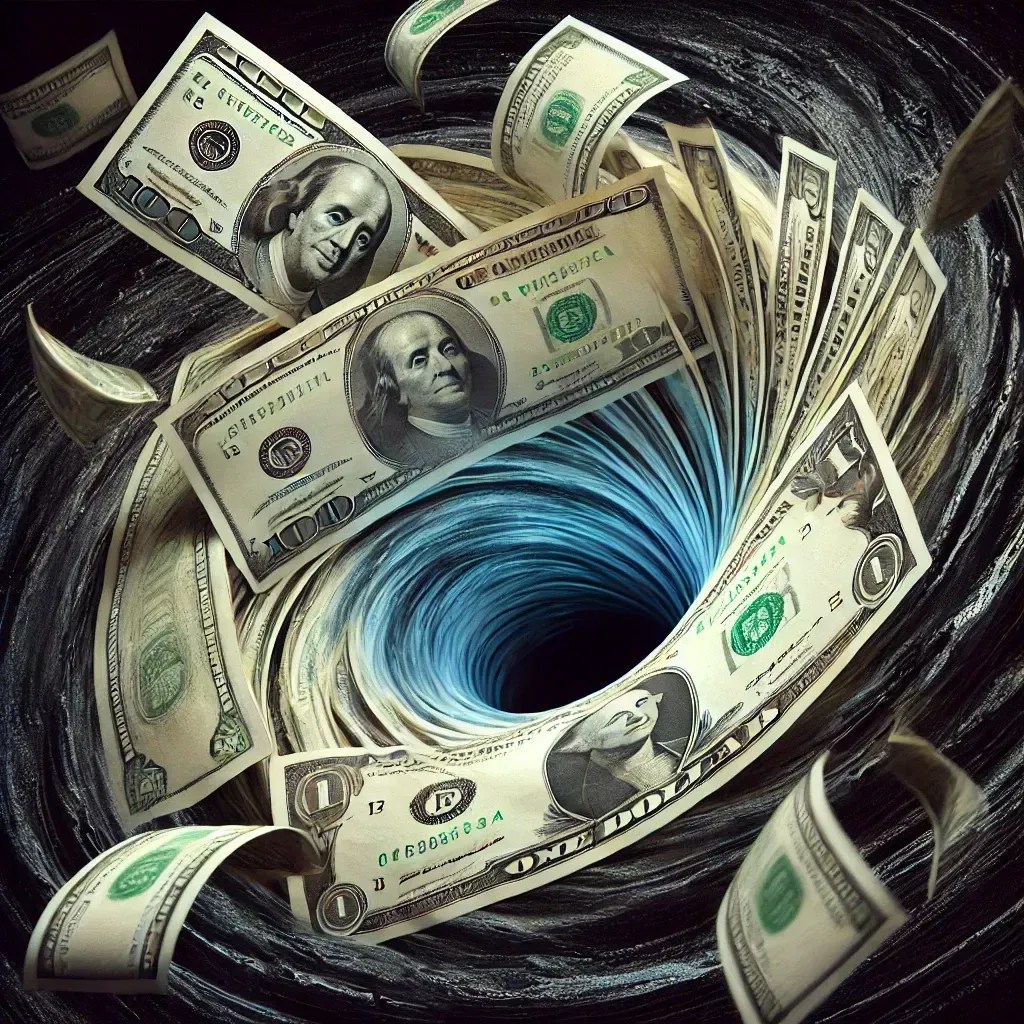
That outcome is still not a forgone conclusion. But it’s obvious that the key here is to cut spending. Dramatically. Again, the more money the government has to spend, the more they flush down the Black Hole of Waste.
It seems like the new administration is sincere about making deep spending cuts. And I truly hope they pull it off.
But in case they are not successful… it still makes so much sense to have a Plan B. And a big part of that is thinking about the potential challenges of inflation, and the loss of the dollar’s reserve status.
In our view, that means giving serious consideration to real assets.
And as we’ve talked about before, some of those real assets are as cheap as they’ve ever been right now. More on this next week.
You can also access the latest news at this address: www.whatfinger.com
-
The Government Prepping For The Collapse Of Society

Preparing for an economic collapse can be challenging, but it is essential in today’s uncertain world. By having a plan, diversifying your investments, stockpiling essential supplies, learning new skills, and paying off debt, you can increase your chances of surviving and thriving during a financial crisis.
It sounds like something out of a Cold War era movie. Boxes of medical supplies stacked high in government warehouses to help citizens in the event of a public health emergency.
However, this huge stockpile is very real. It is called the Strategic National Stockpile, and “Once Federal and local authorities agree that the SNS is needed, medicines will be delivered to any state in the U.S. in time for them to be effective. Each state has plans to receive and distribute SNS medicine and medical supplies to local communities as quickly as possible.”
For security reasons, the location and the number of warehouses that comprise the SNS are classified information – as is much of what is in them. “If everybody knows exactly what we have, then you know exactly what you can do to us that we can’t fix,” Greg Burel, director of the program told National Public Radio in a recent interview. “And we just don’t want that to happen.”
The SNS started in 1999 with an approximate $50 million budget. Since then, it has built an inventory in multiple warehouses that is valued at just over $7 billion. “If you envision, say, a Super Walmart and stick two of those side by side and take out all the drop ceiling, that’s about the same kind of space that we would occupy in one of these storage locations,” Burel said.
The SNS extensive inventory includes massive amounts of small pox vaccines, antivirals in case of deadly flu pandemic, medicines to treat radiation burns and sickness, chemical agent antidotes, wound care supplies, antibiotics and IV fluids.
NPR science writer Nell Greenfieldboyce recently visited an SNS. She was told she was the first reporter ever to visit the secret warehouses, and she had to sign a confidentiality agreement not to describe the location or the exterior of the facility.
A locked section of the warehouse stocks painkillers than can be addictive. A giant freezer is filled with medicines that need to be kept frozen. Greenfieldboyce described a humming sound that comes from the rows of ventilators that are charged once a month and sent out for maintenance once a year.
With an annual budget of more than half a billion dollars, the SNS is charged with deciding what to purchase for the stockpile. In order to do so, officials must determine which threats are realistic and which are not.
“That’s where we have a huge, complex bureaucracy trying to sort through that,” Irwin Redlener, director of the National Center for Disaster Preparedness at Columbia University, told Greenfieldboyce.
The government recently hired a firm called Gryphon Scientific to analyze how well the stockpile could respond to a range of health disaster scenarios.
Although he said he could not be specific on results of the study, Gryphon Scientific’s Rocco Casagrande told the NPR reporter, “One thing we can say is that across the variety of threats that we examined, the Strategic National Stockpile has the adequate amount of materials in it and by and large the right type of thing.”
However, he pointed out that the studies were based upon a single type of attack at a time or a single type of weapon.
The brief shelf life of some of the newer medicines is a problem for the SNS. “These are often very powerful, very exciting and useful new medicines, but they are also very expensive and they expire after a couple years,” explained Dr. Tara O’Toole, a former Homeland Security official who is now at In-Q-Tel, a nonprofit that helps bring technological innovation to the U. S. intelligence community.
Another problem is the time it would take to get the medicines from the warehouses to the people who need them in the event of real emergency. “It is not going to be easy or simple to put medicines in the hand of everybody who wants it,” O’Toole told NPR.
The warehouse Greenfieldboyce visited contains 130 shipping containers, but who will be on the receiving end of these shipping containers during an actual emergency?
“While they do have plans for emergencies, and lists of volunteers, they’re volunteers,” said Paul Petersen, director of emergency preparedness for Tennessee. “And they’re not guaranteed to show up in the time of need.”
Local public health officials have had severe budget cuts and are underfunded, Petersen told NPR. “Over and over, I heard worries about this part of the stockpile system.”
O’Toole said, “We have drastically decreased the level of state public health resources in the last decade. We’ve lost 50,000 state and local health officials. That’s a huge hit.” She commented that emergency drills would be helpful, adding, “The notion that this is all going to be top down, that the feds are in charge and the feds will deliver, is wrong.”
Meanwhile, the secret warehouses continue to stockpile supplies. “We have the capability, if something bad happens, that we can intervene in a positive way, but then we don’t ever want to have to do that. So it’s kind of a strange place,” Burel told NPR.
“But we would be foolish not to prepare for those events that we could predict might happen.”
You can also access the latest news at this address: www.whatfinger.com
-
Cashless Society Can Pose Significant Risks If You Aren’t Prepared- Many Countries Are In The Process of Eliminating Physical Cash And Coins.

First take a look at one of the most shocking videos in the world! This video actually shows us what the secret of the Trump family is related to their expressive health!!! –FULL VIDEO HERE
Aside from economic collapse scenarios, many countries are in the process of eliminating physical cash and coins. Instead, everyone has an account that holds their money. You cannot purchase goods or services without access to government-based cryptocurrency. Even if the currency itself is still backed by faith in the government, you have to use this electronic system.
The result is multiple problems that could leave you in a situation where you have the money in the bank to pay your bills and purchase goods and services, yet you cannot do so.
First take a look at one of the most shocking videos in the world!
Secret FEMA Report Warns: 4-10 Years WITHOUT ELECTRICITY. Video Below!
These threats include:
Attacks Sponsored by Foreign Governments
These hacks usually affect the bank or primary clearinghouse rather than a specific person’s account. You may be unable to purchase goods or services for hours or days. While this is inconvenient, it isn’t as bad as a full collapse, where the banks close for good.
There’s only so much you can do about this kind of hack other than make sure you can go two weeks without buying anything at any given time. It is also essential to keep a paper-based address book with phone numbers and account information so that you can contact utility companies or others who may be expecting payments from you while the bank or clearinghouse is down.
Let’s say you can connect to Wi-Fi independently of the SIM Card. Your phone app may not work with Wi-Fi. This is why I recommend having an app on your phone that doesn’t use the SIM card to dial out on Wi-Fi so that you can make the necessary calls.
Attacks Sponsored by Non-government Groups
If the hacker was able to steal money from your accounts, it could take weeks to years before you recover the money. In the short term, you will have to shut down credit cards and so on, then wait for new ones to come in the mail. You may also have to manage restoring devices and regaining access to your accounts.
Here again, make sure you can go at least 2 weeks without buying anything so that you can manage your basic necessities.
Merchant Category Codes and Social Credit Scores
Merchant Category Codes are unique identifiers that put different products into separate categories. For example, food has one set of numeric identifiers, while clothing has other identifiers.
Even without looking at your receipt, the bank and transaction clearinghouse may have some ideas about what you bought. The transaction cost can then give some estimates about quantity and item type. One day, data from all banks and clearinghouses may pool into a central government computer.

Social credit scores work like your financial-based credit scores. Consider how your financial credit score enables businesses to “reward” you with credit or better interest rates if you pay your bills on time and have an optimal debt-to-income ratio. Your social credit score looks at how you act in society. For example, China has a system that rewards things like donating blood.
This same system “punishes” people who drive drunk or engage in other activities that aren’t “beneficial to society.” People with good social credit scores may get tax breaks, an increased chance of getting a promotion, or other benefits.
When vaccines became available for COVID-19, governments worldwide were concerned because people hesitated to embrace mRNA vaccines. This led to people not complying with recommendations to get vaccinated. Social credit scores can be paired with cashless systems that will block purchasing from specific merchant category codes. It could become possible to deny people the ability to buy food, gas, and other essentials if they aren’t vaccinated.
When you can’t use cash, pressure campaigns like this will be almost 100% effective because you will have to comply or do without the necessities of life.
The only way to outlast a pressure campaign like this is to have a stockpile of food and other essentials that will last until the pressure tactics are stopped.
Moving Away From Hard Cash to Fiat Cryptocurrency
At first, you might think merchant credit codes will only come into play when the government seeks to limit, slow down, or prevent purchasing certain goods and services. The problem is that modern networks aren’t safe from hackers, including those who seek to disrupt trade for ethical reasons.
For example, the Internet Archive was recently targeted by a hacktivist group, Blackmeta. They claim they attacked this non-profit library site because it is based in the USA and, therefore, is aligned with Israeli activities. Ironically, the Internet Archive has been locked in multiple court battles with publishers that may be far more aligned with Israel. These publishers, in turn, are trying to shut down the Internet Archive because when people don’t buy from the publisher, it cuts into their profits.
Now imagine this kind of situation happening with the information stolen from the Heritage Foundation, and then used to target more granular data in banks and merchant clearinghouse systems. You could very easily see transactions declined for what appears to be “government” or other legislative curbs, when in fact, it’s some group attacking you because of a “social credit score” known only to them.
If you want to buy something right now, you can just put your credit card away and use cash. This won’t be possible once the only fiat currency available is electronic in nature. No matter how much you want to look at the potential for excess government imposition, the fact remains any group with sufficient skills and interest can cause serious problems.
AI-Based Curbing Impositions
AI can keep track of billions of records and patterns of activity. This includes determining if what you buy is “normal” for your location as well as for you as a consumer within a particular category.
Right now, that’s likely beyond the implementation of the cashless centralized government cryptocurrency systems.
At some point, though, someone on something like the “no-fly list,” etc., could wind up unable to buy certain items or in certain quantities and not realize there is a curb based on a government-based list. Considering how many lists there are, it may be difficult, if not impossible, to resolve the problem and purchase goods in a timely manner.
This includes lists that may be compiled based on estimated political slant. Consider that even now, traffic cameras can match license plates with bumper stickers and yard political signs to determine your likely preferences.
When you factor in non-governmental groups, the situation gets even worse. Technologically speaking, it’s within the scope of foreign agents and hacktivists to bring together limits on how you spend your money and non-financial activities.
As we are seeing in various hacks, there is certainly a “social credit score” being applied to businesses that can be scaled to target individuals who may want to purchase extra supplies to manage an emergency.
Use Multiple Banks to Store Your Money
Right now you can protect your money while it is still in your control. First, it is very important to keep your money in different banks. Even if one goes down, the others may still be functioning.
This applies to credit and debit cards. If you have only Visa cards, ensure you have at least one Mastercard. You can do this with prepaid cards as well as more permanent accounts.
This method won’t work if every transaction must go through a centralized clearinghouse that includes every possible bank or other institution. At this point, it’s impossible to say whether that kind of system exists and how various groups would use or misuse it.

Convenience Store Owner Threatens Man At Gunpoint After Hitting His 5th Lottery Winner In 3 Months Second, if you routinely buy from certain stores, you can purchase gift cards and have the money ready and waiting in your account. If you cannot access your bank account, you can still buy from that store. This won’t necessarily prevent you from running into rationing or other limits that may be imposed by the government through the store or at the store level.
Bartering: An Alternative to Using Fiat and Non-Government Currency
Preparing for small—and large-scale disasters is essential for your well-being and that of your family. You can still use bartering, provided you have a clear sense of the value of what you will offer and whether or not the other party needs what you have.
Make consistent contacts with small or local farmers and others who may be willing to take something in exchange for food. The trade could be anything from assisting with mechanical repairs to making garments. Everything will depend on the relationship you develop and the situation.
You can make barter arrangements for just about anything from tangible goods to training in various skills. Look for small businesses and local groups, as they may be more open to these kinds of arrangements. Spending a few dollars extra and supporting these people now may be very useful later on.
This is also a good time to form relationships with established flea markets and others with different kinds of products. These people may be very helpful when you find a way to barter for tools or other goods that you can no longer purchase using money. Here again, you have to know what their needs are and how you can meet them.
As hacks on banks, hospitals, water purification plants, and the government itself become more common, it should be obvious that a cashless society can pose significant risks if you aren’t prepared. Taking a few simple measures now may help you get through these situations as painlessly as possible.
FOLLOW BELOW THIS NEWS CAREFULLY!!! IT CAN CHANGE YOUR LIFE.
Major sites such as: BBC, FOX5, CNN, CNBC, NBC NEWS and many more are warning of an imminent collapse in the coming years!!!
Final Collapse Review – Elon Musk TERRIFIES Church Leaders (proof inside)

Source- http://www.survivopedia.com
-
Civil-Asset-Forfeiture Abuse: Real Story!
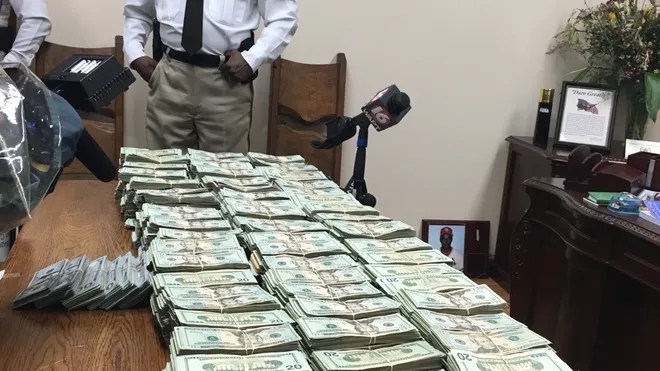
This article is the story of a friend of mine.
Is civil asset forfeiture being abused by law enforcement in the United States?
I had what I thought was a good friend. We’d been friends for several years. We shared hangar, and spent hours a day chatting.
He is an airline pilot, and — or so I thought — ran a flight school. (Turned out flight school is entirely owned an operated in his wife’s name, but that’s a whole other story).
He would occasionally fly charter jobs and such, and once went on one such trip using a customer of mine’s airplane, a twin-engined 8-seat airplane.
Roughly a week later I saw him… he drove across the ramp to the hangar and called me. “Chris, get in, I gotta talk to you.”
I got into the passenger seat, and he hands me an empty evidence bag. WTF.
Begins telling me his story when his wife walks up, and he stashes the bag under the seat. After they make their smalltalk, we drive off, and the bag comes back out.
I right away away assume incorrectly and say to him “Drugs! Are you crazy!” And he replies, “No, it was full of money.” He then proceeded to tell me how he’d flown to Mexico, and brought in an undocumented group, and was caught when he landed – Texas or Arizona, I don’t recall. Told me he spent 12 hours in handcuffs in a cell with not-so-nice people, fearing for his life, and frequent attempted interrogations, to which he apparently only replied “lawyer”.
He was utterly relieved that they let him go, and (I believe) gave the money back to him.
Shortly thereafter, I discovered his wife had bought the entire hangar complex, and this gem of a witch evicted me. Without notice. Changed my door locks.
I was in the middle of performing a detailed inspection of the aircraft used.
I struck a deal with the only other semi-viable place on the airport to finish the inspection — a T-hangar where I could wheel half the airplane in, and work half in the sun and half in the shade.
After about two weeks, the Feds roll in. ICE. CBP. FAA.
And seize the aircraft.
As it’s still quite disassembled, I’m told to get it into flying condition, and that the Federal Government would pay me to do so.
I complied. And submitted my request for payment.
And never got a dime, nor an answer.
The owner of the airplane spent a small fortune on attorneys, and eventually got the airplane back — with a blown engine. Engine overhaul would cost him maybe another $50,000.
I did have one small moment of joy. After several weeks of the government shutdown, I texted the DEA agent, and asked him: “So, how does it feel to work for the government and not get paid?”
He called back. And didn’t think it was funny.
He eventually did get paid. I still lost my life savings.
BREAKING NEWS: All Americans Will Lose Their Home, Income And Power By March 17, 2025

Additional- Can the government seize your house, car and cash, even if you’ve done nothing wrong? Unfortunately, the shocking answer is yes! Steve Forbes on civil asset forfeitures, and on how this process is being grossly abused and why it should be promptly ruled unconstitutional.
You can also access the latest news at this address: www.whatfinger.com
-
The Final Revelation: A Symphony of Rot and Hubris

Silent Landscape
The year is 2058…
Skyscrapers, once symbols of progress and power, now stood as hollow, decaying shells. Entangled with vines and creeping vegetation, their frames of twisted steel clawed at the sky. Shattered windows gaped like empty eye sockets, staring blindly at the deserted streets below. The ground was a mosaic of cracked asphalt and decaying artifacts from a world whose demise had been long overdue. The air hummed with the eerie stillness of abandonment, broken only by the whisper of wind through empty buildings and the distant groan of swaying metal. The sky was a fever dream—a wash of blood-red and smoldering amber, where clouds boiled like molten iron, backlit by the sun’s dying ember as it sank into the horizon. This otherworldly sunset spilled across the ruinous landscape, casting long, crisscrossing shadows.
Cloaked in a tattered robe that seemed to merge with the surrounding wreckage, a lone figure walked where the remnants of human ambition had been swallowed by nature and time. His hooded face, half-lost in darkness, hinted at a respirator grafted from scavenged tech, wires snaking around his face like cybernetic veins. When not tending to his small garden of genetically modified crops designed to withstand the increasingly harsh conditions of a hothouse Earth, his days were spent reclaiming and repurposing fragments of the technosphere, curating the relics of a civilization that would never have historians. Clinging to such routines was vital to maintaining his sanity. He moved with a deliberate, almost ritualistic pace down the debris-strewn street as he remembered the stories his parents told him about the world before—when the skies were still blue, and the air didn’t burn your lungs if you breathed too deeply. From his journal…
“I was born into a world that was already unraveling. The air was thick with 435 ppm of CO2, and people argued over whether it was too late to change. They called it climate change, but it was more than that—it was the end of everything we knew. By the time I was old enough to understand, the storms had grown fiercer and the crops were all failing. As the food and water disappeared, wars became rampant. I didn’t understand why everyone was so angry, why they couldn’t just work together. But now… now I get it. Fear makes people selfish. And when the world started to die, so did we. Governments fell, cities drowned, and the skies turned gray. By 2050, the collapse was complete. The last messages from satellites stopped. The last voices on the radio went silent. And now, here I am, thirty years old, standing in the waste of a world that couldn’t save itself. I am the final survivor of a species that devoured itself in an orgy of greed and ignorance.
I don’t know how I’m still here. Maybe it’s luck. Maybe it’s a curse. I’ve walked through uninhabited cities, overgrown with weeds and silence. I’ve seen the bones of the old world disintegrating under the sun. Sometimes I talk to the shadows, just to hear a voice. Sometimes I wonder if I myself am even real.
I wish I could’ve seen the world the way it was supposed to be—green and alive, full of people laughing and living. But all I have are the ashes and the memories of what we lost. I don’t know if anyone will ever read this, but if they do… don’t make the same mistakes my ancestors did. Don’t take the world for granted. Because once it’s gone, it’s gone forever.”
In the end, he clung to a fragile truth: Meaning is not found, but forged. Even here, in this desolate world, he chose to witness. To breathe. To exist as a testament to what once was. The universe may not care, but in his defiance—watering a lone plant, singing off-key to the horizon—he became both mourner and monument. A flicker of meaning in the infinite dark, until even that flicker faded. Let the cosmos shrug, he thought, Let entropy gnaw. For a fleeting moment in time, he was the curator of the absurd, the bard of the extinct, the gardener of ghosts.
The Final Revelation: A Symphony of Rot and Hubris
The man’s name was forgotten, even to himself. He had not spoken it aloud in years. Names required other people to give them meaning, and the only company he kept now were the ghosts that flickered at the edges of his vision—phantoms of crowds that once thronged these streets, their laughter now reduced to the creak of collapsing girders. His garden, a patch of sickly green defiantly clawing through irradiated soil, was his sole tether to purpose. The crops were grotesque parodies of life: tomatoes swollen like tumors, cornstalks oozing black sap, all engineered by desperate minds in the final days of the Biosphere Collapse. They kept him alive, though he often wondered if the mutations in his cells—the ones that made his fingertips numb and his heart race—would kill him before starvation could.
The man’s boots crunched over shards of glass and bone as he ventured deeper into the cavernous remains of what was once a cathedral of human ingenuity—a monolithic structure half-buried beneath the earth, its entrance yawning like the throat of some prehistoric beast. He had stumbled upon it weeks prior, while digging for uncontaminated soil near his garden. The door, though rusted and bowed, bore the insignia of a serpent coiled around a globe, its eyes twin rubies that glinted even through layers of grime. It took him days to pry it open, his muscles trembling with exertion, but curiosity had become a rare luxury in his barren existence.
Inside, the air was cooler, tinged with the metallic tang of preserved decay. Flickering emergency lights cast a jaundiced glow over walls lined with steel panels, their surfaces etched with the faded logos of long-dead conglomerates: Elysium Solutions. Prometheus Industries. The Gaia Initiative. His respirator hissed as he descended staircases spiraling deep into the earth, each step echoing like a funeral drum.
At the lowest level, he found them…

The Chambers of the Chosen
Like something from a futuristic sci-fi movie, rows of hibernation pods stretched into the darkness, each one a sarcophagus for the withered human husks within. Men and women in tailored suits, their skin parchment-thin, clung to the vestiges of opulence—gold and diamond cufflinks, silk scarves, faces frozen in expressions of smug serenity. Their pods were adorned with plaques: Architect Series. Project Lazarus. Rebirth Protocol Initiated 2045.
A holographic terminal flickered to life as he approached, its blue light slicing through the gloom. The face that materialized was pristine, golden-haired, and smiling—a corporate avatar with eyes like shards of ice. “Welcome, Architect,” it intoned, voice syrup-smooth. “Status report: Global cleansing at 98.7% efficacy. Surface conditions stabilized. Initiate Phase Three: Repopulation.”
The man’s breath hitched. His numb fingers brushed the screen, pulling up files—decades of encrypted memos, video logs, clinical projections.
“The herd must be culled,” declared a sharp-faced man in a 2035 recording, his suit worth more than a city block. “Climate collapse is inevitable, but we can sculpt it. A controlled demolition. Famine. Sterilization vectors in the GMO crops. The masses will blame themselves—their consumption, their wars. By the time the dust settles, only we will remain to inherit the Earth.”
Another log, 2042: a woman smirking over champagne. “The beauty of it is, they’ll beg for our solutions. Bioengineered crops to ‘save’ them? Perfect. Once ingested, the sterility agents activate. No more hungry mouths. And the mutations… well, collateral damage.”
Laughter, crisp and cruel, echoed through the chamber.
The man staggered back, clutching his chest. His garden. The swollen tomatoes, the oozing corn—he’d been eating them for years. He tore off his gloves, staring at the lesions webbing his hands, the black spider veins creeping toward his heart. They’d sterilized him. They’d turned his body into a tomb for a lineage already extinguished.
But the terminal’s final log gutted him. 2050: the same golden avatar, now fraying at the edges. “Critical error detected in Lazarus Protocol. Solar flares compromised hibernation and preservation systems. Revival sequence failed. All Architects deceased. Project Lazarus: Terminated.”
The elites had miscalculated. Their sanctuary became a crypt. Their grand design—a symphony of control—had devolved into a cacophony of blunders. They had orchestrated the apocalypse, only to be suffocated by their own arrogance, their pods now grotesque fish tanks for corpses.
The man’s laughter erupted, raw and jagged, bouncing off the walls and climbing into hysteria, then crumbling into sobs. All this death, all this pain—for nothing. No rebirth. No renewal. Just ash and irony, thick enough to choke on. You thought you’d be gods, he mused, but you were just rats in a maze of your own making.
He fell against a pod, its occupant’s skeleton fingers pointing at his face. The mutations were accelerating—his vision blurring, breath shallow. As darkness crept in, he wondered if the Architects’ ghosts haunted this place too, screaming into the void with him.
The Last Sunset
Aboveground, the man crawled to his garden and collapsed at the edge of the plot, his breath rattling through the respirator’s filters. With trembling hands, he unclasped the mask, letting it fall. The air bit his lungs, acrid and metallic, but he welcomed the pain. It was real. He was real. Above him, the sky burned—a molten tapestry of crimson and gold, the sun a bloated orb sinking into the horizon as though even it longed to escape the weight of this ruined world. He plucked a deformed tomato, its skin pulsating, and bit into it. Acidic juice dribbled down his chin. He slumped onto his side, cheek pressed to the soil. The ground pulsed faintly, as though the Earth itself still harbored a heartbeat beneath its scars. His mother’s face flickered in his mind—her calloused hands, her voice singing lullabies as fires raged outside their bunker. “The world’s just tired,” she’d lied.
In his final moment, he smiled. Not at the elites’ hubris, or the cruel joke of their failed Eden, but at the simplicity of it all. The Earth needed no Architects. It would fold their bones into its crust, dissolve their bunkers into sediment, and let the rains scrub their epitaphs from the stones.
When the sun dipped below the horizon, it took him with it. His body curled into the soil, a fossil among fossils in the barren ground.
The Earth, as ever, was unimpressed. They were here for just a short while, and she had survived her worst tenants.

-
Top 6 Most Dangerous Medicines For People Over 40… Are You Taking any of These?
Many people weigh their physical and mental health by how often they see a physician. Those who rarely find themselves in the presence of doctors tend to be better for it. This is strictly anecdotal but consider what Voltaire said in the 18th Century.
“The art of medicine consists of amusing the patient while nature cures the disease.”
All kidding aside, doctors are a very important part of our society. You will face an infection or virus that will require a doctor. This article is not intended to vilify your physician. In 2018 you have access to medical care at any moment. If you are suffering from a severe infection or illness, seek medical treatment.
What this article is intended for is to understand that there are prescriptions out there that are imprisoning people. I chose the word ‘imprisoning’ carefully because it best describes the life of someone who has become dependent on the various medications we are going to talk about.
There is a lot of money to be made in the business of medicating humans. It’s a massive industry that has bigger concerns than your health. Take this example by Chris Martenson from Peak Prosperity:
“Pharmaceutical companies quietly fund opposition to medical marijuana ballot initiatives because the data shows that the use of safe and effective marijuana seriously cuts into the extremely profitable sales of highly addictive and deadly opiates.”
Statins
These lipid lowering drugs are often prescribed to people with heart conditions and have seen a serious boom as of late. I am sure you know at least one person over 40 who is on statins. These drugs will reduce blood lipids but they come with a slew of other side effects. It seems statins can be linked to other life-threatening disease as well as negatively effecting the overall efficiency of the body.
To best understand the motivations behind statins you must get a grip on the industry. Consider this from the AHN-USA.com
“Heart disease, as many of us know, is one of the leading causes of death in the US, killing about 610,000 people each year. Big Pharma—in the belief that cholesterol is the primary factor in heart disease—developed statin drugs that would lower cholesterol and reduce the risk of heart disease. The drugs, which have been accompanied by massive marketing campaigns, are huge moneymakers for the drug industry, to the tune of about $29 billion worth of sales in 2013. That’s the kind of outrageous money you make when you convince one in four Americans over the age of 45 to take statins.”
Alternatives:
Cholesterol is the glue that heals your endothelial wall. It is not a death sentence, it’s an important part of your body’s natural functions. The best way for you to get your levels in order is to exercise. There are things like oat bran, garlic and barley that have been shown to affect cholesterol levels as well.
SSRIS
We could start with the low hanging fruit and mention most of mass shooters who were prescribed these medications. That is an argument against them that is all over the web today. The deeper root of the issue with selective serotonin reuptake inhibitors is the patient’s ability to manage the medication and the use of these meds as a long-term solution.
These medications become incredibly dangerous when the dosage changes sporadically i.e. if the person on them forgets or decides not to take so many or stops taking them altogether. There are no safeties in place to stop this. Instead, you have an individual who is struggling with their own mind and altering its chemistry as well.
The best examples of SSRI use come from folks who paid close attention to their bodies, used the as a rung to grasp and once they felt better weaned off them. The biggest problem is that it pays to keep people on them.
Flu Vaccine
The flu vaccine is a gamble. It’s a gamble every year. Doctors attempt to tell the future by guessing which strains of the flu will show up and do the most harm in the coming season. These strains make up the flu vaccine and are pumped into your body.
It’s a more precise than doctors pulling strains of the flu out of a hat but it’s still very much a gamble. I have only taken one flu shot and it was the year my first son was born. I didn’t get the flu but I haven’t gotten the flu in many years.
There are allergy concerns as well as other contaminants found within the makeup of the flu vaccine.
Alternative:
The flu is a virus and I have found that the best way to deal with viral infections is by pumping yourself with high doses of ascorbic acid. Each day I take between 1-2000mgs of Vitamin C in the crystalized form.
Ibuprofen
You may not have expected to see Ibuprofen on the list. It is a benign pain reliever and anti-inflammatory, right? Low dose, probably something you take at least once a week. The truth of the matter is that prolonged regular use of Ibuprofen can wreak havoc on your body. Consistent use will do long lasting damage to internal organs like the liver and the kidneys.
The other important and less known issue is the effect ibuprofen has on inflammation and your gut. Anti-inflammatory OTCs have been linked to stomach issues and bleeding ulcers in the stomach.
Alternative:
One of the best ways to rid yourself of inflammation is to look at what you are eating. Things like gluten and sugars have been shown to increase inflammation in the body. Eating foods like ginger and turmeric along with things like fatty fish can affect the inflammation in your body. Look at your diet for answers to your pain problems before taking pills.
Prednisone and Cortisone
The steroids are being prescribed to people in America all the time. Some people who suffer from things like asthma, lupus and rashes are on these medications. You could get them prescribed for other issues as well. These meds mess with natural hormone production in your body. They also have negative effects on your immune system. They should never be taken for prolonged periods.
They have also been shown to affect:
- Blood Sugar
- Mood
- Weight Gain
- Fluid Retention
Alternative:
In most cases you are taking these meds for some sort of inflammation. It’s important to look at how your diet and exercise as well as daily activities and environment might be affecting your inflammation. Similar to what was recommended for the use of Ibuprofen.
Chemotherapy
If you have ever seen someone ravaged by chemotherapy its terrible to watch. Chemo is our answer to cancer right now and it’s a bad one. In most cases the chemo only makes the cancer recede before battling back with more voracity.
Alternative:
There are some incredible findings and case studies on CBD oil and the effect of THC on cancer cells. Consider the positive effects that CBD oil users are having in their battle with cancer. This is a much less invasive method in comparison to the devastating effects of chemo.
There are millions of dollars put into the effectiveness of drugs at the onset of their use. Will they fix the problem quickly? The biggest issue with Pharmaceuticals is that there is not the same money or effort put into understanding long term effects or long-term necessity of these drugs.
-
Subscribe
Subscribed
Already have a WordPress.com account? Log in now.
 Site Title