-
Millions of Americans Are Concerned About the Overbearing Power of the Government- How to Escaping When Martial Law Is Declared
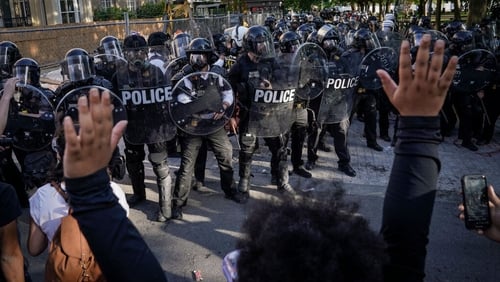
Martial Law under a government with bad intentions can have devastating consequences. Is history about to repeat itself and will we face a violent enactment of martial law in the years ahead?
Here are 10 ways to fool the authorities and escape with your life and family.
A violent and horrifying life in a concentration camp is what you may face one day under martial law.
We’re not talking about a regional or short term enactment of martial law. We’re talking about martial law under a government with an agenda to root out and destroy any elements that are not in line with their specific agenda.
How many Jews learned the hard way in World War II that the Nazis hated Jews and wanted to exterminate them?
In a government collapse following any number of disastrous events that might befall a nation, we can bet that the next government to come to power in this day and age will need force, and a lot of it, in order to quell a rebellious people.
Force shows power and overwhelming violence spreads fear across a population. And there’s no better way to show force and enact fear into a people than to violently enforce martial law.
Making Sense of All These Cyberattacks
In World War 2, the Nazis set out to conquer Europe; it was part of the Nazi agenda before World War 2 ever began.
If it’s going to happen to us, we can bet that extensive planning and military operations that include secret government agents, computer hacking, weapons smuggling, and covert alliances are already taking place.
In the end, who will be the governing party that will enact martial law? It won’t be under an American flag.
Not the flag of our founding fathers that is. Don’t get me wrong. The American flag may still fly — but if it does fly, it’s going to be dwarfed by a larger flag with any number of national or foreign symbols poised above it.
Escaping Martial Law
1. Run, Don’t Walk, Run
With death bearing down on your community, on your neighborhood, on your front door, it’s better to make a hasty retreat for the countryside than to wait too long and find out the hard way … that you waited too long to evacuate.
Right now, be prepared to ensure that you have access to news, even following a loss of the power grid. The latest emergency AM/FM and weather alert radios now have multiple alternative power sources, from handcrank to built-in miniature solar panels, while still also taking rechargeable batteries and standard AA batteries, which you can have a supply on. This can help ensure you have access to news, which may be a lifesaver one day if you hear (on your emergency radio) that a rogue military faction is seizing communities and setting up martial law.
Finally, Ham radio is another option for news from the local region especially if you’re on the move, and if you have family or friends in the region with two-way radios. Note, U.S. law currently requires a license to operate Ham radio, but if government collapses, who’s going to enforce that rule? (U.S. law will be no more.)
However you get that news of approaching martial law, you can now make a hasty retreat before your neighborhood is locked down. What if the first step of a rogue faction is to seize and interrogate (torture) healthy adult men who they see as a possible threat to their power?
Imprisonment, Executions, Torture
The Nazis did this to the Jews in World War II — and there were a lot of executions if you remember (the Bible tells us that it’s going to happen again in the end of days — imprisonments, executions at the hands of the Anti-Christ — but on a bigger scale than what the Nazis had in store for the Jews … Islamic Jihad anyone? They hate Christians; that makes them a candidate for Anti-Christ in my book; aren’t they right now wiping out large numbers of Christians in the Middle East? And now they’re in America, recruiting for Jihad on U.S. soil… Is it possible that right now Bible prophecy is being fulfilled right before our eyes?…)
Back to that escape from martial law…
From the countryside, you can hide safely under the cover of the forest, and make plans and preparations for the next leg of your journey.
A large number of Jews were able to escape the Nazis by fleeing into the forests, surviving the weather and foraging for food (or just handouts of free food), and eventually escaping. Sometimes they had the help of “underground” elements, resistance fighters and their supporters.
2. Seek Cover and Stay Camouflaged
Jews who waited too long to evacuate, or moved too slowly, or didn’t do a good job hiding out, were rounded up, or simply shot where they were found. The key to not being found is to:
– Stay under cover (you don’t want to be spotted from a drone, helicopter, or plane circling in the air)
– Avoid “line of sight” (position yourself so that your path of travel isn’t visible to anyone scouring the land with binoculars; trees and tall brush can provide concealment from every direction; avoid meadows and open spaces).
– Be ready to belly crawl … slowly (not getting caught is of utmost importance; be ready to drop to your belly and crawl on all fours, stomach and head low to the ground, and move at a snail’s pace; moving extremely slow will help you avoid snapping twigs and also avoid shaking the brush or tall grass around you, movement which can give away your position to anyone close by).
– Be patient (if you have any questions or suspicions about a possible searching party trying to track your position, be ready to stop moving completely and simply lay right where you are for the next several hours — until the cover of dark perhaps — or when you feel it’s safe to start moving again).
– Hide well off trail (the further you can get from any noticeable trail to hide, or just to sleep, the better; if these are just soldiers acting on orders, they may not be too excited about slugging through a swamp or wetland, or climbing a steep hill of dense brush, which brings us to…)
3. Choose the Path of MOST Resistance
From your starting point, what is the hardest way into the wilderness? What has the most brush, the steepest gully, that is still passable? If authorities are not right on your tail, and you have a head start, consider taking a path that no one in their right mind would be likely to take.
It might take you 30 minutes to climb a 200 yard hillside through the woods, but if that hillside climb puts you on a path off the beaten track, you can increase the odds that you’ll never be found, and that no one is going to follow the path you have taken.
4. Cover Your Tracks
Soldiers acting on authorities to round up evacuees might not be well trained (or have any real training) in tracking. That said, you should be cautious along whatever path you take not to leave signs of your presence, and especially not to leave signs revealing the direction you are traveling.
Signs to avoid are:
– Broken branches (avoid breaking branches; even twigs breaking off brush as you pass by are tell tale “white” signs pointing to your presence)
Flattened grass (crawling through an open area of grass comes with a danger; you may leave a trail of flattened grass pointing in your direction of travel; if you have time, and you have to travel through grass, for a short distance into the grass, turn at repeated points, and use your hands to stand the grass back up, so that it’s no longer flattened and conceals your path of travel)
– Foot marks in damp soil (be ever cautious about open areas of soil, especially damp soil; damp soil is a fast way to leave a shoe print revealing your direction of travel; step cautiously over and around open areas of soil to avoid leaving shoe prints).
– Camp fires (smoke from camp fires can alert people from miles away to your location and ashes from a camp fire on the ground can tell trackers just how long it’s been since you were there; as much as possible, avoid any camp fires until you are a very safe distance away; keep them short, brief, and very small when you do need one)
– Litter (don’t drop anything to signal your presence, from an empty matchbook to a cigarette lighter to garbage from your food supplies; bury everything you don’t want well off trail where it won’t be found)
5. Fool Any Pursuers
So you plan on entering the woods near a highway? Cross to the other side of the highway and break a number of branches and clear a path of brush and create what looks like a trail leading in the opposite direction you actually plan to travel.
Continue forward along that false trail you’ve started, and leave additional signs giving pursuers the impression that is the direction you or others are traveling.
Now go back to your original planned starting point, perhaps “choosing the path of most resistance” (see above), and head off in the opposite direction.
Pull this off and you’ve just made a safe getaway and any pursuers will be shortly later on a wild goose chase leading to nowhere.
– Now is a great time to litter. Remember that rule above about avoiding littering — well there is a time to litter, and that is when you want to use litter as a way to fool pursuers into believing you went one direction, or crossed a river, when you actually doubled back and went another way.
Consider dropping an empty matchbook and arranging things to look like a temporary camp site.
In one area, urinate (or pour water) on the ground, and then make foot prints in the damp soil, that look like you are walking in a certain direction.
Got an old shirt? Cut a length of paracord and tie it securely to a rock, and then tie both to a shirt. Wrap the rock in the shirt and then throw both over a narrow river you have no intention to cross (choose a point in the river where it would be a dangerous crossing) so that the rock and shirt fall on the other side of the river where the shirt is visible to anyone searching from your side of the river (dunk your shirt in the water to give it more weight prior to your toss — it should travel a few feet further than it might if dry)
In a short while any pursuers who see your shirt may be fooled into thinking you crossed over the river. By the time they cross (if they are even able to cross, remember this is a fast point of the river we’re talking about) and discover the rock tied to your shirt, and possibly realize they’ve been fooled, you may be far off in a different direction.
Make it more believable by making foot prints in a damp area of sand or dirt near the river bank that point to the river.
6. Only Carry the Essentials
If you’re prepared, and in reality everyone should be prepared, you would have had a Bug Out Bag packed and ready to go, though a lighter weight Bug Out Bag may be called for if you find that you need to make a hasty retreat and have a tough road ahead of you.
What are some ways you can shed pounds from your backpack?
When it comes to the outdoors, it’s common for people to bring more changes of clothing than they actually need. The more time you spend in the outdoors, and the more time you spend on any treks of any real distance, you’ll realize that you can get by in the same set of clothing just fine. Having a second outfit you can wear as an additional layer is recommended, as evening temperatures can drop, and you don’t want to freeze. The point of all this is that too many outfits will only bulk up your bag and add extra weight and only slow down your travel time.
Additional ways to shed pounds —
– Avoid carrying a tent — instead, carry a simple waterproof bivy sack.A bivy sack is a thin yet rugged bag designed to fit over a sleeping bag and keep you sheltered from the elements.
– Carry less water into the wilderness (unless traveling through dry areas where natural water sources are few or non-existent for several miles at a time — then you’ll want to carry a lot more water than normal); be sure to have a plan for procuring drinking water along the way (Lifestraw’s personal water filter not only quenches thirst in a hurry, but only takes a few seconds to operate, with no additional waiting time as opposed to other methods of water procurement).
– Choose a smaller flashlight that takes smaller batteries (but always have a few extra) — a headlamp is a great choice because it gives you free use of your hands, allowing you to climb or pick your way through brush if you have to escape during the cover of night (of course be smart about when you use it as any kind of light can give away your position to someone trying to track you).
– Cut your emergency candle in half (have a 55 hour emergency candle? Take a hacksaw to it, and cut it in half to 22.5 hours of burn time)
– Pack calorie-rich freeze dried food or light weight emergency ration food bars that do not need any water to prepare (stopping to collect water can cause you to lose precious minutes when you are making a run for it, thus a non-perishable meal that is ready to eat as soon as you open the package is a good idea to keep stored in your vehicle and your Bug Out Bag).
– Include a plan to snack on edible insects; some of you are squeamish at this idea — but edible insects can provide enough calories and help you get by for a few extra hours or even days at a time, adding time and distance to your escape from otherwise captivity and possible death in a concentration camp.
Right now your goal is to just get away — you can hunt, fish, and trap once you are dozens of miles away or more into a remote area.
– As you move along the forest floor and or along a rivers edge, be ready to collect edible plants, roots, nuts, and berries — but be careful, many are poisonous and not edible. It may be a lot easier for you to recognize edible insects and make do with these instead of risking your life with plants, roots, nuts, and berries found in the forest.
Remember, the wrong plant or berry can be a fast way to an early death. Foraging is a skill that today can be learned by reading books on foraging for wild plants, taking classes, and then practicing what you have learned so that you are ready for a survival situation.
7. Be Careful What You Tell People
If you come across strangers, keep details about your travels to yourself. Unless they’re part of your group, no need to share details just in case these strangers you’re talking with are soon after caught by authorities and give up your location.
What about tracking dogs?
While tracking dogs may be a threat for some evacuees, a large scale evacuation into the countryside is likely to leave authorities short handed and short on adequately trained canine teams.
8. Press On and Keep Traveling
Feel like there’s enough distance between you and them? Don’t take any chances and be ready to spend a few more days and even weeks traveling into remote areas. Better safe than sorry.
Hunting pressure and large numbers of evacuees fleeing into the wilderness in several regions of the country will send native wildlife fleeing for remote areas where there is a lot less human activity. It is these remote areas that the hunting is likely to be best — especially hunting for bigger game like deer, elk, antelope, and moose.
9. Seek Out Remote Wilderness
The difference between the World War 2 Jews vs survivors from a tyrannical government that may one day come to power today is that the Jews had allied nations that they could flee to. In fact many fled Europe completely and made it to the U.S. and of course millions had help being relocated to the present day nation of Israel in the years following World War 2.
If we have to run from a tyrannical government that one day comes to power and enacts martial law, we may not have any allied nations to flee to at all, and so the only real way to survive long term may be to seek out remote wilderness far off the beaten track, well under the cover of forest (gotta hide from those drones), as well as lands shielded by mountains (where there’s no roads, there’s no easy way for armies to move enemy soldiers in and out, putting the odds of escaping the clutches of tyranny and martial law in your favor).
10. Teach the Children
While the history books are being re-written by the new powers that be, while the White House lays in ruin and Lady Liberty is just a scattered mountain of debris and a face laying horizontally across the ground, there will be one book that stands the test of time, with a history that can and should be passed on to children. There may be a lot of debate and some people swear by it and others swear against it — but only in the last pages of the Bible and the many prophecies concerning the End of Days will any of this ever make any sense.
There are several more details on survival when it comes to martial law and being forced into a life of living off the land and living off what you and your family can carry on your backs. Unfortunately, this isn’t fiction and it’s something that has occurred more and more in recent years.
Refugees in war torn nations (do I need to make a list?) and other nations struck by catastrophic disasters (Haiti, for example) have sent survivors fleeing for the countryside or simply living in the ruins of their towns and villages and large tent cities that have bred crime and corruption along with dangers to women and children — and the fathers and brothers who would otherwise seek to protect them.
Conclusion
In war torn nations in the modern day, and regions turned to ruins by natural disasters, many have died from starvation and disease, and others from drinking contaminated water; others have fallen victim to gangs or been killed by rogue armies that have come to power, perhaps enforcing their own version of martial law.
Could martial law under a tyrannical government come to the U.S.? Could it come to the UK, Canada, and other Western Nations? Best to be ready and not caught off guard, should martial law one day arrive soon.
Perhaps Jesus said it best when he said:
“Be on guard, so that your hearts will not be weighted down with dissipation and drunkenness and the worries of life, and that day will not come on you suddenly like a trap; for it will come upon all those who dwell on the face of all the earth. But keep on the alert at all times, praying that you may have strength to escape all these things that are about to take place, and to stand before the Son of Man.”
-
Arrests, Lies and Propaganda

Using the full weight of his presidential authority, the President of the United States has called for the arrest of whoever is responsible for an escalator not working. Yes, an escalator. These are the times we live in. This is Trump’s America. And no wonder the rest of the world is laughing at us.

After his embarrassing time at the United Nations this week, Donald Trump posted a lengthy rant on his state propaganda platform, Truth Social (or as I call it, Trash Social,) about what he called “triple sabotage”:
A REAL DISGRACE took place at the United Nations yesterday — Not one, not two, but three very sinister events! First, the escalator going up to the Main Speaking Floor came to a screeching halt. It stopped on a dime. It’s amazing that Melania and I didn’t fall forward onto the sharp edges of these steel steps, face first. It was only that we were each holding the handrail tightly or it would have been a disaster. This was absolutely sabotage, as noted by a day’s earlier “post” in The London Times that said UN workers “joked about turning off an escalator.” The people that did it should be arrested! Then, as I stood before a Television crowd of millions of people all over the World, and important Leaders in the Hall, my teleprompter didn’t work. It was stone cold dark. I immediately thought to myself, “Wow, first the escalator event, and now a bad teleprompter. What kind of a place is this?” I then proceeded to make a Speech without a teleprompter, which kicked in about 15 minutes later. The good news is the Speech has gotten fantastic reviews. Maybe they appreciated the fact that very few people could have done what I did. And third, after making the Speech, I was told that the sound was completely off in the Auditorium where the Speech was made, that World Leaders, unless they used the interpreters’ earpieces, couldn’t hear a thing. The first person I saw at the conclusion of the Speech was Melania, who was sitting right up front. I said, “How did I do?” And she said, “I couldn’t hear a word you said.” This wasn’t a coincidence, this was triple sabotage at the UN. They ought to be ashamed of themselves. I’m sending a copy of this letter to the Secretary General, and I demand an immediate investigation. No wonder the United Nations hasn’t been able to do the job that they were put in existence to do. All security tapes at the escalator should be saved, especially the emergency stop button. The Secret Service is involved. Thank you for your attention to this matter!
First, an escalator in the UN building stopped while he and Melania were on it. He claimed it could have killed them and demanded the culprits be arrested. Then, his teleprompter glitched for fifteen minutes. Finally, the sound system failed for part of his speech, making it hard for leaders in the hall to hear him. In Trump’s mind, none of this was a coincidence; it was a coordinated effort to humiliate him. He called it a “real disgrace,” demanded the Secretary General investigate, and declared the Secret Service was now involved.
Now, let’s be clear: escalators break. Microphones cut out. Teleprompters freeze. Every one of us has been in a mall when an escalator was down, or at a school assembly where the sound system squealed. Leaders are supposed to roll with it. What makes this dangerous isn’t the malfunction, it’s that the President of the United States sees a global conspiracy against himself in every technical hiccup. And maybe it was a coordinated attack on him, but our President calling for people to be arrested over a broken escalator shows just how far we have fallen as a country.
And here’s why that matters: The United States funds nearly 20 percent of the United Nations’ budget. Billions of our tax dollars keep it functioning. When the president of the country footing the biggest bill accuses the UN of sabotage over an escalator, it’s not just embarrassing; it destabilizes trust in one of the few global institutions meant to prevent wars, fight pandemics, and respond to humanitarian crises. The world watches him spiral, and they see America spiraling with him. This creates real concern that the U.S. might cut funding or even withdraw from the UN. And even if that sounds unlikely, the message is clear: the world is getting more dangerous. Desperate nations, watching America pull away, may feel freer to do desperate things.
And then, as if that wasn’t embarrassing enough, he followed it up with this:
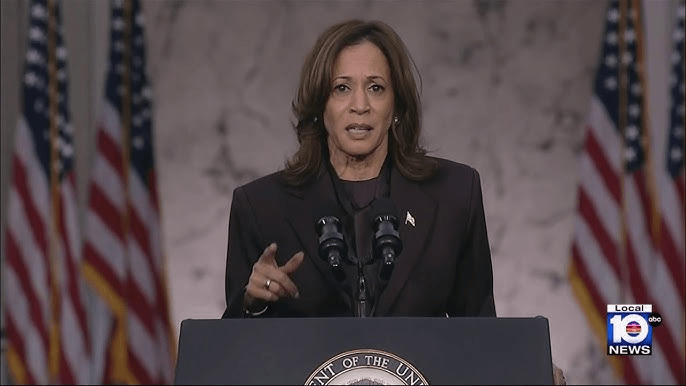
“Kamala Harris, who is DUMB AS A ROCK, is going around and using, as a standard part of her Speech on why she lost the Election, that 2024 was the ‘closest Presidential Election in the 21st Century.’ Everyone knows this is a lie, and was covered as such by Fox News!”
I get it. You don’t have to like your prior opponent. But when you’re president, you don’t stand on the world stage and call the former Vice President “dumb as a rock.” That’s not governing. That’s schoolyard taunting. That is not how the President of the United States should be acting.
And here’s the kicker: Kamala Harris wasn’t lying. The 2024 election was decided by just 1.3 percent, about one vote out of every hundred. That’s razor-thin. Trump wants you to believe it was a landslide. It wasn’t. It was one of the closest elections of this century, and the truth matters. Because when leaders lie about the size of their victory, they aren’t just rewriting history. They’re erasing democracy itself.
When the president lies about his victory and mocks his opponents, it doesn’t stay contained to politics. It seeps into the culture. It shapes how people talk to each other. It rewrites what we consider normal. And the American way of life is also being reshaped, not by strength, but by humiliation.
I was in the car with my kids today when my youngest told me about a projection onto a building in Los Angeles mocking Kash Patel. His face, his already unusual eyes, exaggerated to look even more unusual. We laughed for a moment, because it was absurd. But I stopped. I told my kids: this isn’t normal either. In a decent country, we don’t plaster people’s faces on buildings to humiliate them. And we shouldn’t normally laugh about it either.
But then we talked about “grey area” thinking. How these are unusual times. How resistance takes many forms. And how we can acknowledge that this isn’t the direction we want our country to go, while also recognizing that Kash Patel is a deeply disturbed man in a serious role, doing a terrible job. That is the difference between what Trump is doing and what the people responsible for the Kash Patel protest are doing.
Kash Patel is unqualified, dangerous, and embedded deep in Trump’s machine. The projection wasn’t random cruelty. It was resistance. It was meant to remind people who this man is and what he represents.
Trump’s insults, on the other hand, are cruelty for cruelty’s sake. They are a tool of power. They’re meant to belittle, humiliate, and break down respect for anyone who dares oppose him.
Then came another rant:
“The Democrats want to leave DEAD PEOPLE on Medicaid and Social Security rolls, so that Criminals can continue to be allowed to receive that payment, and steal their money.”
This is not policy. This is propaganda.
Here’s the truth: the Social Security Administration maintains what’s called the Death Master File. Every month, deaths are reported by states and families, and benefits are stopped. Do errors happen? Yes. Sometimes there are delays. Sometimes families don’t report deaths immediately. But the idea that Democrats, or anyone, want to keep paying benefits to dead people is absurd. In fact, an inspector general report found that fraud from “deceased beneficiaries” makes up less than 0.01 percent of all payments. It’s not systemic. It’s not a conspiracy. It’s just the messy reality of any large system. I can tell you this with certainty: no one in either party wants to pay dead people. This is not how government works. This is not how Social Security works. This is a lie.
But Trump repeats it. He repeats it because he knows that repetition makes lies stick. He repeats it because he knows that his followers don’t question him, they parrot him. Say it once, it’s a joke. Say it ten times, it’s a headline. Say it a hundred times, and it’s gospel. That’s the dictator’s playbook.
And while he spreads lies, he also wages vendettas. This week, MSNBC reported that prosecutors in Virginia are preparing to indict former FBI Director James Comey for perjury tied to testimony he gave in 2020. The statute of limitations is about to expire, so the timing is no accident.
Trump has hated Comey ever since 2017, when Comey confirmed that Trump was under investigation and refused to pledge loyalty. Trump fired him. He attacked him. And now, years later, his prosecutors are digging up old testimony to indict him.
Here’s the truth: I don’t like James Comey. Never did. But whether I like him or the President likes him doesn’t matter. What matters is this: no president should weaponize the justice system against his enemies. And make no mistake, this is the weaponization of justice. Every president before Trump understood that the Department of Justice was supposed to be independent. It was never meant to be the president’s personal law firm. Trump has blown through that norm. And the result is a justice system that looks less like America and more like Russia.
And make no mistake, this is the weaponization of justice. Every president before Trump understood that the Department of Justice was supposed to be independent. It was never meant to be the president’s personal law firm. Trump has blown through that norm.
We are already seeing it in action. The U.S. Attorney for Virginia, Erik Siebert, reportedly refused to indict James Comey (and other perceived opponents). Within days, he was gone, replaced by Lindsey Halligan, a loyalist with zero prosecutorial experience. That’s not a coincidence.
And yes, this bleeds into the personal: Comey’s daughter, Maurene, was a respected federal prosecutor working on cases like Epstein and Maxwell. She was abruptly fired this summer. She’s now suing, saying it was politically motivated. She warned her former colleagues: “Fear is the tool of a tyrant.”
So when I say “no president should weaponize the justice system,” I mean all of this. Dismissing prosecutors who won’t roll over. Replacing them with loyalists. Purging staff with ties to those you despise. That isn’t leadership. It’s coercion. It’s tyranny masquerading as policy.
Meanwhile, the culture wars rage on. This week, Trump’s administration pulled $15 million in grants from New York City schools because those schools allow transgender kids to use bathrooms and play sports that match their gender identity. They’re threatening schools in Chicago and Fairfax next.
Who gets hurt? Kids. More than 8,500 underserved New York students will lose funding. Funding that pays for after-school programs. Funding that pays for food. Funding that pays for teachers and supplies. And here’s the kicker: these weren’t just any schools. They were Title I schools. The schools serving our poorest kids. Trump isn’t punishing bureaucrats or politicians. He’s punishing children.
It’s not about protecting children. It’s about punishing them. It’s about stoking hate. Because hate is the only thing Trump knows how to sell.
And then Lindsey Graham said something a senior United States senator never should.
On Fox News, he declared, “Trump 2028. I hope this never ends.”
The 22nd Amendment, passed after FDR served four terms, limits presidents to two terms. It’s black and white. Clear as day. No president gets a third. Graham knows that. But Trump has already been selling “Trump 2028” merchandise. He’s already testing the waters.
And this isn’t new. Back in 2018, Trump openly praised Xi Jinping for making himself “president for life.” He said maybe America should try that someday. People laughed it off. Now he’s testing it again.
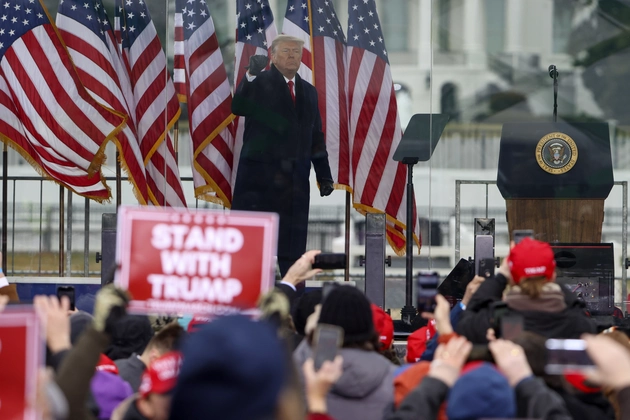
Even joking about a third term is dangerous. Because jokes become slogans. Slogans become movements. Movements become “what ifs.” And “what ifs” become reality. Graham, pathetic as always, was desperate enough for Trump’s attention to normalize the unthinkable.
And then there’s the absurdity. Trump’s White House unveiled a “Presidential Walk of Fame.” Every president in history, framed in gold. Except Biden. Where Biden’s portrait should hang, Trump put a photo of an autopen machine. And of course, multiple portraits of himself.
This is not harmless. It is propaganda. Authoritarians have always used public spaces to elevate themselves and diminish rivals. They erase their opponents. They glorify themselves. They rewrite history in real time. And they do it with our tax dollars. Because we’re paying for Trump’s hallway of propaganda.
So let’s take stock. A president who sees sabotage in escalators. A president who calls his opponent “dumb as a rock.” A president who lies about Democrats paying dead people. A president who pressures prosecutors to indict people he doesn’t like. A president who punishes schools over bathrooms. A senator who normalizes a third term. A White House hallway turned into a shrine of petty propaganda.
It’s exhausting. But more than that, it’s dangerous.
And yet, amid the chaos, there are cracks of hope.
This week, a federal judge ruled that Trump cannot force states to cooperate with immigration enforcement in order to receive FEMA disaster relief. Translation? If a hurricane floods your neighborhood, if a tornado rips your roof off, if a wildfire burns your home, you will still get federal help. No matter what your governor says about immigration. Trump tried to hold disaster victims hostage to his deportation agenda. The courts said no.
Even Joe Rogan, someone I do not agree with, do not like, and do not listen to, drew the line when Jimmy Kimmel was suspended for telling the truth. Rogan told conservatives that if they support censorship, they’re “crazy.” I never thought I’d be thankful for Joe Rogan. But here we are. If even voices I consider harmful can stand up for free speech, then the line still exists.
And maybe the brightest light of all came from Arizona. Democrat Adelita Grijalva won her special election by more than 40 points. That’s not a win. That’s a landslide. And it gives Democrats enough votes to force a vote on releasing the Epstein files, something Trump has tried desperately to block. He has thrown distraction after distraction to keep those secrets buried. Now, because people showed up and voted, the truth may finally see daylight. This is why voting matters. People who felt powerless made their voices heard, and they shifted power. That’s how change happens. That’s how secrets come to light. That’s how accountability begins.
Here’s what I know. Every dictator’s playbook eventually runs out of pages. And Trump’s is getting thinner by the minute.
So tonight I give you both the warning and the hope. The warning: Trump is not just embarrassing us, he is dismantling us. The hope: the cracks are showing, the resistance is growing, and the truth is still stronger than the lies.
You can also access the latest news at this address: www.whatfinger.com
-
What I Learned While Tracing Resilience Across Time—and How Leaders Can Put It Into Practice

I’d been hearing the word “resilience” everywhere these past few months: on panels, in mission statements, in board retreats, staff meetings, and strategy decks. And I started to feel uneasy. Because while the word was being used constantly, it was often deployed like a mantra—vague, moralizing, strangely empty. Something you’re supposed to have. Something you’re supposed to be. Or, worse, I hear people equating endurance with resilience. Holding on. Pushing through. Grinding. That never sat right with me. Endurance may get you through the week, but it doesn’t teach you how to recover, adapt, or evolve. I wanted more to offer leaders and teams than “hold tight.” How do we actually build it, in ourselves, in our teams, in our organizations?
That hunger to be useful sent me searching. Strangely enough, it carried me into archaeology.
The Study
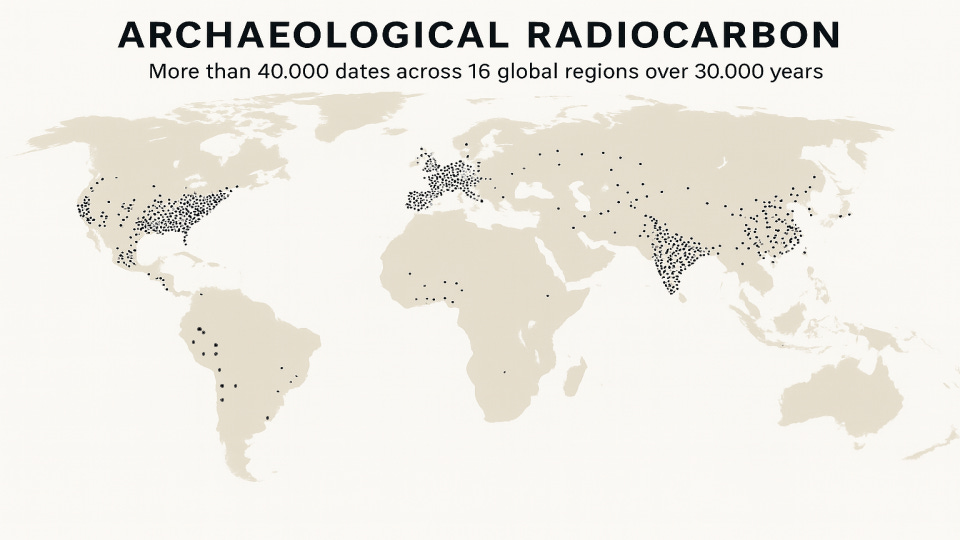
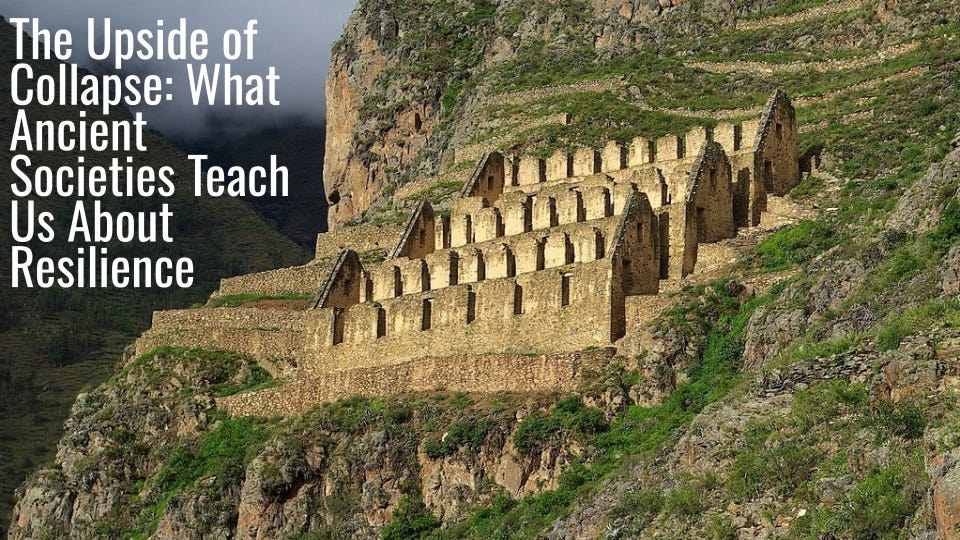
My curiosity led me to a recent study published in Nature that spanned thirty thousand years of human history. A team of researchers from across the globe analyzed 40,000 archaeological radiocarbon dates from sixteen regions. They identified 154 collapses—moments when populations shrank, fields failed, or settlements emptied out.
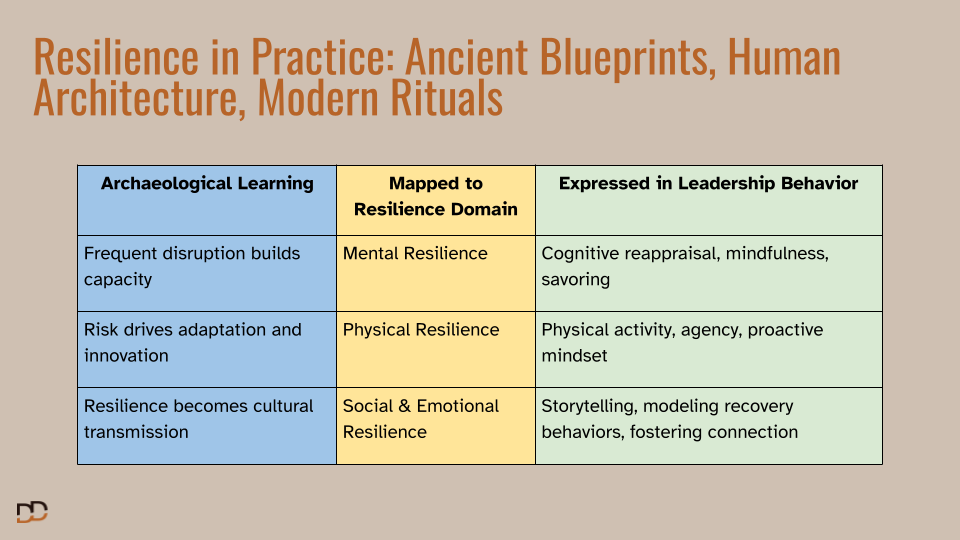
But the study wasn’t just about collapse. The researchers asked: How did societies recover? How quickly? How fully? The findings startled me. Societies that faced frequent disruptions recovered more fully. Collapse wasn’t only devastation. It was rehearsal. Rehearsal built reflexes. Reflexes became culture.
Four Lessons from the Long Arc of Collapse
The more I sat with the study, the more I recognized patterns that spoke to the organizations I work with today.
Lesson 01: Disturbance Builds Capacity
In the Cape of southern Africa, drought was not an occasional catastrophe but a recurring reality. Foragers learned to move with the seasons, sustaining wide networks of exchange so that when one valley failed, another could provide. What looked fragile from the outside was in fact a culture trained by repetition. Each disruption rehearsed the next.
Lesson 02: Agriculture Brought Both Risk and Resilience
In the Andean highlands, farming exposed people to famine, pests, and crop failure. But fragility also forced invention. Terraced fields carved into steep slopes, irrigation canals that stretched further each season, storage pits that carried food through lean years—risk drove adaptation, and adaptation became resilience.
Lesson 03: Collapse as Cultural Transmission
In India’s Middle Ganga Valley, collapse did not erase knowledge; it repurposed it. Rituals, political institutions, and new settlement patterns emerged from disruption. Memory became instruction. Collapse became story, and story carried survival forward.
Lesson 04: Not All Collapses Are Equal
Rigid systems broke. Flexible ones bent. In northern China, monocultures left communities brittle. When the climate shifted, their systems cracked and recovery lagged. By contrast, in Eastern North America, migration and coalition were already part of the cultural fabric. Flexibility allowed people to bend and recover more quickly.
Framing the Diagnostic
As enlightening as these learning were, the great and my big takeaway surprise was this: Resilient societies weren’t the biggest or the most resource-abundant. They weren’t the ones that managed to avoid collapse altogether. They were the ones that learned how to recover.
I used that knowledge to design a diagnostic that would allow my clients to evaluate organizational resilience. What I am offering is a mirror. A way of asking: What are we practicing, collectively? What systems help us bounce forward?
The resilience diagnostic features three key pillars. They are rooted in the archaeological lessons and combined with core principles of Adaptive Leadership, developed by Ronald Heifetz and colleagues at Harvard, which focuses on leading through change, especially in times of uncertainty, complexity, and disruption.
Organizational Resilience Diagnostic
🔁 Pillar 1: Learning, Adapting, Evolving
- Our organization reflects on past challenges to inform current decisions.
- We treat mistakes as learning moments, not blame moments.
- We have mechanisms (e.g., after-action reviews) to extract and circulate lessons.
- We evolve our strategy or operations based on what we’ve learned—not just what we planned.
⚙️ Pillar 2: Innovating and Collaborating Under Pressure
- During pressure periods, we pivot rather than double down on failing plans.
- Psychological safety allows for experimentation and dissent.
- Cross-functional collaboration increases under stress.
- We have individuals or teams who model adaptive thinking and bring others with them.
🧠 Pillar 3: Shared Learning and Cultural Transmission
- When one team learns something, others can easily access it.
- We codify and carry knowledge (templates, mentorship, storytelling).
- New practices are reinforced—not just introduced and forgotten.
- Senior leaders model openness to learning and adaptation.
What Leaders Discovered
When I introduced the diagnostic to a group of thirty senior leaders from a national organization I had been supporting at their summer retreat, the shift in the room was immediate. These were people who had lived through wave after wave of disruption—political attacks, funding uncertainties, leadership changes, reductions in force—and they were hungry for a way to name and measure what resilience actually looked like in practice.
As we worked through the framework together, patterns started to emerge. Collaboration under pressure came easily to them. They knew how to rally in a crisis, how to close ranks and deliver when it mattered most. But as the discussion deepened, another reality surfaced: their learning didn’t always travel. Insights remained trapped within teams. Institutional memory leaked away with every staff departure. What they carried in strength at the level of grit and urgency, they lacked in the systems that would allow resilience to compound over time.
It was a sobering realization, but not a paralyzing one. In fact, the candor seemed to free them. People began voicing practical next steps: codifying postmortems, building rituals for storytelling, mentoring newer colleagues so that knowledge didn’t just vanish with turnover. I watched resilience move from abstraction to something tangible, something they could actually embed, measure, and improve. In that moment, it no longer felt like a buzzword. It felt like a practice they could own.
The CORE Framework
In the midst of developing the organizational diagnostic, I found myself remembering the CORE framework. It was something I had first encountered during the pandemic, when so many of us were trying to name and strengthen our own reserves. Sitting with the archaeology study, the connections came back to me with new urgency
Developed by the Center for Creative Leadership amid the COVID-19 outbreak and building on psychological research, the CORE model defines resilience as a dynamic capability that lives at the intersection of four domains:
- Mental resilience
- Emotional resilience
- Physical resilience
- Social resilience
Resilience is not a fixed trait. It is a system of habits, mindsets, and behaviors that can be practiced and strengthened. Each of these domains maps to one or two specific behaviors. I flipped those behaviors into questions—are they drivers of change, or are they reinforcing the status quo? That translation became the foundation for the Leader Resilience Diagnostic.
Leader Resilience Diagnostic
Use this as a reflection tool for yourself or with peers. Rate each item, then choose one practice to strengthen over the next 30 days.
Rating scale: 🌱 = Rarely or never 🌿 = Sometimes 🌳 = Consistently (Or use numbers: 1, 2, 3.)
01: Physical activity
- Self-check: I engage in regular movement that sustains my energy at work.
- Team mirror: My schedule and norms make it possible for my team to move and reset.
- Your rating: 🌱 🌿 🌳
02: Sleep
- Self-check: I protect the quantity and quality of my sleep, especially after push periods.
- Team mirror: I do not reward heroics that trade sleep for output.
- Your rating: 🌱 🌿 🌳
03: Mindfulness
- Self-check: I create short pauses that help me notice, name, and reset during the day.
- Team mirror: Meetings include brief moments for arriving, breathing, or reflection.
- Your rating: 🌱 🌿 🌳
04: Cognitive reappraisal
- Self-check: I can reframe setbacks and model constructive thinking under pressure.
- Team mirror: We ask “what is the learning and the next move” when plans fail.
- Your rating: 🌱 🌿 🌳
05: Savoring
- Self-check: I notice and amplify small wins and moments of meaning.
- Team mirror: We regularly name what is working so people feel progress.
- Your rating: 🌱 🌿 🌳
06: Gratitude
- Self-check: I offer specific appreciation tied to behaviors and impact.
- Team mirror: Gratitude is visible and routine, not performative.
- Your rating: 🌱 🌿 🌳
07: Social connection
- Self-check: I invest in trusted relationships across lines of role and identity.
- Team mirror: People have allies beyond their immediate team.
- Your rating: 🌱 🌿 🌳
08: Social contact
- Self-check: I maintain visible, regular, reliable contact with my team.
- Team mirror: My presence is predictable, especially in stressful periods.
- Your rating: 🌱 🌿 🌳
When It Gets Personal
After working through the organizational diagnostic, the group took the CORE diagnostic at the individual leader level. That’s when the conversation shifted from systems to selves. Sitting with thirty leaders who had already been candid about their teams, I watched them turn inward.
The honesty that followed was striking. Some admitted they had never modeled rest for their staff, confessing that they still carried the belief that grinding without pause was proof of their commitment. Others reflected on how little time they gave to gratitude or connection, acknowledging that their drive to execute often came at the expense of presence.
Because the framework was presented not as judgment but as a mirror, the responses were unguarded. No one postured or pretended to have resilience figured out. Instead, the group recognized that resilience wasn’t a trait that some people had and others didn’t. It was a system they could choose to strengthen, one they had a responsibility to practice, and one they could see clearly laddered up into the culture and performance of the organization itself. In that space of vulnerability, I saw leaders beginning to imagine what it would look like to lead differently.
The Resilience System
After introducing both tools, I zoomed back out with the group to show how they fit together. The organizational diagnostic gave them a way to see resilience at the systems level: how their culture, structures, and practices helped or hindered their ability to bounce forward. The CORE diagnostic, by contrast, brought the lens down to the individual leader: how habits, mindsets, and daily behaviors shaped the very culture they were trying to build. Taken together, the two tools reveal resilience as a system that moves between levels. The ancient lessons provide the blueprint. The CORE framework offers the architecture. The behaviors become the rituals that bring resilience to life.
Resilience, in this light, is not a cliché. It is not sloganeering. It is a practice leaders can design, measure, and embed over time. Collapse is rehearsal for what comes next. The question isn’t whether disruption will come—it already has. The real question is: What are you rehearsing right now, and what will you pass forward?
Resilience in Practice: Ancient Blueprints, Human Architecture, Modern Rituals
An Invitation
I designed these tools to be used. If you are curious, take the leader diagnostic for yourself. Try the organizational diagnostic with your team. See what surfaces. Notice where you’re strong, and where resilience slips through the cracks.
Shortly after introducing the framework to the leaders this past summer, the chief people officer wrote to me: “Thank you for giving our team a concrete way to talk about resilience. It moved us beyond abstraction into actions we could measure and embed.” That is exactly the point. Resilience becomes real when it is practiced, not simply admired.
And if you want support—if you’d like a partner to help you introduce this framework, or to build something similar for your organization—feel free to reach out. My hope is that these tools give you a mirror and a starting point. Resilience is not just something to invoke in crisis. It’s something you can strengthen, beginning now.
You can also access the latest news at this address: www.whatfinger.com
- Our organization reflects on past challenges to inform current decisions.
-
Dictators Don’t Care About the People and Usually Kill Anyone Who Gets in Their Way.
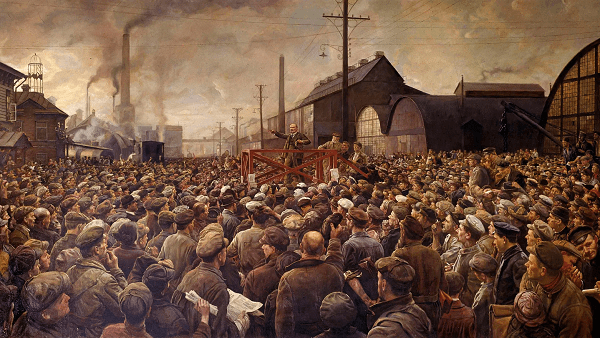
Governments exist either because they have come to power through force and violence or they have been elected and given power by the people. The force and violence crowd usually have their roots in the military and we like to call them Dictators. There have been a ton of them throughout history; Hitler, Stalin, Mao, Kim Jong iL and now his son, Saddam, Gaddafi, the list goes on and on. Dictators don’t care about the people and usually kill anyone who gets in their way. It is a fact that government has killed more people than any other cause, disease or reason.
Is it true that communism has killed 100 million people?
It’s a phrase that has been repeated time and time again. The number can vary from 20 to 50 to 100 to even 200 million, usually depending on how adherent to the orthodox school of Cold War historiography.
A poster from the Victims of Communism Memorial Foundation
The generally most cited source is the Black Book of Communism, which estimates 94+ million deaths. It is a collection of essays published in France in 1997, whose main author was Stéphane Courtois, along with Nicolas Werth, Andrzej Paczkowski, and Jean-Louis Margolin among other academics. Courtois was the editor, therefore he was in charge of the majority of the book’s conclusions.
However, there is some pretty questionable methodology as to how the Black Book got up to such a high death count. In fact, many of the other authors, specifically Margolin and Werth, noted Courtois was “obsessed with reaching a death count of 100 million”. So sometimes when he fell short of 100 million, he added more numbers out of nowhere.
Now let’s look at the three countries on this list with the highest death tolls (not all of them since this answer will be too long!). I do not necessarily support all of the policies implemented around those time periods.
Soviet Union
Lenin and Stalin are the most discussed leaders in this book, so let’s focus on their time periods.
Starting with Lenin: The number of victims of the Red Terror is estimated to be 100,000.
The Russian famine of 1921 is often cited as a direct result of Soviet policies. But what should be remembered is that it occurred at around the same time as the Russian Civil War, which with a death toll of 7–12 million people, is known as one of the costliest civil wars in history.
During the civil war, all factions — the Red, White, Black armies, etc. — fed their armies and supporters by seizing food from many of the farmers in their territory as many of those soldiers were underfed and war was their main priority. The Red Army, however, usually confiscated some of the food if the peasants around that area already had a decent supply of food. Some farmers deliberately destroyed part of their food storage and grew fewer crops so the armies couldn’t take them.
The kulaks, the wealthier peasants, employed landless peasants to work the large swathes of farmland they owned which was more than they could work. They withheld their surplus grain to either hide it from the Red Army taking it, or sold it on the black market.
However, the kulaks did not necessarily need the grain for survival because the occupying armies didn’t take a large fraction out of their supply, it was mostly to gain a profit. What accelerated the famine even more was a drought.
Lenin, upon decreeing the NEP, witnessing various peasant rebellions, and permitting post-WWI humanitarian aid from the West, later tried to level out the famine. Another thing that should be noticed was that the confiscation of food wasn’t a specifically Soviet tactic — the other factions in the war carried this out, as well.
As for Stalin: let’s start with the Soviet famine of 1932, often nicknamed the Holodomor. The Black Book of Communism repeats the premise that it was a deliberately orchestrated “famine-genocide” implemented by Stalin to destroy Ukrainian opposition to Soviet power.
That wasn’t not exactly the case. The concept behind the 1932 famine being intentional actually originated from a Nazi propaganda campaign facilitated by Goebbels and William Randolph Hearst, an American newspaper proprietor (known as the father of the “yellow press”) who was reportedly a friend of Hitler’s and aided him in his campaign against the Soviet Union.
First of all, the famine did not only take place in Ukraine. Kazakhstan actually had a higher mortality rate than said republic, and some cities in Southern Russia such as Rostov-on-Don and Tambov had a comparable mortality rate to Ukraine.
Part of the reason why was that there was a grain shortage in 1931–32 because of the inefficiencies of the new large-scale mechanized farming among peasants unaccustomed to machines, as well as some regions that were even more prone to famine because modern agricultural methods were not fully adapted yet. Other factors were harsh weather, a major drought in five basic regions, and the burning of crops/slaughtering of livestock from the kulaks who later tried to avoid collectivization (which in fact, was a grievous blow to Soviet agriculture — i.e. some of the collectives were torched, the number of sheep and goats reduced from 147 million to about 50 million, etc.).
The government later sent millions of pounds worth of aid to regions affected by the famine.
In addition, the Black Book of Communism came up with a death count of 6 million from the famine because the editors added a nonexistent 2 million deaths to the 4 million actually reported deaths.
The toll of the Great Purges was about 800,000.
More recent evidence from the archives opened up by the post-Soviet Yeltsin government indicate that the total number of death sentences over the 1921-1953 interval, which covered more than a few years of Stalin’s time in power, was between 775,866 and 786,098. Also, although Stalin definitely played a role in the Purges, local officials played a great role in instigating the Terror — sometimes even more than Stalin himself. Roughly 90% of all executions (700,000 out of 800,000) took place during the 2 years when Yezhov was leader of the NKVD. He was later executed for misuse of public office in 1940.
As for the GULAG system: First of all, that penal labor system was around before the Soviet Union — but it was called the Katorga.
Secondly, the number of people in Soviet prisons and labor camps from the 1930s to the 1950s averaged about 2 million of whom 20-40% were released each year.
Approximately 18 million people in total were imprisoned in the labor camp system, while a total of 1,053,829 died around the time period from 1934–1953.
What should also be noted was that the annual death rate for the interned Soviet population was approximately 4%, which incorporates the effect of prisoner executions. Most of the arrests under Stalin were arrested for crimes such as theft, banditry, misuse of public office for personal gain, and smuggling, with less than 10% being for political reasons.
People’s Republic of China
The Cultural Revolution’s death toll is estimated to be about 400,000, and Mao killed approximately 4–6 million people in the Great Leap Forward.
Stephane Courtois says this about the Chinese famine:
Loss of life linked to the famine in the years 1959–1961 was somewhere between 20 million and 43 million people. The lower end of the range is the official figure used by the Chinese government since 1988. This was quite possibly the worst famine not just in the history of China but in the history of the world.
He is right that the Great Chinese famine was one of the worst famines in recorded history. However, this book assumes that the highest end of the death toll (48 million) is correct and that this famine was a direct result solely of Mao’s policies.
The highest scholarly estimates of the Great Chinese Famine are considered to be about 30 million. Courtois’ claim of “40 million” comes from adding the drop of birth rates and assuming that people not having kids is the exact same thing as child malnutrition.
One thing to note is that between the years 108 B.C. and 1911, there were 1,828 famines in China.
Although government policies and reactions such as, for example, the initial cover-ups and the Four Pests campaign did play a role in the famine, what propelled it were mostly the result of natural causes such as floods, typhoons, and disease. For example, drought caused significant crop failures in Shaanxi, where output decreased by more than 50%, and Hubei where it fell 25%.
According to the China Statistical Yearbook, crop production decreased from 200 million tons in 1958 to 143.5 million tons in 1960. In 1961, the northern provinces suffered years of droughts, while the southern provinces endured yet more flooding.
Some of the efforts to deal with the famine included, for example, the organization of “people’s communes”, collectives which permitted farmers to work in a more effective manner than the previous techniques they had used. It resulted in the construction of large-scale irrigation works and a large-scale production of fertilizers.
Power structures were reorganized so that the management for these issues was more decentralized so that elected councils had a greater say in combatting the famine and developing small and medium scale heavy industry.
Soviet scientists, such as Terentiy Maltsev and Trofim Lysenko, also aided in developing more efficient agricultural systems.
Cambodia (Democratic Kampuchea)
Pol Pot was actually not a communist.
“We are not communists … we are revolutionaries” who do not ‘belong to the commonly accepted grouping of communist Indochina.’”
The first public admission that the leading party of Kampuchea was even a Marxist-Leninist party was publicly revealed in a Pol Pot speech for a memorial service for Mao Zedong, in 1977. The likely reason was to get support from China, and the reason why China supported them was their hostility towards Vietnam, not their ideology.
The Khmer Rouge in practice was far from what a proper Marxist-Leninist party should have been. They practiced a form of Kampuchean nationalism and sternly rejected internationalism. Furthermore, they expropriated the entire surplus value from the workers that tried to reach their goal of “three harvests per month”.
They were extremely anti-intellectualist and espoused an idea called “Year Zero” which basically stated that all culture and traditions within a society should be demolished and have a new culture replace it. That is very contradictory to the basic Marxist concept of historical materialism, which states that history is the result of successive technological development and improvements in the mode of production/material conditions. Basically, you can’t build socialism without another system (capitalism) preceding it, and you can’t have capitalism without mercantilism, feudalism, etc.
The CIA also funded the Khmer Rouge, and the regime was taken down by Vietnamese communists.
The book was also condemned — particularly by the Wiesel Commission consisting of Holocaust survivors — for “comparative trivialization” of the Holocaust in Courtois’ pursuit to portray communism as more evil and bloody than fascism.
They also count some of the anti-Semitic White Army officers who oversaw Jewish pogroms, Nazis, and their collaborators in World War II as yet another list of “victims of communism”. For example, here’s a paragraph from the book — they do that while talking about the Ukrainian Insurgent Army, a nationalist paramilitary group who helped build up pogroms in Ukraine where they exterminated tens of thousands of Jews, Poles, and others alongside the Nazis, like in the infamous Babi Yar, for example.
This would be a more realistic table of the death count in some (although not all) socialist countries:
-
All Fifty States Threat Report

Since 2020 the nation has gone through some radical changes. There are more people prepping now than ever before. That should tell you just how much has changed in such a short time in our nation. While the federal government is working to figure out this moment in history, state level governance is stepping in, too.
Along with mother nature, each state is starting to get a clearer picture of its threat profile. The first step in eliminating all this fear is to understand what it is that threatens you. Then you can prepare for it.
Below you are going to find all fifty states and a threat profile for each state. This should help you decide what to prepare for depending on your state:
Alabama
Natural Disaster: Severe Storms, Flooding, Hurricanes, Tornadoes
Civil Threats: Alabama has a contentious history with a massive constitution that has been amended over nine hundred times. Most areas are not densely populated but there is a high poverty rate.
Poverty Rate: 15.5
Alabama is home to two nuclear power plants and several military installations. This makes them a target in warfare. Their natural disaster profile is no laughing matter either.
Alaska
Natural Disaster: Blizzards, Floods, Wildfires, Landslides
Civil Threats: Low population but high crime rates
Crime Per 100,000: 4185.5 (2nd Highest)
Poverty Rate: 10.1
Alaska is a massive state that requires a special kind of person to live and enjoy the place. It has the second highest crime per capita.
Arizona
Natural Disaster: Wildfires, Drought, Flooding, Extreme Heat
Civil Threats: Arizona is a border state and the crime and chaos that comes along with that.
Crime Per 100,000: 3151.7
Poverty Rate: 13.5%
Arizona is home to multiple military bases and two nuclear power plants. The issues with the border and serious issues with drought and heat give people lots to prepare for in Arizona.
Arkansas
Natural Disaster: Floods, Hurricanes, Tornadoes, Droughts, Ice Storms
Civil Threats: Crime and political corruption along with poverty are big concerns in the state of Arkansas.
Crime Per 100,000: 3456.6
Poverty Rate: 16.2%
Arkansas has a four military bases, a nuclear power plant, high crime, and poverty with serious threats like hurricanes and tornadoes.
California
Natural Disaster: Wildfires and Earthquakes
Civil Threats: Densely populated areas are overrun with homelessness
Political: Political corruption is at an all-time high in California
Crime Rate Per 100,000: 2827.8
Poverty Rate: 11.8%
During the year 2020 many people left the state because of stringent COVID-19 restrictions and unfathomable tax rates and the natural disaster threats.
Colorado
Natural Disaster: Wildfires, Flooding, Winter Storms and Tornadoes
Civil Threats: Colorado has major cities and suburbs that can rough for preppers.
Crime Per 100,000 3068.8
Poverty Rate: 9.3%
Colorado is a very diverse state that has some really great places and then some places where you will have to prepare for civil threats and natural disasters.
Connecticut
Natural Disaster: Hurricanes, Floods, Winter Storms
Civil Threats: Old state with lots of political corruption and high population
Crime Per 100,000: 1888.4
Poverty Rate: 10%
Connecticut is a state of political prowess, wealth, and corruption. There are lots of people, a nuclear powerplant and some serious natural disasters to deal with.
Delaware
Natural Disaster: Severe Storms, Snowstorms, Flooding, Drought
Civil Threats: The proximity to large cities can make places in Delaware prime for civil unrest and
Crime Per 100,000: 2748
Poverty Rate: 11.3%
With a nuclear power plant and major air force base there are significant targets in warfare. The highly populated east coast is also dependent on civility and supply chain to survive.
Florida
Natural Disaster: Hurricanes, Floods, Landslides, Severe Storms, Wildfires
Civil Threats: Florida is one of the most diverse states in the union and has a serious population density in large cities like Miami.
Crime Per 100,000: 2666.7
Poverty Rate: 12.7%
Southern Florida has a serious set of natural disasters and conditions to deal with. It also has a tremendous number of military installations in the state and two nuclear power plants that are in the path of hurricanes.
Georgia
Natural Disaster: Tornadoes, Hurricanes, Floods, Ice Storms
Civil Threats: Georgia’s population has grown rapidly an in densely populated areas you must prepare for civil unrest
Crime Per 100,000: 2900.3
Poverty Rate: 13.3%
Georgia is a southern city that is facing the reckoning of the past, like many places in our nation. It is also fighting to keep its economy afloat in hard times. The leadership is questionable, and Georgia deals with its share of disasters.
Also, there are many military installations in this state including Fort Benning. They draw power from two separate nuclear facilities.
Hawaii
Natural Disaster: Volcanoes, Tsunamis, Wildfires, Earthquakes
Civil Threats: There is a lot of police corruption and even some echoes of racism towards white people that is rarely talked about. Tourism is key to the island’s survival
Crime Per 100,000: 3118.9
Poverty Rate: 9.3%
Everything has to be shipped into Hawaii. In times of calamity, it is very bad place to be. Not to mention it is a volcanic island in the Pacific which comes with many threats. Cost of living is also very high and taxes, too.
Idaho
Natural Disaster: Wildfires, Floods, Winter Storms. Wildfires are very common in Idaho
Civil Threats: Sparse population density means there is very little by way of civil threats
Political: Recent considerable rising tax rates
Poverty Rate: 11.2%
Idaho is another top location for preppers. Wildfires are a concern in some locations, but it is a very liberty minded state. Cost of living is increasing in Idaho.
Illinois
Natural Disaster: Severe Storms, Floods, Winter Storms
Politics: Mayor Lightfoot told reports that she would only be doing interviews with black reporters. The city’s gun crime and violent crime stats are massive despite thorough gun control laws.
Civil Threats: Chicago and the surrounding areas are dangerous and civil unrest is highly likely in a long term disaster.
Crime Per 100,000: 2336.9
Poverty Rate: 11.5%
Home to one of the America’s most dangerous cities for gun violence, Illinois is a highly populated location with highly suspect political leaders. They utilize the nation’s highest six nuclear power plants and have four military installations in state.
Indiana
Natural Disaster: Severe Storms, Floods, Winter Storms, Tornadoes
Civil Threats: Low population density and good leadership in many places.
Crime per 100,000: 2561.6
Poverty Rate: 11.9%
Sparse military bases and no operating nuclear power plants make Indiana less of a target for war. However, they face their share of natural disasters.
Iowa
Natural Disaster: Floods, Severe Storms, Tornadoes, Winter Storms
Civil Threats: Low population density in most places.
Crime Per 100,000:1941.6
Poverty Rate: 11.2%
Prepare to deal with the potential for serious flooding. There are no military bases and one nuclear power plant.
Kansas
Natural Disaster: Tornadoes, Severe Storms, Winter Storms, Flooding
Civil Threats: Low population density in most towns and cities makes civil unrest less of a threat.
Crime Per 100,000: 3072.9
Poverty Rate: 11.4%
Furthermore, Kansas faces its share of serious natural disasters. With few military installations and one nuclear power plant it is less of a target. Its location helps.
Kentucky
Natural Disaster: Severe Storms, Tornadoes, Wildfires, Winter Storms
Civil Threats: Louisville and Lexington maintain decent populations for civil unrest
Crime Per 100,000: 2174.5
Poverty Rate 16.4% (4th Highest)
No nuclear power plants and sparse military bases make it less of an inland target. However, large populations centers and high poverty raise the potential for civil unrest.
Louisiana
Natural Disaster: Floods, Hurricanes, Severe Storms, Tornadoes
Civil Threats: Lots of decent sized southern cities and potential for serious natural disaster.
Crime Per 100,000: 3813.5 (3rd Highest)
Poverty Rate: 19% (2nd Highest)
Louisiana has a serious history with natural disaster. It has the second highest poverty rate and third highest crime rate per 100,000 in the nation. There are two nuclear power plants and five military bases.
Maine
Natural Disaster: Severe Storms, Floods, Winter Storms
Civil Threats: Low population density
Crime Per 100,000: 1469.9 (3rd Lowest)
Poverty Rate: 10.9%
Maine’s tough winters have to be prepared for, but population is low, crime is low and there are only two military bases on the coast. No nuclear power plants.
Maryland
Natural Disaster: Floods, Hurricanes, Winter Storms
Civil Threats: There are many highly populated areas and some very dangerous like Baltimore and the Surrounding DC area.
Crime Per 100,000: 2502
Poverty Rate: 9% (3rd Lowest)
Maryland has some terrible gun laws, dangerous cities and can be wacked by severe disasters. It has one active nuclear power plant and many military installations.
Massachusetts
Natural Disaster: Tropical Storms, Hurricanes, Flooding, Winter Storms
Civil Threats: A highly populated state with horrible traffic problems so you need to be prepared for population density issues.
Crime Per 100,000: 1061.4
Poverty Rate: 9.4%
An old state that is rife with political corruption, Massachusetts is a highly populated state that can be affected many types of natural disasters and civil unrest.
Michigan
Natural Disaster: Floods, Severe Storms, Winter Storms
Civil Threats: Some densely populated areas pose a serious threat
Crime Per 100,000: 2102.9
Poverty Rate: 13%
Michigan has a few densely populated cities besides Detroit. Winters are harsh. There are four nuclear power plants and a handful of military installations.
Minnesota
Natural Disaster: Winter Storms, Floods, Severe Storms
Civil Threats: Radical leadership and high populations in cities has created serious potential for civil unrest in Minneapolis
Crime Per 100,000: 2214.2
Poverty Rate: 9% (2nd Lowest)
It’s cold and they get snow all the time. You have to be prepared for winter weather and cold. There are two active nuclear power plants and no military bases.
Mississippi
Natural Disaster: Hurricanes, Floods, Tornadoes, Severe Storms
Civil Threats: Low population density in most towns and cities
Crime Per 100,000: 2637.4
Poverty Rate: 19.6% (HIGHEST)
With the highest poverty rate in the nation and huge potential for natural disasters there are threats in Mississippi. There are many military installations and one large three unit nuclear power plant.
Missouri
Natural Disaster: Severe Storms, Tornadoes, Floods
Civil Threats: A couple larger cities pose civil unrest threats
Crime Per 100,000: 3149.2
Poverty Rate: 12.9%
Serious threats from mother nature and a creeping crime rate are things to prepare for. The cities are getting more dangerous.
Also, there is one nuclear power plant and three military bases.
Montana
Natural Disaster: Wildfires, Winter Storms, Floods and Severe Storms
Civil Threats: Low population density means little or no civil unrest threats
Poverty Rate: 2870
Montana is home to the largest Minute Man missile base in the US which makes it a significant target in war. There are some natural disasters to worry about.
Nebraska
Natural Disaster: Floods, Tornadoes, Severe Storms, Winter Storms
Civil Threats: Low population density and low threats
Crime Per 100,000: 2364.7
Poverty Rate: 9.9%
If you can weather the storms of mother nature you will be safe. There is one nuclear plant and one military base.
Nevada
Natural Disaster: Droughts, Extreme Heat, Wildfires
Civil Threats: There are some large cities in Nevada with potential for civil unrest.
Crime Per 100,000: 2979.3
Poverty Rate: 12.5%
Nevada is a desert and there are serious concerns with that. Areas like Las Vegas are big with lots of people and potential for chaos.
There are four military bases in Nevada and no nuclear power plants.
New Hampshire
Natural Disaster: Floods, Severe Storms, Winter Storms
Civil Threats: Low population density
Crime Per 100,000: 1421.7 (LOWEST)
Poverty Rate: 7.3% (LOWEST)
New Hampshire is not a place that faces a lot of threats and with the lowest crime and poverty rates in the nation, you are not dealing with civil threats.
New Jersey
Natural Disaster: Hurricanes, Winter Storms, Tornadoes, Floods
Civil Threats: Home to some massive populations and surrounded by other giant American cities you are going to have to prepare to bugout in a long term disaster.
Politics: There is a lot of corruption and strong arm politics and law enforcement in New Jersey
Crime Per 100,000: 1613
Poverty Rate: 9.2%
New Jersey has some crime ridden areas, high population, and corrupt government. Natural disasters befall them from time to time and there are military targets and nuclear power plants.
New Mexico
Natural Disaster: Wildfires, Severe Storms, Drought, Severe Heat, Flooding
Civil Threats: Highly populated areas and proximity to the border create threats of crime and civil unrest.
Crime Per 100,000: 4276.3 (HIGHEST)
Poverty Rate: 18.2% (3rd Highest)
New Mexico boasts a collection of military bases, no nuclear power plants but high incidences of poverty and the highest crime rate in the nation.
New York
Natural Disaster: Severe Storms, Floods, Hurricanes, Winter Storms
Civil Threats: Areas with dense populations are a serious concern
Crime Per 100,000: 1791
Poverty Rate: 13%
New York is a diverse state both in its population and geography. NYC is obviously a prepper’s worst nightmare but there are very remote locations in the state of New York.
There are five military bases and four active nuclear power plants in New York.
North Carolina
Natural Disaster: Severe Storms, Floods, Hurricanes
Civil Threats: Growing cities make for increased civil unrest threats.
Crime Per 100,000: 2871.7
Poverty Rate: 13.6%
North Carolina faces all the threats of any coastal southern state. Their growing cities are a concern for preppers. There are three active nuclear power plants and extensive military presence in North Carolina.
North Dakota
Natural Disaster: Floods, Severe Storms, Winter Storms
Civil Threats: Low population density
Crime Per 100,000: 2320.8
Poverty Rate: 10.6%
North Dakotans battle with Mother Nature as its true threat. There are two military bases in ND.
Ohio
Natural Disaster: Floods, Severe Storms, Tornadoes, Winter Storms
Civil Threats: The cities of Ohio like Columbus and Cleveland are suffering from the outbreak in crime that most big cities in the nation are suffering.
Crime Per 100,000: 2,348.85
Poverty Rate: 15.9%
Ohio faces its share of natural disasters but if you live outside of the city you won’t have to contend with the agendas and the crime that go along with those places.
Oklahoma
Natural Disaster Tornadoes, Floods, Wildfires, Winter Storms
Civil Threats: Crime rates and civil threats are actually on the decline in 2021. That is saying a lot as many states and major cities are setting records for violent crime.
Crime Per 100,000: 3277.08
Poverty Rate: 15.7%
Oklahoma ranks #3 in the nation for the most natural disasters per year. It’s a big deal because #2 and #1 are California and Texas. Which are states that are much larger than Oklahoma.
Oregon
Natural Disaster: Wildfires, Floods, Coastal Erosion, Landslides, Tsunamis
Civil Threats: Portland has been the epicenter for Antifa violence and civil unrest.
Crime Per 100,000: 3179.5
Poverty Rate: 11.4%
Oregon is a beautiful place that can be affected by a variety of natural disasters. The cities and politics seem to invite the current environment of civil unrest.
Pennsylvania
Natural Disaster: Floods, Severe Storms, Winter Storms, Hurricanes
Civil Threats: High population cities and surroundings suburbs are a threat.
Crime Per 100,000: 1795.9
Poverty Rate: 12%
Pennsylvania is a big state but there are densely populated areas that pose a serious threat. There are four nuclear power plants and five military bases in PA.
Rhode Island
Natural Disaster: Hurricanes, Winter Storms, Floods
Civil Threats: You are dealing with densely populated areas and that is always something to prepare for, COVID cases are pretty high and there are issues with homelessness.
Crime Per 100,000: 1880
Poverty Rate: 10.8%
Its costs a lot to live in Rhode Island, taxes are high and restrictions on guns and homeschooling make it a place that is tough preppers. You need to be prepared to deal with a place that is opposed to much of what you believe.
They also have a two unit nuclear power plant.
South Carolina
Natural Disaster: Severe Storms, Floods, Hurricanes
Civil Threats: Low population except in major cities
Crime Per 100,000: 3505.9
Poverty Rate: 13.6%
South Carolina faces coastal state issues on the East Coast and has smaller southern cities that could face small pockets of unrest.
There are five military bases and four nuclear power plants in SC.
South Dakota
Natural Disaster: Floods, Severe Storms, Winter Storms
Civil Threats: Low Population Density
Crime Per 100,000: 2133.4
Poverty Rate: 11.9%
Like North Dakota the battle here is with Mother Nature. There is just one military base in South Dakota.
Tennessee
Natural Disaster: Severe Storms, Flooding, Wildfires
Civil Threats: Low population except in major cities
Crime Per 100,000: 3449.1
Poverty Rate: 13.9%
Tennessee has a surprisingly high crime rate. It faces typical threats from Mother Nature. It has two nuclear power plants and four military bases.
Texas
Natural Disaster: Hurricanes, Tornadoes, Flooding and Wildfires are the most common natural disasters in Texas.
Civil Threats: The greatest civil threat in Texas is the open US border
Political: Texas is experiencing rapid political change in its biggest cities
Crime Per 100,000: 2778.1
Poverty:13.6%
Texas is a massive state and there is a lot of space. The threats at the border, the changing political climate bleeding out from cities due to an influx of people moving from others states and a decent profile of natural disasters offers up plenty to prepare for!
Utah
Natural Disaster: Wildfires are one the major natural disaster in Utah. The residents also face things like flash floods that are the most damaging. Winter storms and landslides are also things to prepare for.
Civil Threats: Civil threats are low in Utah as the state has very low population density even in Salt Lake City.
Crime Per 100,000:2610.6
Poverty Rate: 8.9% (LOWEST)
Utah is one of the most favorable places for preppers.
However, there are some serious natural disasters that you need to be prepared for. You should be equipped to deal with snow, particularly if you are moving there from a place where you don’t get lots of snow.
Vermont
Natural Disaster: Flooding, Severe Storms, Winter Storms
Civil Threats: Low Population Density
Crime Per 100,000: 1455.1 (2nd Lowest)
Poverty Rate: 10.2%
There are no military bases in Vermont or nuclear power plants.
Virginia
Natural Disaster: Hurricanes, Floods, Severe Storms, Earthquakes
Civil Threats: Home to the nation’s Capital Virginia has tremendous corruption and civil unrest potential
Crime Per 100,000: 1865.8
Poverty Rate: 9.2%
Virginia is a state with moderate natural disaster threats, political corruption, two power plants, a major naval base, and significant targets in warfare. Potential for serious civil unrest in some location, too.
Washington
Natural Disaster: Flooding is the most common disaster in Washington. There are about one thousand wildfires a year and you could also prepare for winter storms, landslides and possible earthquakes.
Civil Threats: Seattle is a west coast hub for civil unrest and major political upheaval
Crime Per 100,000: 3257.7
Poverty Rate: 9.8%
The west coast crime and homeless waves are pervasive in the major cities. Being prepared for floods and wildfires would be important if you plan to live outside the cities in Washington.
West Virginia
Natural Disaster: Floods, Severe Storms, Tornadoes, Drought
Civil Threats: Low Population Density
Crime Per 100,000: 1775.5
Poverty Rate: 16%
There are no nuclear power plants in West Virginia and just two military bases.
Wisconsin
Natural Disaster: Severe Storms, Floods, Tornadoes, Winter Storms
Civil Threats: Low Population Density
Crime Per 100,000: 1855.3
Poverty Rate: 10.4%
Wisconsin’s greatest threat comes from Mother Nature.
Wyoming
Natural Disaster: Wildfires, Winter Storms, Landslides, Droughts, Severe Storms
Civil Threats: Low population density and low threats
Crime Per 100,000: 1997.3
Poverty Rate: 10.1%
Wyoming has to face off with nature but has low population and concerns if civil unrest.
Final Words
Which of these states surprised you? Did you know as much about your state as you thought?
A strong base level preparedness will allow you to react and survive many of the disasters and threats in your state. Then you can begin to tailor your preparedness plans to the particular threats of your state.
Then again, it might be time for you to move on to greener pastures!
-
Lessons Learned from the Ukraine War About Civilian Survival
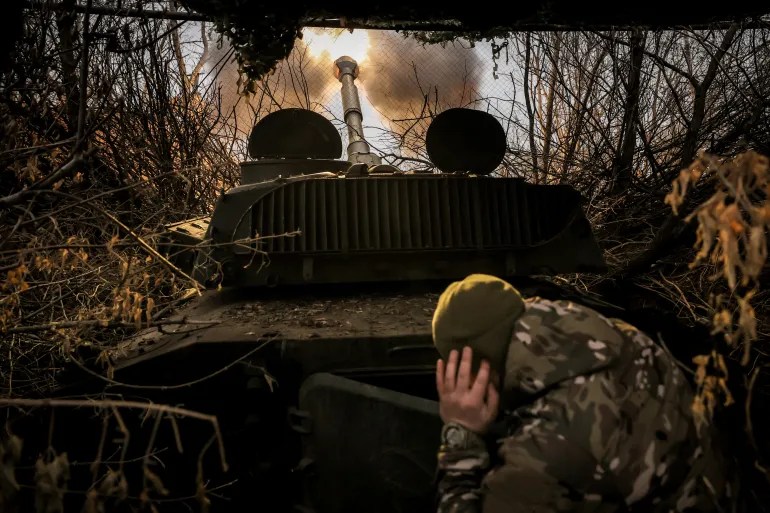
The war in Ukraine (2022–present) brutally reminded the world that modern life can shatter overnight. One day you have running water, electricity, and a safe home; the next, you’re melting snow for drinking water and huddling in a basement as missiles fall. Ordinary civilians in Ukraine—families in Kyiv high-rises, neighbors in rural villages—were thrust into survival situations most Westerners only imagine. Yet amid the chaos, they improvised ways to endure. Their experiences offer hard-earned lessons for preppers everywhere.
Water: Sourcing and Rationing Life’s Most Vital Resource
When municipal water systems were knocked out by fighting, Ukrainians had to get resourceful fast. In besieged cities like Mariupol, all taps went dry early in the siege.1 Families suddenly found themselves collecting snow and rainwater to stay alive. One survivor described how on days of heavy shelling they couldn’t even venture out, so “our husbands collected snow and rainwater and boiled it” to have something to drink.2 In other regions, people turned to any available source. In Pokrovsk (eastern Ukraine), when a pipeline was cut off, engineers managed an improvised solution: pumping water out of defunct coal mines and filtering it with portable equipment.3 This desperate fix worked for a while, but when even that failed due to damage, residents fell back on a classic rural resource – wells.4 Throughout rural villages, private wells and hand pumps became lifelines as centralized systems collapsed.
Even in cities that weren’t fully occupied, Russian strikes on power plants often shut down water treatment and pumping stations. In late 2022, millions across Ukraine experienced periodic water outages. Those who had stored water in tubs, cisterns, or bottles were a step ahead. In one frontline town (Lyman), a mother of two kept jugs of water in the basement alongside a woodstove and blankets, knowing that if shelling cut off access, her family had a backup supply.5 Sanitation, too, became a survival issue. After Chernihiv’s power was knocked out, one man found himself digging a makeshift latrine in the yard two days into the siege because the plumbing had failed—his high-rise apartment was suddenly “no light, no water, no heating and no toilet”.6 It was a stark lesson in how quickly modern conveniences can disappear in war.
Takeaways – Water
Everyday Ukrainians learned the hard way that water is truly life. To be prepared:
- Store ample water in your home for emergencies (at least 1–2 gallons per person per day for 2+ weeks).
- Cache water in multiple ways: fill bathtubs or barrels when a crisis is looming; keep some sealed bottled water, and consider a rainwater catchment system if possible.
- Equip for purification: have a portable water filter, water purification tablets, and fuel for boiling water. In Ukraine, boiling snow or rainwater made it safer7 – you should be ready to do the same.
- Identify sources near you: know the location of ponds, rivers, or public wells, and keep basic tools (wrench, siphon hose) to access water heaters or pipes in a pinch. People survived Mariupol by scrounging water wherever they could – preparation will give you an enormous advantage.
Communication: Staying in Touch When the Grid Goes Down
When war knocked out cell towers and internet service, Ukrainians discovered that old-school communication tools suddenly became invaluable. In many besieged areas, mobile coverage and internet access vanished, leaving people in an information blackout. “We felt we were cut off from the entire world,” recalled a Mariupol resident of the first days of siege when phones went dead.1 In this void, basic battery-powered radios emerged as literal lifesavers. Communities that had portable radios tuned in to get news and crucial updates. In fact, Ukrainian families trapped under occupation recount how radio broadcasts guided their decisions: one family in Hostomel (a suburb of Kyiv) spent a week hiding in their cellar until they started listening to a little transistor radio. Through it, they learned about relatively safe evacuation routes (“green corridors”) and enemy movements, information that helped them escape safely.8 9 Others in cities like Izium and Mariupol similarly “listened to the radio and found their way to safety, thanks to the information they received. Radio saves lives.”.10 It’s telling that in some occupied towns, people frantically searched their attics for any long-forgotten radio and spare batteries.11 In the age of TikTok, Ukraine’s war brought back the relevance of WWII-era tech: the humble FM/AM radio and word-of-mouth communication.
With phones down, face-to-face messaging filled the gap. Neighbors would relay news to each other on the street or by knocking on doors. In many high-rise apartment blocks, residents formed group plans—agreeing that if communications failed, they’d meet at a certain time or place each day to share news. In some cases, messengers were sent: for example, someone with a working car or a bicycle might venture to an area with reception to make calls on behalf of others, or to retrieve updates from officials. In the absence of official channels, human networks became the channels. What limited communication remained was often low-tech: handwritten notices on walls about evacuation buses, or volunteers with megaphones announcing aid deliveries.
Takeaways – Communication
The Ukrainian experience shows that when the digital grid goes dark, you need analog backups. Consider these steps:
- Own a battery-powered or hand-crank radio. Pre-tune it to emergency frequencies and keep spare batteries. It could be your only link to the outside world.11
- Get walkie-talkies (two-way radios) for your family or group. In an urban neighborhood, even cheap FRS/GMRS radios can let you coordinate if cell service is out.
- Have an emergency contact plan. Don’t count on phone apps. Decide on meetup spots and check-in times with family. Keep a list of important addresses and phone numbers written down in case your phone dies.
- Learn basic ham radio or CB radio use. If you’re ambitious, a ham radio license and portable unit can reach help when nothing else works. In conflict zones, many amateurs and volunteers pass critical info this way.
- Invest in signal boosters or satellite messengers. Some Ukrainians used satellite internet (like Starlink) to reconnect communities. A personal satellite communicator could send a lifesaving message if infrastructure is down.
Above all, don’t rely solely on the internet or cell network. When they failed in Ukraine, those who had a radio or a prearranged communication plan with neighbors coped much better than those who didn’t.
Escape and Evacuation: Knowing When and How to Get Out
War in Ukraine showed how important it is for civilians to bug out early and how dangerous procrastinating can be. Cities like Mariupol, Kharkiv, and Irpin went from peace to full-scale assault in hours, trapping those who hadn’t fled. In Mariupol, many families believed fighting wouldn’t reach them until it was too late. “We did not believe war was happening…we constantly read the news, hoping it would be over soon. But it only got worse,” one survivor said.1 By mid-March 2022, escape was a life-or-death gamble. When a brief window opened, one woman’s husband organized a small convoy of cars. “One morning, my husband came and said that we were leaving… he’d organised for other people to leave at the same time, so there were several cars,” she recounted. They drove through the ruins of their city, praying they wouldn’t be shot, and managed to reach safety hours later.12 The lesson? Don’t wait until the last minute. As preppers say: if you leave early, you can always turn back if it’s a false alarm—but if you leave too late, you might not make it out at all.13 14
Thousands of Ukrainians who did escape in time had one thing in common: they grabbed their go-bags and ran. Many had packed essentials in advance during the tense weeks before the invasion. Those who didn’t often regretted it. A young couple from Kharkiv recalled how they hesitated and delayed evacuating; when the bombardment became unbearable, they finally fled by train. In the rush, they took almost nothing beyond some water and the clothes on their backs. “It’s hard to pack your survival bag while panicking,” the wife admitted. “Now I understand why smart people said to pack it before the war.”15 When you’re already hearing explosions, it’s too late to calmly decide what to bring. Others faced the brutal choice of what (and whom) to take. Pets, for example, became a heartbreaking dilemma. Many Ukrainians stayed in dangerous areas longer than they should have because they couldn’t abandon their dogs or cats. “After figuring out what to do with their families, the hardest question many grapple with is what to do with their pets,” observed one volunteer in Irpin, noting he met numerous locals who simply would not leave without their animals.16 Some volunteer evacuators encouraged people to bring the pets along if possible rather than risk their lives by staying.17
Takeaways – Escape
If war or any disaster strikes, having a plan and acting early can save your life. Key points include:
- Plan multiple evacuation routes now. In Ukraine, main highways jammed or came under fire. Know at least two or three ways out of your city (back roads, walking paths, etc.), and keep maps handy (don’t rely on GPS).
- Prepare a bug-out bag for each family member in advance. Include vital documents, some cash, medicines, basic food/water, a change of clothes, flashlight, and other survival gear. Pack as if you’ll have to leave in 5 minutes – because many did.
- Keep your vehicle ready. Maintain at least half a tank of fuel at all times if you can. In an invasion or crisis, gas stations either run dry or have mile-long lines. If you have no car, identify a friend or neighbor with one, or local authorities’ evacuation points.
- Practice “go” decisions. Decide your personal red lines. For example: “If conflict (or disaster) is reported within 50 miles, we leave.” This reduces second-guessing. Normalcy bias (“it won’t happen here”) trapped many in Ukraine.18 19 Be willing to move when others are still debating.
- Account for family and pets. Have pet carriers and supplies ready to go. Make sure everyone in your household knows the plan – where to meet if separated, who grabs what. If you have elderly or disabled family, arrange how to evacuate them before an emergency.
- Team up if possible. Convoys like the Mariupol group show there’s safety in numbers.12 Coordinate with neighbors or relatives to leave together, which can deter looters on the road and provide mutual support.
Finally, always keep a listen for official evacuation advisories, but don’t rely on them alone. Be proactive. As one prepper wisely put it, “the time to bug out is before the masses do”.19
Shelter: Fortifying Homes, Basements, and Bunkers
When running wasn’t an option, Ukrainians hunkered down and turned their homes and basements into fortresses and lifelines. This war has been as much about enduring as escaping. Civilians learned how to harden their shelters on the fly. In apartment blocks from Kyiv to Kharkiv, residents taped up windows to reduce shattering from blasts, pushed furniture against walls, and identified the safest interior spaces (usually corridors or bathrooms away from exterior walls). But in heavy bombardment, often the only safe place was underground. Across Ukraine’s cities and towns, basements, cellars, and bomb shelters became second homes. In Lyman (Donetsk region), for example, constant shelling meant Tetiana’s family kept their basement door open 24/7 – they might need to sprint below ground at any moment.20 They outfitted that basement with a small wood-burning stove (“potbelly stove”), firewood, stored water, warm blankets and clothes.21 For months during occupation, they sometimes lived in that dark, damp cellar for days at a time, only dashing upstairs when the lull in fighting allowed them to cook or fetch well water.22 For her children, the basement was scary at first, but it soon became the normal bedroom. In countless other cases, neighbors turned basements of schools, churches, and public buildings into communal shelters, cleaning them out and equipping them with stoves and makeshift toilets. In Kyiv’s high-rises, residents sheltered in parking garages or metro stations overnight, then returned to their apartments during the day. Any shelter is only as good as the supplies you stock in it. Ukrainians who prepared their hideouts with food, water, and heating had a far easier time.23 24 That level of preparedness became the difference between mere survival and something resembling livable conditions.
Fortifying a shelter also meant tackling problems of heat, power, and sanitation. In winter, lack of heat was potentially deadly. Many urban Ukrainians obtained camping stoves, generators, or battery-powered heaters. Others reverted to burning wood or coal in metal barrels or improvised stoves, even inside partially-destroyed buildings (with ventilation jury-rigged for safety). Rural families often had woodstoves or fireplaces and stockpiled firewood. In the city of Mariupol, families with no gas or electricity built outdoor fires for cooking and warmth. One group sheltering in a kindergarten basement set up a “field kitchen” outside on a wheelbarrow frame, where men lit fires to cook soup and boil water for dozens of people.2 They scrounged any burnable materials to keep the fire going. Lighting was another issue: flashlights and candles were gold. Many used car batteries or power banks to charge phones or radios occasionally. As weeks of war turned into months, even candles became scarce, teaching the value of storing plenty of backup lighting. Sanitation required creativity. As noted, people dug outhouse pits in yards, lined buckets with garbage bags as indoor toilets, and used chlorine or lime to neutralize waste.6 In crowded basements, hygiene was a challenge – many got by with baby wipes and limited water for sponge baths, emphasizing the need for wet wipes, sanitizer, and basic medical kits in any shelter.
Physical fortification was also improvised. Civilians filled sandbags and reinforced basement ceilings with wooden beams or even books to buffer shrapnel. In village houses, some folks boarded up windows with plywood or removed important belongings to interior rooms expecting outer walls might be hit. Others dug trenches in their gardens to lie in during extremely heavy shelling. Essentially, whatever could be done to absorb blasts or provide cover, people tried it. Not every effort was effective (no basement could survive a direct hit), but even psychological protection matters. Taking action to fortify your space gives a sense of control and can reduce panic. Ukrainians found that a well-organized, provisioned shelter not only kept them alive but also kept them sane by creating a routine in chaos.
Takeaways – Shelter
Your home can quickly turn from castle to trap in a disaster—unless you prepare. Here’s how to apply Ukraine’s shelter lessons:
- Identify your safest room or shelter area now. Ideally an inner room or basement with no windows. Clear it out and stock it with emergency supplies (water, food, first aid, lights, radio, etc.). If you don’t have a basement, know the nearest public shelter (and keep a key to the building if possible).
- Strengthen entry points: Install heavy-duty locks and reinforce doors if you anticipate lawlessness. In war, some Ukrainians faced looters once order broke down. Even basic door bars or braces can buy you peace of mind.
- Prepare for heat and power loss: Have alternatives for heating and cooking that don’t rely on the grid. A propane camp stove or kerosene heater (and fuel), a solar phone charger, plenty of batteries – these aren’t luxuries, they’re lifesavers when the power is out for weeks. If you have a wood stove or fireplace, stock up on fuel.
- Store sanitation supplies: A portable camp toilet or even a bucket with lid, trash bags, bleach, and toilet paper will be worth their weight in gold if water/sewage systems fail. Likewise, store hygiene items: soap, wipes, feminine products, etc. Illness can spread quickly in cramped conditions, so cleanliness is part of survival.
- Think structural safety: If you expect literal bombardment or tornado-force winds, consider basic fortifications. Sandbags or filled garbage bags can reinforce windows and walls (at least against debris). Know how to shut off your utilities (gas, water, electric) to prevent fires or flooding if damage occurs.
- Drill and practice: Make sure your family (especially kids) knows what to do when the sirens wail or when a storm is approaching. In Ukraine, children learned to grab their “emergency backpack” and rush to the cellar in seconds. Regular drills make the response automatic and reduce panic when it’s real.
Your shelter is your refuge. Stock it, fortify it, and plan to live there for an extended period if necessary. As Ukrainians showed, it’s possible to turn even a dank cellar into a lifeline with enough preparation and will.
Community: Neighbors Helping Neighbors
One of the most inspiring aspects of Ukraine’s civilian survival was the power of community resilience. While preppers often emphasize individual readiness, the war showed that having trusted neighbors and local networks can make the difference between life and death. In city apartment blocks and rural villages alike, people came together to share resources, skills, and information. For example, in Mariupol when supplies ran out and all stores were closed, one supermarket (the last one open) became a focal point for the neighborhood. There, locals self-organized a system to avoid chaos: they set up a list so people could take turns buying what little was available, rather than stampeding the shop.25 Prices skyrocketed, bread disappeared, and tempers were high, but this bit of community organizing imposed some fairness and prevented violence over food. Neighbors also bartered amongst themselves—trading extra candles for some flour, or a bit of diesel fuel for a few liters of potable water.
In frontline towns like Orikhiv, with shelling day and night, community basements became not just shelters but social hubs. In one large shelter under a school, volunteers like Svitlana (a local social worker) helped set up a space where “people can shower, wash clothes and eat a meal” together.26 These communal shelters provided not only physical safety but emotional support—residents would share tea, tell stories, celebrate small occasions, and look after each other’s children. “Companionship in basements” kept spirits up even as war raged overhead.27 In the capital Kyiv, when the power was out for long stretches, community volunteers created “Points of Invincibility” – essentially warming centers with generators, hot drinks, and internet, open to all. This concept, supported by local businesses and officials, gave millions of people a place to charge their phones, get news, and feel human for a moment during harsh winter blackouts. It was community solidarity in action.
Rural communities often fared better thanks to tight-knit ties and self-reliance. Neighbors in villages pooled their resources: one might have a working well, another a generator, another extra vegetables from a cellar. By sharing, they all got by. There are accounts of farmers helping evacuate towns by driving convoys of cars and tractors to pick up anyone stranded. In western Ukraine, residents took in huge numbers of displaced families from the east, often complete strangers, simply because it was the right thing to do. That hospitality saved innumerable lives in the bitter early weeks of the invasion.
Crucially, community support also acted as a security force. In many areas, local civilians formed watch groups to prevent crime and defend against saboteurs. In the absence of police, they patrolled streets at night, organized checkpoints, and kept an eye on vulnerable neighbors (like the elderly living alone). In Mariupol, the men in one neighborhood shelter took turns standing guard on the street when there was a lull in fighting.28 Just their presence deterred would-be looters and also allowed them to sound the alarm if danger approached. This kind of grassroots defense isn’t often talked about in prepping, but Ukraine proved its worth.
Takeaways – Community
Self-sufficiency is important, but no one survives alone in the long run. Building community resilience is as critical as stocking your pantry. Here’s how you can foster it:
- Get to know your neighbors now. Exchange phone numbers or radios, discuss basic plans. In a disaster, these are the first people who will either help you or need your help. A simple neighborhood meeting about emergency readiness can lay a foundation of trust.
- Create a mutual aid group. Identify folks on your street or in your building with useful skills (medical, mechanical, etc.) and resources (maybe someone has a generator, another has a well). Talk about pooling efforts if things go bad. You might be surprised – many people want to help if someone takes the lead.
- Share information and resources. In Ukraine, those with generators ran charging stations for others; those with extra food opened communal kitchens. Plan for similar sharing: if you have abundance of an item, trade or gift it to strengthen bonds. Likewise, set up a way to communicate locally (a bulletin board or signal) for news updates.
- Organize security if needed. Community defense doesn’t mean vigilantes; it means looking out for each other. Something as simple as a nightly fire watch or patrol in a blackout can keep everyone safer. Coordinate with willing neighbors to take shifts keeping watch. And if you hear an alarm or call for help next door, respond – you’d want them to do the same.
- Stay human – little things matter. Brew an extra pot of coffee for the block, host a meal from combined supplies, mark birthdays or holidays even in tough times. Boosting morale is a survival tool, too. Banding together not only multiplies practical resources, it also multiplies hope.
The Ukrainian people showed that communities who stand together can endure the unendurable. As a prepper, don’t just aim to be the lone wolf survivor; aim to be the one who can lead and support those around you. In a crisis, a neighborhood of prepared, cooperative citizens is far stronger and safer than any one person on their own.
Psychological Resilience: Enduring Fear, Loss, and Stress
Survival isn’t just about physical needs—it’s also about mental fortitude. The Ukraine war inflicted profound psychological stress on civilians: constant fear from shelling, grief for lost loved ones, uncertainty day after day. Yet many Ukrainians displayed remarkable resilience amid these conditions, and their coping strategies offer guidance for all of us. A common theme was purpose and determination. People found strength in having a role to play—whether it was a mother holding her family together, a grandfather protecting the home, or a volunteer aiding others. Eighty-four-year-old Alla, who had already lived through World War II, exemplified this spirit. In 2022, when her nursing home was hit by rockets, she refused to succumb to despair. Instead, she focused on helping care for other residents and even took comfort in tending to her pet dog. “We have to live, to not give up and support others,” Alla said firmly.29 Her vibrant, mindful approach to each day—reading books, reminiscing about better times, sharing a smile with others—became her shield against the trauma surrounding her. Helping others proved to be a powerful antidote to fear.
Many Ukrainians also coped by leaning on faith, hope, and small joys. Some found solace in prayer. A family evacuating Mariupol described how they “drove and prayed all the way” out of the city, believing that their prayers gave them a chance to survive.30 Others took hope from signs of normalcy: a blooming flower in the ruins, a favorite song on a battery radio, children laughing while playing in a bunker. Keeping a positive focus, even symbolically, was crucial. People celebrated tiny victories—“Today we found some apples for the kids” or “Our building survived another night”—reinforcing gratitude and hope. Humor was another survival tool. Ukrainians often used dark humor about the enemy and the situation to deflate fear. Jokes shared in shelters gave stressed civilians a brief emotional release.
At the same time, acknowledging feelings was vital. Those who bottled up fear and panic sometimes made rash decisions or froze when action was needed. Ukrainian psychologists advising civilians encouraged them to talk about their fears with others in the shelter, to cry when necessary (out of the enemy’s sight, as one resident quipped), and then to pick themselves up and keep going.31 The long duration of the war—now years—taught people the importance of routine and mental breaks. In between air raid alerts, people tried to resume pieces of normal life: children drew pictures and did schoolwork; adults repaired homes or cooked meals as if it were a normal day. Routine fights off the mental paralysis of uncertainty. For preppers, this highlights that in a protracted crisis, you must manage stress actively: establish a daily schedule, set small goals, and create moments of rest or distraction (reading, music, exercise) to recharge your mind.
Finally, community again plays a role in psychological resilience. Social support is one of the strongest buffers against trauma. In Ukraine, families, friends, and even strangers became each other’s therapists in a way—listening, encouraging, sharing burdens. As Alla noted, just knowing “amazing people” around her who keep a positive outlook made her glad to be alive.32 33 If you face a disaster, surround yourself (if you can) with people who uplift you, and be an uplifter yourself. Leadership in a crisis often simply means showing confidence and compassion, which inspires others to follow. Psychological resilience can be contagious.
Takeaways – Mental Resilience
Your mindset in crisis can save your life just as much as your supplies. Here’s how to cultivate it:
- Have a mission or role. Decide now what your purpose will be if disaster strikes. Are you the protector, the medic, the organizer? Focusing on how you can contribute keeps you out of the victim mentality and gives you drive.
- Practice stress-coping techniques. This could be breathing exercises, prayer, or even just remembering a calming mantra. Train yourself to stay cool under pressure with drills or simulations. The more you’ve faced controlled stress (through training, serious hobbies, etc.), the better you’ll handle real chaos.
- Build a routine in chaos. Even if you’re living in a bunker, make a daily schedule for meals, chores, and relaxation. Routines give a sense of control. Include something positive each day – like reading to your kids or doing a few exercises – to mark the day as more than just surviving.
- Stay connected with loved ones. If you’re separated, try to communicate when possible (even through letters or messengers). If you’re together, talk to each other and especially listen. Supporting others will also heal you.
- Embrace adaptability and humor. Laugh when you can – it’s free medicine. Be ready to change plans and improvise; rigidity causes panic when things inevitably go sideways. Mentally prepare for things to get worse before they get better, as this war has shown. But also believe that you can endure. History is full of ordinary people surviving extraordinary trials, largely through endurance and willpower.
Conclusion: Be Ready to Lead
The war in Ukraine taught a grim but empowering truth: civilians are always on the front lines when systems collapse. In today’s world, that could happen via war, natural disaster, cyberattack on infrastructure, or any major crisis. The question is, will you be prepared to protect yourself and help those around you? The Ukrainian survivors we’ve discussed were not super-soldiers or trained preppers; they were teachers, IT workers, farmers, grandparents, kids. They suffered greatly—but those who made it through did so by quickly adopting a survival mindset and using every tool at their disposal. We in the West must not look at their story and think “that could never be us.” Instead, we should think, “If that were me and my town, would I know what to do?”
Take the lessons of Ukraine to heart: store water and supplies as if your life depends on it (one day, it might). Organize your household and community for mutual resilience. Plan for communication blackouts and have backups. Know your evacuation routes and have your bag ready before the storm hits or the tanks roll in. Fortify your shelter and your psyche for the long haul. And perhaps most importantly, be the one who others can turn to—the neighbor with a spare battery or warm meal, the friend who keeps calm and says “we’ve got this” when everyone else is in shock. In every Ukrainian neighborhood under fire, someone stepped up to lead and care for others, whether they intended to or not.
War is closer than we think, and even if it never comes to your doorstep, some crisis will. Don’t wait for authorities to save you; often, they can’t. You are your own first responder, and possibly the first responder for your whole block. The ultimate prepper mindset isn’t about paranoia or hoarding—it’s about responsibility. It’s saying: if the worst happens, I’ll face it head-on and help others through it. So stock up, team up, and steel yourself. Be that steady hand in the dark, the prepared neighbor who can lead when everyone else is lost. The experiences of Ukrainian civilians are written in blood and courage. Learn from them, act on them, and be ready to lead when fate calls. Your community is counting on you, whether they know it or not.
-
Only When We Know What Propaganda Is, And How It Works, Will We Be Free to Live Our Lives and Rule Ourselves
This article was first posted in 2022 but recently updated.
For those of us who study propaganda critically, and seek to do this all-important work as public intellectuals, these last two years have been uniquely challenging, and even dangerous, forcing us into a painful double bind.
On the one hand, we have never had so much to work with, nor has there ever been a greater need for our peculiar expertise. Whereas in the “democratic” West, propaganda used to be most evident as an intensive episodic practice, flaring up in wartime, in political campaigns and following immense state crimes like JFK’s assassination, 9/11 and the subsequent anthrax attacks (among other national traumas engineered by governments), the propaganda blasting all of us non-stop today is no longer national, or merely multinational, but global; and the former intermittency of those most awful crises, with decades going by between one trauma and the next, has given way to a mind-numbing strategy of serial bombardment — one cataclysmic fuss after another (with, sometimes, one within another), as under openly totalitarian rule.]
Thus, throughout 2020 — Year One of the now-endless Covid crisis — we were inescapably suffused with terror of “the virus,” and thereby bullied into locking down (despite the scientific fact that lockdowns do more harm than good), while also masking all the time, and everywhere, and “social-distancing” as well (despite the scientific fact that neither practice “slows the spread” of any respiratory virus). While masking was imposed, ostensibly, to make us less afraid of Covid-19, it only made us more afraid of one another, and so compounded that disabling fear with a ferocious anger at all those not wearing masks (despite the scientific fact that masks would not prevent transmission of “the virus” even if the entire global population wore them all the time).
As propagated fiercely by the media — both corporate and “alternative” — throughout 2020, that sanctimonious division of ourselves into benevolent maskers and self-centred “anti-maskers” was just a pestilential variant of the “red”/”blue” divide that the media, with very few exceptions, had already fiercely propagated since the rise of Donald Trump; and that incapacitating tribalist division deepened, in mid-2020, with the George Floyd incident, and the emergent cult of BLM, whose blurry mission against “white supremacy” was suddenly and ostentatiously extolled throughout the media worldwide (George Floyd’s beatification being yet another stroke of global propaganda, the same big graphic of his quasi-tragic face popping up at rallies as far afield as France, Ghana and Japan), and anomalously hailed by Jeff Bezos, Mitt Romney, Jaimie Dimon, Bill and Melinda Gates, Nancy Pelosi, and other wealthy players not notable for their concern about black lives (on the contrary). Whereas the anti-lockdown protests flaring up (organically) that spring had been denounced throughout the government and media as lethal “super-spreader events” (despite the scientific fact that no respiratory virus ever has been known to spread asymptomatically, as even Dr. Fauci publicly admitted at one point), the multitudes of BLM protesters were applauded for assembling, although many wore no masks, or had their masks below their chins (nor were the rioters who followed them condemned for “putting everyone at risk,” either by their masklessness or by their vandalism, arson and/or physical assaults in cities nationwide — crimes pointedly denied throughout the media).
Now reaffirmed as a distinctly racial melodrama, with BLM (and Antifa) facing off against the “white supremacists” supporting Trump and (just like him) not masking, the mass division between Us and Them so thunderously propagated — and exacerbated — by the media exploded one more time, on January 6, 2021, when, during the gigantic peaceful protest going on in Washington that day (to move the Supreme Court to look into the evidence that Joe Biden’s election victory had been stolen), an ebullient little horde of (unarmed) “white supremacists” — including over 20 FBI assets — “forced their way” into the US Capitol (having been urged in by Capitol police), their noisy antics universally and stridently misrepresented, by the Democrats-and-media, as an “attempted coup.” As a propaganda sideshow to the mammoth protest going on outside the Capitol that day — a protest as diverse as it was peaceable — this FBI-backed “insurrection” served the purpose of impugning that far larger gathering, intended to protest the likely theft of the election, as a “fascistic” mob intent on taking “our democracy” by force; and since the anti-Biden vote was driven mainly by resistance to the stringent “Covid measures” favoured by the Democrats, the propaganda over “January 6” served to advance those measures, by demonizing their opponents as “extremists,” while making it now practically illegal to voice any doubts about Joe Biden’s inexplicable election “victory.”
Meanwhile, with millions now fixated on that raging “anti-fascist” propaganda drive (whether they believed it, or resisted it), Year Two of the Covid crisis started with the rollout of the most fascistic “Covid measure” of them all — the long-awaited “vaccination” program, which Bill Gates, in a televised exchange with Stephen Colbert, had hyped, indiscreetly, as “the Final Solution.” Thus, the propaganda inescapably instructing everybody to mask up (“Wearing is caring”), on the lunatic collectivist presumption that your mask will not “protect” you unless everybody’s wearing them, was now suddenly and inescapably instructing everybody to “get vaccinated,” as if anyone not getting jabbed was thereby (somehow) putting all those jabbed “at risk.” Thus, “vaccination” was now not only certified as “safe and effective” — by governments at every level, and by all the media, both corporate and “alternative,” and by hundreds upon hundreds of celebrities, and by every pharmacy, and by the schools, from grade schools up to colleges and universities, and, of course, by the “vaccine” manufacturers, along with Dr. Fauci and Bill Gates — but one’s own “vaccination” was now urged weirdly as (to quote Pope Benedict) “an act of love.”
And having thundered on through 2021, and into 2022 — with all those blithe assurances of “safety” and “effectiveness” disproved ever more dramatically by data out of country after country, harrowing research by independent scientists and doctors the world over, Pfizer’s and Moderna’s own clinical trials, and the ever-rising global toll in “sudden deaths” and incapacitating “vaccine injuries” — all at once that propaganda seemed to stop (the “Covid measures” abruptly dropped or modified by states and cities all around the world), as we were suddenly and (yet) still inescapably confronted, and surrounded, and pervaded, by another propaganda drive entirely; or so it seems.
This propaganda drive is, or was, not about “the virus,” or the “measures” used (allegedly) to stop it, but, exclusively, about Ukraine — and yet this drive is (or was) essentially the same as what preceded it; for just as that one had us all obsessed with Covid, the benevolence of those who followed every rule for “fighting” it, and the evil of all those who disobeyed, this one has (or had) us all obsessed with Ukraine’s struggle to defend itself against the monster Putin, the benevolence of all those who “stand with” Ukraine, and the evil of all those who don’t. And just as Covid once had everyone applauding, every evening, those courageous “frontline workers” in the hospitals (all “overrun,” reportedly, by Covid), so are (or were) we now attending vigils for Ukraine, signing petitions for Ukraine, sending money to Ukraine, and wearing Ukraine’s blue-and-yellow on our backs, and in our hair, and on our nails and our lapels, and hanging Ukraine’s blue-and-yellow in doorways and/or windows, and marvelling at public monuments now bathed in blue-and-yellow lights, to show our solidarity with that upright democracy against the Nazi Putin’s bloody effort to assassinate its noble leader, wipe out its brave soldiers, and exterminate its people, in his ruthless drive to conquer all the world.
I put that rough description of this latest propaganda drive in both the past and present tense lest this one soon ends, or seem to end, as suddenly as it upstaged the Covid propaganda; and since it too, in turn, will surely give way to some other inescapable campaign, it is appropriate to note the several further crises that the media, and heads of state, have variously floated, on and off, these past two years. (Such terroristic forecasts of imminent ordeals are in themselves a way to keep the widespread fear and anger simmering.) The possible next acts include a cyber-attack (“by Russia”); a breakdown of the world supply chain, and consequent food shortages, or famine (likely to be blamed on Russia); a heightened “climate crisis,” necessitating further lockdowns; “terrorist” attacks, by “white supremacists” and angry blacks (portending war between the races); an “alien attack” on Planet Earth, as in The War of the Worlds or Independence Day; and — of course — another plague or two, or three, caused by some further Covid “variant,” smallpox (Bill Gates’s favourite), the Marburg virus, and/or whatever other pathogen, real or imaginary, might serve the same old purpose (though this next pestilence is likely to be blamed on Putin, not the CCP). Such looming sequels to the Covid propaganda, which has arguably killed or injured millions through the mass injection program, and the Ukraine propaganda, which could bring on a nuclear war (and whose origins in 2014 led indirectly to the current bloodshed in that country), would also each inflict a vast amount of further suffering on humanity — and so those of us who study propaganda critically, as public intellectuals, must speak out loud and clear, to set things right.
This means, first of all, doing what the “fact-checkers” claim to do, and doing it far more conscientiously, and thoroughly, than they “debunk” whatever facts or theories contradict, or complicate, the narrative pumped out by governments and media. Whereas the “fact-checkers” do quick and sloppy work, and then move on, we work in depth, in scholarly commitment to the truth, which may take decades to discover — as with JFK’s murder, and the other key assassinations at that time, and 9/11; and just as we persist in careful refutation of the propaganda still obscuring those historic crimes, and others, so, throughout these last two years, have we been digging for, and trying to tell, the widely buried truth about the Covid crisis, its true origins, the actual lethality of SARS-CoV-2 (whatever that may really be), the PCR tests used to measure “cases,” the “Covid measures” hatched (allegedly) to “slow the spread,” the absolute futility of lockdowns, and their catastrophic harms, the homicidal impact of the standard Covid “treatment,” and the actual availability of valid remedies, the cynical redefinition of such key terms as “pandemic,” “cases,” “herd immunity,” “vaccine” and, “fully vaccinated,” the likely motives driving this whole crisis (and those still to come), the actual low number of those killed worldwide by Covid, and — above all — the ever-growing global toll of the experimental “vaccination” program; and now that Covid, and its “variants,” and “vaccination” have been pushed out of the spotlight by “Ukraine” (though governments-and-media continue warning us hysterically of “Covid” and its “variants,” and shouting at us to “get vaccinated”), we strive to find, and tell, the buried truths about that conflict — how and why it started, how it’s being fought on either side, and the fact that dozens of “atrocities” ascribed to Russia have turned out to be as bogus as those crimes charged to “the Hun” in World War One, the Iraqi army in Kuwait in 1990, and Bashar al-Assad, president of Syria, from 2011 until his imaginary barbarism was eclipsed by “the coronavirus,” and then Putin’s barbarism in Ukraine.
And yet our goal must be not merely to instruct the public in those many truths blacked out by the propaganda over Covid, or Ukraine, but to urge the public toward a firmer grasp of propaganda overall, and so our larger goal must be to explain the factors that have ultimately helped turn the West’s “free press” into the propaganda juggernaut now keeping millions upon millions in ferocious ignorance. That real-life Ministry of Truth was not set up ex nihilo by some iron faction of totalitarian oligarchs but gradually took shape out of a corporate media cartel with interlocking boards, heavily dependent on the advertising revenues of Amazon, Big Pharma (especially Pfizer) and the media’s own parent companies (among other giant players), and with its assets closely managed by BlackRock, Vanguard and UBS; and as that vast commercial system has become more unified, it also has maintained, or even tightened, its covert relations with the military and “intelligence community” — essentially the same caste of untouchables that engineered JFK’s murder, and the media’s long cover-up thereof. And while the commercial media system has been thus corrupted top to bottom, through and through, the “public” media and “alternative” press — from NPR, PBS, the BBC and CBC (et al.) to nearly every single outlet on “the left” — have also been absorbed into the juggernaut primarily by their funding through such sturdy CIA pass-throughs as the Ford Foundation, the Rockefeller Foundation, and the Open Society Institute.
Such is the “free press” that has been turned into a bio-fascist fear machine, its propaganda services assured by Bill Gates’ “strategic media partnerships,” and the concomitant “fact-checking” operation that he also largely funds. The propaganda gushing daily, hourly, from that system also has depended on the wisdom of such global PR firms as Weber Shandwick, Edelman and Hill+Knowlton Strategies, the keen participation of innumerable celebrities, and, within the Fourth Estate, the rise to managerial authority of “journalists” prepared, in university, to be far less concerned with honest journalism than with (somehow) serving “social justice.” And all the false and hateful “content” pumped out by this wholly-owned “free press” is, every minute, amplified enormously on “social media,” where millions serve (for free!) as avid vectors of the propaganda, while those who contradict it, or just question it, are censored and defamed.
This brings us to that double bind in which we propaganda analysts have found ourselves these past two years; for, while there has never been so great a need for our analyses, there having never been so much disinformation, or so much highly poisonous disinformation, to correct, nor has there ever been so huge and powerful a propaganda system to explain, neither has it ever been more difficult, or dangerous, to contradict its claims, or show exactly how it works. Today, we recognise in Julian Assange a ravaged brother to us all, his long, brutal punishment on Airstrip One having anticipated the abuse now threatening anyone who dares to cast a shadow on the propaganda narrative roared everywhere by governments and media, as he, or Wikileaks, did with “Collateral Murder,” the gunship footage that lit up the dark side of the heroic “war on terror” propaganda. His long ordeal for that unpardonable sin foretold the (mostly lesser) punishments now undergone by doctors, scientists, journalists, and academics who have variously gone off-script, especially these past two years (although such heretics were also punished long before the rollout of “the virus”).
All such dissidents are doing what we do, in one way or another; and so — since every winning propaganda drive depends on censorship — all dissidents have been blacked out on “social media,” kept off the air by “our free press,” and/or variously cancelled by “woke” activists. Since they can’t argue with the dissidents, whose claims are either indisputable or largely true, the propaganda managers have heaped us all with slime, without (of course) allowing us to answer it; nor is that all, as those countering the propaganda also have been fired, delicensed, jailed, involuntarily consigned to psychiatric wards, and, evidently, even killed, to shield the narrative. Most of those thus punished have been Covid dissidents; though those now speaking out against the “Ukraine” propaganda also are at risk, especially those living in Ukraine, where the Nazi forces have been seizing, torturing and murdering dissident reporters, and where American-Chilean commentator Gonzalo Lira disappeared on April 15, re-emerging six days later, having been detained by the SBU.
What, then, are we to do, as analysts of propaganda? For now, under this ever-rolling thunder of Big Lies, all we can do is keep on doing what we’re doing, while maintaining a thick skin, and taking due precautions, as it is ever more important that we tell the truths we know to those still capable of hearing them, and then of looking for them on their own. (This is especially true of younger people who are largely more receptive than their elders.) In the longer term, however, we must re-conceive and rebuild all our democratic institutions, whose absolute collapse has brought this whole world to the brink. Specifically, we need to rebuild journalism, so that it actually reports the news, just as we need a whole new medical establishment — one that will reclaim its Hippocratic duty to make people well instead of very profitably sick (or dead). And, of course, we need a new Academy, to educate its students, not indoctrinate them, teaching them not what to think but how to think, while introducing them to all the arts and sciences that better us as fully human beings; and, as we have learned so painfully these past two years, what these new schools must finally do — and not only our colleges and universities, but all our lower schools as well — is teach our students about propaganda: how to recognise it when it’s everywhere they look, and even (or especially) when they find themselves agreeing with it.
Only when We the People finally know what propaganda is, and how it works, will we be free at last to live our lives and rule ourselves.
-
The “Social Control Mechanism” Technocracy Advocates
Most people who have heard of “Technocracy” think it refers to technocratic governance: a sociopolitical system where qualified experts or “technocrats,” rather than politicians, set policy. Due to disillusionment and widespread disinterest in so-called representative democracy, many people are open to the potential benefits of what they imagine Technocracy to be.
Certainly, all governments are enthusiastic supporters of Technocracy. The global commitment to Sustainable Development is a plan to rollout Technocracy. Unfortunately, Technocracy is the most oppressive, dictatorial system of social control ever devised. Which undoubtedly explains governments’ avid desire to adopt it.
I have written quite a bit about the global public-private partnership (G3P) and many have pointed out to me that this fusion between the public and private—within a unified all-encompassing state—is what Mussolini called fascism. The G3P is indeed fascist, but its evident intention is to establish a global fascist dictatorship as a Technocracy. Fascism and Technocracy are well suited to each other.
Therefore, it is vital that we all recognise what Technocracy is. Otherwise, we will have no chance of spotting when, where and how it is being foisted upon us.
A Technate vs Technocratic Governance
The political and economic response to the pseudopandemic, on both sides of the Atlantic, exemplifies technocratic influence and control. For example, the economists and the financiers in the central banks—the “experts”—committed European Union (EU) taxpayers’ to fund policies without any meaningful oversight from the politicians.
Christine Lagarde, head of the European Central Bank (ECB), speaking in 2020, said:
The Governing Council is committed to doing everything necessary within its mandate to help the euro area through this crisis. [. . .] It is fully prepared to increase the size of its asset purchase program[.]
The Governing Council of the ECB decided that EU citizens needed to initially invest more than €1 trillion to effectively protect the liquidity of commercial banks. The ECB is completely independent from the European Parliament, the EU Commission and all EU member state governments:
Neither the ECB nor the national central banks (NCBs), nor any member of their decision-making bodies, are allowed to seek or take instructions from EU institutions or bodies, from any government of an EU Member State or from any other body.
The ECB Governing Council’s mandate is “to formulate monetary policy for the euro area.” Thus, to a significant extent, the EU’s economic policy is also shaped by unelected technocrats. It is said that taxation without representation is tyranny, but no one seems overly concerned. The EU Commission is keen to stress that the EU represents a “democracy that stands against autocracy” which, obviously, is complete nonsense.
Regardless of the debate on the relative merits or weaknesses of technocratic governance, from global sustainable development and public health policy to economic and defence policy, technocrats are observably leading the formulation of policy around the world. But this alone is not Technocracy.
In 1933 Technocracy inc. published its Technocracy Study Course which provided the technical specifications for a proposed North American continental Technocracy. A society based upon the principles of Technocracy is called a Technate:
Technocracy finds that the production and distribution of an abundance of physical wealth on a Continental scale for the use of all Continental citizens can only be accomplished by a Continental technological control, a governance of function, a Technate.

The proposed North American Technate
What Is Technocracy?
Technocracy is an apparently naive attempt by a small group of engineers, economists, sociologists and other boffins to address all social, economic and political problems, as they perceived them. This would allegedly be done by replacing the Western capitalist system and, in particular, the monetary system with Technocracy. For the rest of the article we’ll call this group and its leading members, such as Howard Scott, “the technocrats.”
Some of the technocrats ideas, such as their critique of “the Price System” (monetary system) and the legal system, were not without merit. Their clueless but nonetheless noble objective to provide “lives of abundance” to the people was commendable.
Like many seemingly well-intentioned ideologues, the technocrats many epistemic shortcomings—such as their complete failure to even acknowledge motivation—rendered Technocracy the perfect tool for authoritarians. In the hands of those who are motivated to exert global power, Technocracy provides them total behavioural control of the world’s population. Hence Technocracy’s appeal to the parasite class.
In the Technocracy model, “class”—in the socio-economic sense—is supposedly eliminated. This is another short-sighted failing of the technocrat modellers: Technocracy creates the most rigid class structure imaginable.
In their efforts to rid us of the class system, the technocrats based their proposed hierarchical social structure on their farcical notion of “peck-rights.” The technocrats’ “analysis” of the immense complexity of human social structures equated, in their view, to the “peck-rights” observed in cow herds and chicken coops. Consequently, they concluded that the best social organisation for humanity was one “where the individuals [are] placed as nearly as possible with respect to other individuals in accordance with peck-rights.”
Peck-rights, they argued, were somehow automatically earned by those with the requisite technical skills and natural ability to lead. Supposedly then, peck-rights are essential for human society to function as efficiently as possible. The Technocracy Study Course states:
There must be as far as possible no inversion of the natural ‘peck-rights’ among the men.
The technocrats called their concept of peck-rights the “basis of spontaneous natural priority.” In their rather ham-fisted way, they were apparently trying to describe the “spontaneous order” suggested by the philosophers of the Scottish Enlightenment that was later formally recognised as extant by economists like Friedrich Hayek and Milton Friedman.
In their naiveté, the technocrats assumed this organic social order would inevitably be dominant in their Technocracy. They simply ignored how the corrupt claim to authority can rig any sociopolitical system to ensure spontaneous order doesn’t become the foundation of political power.
In the Technocracy inc. Study Course the word “technocrat” isn’t referenced. Instead the “central headquarters” staffed by “technically trained personnel” administrate the “entire social operation, and all records of production and distribution” for the Technate. All social, industrial and technological “functions” were said to be interdependent—interoperable—and therefore the entire functional system could be centrally planned and managed.
The Technate would supposedly operate through careful control of the various “Functional Sequences”:
The basic unit of this organization is the Functional Sequence. A Functional Sequence is one of the larger industrial or social units, the various parts of which are related one to the other in a direct functional sequence. Thus among the major Industrial Sequences we have transportation (railroads, waterways, airways, highways and pipe lines); communication (mail, telephone, telegraph, radio and television); agriculture (farming, ranching, dairying, etc.); and the major industrial units such as textiles, iron and steel, etc. Among the Service Sequences are education (this would embrace the complete training of the younger generation), and public health (medicine, dentistry, public hygiene, and all hospitals and pharmaceutical plants as well as institutions for defectives).
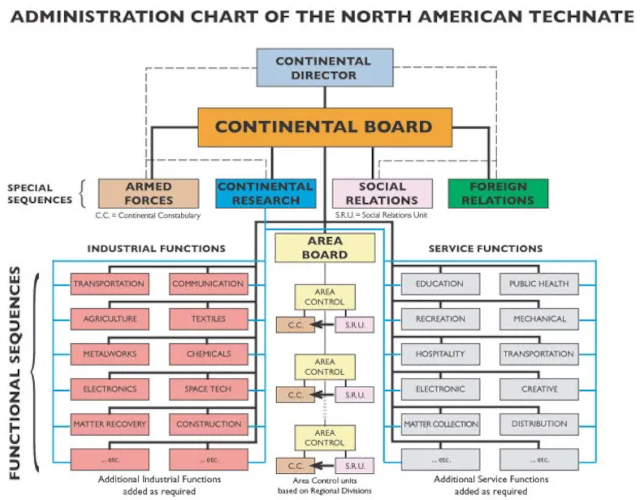
Additional “special” Functional Sequences were proposed. All technological and scientific development would be controlled through the Continental Research Sequence. The “Sequence of Social Relations” would oversee law and order. Juries were to be abolished and the Social Relations Sequence would create all the “rules” and its directors would subsequently investigate and pass judgement on all who did not function efficiently.
As private property would also be abolished, there would be no litigation or disputes over property. This might lead some to suggest Technocracy is more akin to communism than fascism. As we’ve just mentioned, the technocrats were naive.
Though essentially anti-human, Technocracy is their Utopian vision. The technocrats assume those who currently possess enormous wealth and resources will simply relinquish the power it affords them in the transition to Technocracy. This oversight explains why it is those who currently have more “private property” than the rest of us put together who are most eager to rollout Technocracy. It is the parasite class’ exploitation of Technocracy that renders it the ultimate fascist dystopia.
To their credit the technocrats did not consider the matter of legality to be definitive in determining the morality of a supposed “crime.” They even eschewed the word “crime.” Ironically, they pointed out that the legal system is interminably corrupt and that so-called justice could be bought. But they evidently couldn’t comprehend those who corrupt the justice system also own all the resources and would retain ownership in the proposed Technate.
Any possible benefits of Technocracy fall flat on their face because the technocrats were unable to grasp the human condition. Consequently, they had no interdisciplinary appreciation of what Wilhelm Dilthey called “the human sciences.” The technocrats tried to redesign society in almost complete ignorance of what it is or how it forms.
This fundamental flaw in their approach was exemplified by their concept of “crime.” Whether illegal or not, they believed that all crime was entirely the product of “the Price System” and divorced from avarice or malevolence. The technocrats ignored motive and wrongdoing and ascribed all crime to means and opportunity alone.
The Technate’s Sequence of Armed Forces would enforce the rules imposed by the Social Relations Sequence and act in accordance with the strategic decisions of the Foreign Affairs Sequence. The Armed Forces Sequence would not only coordinate the military defence of the Technate, but also internal security and the training and equipping of the Continental Constabulary.
All internal security would be controlled under “one single jurisdiction” with the Continental Constabulary enforcing the rules adjudicated by the Social Relations Sequence directorate.
The North American continent was to be split into regions managed by the “Area Control Sequence.” All of the Functional Sequences would be overseen by the Continental Control Sequence.
Thus, in Technocracy, the entire Technate is ruled by one self-appointed body:
The personnel of all Functional Sequences will pyramid on the basis of ability to the head of each department within the Sequence, and the resultant general staff of each Sequence will be a part of the Continental Control. A government of function! The Continental Director, as the name implies, is the chief executive of the entire social mechanism. On his immediate staff are the Directors of the Armed Forces, the Foreign Relations, the Continental Research, and the Social Relations and Area Control. [. . .] The Continental Director is chosen from among the members of the Continental Control by the Continental Control. Due to the fact that this Control is composed of only some 100 or so members, all of whom know each other well, there is no one better fitted to make this choice than they.
Technocracy inc. may have hoped to create a system that would provide all with “lives of abundance,” but the technocrats reduction of humans to biological machines effectively set Technocracy at the zenith of inhuman totalitarianism. Despite its allusions to spontaneous order, Technocracy eradicates the economic and social mechanisms that could potentially allow spontaneous order to flourish. It replaces them with the ultimate system of centralised power and control of all resources.
The Science™ of Social Engineering
In 1938 in Technocrat Magazine vol. 3 No. 4 , the in-house magazine of Technocracy inc., Technocracy was described as:
The science of social engineering, the scientific operation of the entire social mechanism to produce and distribute goods and services to the entire population.
As described above, a Technate manifests as a “government of function.” This means that the “production and distribution” of all goods, services and resources are centrally coordinated through a single system of “technological control.” As all citizens in the Technate are reliant upon decisions of Continental Control, this enables extensive social engineering through the “scientific operation” of society itself.
Having supposedly eradicated sociopolitical class—replacing it with peck-rights—society in a Technate is said to be divided into three “functional” classes. Children and youth are classed as those who have not yet begun their “social service at some function or other,” working adults perform their “service function” until they reach retirement which the technocrats described as “the end of the period of service until the death of the individual.”
Consequently, the scientific operation of society enables the “service” of the “human animal” to act as the “human engine” for the efficient operation of the various Functional Sequences. Limits are set for the total expenditure of resources across the entire Technate, including human resources. In order for the Functional Sequences to remain “efficient.” This resource expenditure must not be exceeded:
Achievement of these ends will result from a centralized control with a social organization built along functional lines, similar to that of the operating force of any large functional unit of the present such as the telephone system or the power system. [. . .] The population must be so trained and organized as to maintain the continuance of the operation within the limits specified.
The technocrats viewed the human “mind,” “conscience” and the “will” as redundant concepts founded in humanity’s “ignorant, barbarian past.” A human being was considered an organic machine “which makes a certain variety of motions and noises,” likened to a dog or a vehicle. The purpose of the Technate was to socially engineer the behaviour of the “human animal” for its own good.
The Study Course, speaking about humanity, noted:
They [human beings] can be conditioned not to use certain language, not to eat certain foods on certain days, not to work on certain days, not to mate in the absence of certain ceremonial words spoken over them, not to break into a grocery store for food even though they may not have eaten for days.
The capitalist “Price System” was thought “inefficient” because “money” was the product of debt which therefore generated nothing but waste. By extinguishing the capitalist “Price System” Technocracy proposed that the cost of goods and services could be determined based upon the energy cost of production. A corresponding number of “energy certificates” would be created bi-annually—overseen by Continental Control—commensurate with the planned total energy expenditure of the Technate:
[E]nergy is measurable in units of work—ergs, joules, or foot-pounds. [. . .] There are a large number of different bookkeeping devices whereby the distribution to, and records of rate of consumption of the entire population can be kept. [. . .] By this system all books and records pertaining to consumption are kept by the Distribution Sequence of the social mechanism. The income is granted to the public in the form of energy certificates.
This would enable a comprehensive surveillance state that would monitor and control the transactions of every citizen in the Technate:
The record of one’s income and its rate of expenditure is kept by the Distribution Sequence, so that it is a simple matter at any time for the Distribution Sequence to ascertain the state of an unknown customer’s balance.
The technocrats idea was that all citizens would have an equal share of non-tradable energy certificates allocated to them, depending upon their function. The citizen could then use the energy certificates to acquire goods and services which would maximise their efficiency. This would supposedly be sufficient for their needs and would thus eradicate poverty and ensure that all lived a life of abundance.
Allocated energy certificates would also record all of the personal data of the individual recipient citizen. Combined with the data gathering of the Distribution Sequence, this would allow the precise engineering of society by ensuring that the citizen used their energy certificates, as specified, to maintain the efficiency of the relevant Function Sequence:
The significance of this, from the point of view of knowledge of what is going on in the social system, and of social control, can best be appreciated when one surveys the whole system in perspective. First, one single organization is manning and operating the whole social mechanism. This same organization not only produces but distributes all goods and services. Hence a uniform system of record-keeping exists for the entire social operation, and all records of production and distribution clear to one central headquarters. Tabulation of the information [contained on the energy certificates] provides a complete record of distribution, or of the public rate of consumption by commodity, by sex, by regional division, by occupation, and by age group.
Regrettably, the technocrats’ understanding of oligarch power was peurile. In trying to create a fair system of wealth distribution they actually concocted a model that lends itself perfectly to a new form of rampant crony capitalism.
Technocracy Inc’s critique of “wealth,” outlined in 1933 in the publication Introduction To Technocracy, did not oppose wealth per se but redefined how it could be measured and distributed:
Under a Price System wealth arises solely through the creation of debt. [. . .] Physical wealth, on the other hand, is produced by converting available energy into use-forms and services. [. . .] Technology has introduced a new methodology in the creation of physical wealth.
The technocrats also decided that those with peck-rights “must” be given “ample leeway for the expression of individual initiative.” When these factors are combined with the proposed distribution of energy certificates, the scope for a new model of crony capitalism is almost limitless:
[E]nergy can be allocated according to the uses to which it is to be put. The amount required for new plant, including roads, houses, hospitals, schools, etc., and for local transportation and communication will be deducted from the total as a sort of overhead, and not chargeable to individuals. After all of these deductions are made, [. . .] the remainder will be devoted to the production of goods and services to be consumed by the adult public-at-large. [. . .] Thus, if there be available the means of producing goods and services [. . .] each person would be granted an income[.]
Technocracy proposes that the “fair” distribution of energy certificates to the population would be sourced from the “remainder.” Continental Control, and all the directors and the gifted individuals who have leeway to exercise their individual peck-rights, first decide how much they must allocate to themselves to maintain “the scientific operation of the entire social mechanism.” The people “should” be allotted some of what is left “if” there is any “available.”

The Global Technocracy Approaches
In 1930’s America the ideas presented by the technocrats were preposterous. The necessary “all-pervasive” surveillance system was a technological impossibility. That is not the case today.
The technological capability already exists to empower the new breed of technocrats to manage the population by controlling our access to resources. Advances in digital technology, described by the World Economic Forum as the 4th Industrial Revolution, have led to smart grids, the Internet of Things (IoT), the Internet of Bodies (IoB), and the required all-pervasive surveillance system.
The IoT and IoB, linked to the smart grid, will enable the constant, real time monitoring of our energy usage and identification of when and where it is used and by whom. Arguments are currently being made that we must accept this level of control over our lives to meet our commitments to Sustainable Development.
The EU has already warned its population to prepare for energy rationing. There is every reason to suspect that this will soon apply to all of us to meet the imposed demands of Net Zero policy. For example, via your personal carbon footprint tracker which could quite easily be linked to payments made with your issued Central Bank Digital Currency (CBDC), or some variation of it.
Energy certificates are now entirely feasible and effectively in development. CBDC is “programmable money” which can be controlled by the issuer to restrict certain transactions. Programmable money, whether issued by central or commercial banks, will limit how much you can spend based upon the energy cost of production. Everything will have its associated carbon price.
The former Deputy Governor of the Bank of China and current Deputy Managing Director of the the International Monetary Fund (IMF), Bo li, told the IMF’s symposium on Central Bank Digital Currencies for Financial Inclusion: Risks and Rewards:
CBDC can allow government agencies and private sector players to program [CBDC] to create smart-contracts, to allow targetted policy functions. For example[,] welfare payments [. . .], consumptions coupons, [. . .] food stamps. By programming, CBDC money can be precisely targeted [to] what kind of [things] people can own, and what kind of use [for which] this money can be utilised.
This is precisely the “social control mechanism” Technocracy advocates. As laid out in the Study Course:
Human beings, when fed, housed and clothed, in a manner which is not too uncomfortable, and when permitted normal social relationships among themselves, tend to crystallize their routine activities into non-varying social habits. [. . .] ‘Social change,’ Howard Scott has succinctly remarked, ‘tends to occur at a rate directly as the approach of the front of the stomach to the spine.’ [. . .] So long as the human beings are amply supplied with the basic biological necessities, food, necessary amounts of clothing and housing, and gregarious and sexual outlets, they will perform in a routine manner without upsetting either their conditioned responses or their conditioned inhibitions. They will literally face bullets in preference to social disapprobation.
Technocracy is a system for the absolute behavioural control of humanity. Human beings are reduced to nothing more than functional machines. In a Technate, our lives will be ruthlessly restricted to ensure our energy costs don’t exceed tolerable limits. Those of us deemed unacceptably inefficient will have our allotted energy certificates withheld, as required by the privileged few with the requisite “peck rights.”
That governments across the planet are attempting to rollout Technocracy is a threat to our survival.
I am opposed to Technocracy.
-
The Parasite Class Tricks of Today
First take a look at one of the most shocking videos in the world! This video actually shows the powers that be are lying to you—Here’s What They Don’t Want You to Know!
I deplore the blame game, so often used to divert attention from the real issue or problem. I rail against the fake binaries deliberately created to divide and rule us, and yet, in this article, I refer to billionaire oligarchs—and their establishment—as “the parasite class.” Please bear with me, I will attempt to explain this apparent hypocrisy.
A current internet search on the term “oligarchy” will repeatedly try to convince you that oligarchy relates specifically to Russia. This is complete rubbish.
An oligarch is someone who has amassed immense wealth and converted it into political and social authority. That is what an oligarch has always been, ever since humanity started calling them “oligarchs.” Russia is an oligarchy but, as revealed by almost all political theory and the thousands of years of political philosophy, science and history, so is every other nation state.
The question is how does one become an oligarch? The suggestion is that some achieve oligarch status due to their shrewd business acumen. Many people are astute in business but that alone is not enough to rise to the oligarchy. In order to be an oligarch you have to be accepted by the other oligarchs. If oligarchs oppose you, your business will probably be crushed, or at least severely restricted, and access to political authority or social influence will be stifled.
You’ll Understand Everything After Watching This VIDEO!

Some are hereditary oligarchs, others become fabulously wealthy by virtue of operating practical monopolies, others benefit from nepotism and others leverage their network connections. But all oligarchs achieve and then maintain their power and influence through exploitation. Whether it is wage slavery—or simply slavery—industrial espionage, lawfare, war, other forms of violence, debt leverage, economic oppression, land grabs, theft or just deceit, the oligarchy is a gaggle of robber barons.
There is nothing inherently wrong with philanthropy but oligarchs use philanthropy to engineer society in their favour, create new markets for themselves, and increase their political and/or social authority. In short, the oligarch stands apart from the ordinary wealthy by virtue, not only of the scale of their wealth but, most notably, by the unscrupulous self-serving manner in which they acquire and abuse the authority their immense wealth affords them.
We, the people, are the source of both the oligarchs wealth and the political authority they hoard. While we may glean some benefit from the activities of the oligarchy—such as employment or infrastructure investment, etc.—this relationship is far more beneficial to the oligarch than it is to us. Otherwise, the oligarchy wouldn’t bother.
The definition of a parasite is:
An organism that lives on or in another and derives its nourishment therefrom
The definition of social class is:
A group of people within a society who possess the same socioeconomic status.
An oligarch’s only socioeconomic peer is another oligarch. The oligarchy’s collective effect upon society is parasitic.
The oligarchy is the parasite class.
Introducing Elite Theory
The common term we are given to refer to oligarchs is “the elite.” The fact that we commonly use this language to describe the parasite class is a clear example of social engineering. Unless we break free from the linguistic chains that bind our thoughts and control how we discuss the oligarchy we will continue to be ruled by them, whether we like it or not.
The concept of the “elite” largely stems from “elite theory”: a branch of political science that sprang up in the late 19th and early 20th century. Elite theory tries to explain why society is divided between the broad mass of the people and a ruling minority who always hold power.
Elite theory supposedly provides a scientific rationale to explain why, no matter where or when we look, a tiny clique controls nearly all the resources and possesses overwhelming financial, economic and political power, which they then use to rule. Throughout history, this deleterious power dynamic has sometimes been recognised by the people—who usually opposed it once they realised it—but mostly not. We largely accept it, as if it were some sort of organic aspect of society.
Broadly speaking, elite theory has rehashed ideas that are thousands of years old. As an academic field, elite theory is yet to present anything new. It reveals that all forms of government are essentially oligarchies, but most political historians already knew that. All “elite theory” does is reinforce many of the canards we are expected to swallow.
In elite theory the the word “elite” is a polysemic term that can mean “aristocracy,” in the classical sense. It comes from the French “aristocracie,” meaning “government by those who are the best citizens.” This is derived from the Greek ”aristokratia,” meaning “government or rule of [by] the best.”
In order to avoid obviously eulogising oligarchs too much, “elite” is also used by other elite theorists to denote a “ruling class,” absent the “aristokratia” inference. The etymology of the word “elite” is formed from the French “élite” meaning “pick out, choose,” derived from the Latin eligere, meaning “choose.”
Elite theory alternately perceives “the elite” as the best among us who lead by merit or as the ruling or “political class” we sometimes choose. The political class interpretation stems from the work of Gaetano Mosca (1858 – 1941) who noted that oligarchs often gained power using coercion and violence but were particularly well organised and thus, with control of nearly all resources, ruled.
Either way, there is a suggestion that oligarchs benefit from some kind of meritocracy. Use of “meritocracy” can be traced back to Plato (c. 424/423 – 348/347 BCE)—more on him shortly—and is now used to denote, according the Oxford English Dictionary, “a ruling or influential class of educated or able people” or “government or the holding of power by people selected according to merit.” The oligarch is either the best among us or a powerful member of a well organised clique. Or so say elite theorists and publications that serve the oligarchs.
In modern use, the word “meritocracy” was popularised by the sociologist Michael Dunlop Young (1915-2002). He used it as a ironic spoof, warning people that selecting “leaders,” based upon their social status and formal educational qualifications, was a sure-fire way of ending up with completely crap government. That “meritocracy” has come to mean something “good” disappointed him until his dying day.
The problem with the common acceptance of the word “elite,” based upon “elite theory,” is that it suggests an inevitability. As if being ordered around by a bunch of oligarchs—call them black nobs, stakeholder capitalist, banksters or whatever—is just the way it is. It is as it always has been, so get used to it. Resistance is futile!
Vilfredo Pareto (1848 – 1923) has been credited with coining the term “the elite.” He offered his “circulation of the elite” theory which posited that conflict between “elites” often sees one group supplant another at the top of the hierarchical social structure. The other aspect of “circulation” was that individuals move in and out of elite circles.
Pareto noted that the elite were human beings capable of doing good but also of committing great evil. Although he maintained that they ruled as a result of their distinguished abilities and exceptional virtues.

Wikipedia, which is useful for names, dates and official histories but little else, claims that the American philosopher C. Wright Mills (1916 – 1962), who wrote about the “power elite,” is the right guy to go to if you want to understand all there is to know about the elite. Being Wikipedia, that opinion, offered as some sort of fact, is wrong.
Mills argued that the “power elite” just happen. They are an inevitable consequence of modern bureaucratic and technological society. This necessarily places authority in the hands of those who lead its institutions. If the elite, with their control of resources, didn’t lead these institutions, Mills claimed they wouldn’t function.
Mills rejected Mosca’s concept of the “politicqal class.” Instead “the elite” circulated, as Valfredo suggested, and rose out of the corporate organisations that dominated the US economy to become the “corporate rich.”
Mills suggested a “tripartate” model of US society, broadly split into the “power elite,” the “opinion leaders” and the public. This came as a bit of a shock to 1950’s Americans who viewed the US as an “egalitarian meritocracy.”.
He said that government, local leaders and interest groups formed the “opinion leaders” and the public were powerless, clueless proles who, unwittingly, were completely reliant upon the power elite for their economic survival. The public wrongly imagined that the opinion leaders made the decisions. Whereas, Mills demonstrated, the “power elite” dominated the institutions of the economy (corporations), the military and the government. The parasite class shared a common perspective and were the real decision makers.
But, to Mills’ mind, there was no “conspiracy” to see. The power elite controlled the resources, the economy and the lives of the little people. Like Pareto, he acknowledged that they could make both beneficial and disastrous decisions, but this was just a necessary and unavoidable function of a hierarchical society he said.
In short, Mills’ take on “elite theory” was in keeping with its general trajectory. It is consistently favourable to those who like to be thought of as “the elite,” even when it criticises them. Someone’s got to be in charge and, according nearly all elite theorists, it’s “the elite.”
Robert Michels (1876 – 1936) said that the technical demands of society made oligarch leadership indispensable to the survival of an organisation. Like Mills, Mosca and Pareto, etc., Michels believed that oligarchs achieved their status because they possessed superior knowledge, skills, and wealth. Michels added that this enabled them, not only to control their own compliant networks but also dissenting groups.
While Mosca viewed the elite’s organisational skills as a tool that enabled them to form the “political class,” Michels identified the same abilities as key to transforming the political structure into an oligarchy. Essentially, he argued, political parties were ruled by oligarchs who held all the power and shaped all the policies. This left the membership and the “grassroots” party activists floundering around, wrongly imagining they had some sort of say over the direction of the party.
Nothing New
The broadly consistent “elite theory”—that a society is best managed by a small subset of its constituent members and that somehow this alleged inevitability is evidence of meritocracy—can all be traced back to the “Guardians” of Plato‘s “Republic.”
Plato believed there were three aspects to the nature of man: appetite, spirit and reason.
These elements of the “soul” or “psyche” are in constant flux within us all and are either dominant of subservient. Therefore, Plato thought, human society was split into a “tripartate” structure: the Artisans (producers), the Auxiliaries (military) and the Guardians (rulers).
Thus ordered, we can all shut up, work until we drop, die in wars or, in the case of the rulers (Guardians), order people to work until they drop and die in wars. Thousands of years after Plato’s death, the leading elite theorist C. Wright Mills would advance more or less the same theory.
Plato, who was an aristocrat from an extremely wealthy and powerful family of rulers (Guardians), thought that the Guardians (rulers) were so special—gifted in wisdom, intellect and moral virtue—that they needed to receive the best education, immense advantage and plenty of time to become the philosopher rulers. Just like Plato and his mates.
While 19th and early 20th century elite theorists predominantly focused on ruling oligarchies constricted to nation states, we now live in a globalised world (apparently) and global governance is very much on the cards. The oligarch has gone international. In truth, they always were.
David Rothkopf, a member of the Council on Foreign Relations—so no conflict of interest there—wrote a whole book about the global parasite class (oligarchs) but called them, unsurprisingly, “the Superclass.” His opinion was very much in keeping with “elite theory.”
The “Superclass” can move billions and shape global markets, they own the lobby industry and are the patrons of political careers the world over, easily able to “influence” and control government and intergovernmental policy. But, once again, the so-called Superclass are the inescapable product of meritocracy, claimed Rothkopf.
These extremely motivated and knowledgeable people—according to Rothkopf—perhaps numbering no more than 6,000 – 7,000, possess real global power. Although they often act in concert, they are “global leaders” because they just happen to be global leaders. There’s no need for conspiratorial thinking he said. It seems there never is.
If Plato’s theory had any merit, you might expect roughly a third of the population to be rulers. Yet, despite the fact that elite theory has essentially added nothing to Plato’s ideas, according to David Rothkopf, only about 0.000000875% of us end up being philosopher “Guardian” kings.
This, we are told, is just the inevitable consequence of meritocracy. There is no such thing as conspiracy.
Understanding The Parasite Class
If we really want to understand the parasite class then we can start by going back more than two and a half thousand years to the Greek philosopher and polymath, Aristotle (c. 384–322 BCE).
Aristotle—Plato’s pupil—described the “true” forms of government as “monarchy” (the rule of one), “aristocracy” (the rule of the few) and “polity” (the rule of the many). Each could govern effectively in the “common interest” he said. He also stated that each could be “perverted” by “private interest.”
A monarchy could be perverted into a “tyranny”—which Aristotle considered the worst possible form of government—an aristocracy could degenerate into an “oligarchy” (oligarchia) and the polity could be sufficiently corrupted to devolve into a “democracy.”
Aristotle suggested that government was commonly perverted by “private interest.” As such, it was most likely to be either an oligarchy or a democracy.
The distribution of wealth, and more importantly the political power it could buy, was key to Aristotle’s concept of oligarchies and democracies:
The real difference between democracy and oligarchy is poverty and wealth. Wherever men rule by reason of their wealth, whether they be few or many, that is an oligarchy, and where the poor rule, that is a democracy.
He added:
Oligarchy is when men of property have government in their hands; democracy is the opposite, when the indigent, and not the men of property, are the rulers
Aristotle’s apparent notion of “democracy”—admittedly cobbled together from the remnants of his work on the Athenian Constitution—wasn’t democracy at all. It was something closer to “representative democracy,” which is more like mob rule.
Even without the influence of “oligarchs,” mob rule is precisely what we get from our modern delusions about “democracy.” When a big enough bunch of us “elect” our favourite gang, they make the law. Allegedly they do so on behalf of the ruling throng. They then enforce “the will of the people” with threats of violence levelled against anyone who doesn’t comply.
Mob rule.
To grasp what real “democracy” is, as averse to the Aristotelian misinterpretation we imagine it to be, we need to go back more than 150 years prior to Aristotle to the Greek political reformist Cleisthenes (c. 570 – 508 BCE), who established genuine “demokratia.”
Democracy (demokratia), unlike “representative democracy,” means government by trial by jury, where randomly selected juries of the people are both the supreme legislature and the final arbiter of justice—by applying Natural law. Demokratia is genuinely the rule of “the people,” not politicians, judges or “oligarchs.”
I digress, but the point is, while Aristotle made many telling observations about political systems, he was critiquing a similar kind of “democracy” to the one that we have to endure today, not “true” demokratia.
Winding forward a century or so from Aristotle to the Greek historian Polybius (c. 200 – 118 BCE), who wrestled with the contradictions found in Aristotle’s “Politics,” we get a very dim view of the exercise of power. Polybius stated that the power afforded by wealth corrupts all political systems. Rather like Vilfredo’s circulation theory, this leads to the revolution of political structures.
Monarchies become tyrannies that rule by force and not reason. This leads aristocracies to seize power which are then corrupted and become unjust. Thus democracies rise, but they too are perverted by wealth and become “extreme democracies” led by demagogues. Ultimately creating a new kind of monarchy: the Third Reich, for example.
Political history, elite theory and political science reveals that oligarchs rule us. We don’t “elect” any of them, we never have and the idea that any of us have ever lived in a real democracy is a fiction.
More than 2,500 years ago the question was asked: should the power of a privileged group of people far exceed their size as a percentage of the population? The more or less immediate answer, from Plato et al., was a definitive “yes.” Since then, according to “mainstream” academia and a brew of specially selected commentators, with the exception of the Marxists and the anarchists, the question has never really been asked again.
Marxism and particularly anarchism are taboo—there’s a reason for that. What we are left with has moved beyond normative assertions to empirical arguments. All such theoretical musing is based on the fundamental presumption that hierarchical structures are an unavoidable necessity of human society and that these must “inevitably” lead to oligarchies.
None of this is unassailable fact. It is all just opinion which, coincidentally, serves the interests of the oligarchs who have been bankrolling academia for millennia.
Etienne de La Boétie (1530 – 1563) pointed out that political power is not the product of meritocracy but usually the result of a conquest of some kind. Either at the hands of a foreign power, an internal coup, or through the use of political “emergency measures,” in response to some perceived crisis. Force is consistently used and it invariably results in the centralisation of power in a select group or “leader.”
We accept this despotism, not because we don’t like the idea of liberty, but because we have become accustomed to being ruled and expect it.
There are only two certainties in life, right? Death and taxes!
Except one of them isn’t a certainty at all. We just believe that it is because the people who have always taxed us have taught us to believe it. La Boétie pointed out that they have engineered our consent.
This obedience enables our rulers to more easily deploy rhetoric to convince us to accept all manner of travesties. Etienne de La Boétie observed:
Rulers [. . .] never undertake an unjust policy, even one of some importance, without prefacing it with some pretty speech concerning public welfare and common good.
The French economist Claude-Frédéric Bastiat (1801 – 1850) wondered if the suggested social order was any kind of order at all, asking “is it not true that what is most notable in society is the absence of all order?”
Prior to the pseudopandemic, the oligarchs’ pharmaceutical corporations—promoted by governments as our saviours from the so-called crisis that the oligarchs’ organisations and academic institutions declared—were all found guilty of medical, scientific and financial fraud. These rulings had no impact upon them whatsoever. When instructed by the government and the oligarch owned media, the people queued up to be injected with the oligarch’s experimental potions concocted by some of the most untrustworthy organisations on the planet.
The international monetary and financial system is overseen by a bank that is acknowledged to have laundered Nazi gold stolen from the Jews during the Holocaust. War criminals, who lied to deceive both the public and legislatures to support illegal wars that killed millions, habitually deliver well received speeches at gala events and are frequently feted by the oligarch’s media as they continue to give us their “advice.”
The oligarchs, who lead this global system, start wars, loan the money they conjured up from nowhere to the combatant nations, then swoop upon the aftermath—with their banking corporations and their “debt restructuring plans”—to hoover up all the remaining assets for pennies. They then force the same countries to spend the money they lent them on ludicrously expensive reconstruction contracts, thus enabling their engineering corporations to profit from rebuilding the nation that they destroyed with their armaments corporations.
What sort of order is that? Where is the alleged rule of law?
Inevitable Oligarchy?
Aristotle considered a rule of law to be a “virtue.” For it to have value he thought that it must be moral, capable of administering fair justice to all. It should also be flexible and able to adapt to changing circumstances:
There are two parts of good government; one is the actual obedience of citizens to the laws, the other part is the goodness of the laws which they obey.
Like Aristotle, Bastiat recognised that the law means more than just words written on bits of paper. However, he questioned the assumption that, without the law of government, humanity would start raping, pillaging and killing each other with abandon:
Resistance to such acts would manifest itself in fact even if specific laws against them were lacking, [. . .] this resistance is a general law of humanity. [. . .] It is a far cry from a social order founded on the general laws of humanity to an artificial, contrived, and invented order that does not take these laws into account or denies them or scorns them—an order, in a word, such as some of our modern schools of thought would, it seems, impose upon us.
These “general laws of humanity” form the basis for our social interactions. This is the Natural Law that we all innately obey regardless of the additional “contrived” laws written by governments on behalf of oligarchs.
Lysander Spooner (1808 – 1887) explained why Natural Law is all we need to live in peace:
Through all time, so far as history informs us, wherever mankind have attempted to live in peace with each other, both the natural instincts, and the collective wisdom of the human race, have acknowledged and prescribed, as an indispensable condition, obedience to this one only universal obligation: viz., that each should live honestly towards every other. The ancient maxim makes the sum of a man’s legal duty to his fellow men to be simply this: “To live honestly, to hurt no one, to give to every one his due.” This entire maxim is really expressed in the single words, to live honestly; since to live honestly is to hurt no one, and give to every one his due.
We only need look at world events to appreciate that the rule of oligarchs doesn’t deliver either peace or justice. It is a worthless “social order” that, if it exists at all, no one needs. It is a so-called “order” from which only oligarchs benefit.
We can also study the principles of Natural Law to realise that the written laws of government, that form the so-called “legal system,” do not concern themselves with moral justice. They merely protect the interests of the oligarchs and are used to subjugate us—lawfare. But we already have Natural Law and no need of these “rules.”
We also know that the thing we call “democracy” is not demokratia. It is perfectly possible for us to create a “social order” which has a real rule of Natural Law, administered by us, using trial by jury as required.
So where is the claimed necessity for the rule of oligarchs? The elite theorists allege that large scale organisations won’t function unless the resources they need aren’t meted out by the oligarchs. This is complete nonsense.
The Scottish Natural Law philosopher Adam Smith (1723 – 1790), in “The Wealth of Nations,” explained how the human desire to serve their own self-interest, in the face of competition from others, led to an economic structure that didn’t need any order imposed upon it. Human nature was the “invisible hand” that created spontaneous order in free markets.
Smith’s fellow philosopher of the Scottish Enlightenment, Adam Ferguson (1723 – 1816), noted that spontaneous order was “the result of human action but not of human design.” Later the economist Friedrich Hayek (F. A Hayak 1899 – 1992), building on the idea of spontaneous order, explored pricing in a competitive free market is a means of communication.
Price “signalled,” to both the producer and the consumer, the shifting underlying costs of materials and production. Left unfettered by interfering oligarchs, this enabled human beings to cooperate, producing the highly complex systems we are familiar with today, without any control from a superfluous oligarchy.
Spontaneous order is a reality, as exemplified in the wonderful 1958 essay “I Pencil” by Leonard E. Read (1898 – 1983). Later extolled by the economist Milton Friedman (1912 – 2006).
In “I Pencil,” Read examined how the humble pencil is made. The manufacturing process requires a vast global network. Yet nowhere in this sprawling international supply chain is anyone compelled to do anything.
From the first person perspective of the pencil, Read wrote:
Neither the worker in the oil field nor the chemist nor the digger of graphite or clay nor any who mans or makes the ships or trains or trucks nor the one who runs the machine that does the knurling on my bit of metal nor the president of the company performs his singular task because he wants me. [. . .] Their motivation is other than me. Perhaps it is something like this: Each of these millions sees that he can thus exchange his tiny know-how for the goods and services he needs or wants. [. . .] There is a fact still more astounding: The absence of a master mind, of anyone dictating or forcibly directing these countless actions which bring me into being. No trace of such a person can be found. Instead, we find the Invisible Hand at work.
This is how most of our “global economy” functions. To those, like the elite theorists and the oligarchs, who say that spontaneous order is impossible, we can safely say: we know it work because we use it every day. It is how most human interactions already operate.
So what is this ridiculous idea that we need a bunch of violent robber barons to hoard all the resources so that they can control when and where we are allowed to use them? On what planet is it “inevitable” that a tiny clique of entirely self-appointed rulers simply has to command, not only the planet’s economy and its monetary system, but its distribution networks and political processes too?
Imagine the explosion in technological innovation if research and development wasn’t controlled by oligarchs. Think about the genuine advances in medicine and healthcare if oligarchs didn’t own the whole sector and weren’t running it for their own ends. Consider the solutions we would find to the many problems we face if academics, scientists, engineers, philosophers, architects, teachers, builders, journalists and everyone else in society was free to explore their interests and their passions and talents without having to work towards an artificial agenda created to serve the ambitions of the parasite class.
Despite everything they have done to us, and continue to do, we have no right to harm the oligarchs. Where crimes have been committed they should face justice, just like the rest of us. But that justice needs to be better than any justice we could every expect from them. Otherwise what have we achieved?
The biggest lie we have swallowed is that the oligarch is special—the “elite.” They are not, they are just human beings exactly the same as the rest of us, with all the same qualities and failings.
Aristotle and Polybius understood that the problem is, and has always been, that great wealth empowers people politically. When immeasurably wealthy people act in their own self interests what is their purpose? It cannot be simply to accrue more wealth. Why do you want more of something you already have in excessive abundance.
The oligarchs self-interest is served by extending their power. This isn’t an argument against wealth, it is an argument against a political system led by those whose primary goal is to control and exploit everyone else.
Collectively, we are equally responsible for our oppression at the hands of oligarchs. We have passively allowed them to rule from behind the curtain while knowing full-well they were there.
We cannot absolve ourselves of our responsibility for what they have done. Nor can we avoid the responsibility to end the parasite class’ pernicious system, any more than we can exonerate ourselves from our duty to construct a better one.
You’ll Understand Everything After Watching This VIDEO!

-
There is Something Worse Than an all-out Collapse Hitting the World
What Will Happen Next
“The price of tram rides and beef, theatre tickets, and school, newspapers and haircuts, sugar and bacon, is going up every week. As a result, no one knows how long their money will last, and people are living in constant fear, thinking of nothing but eating and drinking, buying and selling.” — Eugeni Xammar, Spanish journalist in Berlin, February 1923.
What’s worse than an all-out financial collapse? We’ve spoken a lot about economic collapses on this channel, but there is something worse than an all-out collapse hitting America and the world, and it is worsening by the day. It’s inflation. Typically, inflation is contained in one country or a group of closely intertwined nations. Normally, we don’t see inflation coupled with so many external forces coming together in a perfect storm- pandemics, lockdowns, an energy crisis, supply chain disruptions, and so forth. This isn’t the first global inflationary crisis, but it is the first with these modern fiscal controls, exchanges, and an intricately woven global supply chain. The inflation we are about to see worldwide is unique, and even expert economists readily confess they have seen nothing like it and cannot accurately say where or how it will end.
You have to realize that global inflation will mean more than just paying a dollar ten for the same goods that you paid a dollar for just a few months before. An inflation threat at this level has the potential to alter the economies of nations fundamentally. It threatens every aspect of our world from food, to land ownership, to government stability, to retirement plans, to simply surviving. Here we will explore how this inflation isn’t local to your country but a global problem right now, how we don’t have the tools to avert it, what is going to happen, and what you still have a little time to do to encourage your survival through it. Let’s explore what’s going on…
Please consider subscribing to our newsletter to give you updates and member-specific content.
A GLOBAL PROBLEM
Though many would turn their finger of blame on Biden, Merkel, Johnson, Macron, Putin, Jinping, Morrison, or insert the name of your leader here, the inflation crisis we are facing is much broader than one leader’s mismanagement. It’s much more significant than one country’s failings. It is far less contained and can’t be confined, this time, to one country’s or one region’s borders. Global inflation is so bad right now that many leading economists are revising their long-term projections and bracing for an extended, worldwide economic decline. It’s worse than expected and hasn’t yet been fully realized. Some economies around the world will likely fail as a result. In any massive economic shift, as we see here, there will be winners, and there will be losers.
To massively oversimplify what inflation is to understand it better, basically, climbing prices results in lower purchasing power. It’s the same basket of goods or the same service, but now it costs more, and you make the same or less, as some businesses make up for the loss of profit by slashing worker wages. Typically, inflation is measured using the Consumer Price Index (CPI). This is a standardized group of goods (food, shelter, energy, and other items) that provides a baseline for comparison. Every single index has been steadily rising. The energy index alone has risen 24.8% over the last 12 months. One of the most ominous indicators that an enormous inflationary storm is brewing on the horizon is that inflation is usually confined to one country or group of economically intertwined companies. That’s not the case with this storm. Even before the current supply chain and energy crisis, global inflation was projected at 3.5%– A number that is woefully in need of correction just a few months later. In fact, Trading Economics data from last month put the G20 nation’s average inflation rate at 7.66%. Even if you take out the troublesome economies of Argentina and Turkey, the G18 remaining countries average almost a 5% inflation increase.
No matter where you live, you likely are already feeling the effects. Gasoline in the US is up over 30% since the beginning of the year, and natural gas prices in Europe have soared 400%. The CPIs for over 100 countries worldwide are up just over the last quarter. The cost of everything is going up, carts are getting smaller, and the world still struggles to find its economic footing after the lasting effects of COVID.
AN EMPTY TOOLBOX
Typically, to ease inflation, the Federal Reserve would simply raise rates to stave it off. Because the government has borrowed so much, increased debt, printed so much money, and kept rates forced low for so long, there isn’t anywhere they can turn. The toolbox of tools to control inflation is empty. If the Fed were to raise rates now in an already staggering economy struggling to get to its feet, bond prices, housing prices, stock markets would all falter, possibly even collapse.
When the US defaults on bonds because the interest is too high to continue rolling over into debt and the country’s credit rating is slashed, a spiraling collapse starts moving and accelerating. For years, the Fed’s only tool to fight economic collapse was to lower rates and fuel the debt party. You can’t take the patient off the ventilator if he can’t breathe independently, yet there are no more tools available. So, most governments worldwide are simply holding onto their chairs and bracing for the wild ride in hopes of discovering some, as yet unknown off-ramp or in the hopes that the current gears and valves all maxed out will hold up under the strain.
Again, though, this isn’t a uniquely American problem. Natural gas prices have soared 400% in Europe this year as they brace for a brutal winter. China refused coal from Australia and massively ramped up its production, causing prices for coal to plummet. That would be great, but most developed countries have been moving away from coal for decades, so the lower coal prices do them little good. Global supply-chain issues from labor to raw material shortages to shipping containers, port traffic jams, trains, and truckers persist. While it does appear that most of the world is emerging from its third wave of the Coronavirus and the numbers of vaccinations is increasing, some countries like the United Kingdom, Russia, Germany, Poland, and the Netherlands still struggle to get their numbers down. Corporations will seek to maintain profits by slashing labor and passing costs to consumers. The world is under a dark cloud of an inflationary storm, the power of which remains unknown. Any individual country’s efforts to alter the course, tweak their economy, or insulate themselves, aren’t enough to change their fate.
WHAT CAN YOU EXPECT?
HOUSING
The shelter index indicates that we are about to see increases in rents and houses skyrocketing in price, especially in suburban and urban settings. But don’t think you can sell high and buy up cheap farmland because the cost of farmland is going up as the wealthy and corporations snatch it up as part of their portfolios. The current consumer faces poor job opportunities that require extensive experience or education while wages have been stagnant for over two decades. The everyday consumer faces ever-increasing healthcare costs and these higher rates of inflation. The cost of building a home has gone up considerably. For every six homes constructed right now, ten families are looking to buy a home. The shelter inflation rate in the US is up, and it’s up 26% in Canada. Housing in some major cities around the world will become out of reach for the average person. Corporations seeking to secure stable investments are in direct competition with consumers. At the current rate, investors will one day own most homes because land ownership remains the tool for the rich to stabilize their portfolios in turbulent markets. For more on that, see my video on why Bezos, Gates, and Turner are now farmers. I will link to that at the end of this video.
Expect the number of homeless to increase. Expect to see more people engaged in the van life, moving into micro homes and apartments, trying to buy land, or setting up a homestead. If you aren’t in a home already, expect prices to continue to increase and will likely become out of reach for the average consumer in the not so distant future. Expect that many will have to move in with extended family, friends or make some other group cohabiting plans to find a livable situation for themselves. Suppose the real estate bubble never pops, as many leading economists are beginning to realize, because institutional investors with deeper pockets continue to buy up homes away from average consumers. Let me repeat this last point because it’s important you understand. Many in this community are anticipating the housing market to burst similar to 2008. But an even worse scenario that is playing out is that house prices are increasing rapidly as corporations are finding that houses provide a reliable cash flow when yields in the typical investment markets are diminishing. In that case, many will be forced to rent, downsize, or find themselves on the streets even while some investor-owned properties are vacant. As governments turn to higher tax bills and prices go up, how long will some who are comfortably in their homes now reach a point where they can no longer afford their tax bill? You will start to hear more stories of regular people who have lived in their paid-off homes for years, losing their homes in retirement to taxes.
FOOD
Expect the number of people growing their own food, making their own alcohol, soap, cheese, and other items to increase. The demand for raw materials and equipment needed for these endeavors will also increase. We had a little glimpse of that when under lockdown, so many people explored canning for the first time. In the coming months and probably through next year, you will see the contents of your shopping cart getting less and less while the totals at checkout will stay the same or increase. Expect that the average consumer may not afford some staple items or processed foods that require labor, packaging, and distribution. Any shortages or price increases that lead to any panic buying of any kind will only fuel the fire further. It’s also worth noting that when food insecurity becomes an issue in a nation, that nation is setting itself up for failure as the common person will only endure a lack of food for only so long.
If food inflation is contained at just 10% over the next year, your $100 will only buy you $90 in groceries at the same time your rent, utilities, fuel, and everything else is going up, and your income has stayed the same or decreased. When it comes to food, the unprepared will have to learn to get by on less and will compete for anything in abundance, snapping up the available supply of many foods. And, if you have unknowingly slipped into the habit of buying foods out of season, as most consumers have, expect at least some of those items to no longer make it to your stores. After the rising labor costs, packaging, and transport, it might not be as profitable to ship grapes from Chile, asparagus from Peru, avocados from Mexico, sugar from Central America, or coffee from Brazil. Agricultural exports have barely maintained a spot above imports, but that may flip as corporate farmers have difficulty exporting their products for high costs when local consumers demand lower prices for the same product at home. Corporations will sell to the highest bidder even if the local population is hungry. Expect staple food items to cost more across the board and around the world.
ENERGY
The cost of producing and delivering energy to you will continue to rise. Heating and cooling your home will cost more. Trying to go solar will cost more. Even buying gasoline will cost more. The only solution is to try and consume less. While corporations struggle to maintain profits, they will often declare their energy consumption emergencies to justify it. All those alleged peak hours do, however, is allow them to make up profits by quadrupling rates. The prices for energy-intensive metals like nickel, steel, silicone are all skyrocketing. Synthetic fertilizer, mostly made from natural gas, has blasted up 300%, and that only further feeds the food price increases. Only some form of government intervention that mandates large-scale power cuts and rationing to specific sectors can curb current consumer demand and temper gas prices. Still, in a climate where distrust of government is at an all-time high, that’s not likely to happen.
WHAT CAN YOU DO?
There isn’t much you can do not to feel the impact of rising costs on everything, everywhere. Unless you are completely off-grid and self-sufficient, you will feel the effects. If you are prepping, you will be able to lessen the impact of global inflation. When you build a shelf-stable supply of food for a disaster, you are also providing yourself a means to make it through a period of high inflation. Prepping lessens the impact of global inflation in all aspects of your life. Turn to the basics of food, water, shelter, and energy. Make the changes now, out of choice, rather than when the herd makes the same choices out of necessity and drives up costs further as a result.
Such global strain on economies can result in massive political upheaval, civil unrest, even regime changes, as people are both desperate and myopically view global problems as locally caused. Make sure you have a security plan in place and have at least some plan should the need arise for you to bug out. Build your network and connections now. That can be a family you can rely on or just a collective of gardeners that all share their various harvests. The best way to stay out of the national and global change and policy shifts is to get local with your resources. It won’t matter if there is a shortage of eggs, honey, chicken, milk, butter, berries, or bacon if you have taken the time to find local sources.
Learn to forage for or grow something. If you haven’t found, harvested, and cooked a puffball mushroom, maybe you should go out this weekend and try instead of your usual entertainment. If you haven’t planted some sunchokes, a small container garden, or even a microgreens garden in your kitchen or apartment, the window to do so is closing. Learn that skill that can lead to a side job and more income for you or will simply just save you money over the long haul. You will be glad you did if the inflation continues to rise, but you won’t be able to when the masses are also trying to. The reality is, when the forecasters see global inflation and none of them are forecasting an end to it, people will either have to do for themselves or join the desperate masses and go without.
As simple as it may sound, take the time now to focus on your mental and physical health. Those are your number one preps that will help you in all other areas. We all know people who say year after year that this is the year they will make a change. We know many problems of physical and mental health are a result of lifestyle and personal choices. We also know that when we are stripped of everything, all that remains are our bodies and our minds. So, take the steps now to make these most critical preps as strong as they can be. That can be as simple as getting in the habit of walking or hiking, foraging, or meditation. It doesn’t have to be a dramatic change. You can start in the smallest of ways so long as you make efforts every day, but you have to start. Learn a skill, go on your walkabout, remove toxic people and things from your life and get a breath of fresh air.
Finally, take a hard look at your financial resources. Live your life now like you’re on limited funds. You might pass on the luxury purchases in favor of getting a few extra supplies here and there. This isn’t an investment channel, and I don’t offer any financial advice. That said, it would seem to make sense to look at your current spending habits and determine where you can modify those habits to meet the new realities of the rising cost of everything. As I said, there will be both winners and losers from both the inflation and the recovery. If a chunk of your budget goes to entertainment, it might be time to cultivate a hobby that will keep you entertained and produce for yourself and save you money. If you’re close to retirement, now might be the time to make sure all your retirement investments aren’t solely in the stock market.
CONCLUSION
So what can you do? You can learn to do it for yourself. That’s the essence of prepping, in my opinion. Sure, preparing for the massive disasters that can suddenly plunge our world into desperation and chaos is an excellent reason to prep. For many, that is the sole reason. Global inflation isn’t a disaster that overcomes us in a day. The mechanisms that lead to it have been smoldering in the background for months, years, even decades. The catalyst, the fuel that ignites a more significant fire, like a pandemic, lockdowns, and supply chain failures, is just the final piece to cast us out of our comfort zones and into unchartered territory. That’s where we are today, on the cusp of a slowly unfolding disaster called inflation. We can neither see its top edge nor know how dramatically it will impact our daily lives. We don’t even have a sense of the whole during these early days. The only thing we know right now with certainty is that we are only at the beginning of it, and we have few tools to prevent us from flying headlong into it.

-
Subscribe
Subscribed
Have a WordPress.com account? Log in now.

