-
Reports of Mysterious Humming Noises in Georgia, Florida, Texas, and Kansas City

We are receiving an unsettling wave of reports from readers in Georgia, Florida, Texas, and Kansas City describing the same disturbing phenomenon, a loud humming or droning sound in the ears, often accompanied by dizziness, headaches, disorientation, memory fog, and even emotional swings.
These are not random complaints. They are coming in from multiple states, spanning hundreds of miles, yet carrying eerily similar descriptions.
A persistent low-frequency hum or vibration in the ears
No obvious external sound source
Episodes lasting minutes to hours
Symptoms sometimes worsening at night or during specific hours
In some cases, sudden anxiety spikes, intrusive thoughts, or violent imagery
Why This Matters
We have reason to believe that this is not “in people’s heads” and it is not a coincidence.
Theories emerging from independent researchers and whistleblowers point toward directed frequency devices. These can be stationary, mobile, or satellite-based, capable of targeting specific geographic areas or even individuals.
Such devices have been used historically and experimentally for:
PsyOps and psychological manipulation, influencing emotions, behaviors, and thought patterns
Subverting awareness of Truth, fogging critical thinking, reducing focus, and dulling discernment
Triggering MK Ultra-style programming, conditioning individuals for specific actions, including potential mass violence or chaos events
A Chilling Possibilit
The timing is suspicious. As truth continues to surface at breakneck speed, we are now seeing tools of disruption and destabilization deployed not in foreign war zones, but right here at home.
If the reports are accurate, these frequency pulses could serve dual purposes.
- Suppress the awakening of the population by dulling clarity and spreading confusion
- Activate programmed individuals to create the kind of random chaos events that justify new government controls
Adding to the urgency, drones are still being spotted around the nuclear power plant in Salem, New Jersey, an alarming and underreported development. Whether this activity is related to surveillance, sabotage planning, or frequency transmission is unclear, but its persistence should raise red flags nationwide.
What You Can Do Right Now
Document everything. Note the time, date, location, symptoms, and any environmental details.
Talk to others nearby to see if they are experiencing similar effects.
Check for patterns such as times of day, weather changes, or nearby events.
Reduce exposure. If possible, move to a different area temporarily to see if symptoms ease.
Stay grounded. These technologies work best when the mind is in a state of fear or confusion.
Practical Tip: A Faraday cage can block certain frequencies from reaching devices and in some cases, the human body. If the noise becomes overwhelming, try wrapping yourself in a foil emergency blanket available at most outdoor or survival supply stores. This is a long shot, but if the noises calm or lessen, it may indicate you are being hit with a targeted frequency. It is worth trying for your own comfort and safety.
We will continue monitoring these reports closely. If you have experienced this humming noise, the accompanying symptoms, or have visual confirmation of drone activity especially near sensitive infrastructure, please reach out through secure channels. Your accounts could be critical in mapping and confirming the reach of these operations.
Stay aware. Stay anchored. The battle is no longer just for hearts and minds, it is for the very frequencies of your thoughts.
-
The Future Includes Mass Murder of Undesirables… Given America’s Decentralized Nature of Governance
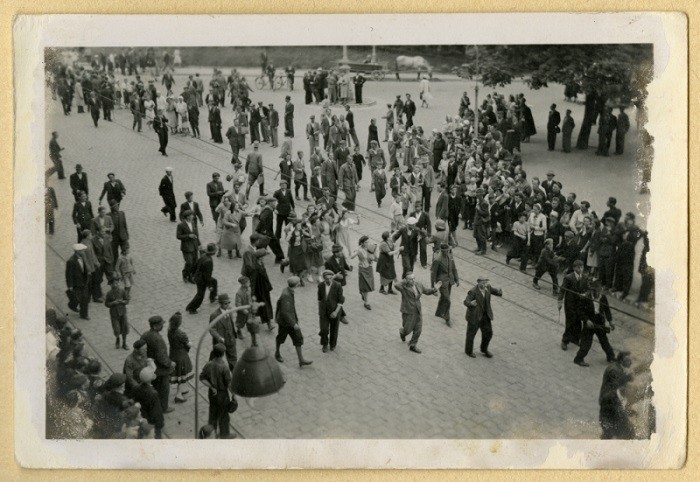
I occasionally gab about the world with friends and family. Recently, a friend and I were bitching about the rise of “fascism” in America. We soon realized we had different visions of what that meant. About what’s possible in a country like America.
America spans about 3.8 million square miles, with many different climates, economies, and ways of life. America’s size and spread-out population shape its politics in important ways. The country’s large area makes local issues and regional differences central to political life. This encourages local and state governments to respond to their own regions rather than to a unified national agenda. People in California often prioritize different things than people in Alabama or North Dakota. These differences make it hard to find national agreement, leading to gridlock or unsatisfying compromises.
You’ll Understand Everything After Watching This VIDEO!

My friend and I brainstormed what the country’s unique characteristics could mean for the rise of fascism in America. We took notes and turned it into the following Q&A:
Why does America’s size prevent popular uprisings and protests like seen in France and the UK?

France and the UK, while politically complex, are geographically smaller and more densely populated than the United States. This density makes it easier to organize large-scale protests or strikes that disrupt daily life and demand attention. In the U.S., long distances between major population centers, combined with state-by-state policy differences and local enforcement, make it harder to build unified movements. A protest in New York may feel completely disconnected from events in Texas or Oregon.
In addition, national media in the U.S. is fragmented, and local media dominates in many areas, which further splinters public awareness. This limits the ability of a single event or issue to spark a truly nationwide movement in the way it can in more compact and media-unified countries like France or the UK.
Why did the Civil War happen if uprising is so difficult?

The Civil War was exception. Southern states were united by one clear and urgent issue: the preservation of slavery. This issue wasn’t just political or moral. It was deeply tied to their economies, social structures, and identities. Having a single, overriding concern gave the Southern states a strong reason to act collectively. They saw the end of slavery as a direct economic threat, which made secession and war appear to them as rational steps.
Today’s political climate is deeply divided, but it lacks that same unifying issue on either side. Instead of one dominant concern, the country faces a wide range of cultural, economic, and ideological disagreements. Political polarization is real, but it’s scattered across many topics. Immigration, education, public health, guns, and more. These divisions often split not just regions but households and communities. That makes it harder to form large, coordinated blocs of action, whether for rebellion or reform. Unlike in the Civil War era, no single issue today binds one half of the country tightly enough to provoke a unified uprising.
Why have other large countries faced major civil conflict while the U.S. hasn’t?
Countries like Russia, the Soviet Union, and China have experienced serious internal conflicts, often because their governments were highly centralized. In Russia, central control after World War I led to a civil war and later regional uprisings. In the Soviet Union, tight control over diverse regions eventually caused unrest and collapse. In China, heavy-handed central rule has led to unrest in areas like Tibet and Xinjiang.
America has avoided this largely because of its decentralized structure. State and local governments have real power. Elections and courts give people ways to push back without turning to violence. This setup reduces the risk of civil conflict, even when tensions run high.
Still, decentralization has downsides. While it protects against sudden takeovers, it can let democratic norms fade slowly. Problems can grow in pockets, through local laws, policies, or political behavior, without triggering a broader response.
Given America’s decentralized nature of governance and broadly distributed population, is it possible we are currently sliding into authoritarianism?
Yes. I think it is already happening. Because power is spread out, no single moment feels like a breaking point. But we’re seeing steady shifts: voter suppression, political disinformation, legal decisions that weaken oversight, and increasing executive power. These changes are happening in ways that don’t always spark national outrage, especially when they’re unevenly distributed across states. The real question isn’t whether the slide is happening, it’s how far it will go and how quickly. Without a shared national response, there’s little friction slowing it down.
What could authoritarianism or fascism look like in America?
In the U.S., authoritarianism might not involve tanks in the streets or the sudden loss of elections. It would look more like gradual shifts. Media manipulation, reduced transparency, weakened courts, and fewer checks on political leaders.
Attention: The US is Facing The BIGGEST Threat Of The Century
War Is Just Around The Corner
You’re about to lose everything you’ve worked so hard for your entire life and it’s even not going to be your fault! – your house, your car, your credit card will be worthless…
So pay chose attention because this video will change your life forever for the good!
What mitigates the risk of military force or overt police control from dominating public life is partly the country’s decentralized system. Local and state governments can resist federal overreach, and courts still offer legal recourse, at least in theory.
But recent trends show there are limits to this counterforce. Agencies like ICE have received massive funding and have operated detention centers that resemble prison camps. There have also been documented incidents of people being detained or removed from protests without clear legal process. These actions don’t match traditional images of authoritarian regimes, but they carry some of the same dynamics: fear, lack of accountability, and concentration of power.
Because Americans are spread out and not easily unified, there’s less chance of a large, sustained public response. That fragmentation may be allowing a quiet centralization of power. Instead of shock tactics, U.S. authoritarianism might grow through public complacency, limited accountability, and the slow normalization of actions that would once have been widely rejected.
What might life look like for the average person in 2028, if this slide continues?

If the current trends continue, by 2028 life for the average American could feel more restricted and uncertain. People might still vote, but with fewer options and less confidence that their votes matter. Courts may become less independent, and some laws could feel more politically targeted than neutral. Media might be more polarized and less trusted, making it harder to know what’s true.
Day-to-day, government agencies might operate with more politically-aligned discretion. Surveillance could increase under the banner of security or public order. Protest activity could be met more quickly with legal or physical suppression. For many, especially those in marginalized communities, interactions with institutions might feel more arbitrary or intimidating.
At the same time, these changes might not feel dramatic. They could come gradually, normalized by distraction or fatigue. Some people might not feel any major shift. While others, depending on where they live or who they are, might feel that the country has changed in ways that are hard to reverse.
Prior to the widening of civil rights throughout the 20th century, was America in some respects authoritarian?
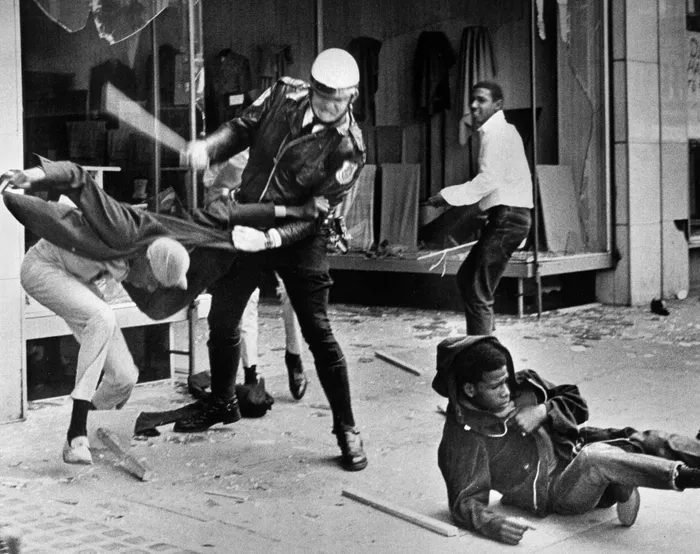
In some ways, yes. For much of its history, many Americans were denied basic rights. Even after the end of slavery, black Americans lived under laws that blocked them from voting, moving freely, or using public services. These rules were enforced by both formal institutions and informal violence, creating a kind of local authoritarian rule within a country that otherwise claimed to be democratic. Women, Indigenous people, and others were also excluded from full participation in public life, lacking political power and legal protection.
America might be returning to a version of this past, though with new tools and under different justifications. 21st century authoritarianism doesn’t have to involve openly racist laws or highly visible purges, instead relying on bureaucracy, surveillance, and selective enforcement. In this sense, the system can suppress rights in ways that feel more procedural than brutal, though the end result may be similar: certain groups living with less freedom, less power, and more fear.
While past authoritarian tendencies were often targeted and local, such as Jim Crow or McCarthy-era blacklisting, today’s trends are more national in scope and diffuse in execution. The big difference is that it’s happening during a time of partisan media, influencial social media, deep digital tracking, highly polarized politics, and increasingly centralized federal power, which may allow it to scale more quietly and pervasively than before. Now AI is making all this easier.
Many compare America today to the rise of the 3rd Reich, implying the future includes mass murder of undesirables.
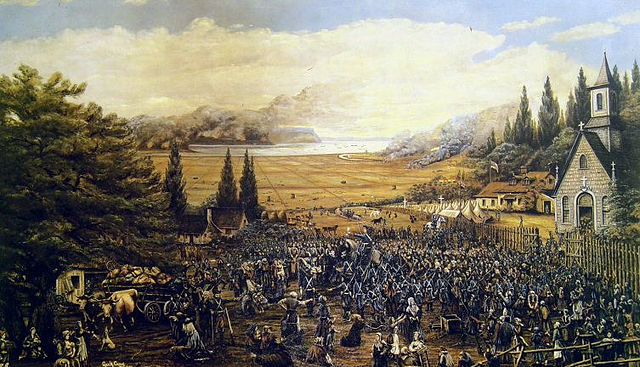
The comparison to the rise of the 3rd Reich can sound alarmist, but it reflects real potential for where unchecked power might lead. In America, what makes something like this possible is the slow erosion of legal norms, the growing use of surveillance, the normalization of detention without trial, and the dehumanization of certain groups through political and media narratives. These patterns echo the early conditions that allowed atrocities in other regimes.
The use of massive detention facilities for immigrants, the criminalization of homelessness, and the growing tolerance for political violence all signal how power might be turned against ‘undesirable’ groups. Once certain populations are seen as outside the protection of the law, anything becomes possible. The machinery (logistics, technology, law enforcement infrastructure) is already in place.
What stops it from happening, at least for now, is a mix of institutional resistance, media scrutiny, and public inertia. But those guardrails are eroding. Courts are becoming more partisan. Media is fragmented. And the public, overwhelmed or polarized, often fails to recognize slow-moving dangers.
The biggest check may be whether enough people in key positions still feel bound by democratic norms, and whether the rest of us are willing to notice when those norms are abandoned.
Attention: The US is Facing The BIGGEST Threat Of The Century!
So pay chose attention because this video will change your life forever for the good!

Source- collapse2050.substack.com
-
Allegations, Secrecy, and the Persistent Shadow of Abuse in American Churches

Sanctuaries or Shields?
For centuries, churches in America have stood as sacred institutions, places of guidance, repentance, and hope. Beneath the marble columns and stained-glass windows, stories of abuse, silence, and systemic failure have unraveled public trust in some of the country’s most respected spiritual leaders.
More than just isolated incidents, a pattern emerges: abuse covered up, victims dismissed, and institutions choosing self-preservation over transparency. And in the darkest corners of public imagination, and conspiracy forums, even more sinister acts are known; underground tunnels, trafficking rings, underground bunkers, reports of underground cities and covert alliances with figures of power.
When money and influence collide with unchecked power, it becomes possible, even easy, to look away.
What We Know – The Documented Failures
The Catholic Church’s Reckoning
In 2002, The Boston Globe’s Spotlight team unearthed what the Church had tried to hide: decades of abuse across the Archdiocese of Boston, shielded by a culture of silence. Since then, similar reports have emerged across the country.
In 2018, a Pennsylvania grand jury detailed abuse by over 300 priests and identified more than 1,000 victims, calling it a “systematic cover-up.” Survivors told stories of spiritual manipulation, threats of damnation, and the use of confession as a tool of grooming.
Despite Vatican policies introduced in the aftermath, implementation remains inconsistent. Some dioceses publish lists of credibly accused priests. Others remain opaque.
Evangelical and Protestant Churches: A Quieter Crisis
In 2019, The Houston Chronicle exposed the Southern Baptist Convention (SBC) for its widespread sexual abuse problem, identifying more than 700 victims and over 380 pastors and volunteers accused of misconduct.
Due to the decentralized structure of many evangelical churches, background checks are inconsistent, and expelled pastors can move freely to new congregations with little to no scrutiny. Survivors report being silenced, shunned, or even blamed.
🔥 Famous Names and Familiar Patterns
• Tony Alamo: Convicted in 2009 for transporting underage girls across state lines for sex, the once-influential evangelist ran a multimillion-dollar religious compound. He used scripture to justify his abuse.
• Doug Phillips: Founder of Vision Forum Ministries, accused of grooming and sexual abuse, settled out of court. His teachings on “biblical patriarchy” shaped thousands of Christian homeschooling households.
• Eddie Long: A megachurch pastor accused by multiple young men of sexual coercion. Cases were settled, and Long denied wrongdoing, but the damage to his ministry’s legacy remains.
These aren’t fringe figures. They were broadcast into homes, led nationwide conferences, and held political sway.
The Appearance of Respectability
Investigators and survivors repeatedly describe a disturbing pattern: abusers often surround themselves with legitimacy. Political endorsements, television appearances, charity initiatives, and close ties to law enforcement or elected officials all contribute to a shield of public trust.
This is not incidental. It’s strategic.
“The more power they gain, the more invisible they become,” says Jane Monahan, a former church employee who blew the whistle on abuse in a Texas congregation. “They donate to police departments, invite mayors to pray. By the time a child speaks up, no one believes them.”
In trafficking investigations globally, not just in religious cases, it’s common to find that someone with political, religious, or celebrity status serves as a front, giving operations the illusion of credibility and moral authority.
The Economics of Exploitation
The financial scale of human trafficking often surprises even seasoned investigators.
According to the International Labour Organization, trafficking for sexual exploitation generates over $99 billion annually, nearly double the global drug trade in some regions.
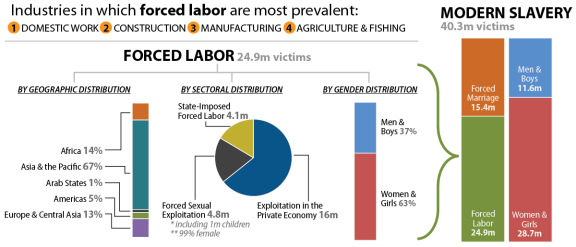
Unlike drugs, which are sold once, a child can be sold multiple times a day, making each victim far more profitable over time.
This reality drives home a chilling equation: the younger the victim, the higher the market value. For traffickers and those who protect them, the industry offers not just wealth, but leverage.
• Money buys power
• Power buys influence
• Influence ensures silence
When such profits flow into religious institutions, whether knowingly or through criminal infiltration, the lines between sacred mission and shadow economy become dangerously blurred.
What It Would Take to Hide It
While no direct evidence is known by the public, that ties major U.S. churches to trafficking rings involving tunnels or smuggling operations, survivors point to how easily it happens given the right conditions.
Financial Opacity
Most churches are tax-exempt and receive large, often untraceable, cash donations. With few legal requirements for disclosure or external audits, it’s difficult to follow the money.
Structural Protection
Top-down authority, internal investigations, and social pressure to avoid “dividing the body of Christ” create a natural shield against scrutiny. Whistleblowers are often demonized.
Weaponized Theology
Many survivors describe how abusers used scripture to justify exploitation, or to silence them afterward. Forgiveness is demanded. Speaking out is seen as rebellion.

The Power Loop
The scale of trafficking revenue means more than criminal profit, it enables protection:
• Donations to law enforcement or political campaigns
• Legal firepower to suppress lawsuits
• PR machines that spin accusations as persecution
What’s Being Done – And What Isn’t
✅ Some Progress
• The SBC has created a sex abuse hotline and published a list of known offenders.
• Certain Catholic dioceses now post names of credibly accused clergy.
• Independent churches are beginning to partner with third-party auditors.
❌ Not Enough
• Statutes of limitations still limit justice for many survivors.
• Most churches investigate internally, with no legal oversight.
• Victims often face stigma, disbelief, and exile from their spiritual communities.
Faith Demands Accountability
We don’t need tunnels or urban legends to justify concern. The facts are already disturbing enough: widespread abuse, repeated cover-ups, and multi-billion-dollar incentives to keep quiet.
Churches are meant to be sanctuaries. But when wealth, secrecy, and power combine, they can become fortresses instead, protecting perpetrators, not the people they serve.
If trust is to be restored, it won’t come through sermons or soundbites. It will come through radical transparency, survivor-led reform, and the moral courage to speak truth from the pulpit, even when it shakes the altar. Soon a shaking will occur, that wealth cannot stop.
-
Modern Allegations of Elite Exploitation (The allegations that wealthy, powerful men have preyed upon Indigenous women and girls in Canada speak to a horrifying continuity between the colonial past and the present.)
Canada is often celebrated as a beacon of human rights, yet beneath that reputation lies a devastating truth. For generations, Indigenous women and girls have faced disproportionate rates of violence, exploitation, and disappearance. In recent years, disturbing allegations have surfaced suggesting that not only common criminals, but also wealthy and powerful men have targeted Indigenous women and girls, shielded by privilege, systemic racism, and a culture of silence.
Though much of this violence occurs away from public view, the stories of survivors, families, and advocates have exposed a grim reality. In these modern allegations, Canada’s colonial legacy merges with contemporary structures of power and impunity.
A Crisis of Violence and Impunity
Indigenous women and girls make up just 4 percent of Canada’s female population, yet account for 24 percent of female homicide victims. According to the National Inquiry into Missing and Murdered Indigenous Women and Girls (MMIWG) 2019 Final Report, this violence constitutes an ongoing genocide.
What is less commonly acknowledged is the role of societal elites. Men in positions of wealth, influence, and authority have been accused of perpetrating or covering up acts of violence against Indigenous women and girls. Allegations have emerged through survivor testimonies, advocacy groups, and investigative journalists. These stories point to a disturbing pattern where Indigenous lives are made disposable and those with power exploit vulnerability without consequence.
Modern Allegations of Elite Exploitation
In urban centers like Winnipeg, Edmonton, and Vancouver’s Downtown Eastside, Indigenous women, often living in poverty and targeted by systemic racism, have reported exploitation by wealthy and influential men. Survivors and advocates allege that men from business, law enforcement, and political circles have preyed on vulnerable Indigenous women, using threats, money, and connections to avoid accountability.
Reports have surfaced of wealthy elites paying $25k to hunt and rape women and children have emerged. Perhaps those in our collective societies that are deemed as undesirables are being targeted as a sport by satanic elites.
In British Columbia, the crisis along the Highway of Tears has long been associated with serial violence. Some community members have alleged that certain disappearances involved men with influence who were shielded by indifferent or complicit institutions.
In Winnipeg, the 2022 murder of Rebecca Contois and the linked deaths of Indigenous women believed to have been disposed of in the Prairie Green landfill drew attention not only to the brutality of the crimes but also to how quickly institutions denied families justice and dignity. Families noted that if these women had been non-Indigenous, the police and city would have responded differently.
Advocates argue that this reflects a broader, unspoken reality. Some men with power have long exploited Indigenous women, operating with the assumption that authorities will look the other way.
Allegations Behind Closed Doors
Community organizations, including the Native Women’s Association of Canada (NWAC) and Families of Sisters in Spirit, have reported survivor accounts of sexual exploitation rings involving influential figures. While much of this remains difficult to prosecute due to fear, trauma, and systemic barriers, patterns in the testimonies have fueled longstanding concerns.
In several cases, Indigenous women have alleged being trafficked to private parties attended by wealthy men or powerful officials. Some advocates argue that law enforcement’s chronic neglect of missing Indigenous women cases points to more than just systemic racism. It suggests the active protection of perpetrators in certain circumstances.
As one urban matriarch told a reporter in 2023, “They pick the ones they think no one will miss. And when they have connections, the police don’t follow up. Everyone knows it.”
Why These Allegations Persist
The structures that enable elite violence against Indigenous women are deeply rooted in colonialism. Centuries of policies designed to dispossess, dehumanize, and erase Indigenous women created a society where their lives are undervalued.
Today, this manifests in underfunded social services, high rates of homelessness, addiction, and poverty within Indigenous communities. These circumstances leave women more vulnerable to exploitation. When violence occurs, police indifference, judicial bias, and media neglect compound the danger.
Wealthy perpetrators are further insulated by their resources, influence, and networks. The result is a society where the most powerful can prey on the most marginalized with little fear of reprisal.
Calls for Justice and Truth
The 2019 MMIWG Inquiry’s 231 Calls for Justice include demands for a national action plan on human trafficking, better protections for vulnerable Indigenous women, and mechanisms for Indigenous-led investigations into cases involving high-profile perpetrators.
While the federal government has pledged reforms, implementation has been slow. Many families and advocates feel betrayed by the lack of political will and transparency.
Grassroots movements continue to lead the fight. In 2023, Indigenous matriarch collectives in Winnipeg and Vancouver organized vigils, direct actions, and awareness campaigns calling attention to the intersections of poverty, colonial violence, and elite impunity.
The allegations that wealthy, powerful men have preyed upon Indigenous women and girls in Canada speak to a horrifying continuity between the colonial past and the present. Though evidence is often buried by fear and silence, the patterns of violence, neglect, and protection for perpetrators are undeniable.
If Canada is to reckon honestly with its history and present, it must confront not only the marginalized men who harm Indigenous women but also those in power who have long gotten away with it.
And perhaps, in light of similar crises across the border in the United States, one must ask whether America’s own epidemic of missing and murdered Indigenous women, girls, and marginalized people could be connected to the same circles of wealthy, well-connected predators operating in the shadows, protected by systemic indifference and privilege. It is a question that demands deeper investigation and one far too long ignored.
Dedication
This work is dedicated to the Indigenous peoples of Turtle Island and beyond, to the ancestors whose strength endures in the blood memory of their descendants, and to the families whose hearts ache for loved ones taken too soon.
To the women, girls, Two-Spirit, and gender-diverse people whose lives have been stolen or silenced by violence, neglect, and erasure, your names, your stories, and your spirits live on in the songs, prayers, and resistance of your people.
To the survivors of human trafficking, sexual violence, and exploitation, your courage in the face of unimaginable harm is a testament to the enduring strength of your ancestors. Your voices, whether spoken or carried silently in your hearts, are sacred and worthy of protection, healing, and justice.
To the families and communities who continue to search, to fight, and to mourn, may you find strength in one another and in the generations who will rise because of your resilience.
To the matriarchs, knowledge keepers, youth, and land defenders who carry the flame of sovereignty, dignity, and truth, may your wisdom and your love guide future generations to a world where Indigenous lives are cherished and safe.
This is for you, in remembrance, in solidarity, and in an unwavering commitment to a future built on justice, healing, and Indigenous self-determination.
-
How Survive in A Gang-controlled Neighborhood
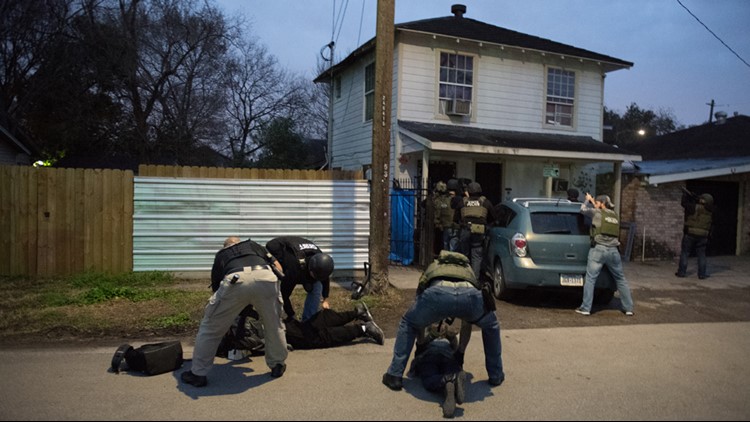
Gang violence is a problem in every major city in the United States and membership is on the rise.
- Be confident and make brief eye contact. Don’t look like a victim but check your ego and show respect.
- Maintain situational awareness. Scan waists and hands for weapons.
- Learn what gangs are active in your area, how to identify members.
- Learn what kinds of crimes they commit and how it goes down. Understanding that, you can reduce both your risk and your exposure to it.
- Caches give you the ability to start over should you be forced by a superior force to capitulate or flee.
Attention: The US is Facing The BIGGEST Threat Of The Century!
So pay chose attention because this video will change your life forever for the good!
Gangs
When readers were asked what the greatest threat was in their neighborhoods, the number one answer was … gangs! I can’t say I’m surprised at that.
Gangs are already a serious problem in the US today, with more than a million and a half members of street gangs, but in the chaos and disorder of emergencies, gang membership skyrockets, making gangs an even bigger pro problem whenever the rule of law gives way to anarchy.
At times like these, people want to know that somebody has their back, so the stress, volatility, and change that accompanies catastrophes drives people to group up. Prison gangs are a well-known example of this behavior.

Situational Awareness & Avoidance
Learn what gangs are operating in your area and how they operate. Each gang has its own SOP and its own IFF (Identification Friend or Foe). Depending on the type of gang, they may use colors (hats, T-shirts, bandannas) or tattoos. Biker gangs, for example, will often wear sleeves (tattoos on their forearms) with symbols that carry meanings to anyone familiar with them. Catalogs of gang tattoos are available from various law enforcement agencies online. Download catalogs and research gangs active in your area. The gang units of police departments and correctional facilities sometimes have online resources such as catalogs of gang tattoos where you can look them up and decipher their meanings.
In an area of Brazil that I visit, two of the local gangs are called Estados Unidos (United States) and Al-Qaeda. And the EU (US) gang used the US Flag as their colors, which I found out when I brought Zippo Lighters emblazoned with the US Flag to give away as souvenirs. I wanted to bring something made in the USA but could have caused trouble for people I liked if they used them in public.

On situational awareness, in the favelas (slums), Brazilian gangs employ low-tech methods to warn the residents of raids by the police or by rival gangs. Chief among these fireworks touched off by lookouts. They are cheap and effective. When people hear them, they know to get behind hardcover because bullets are about to fly.
Two examples of SOP of Brazilian gangs are robbing buses and kidnapping. With the fall of the Soviet Union, Cuban communist revolutionaries experienced major cashflow problems. One of their solutions was to train operatives to carry out kidnappings for ransom, some of which took place in Brazil. Some claim that when the communist kidnappers were caught and imprisoned, they trained Brazilian criminals to carry out kidnappings, but judging by the SOP, I think the idea was more largely disseminated through the media, giving small gangs the idea that they could make money by pulling off kidnappings for ransom, mostly without professional training.
Aware of the fact that local gangs kidnap foreigners to make money, I investigated restraint escape and SERE techniques, started restraint escape training, and integrated restraint escape gear into my EDC.
In the bus robbery scenario, armed thugs board a bus. One puts a handgun to the driver’s head to stop the bus and the other walks from one end of the bus to the other with a backpack or bag. He instructs everybody to drop their wallet, cellphone and jewelry in the bag. If someone doesn’t hand it over and he feels like they are holding out, he unceremoniously shoots that individual in the head and moves to the next person.
Where possible, use superior situational awareness to avoid problems. That doesn’t mean that when you see them, and they see you, you stop, turn around and head in the other direction. That will make you look like prey, triggering a predatory pursuit response. You wouldn’t do that with a dog and it won’t be any more effective here.
Do what you should be doing anytime you come in sight of another on the street, scan their waist and hands for weapons.
Attention: The US is Facing The BIGGEST Threat Of The Century
War Is Just Around The Corner
You’re about to lose everything you’ve worked so hard for your entire life and it’s even not going to be your fault! – your house, your car, your credit card will be worthless…
So pay chose attention because this video will change your life forever for the good!
Reduce Risk & Exposure
Understanding the SOP greatly improves one’s chances of surviving this type of robbery, not to mention limiting exposure to lose. To mitigate risk in this scenario, as well as muggings, my wife and I, employ various techniques:
- Don’t Say, “What?” – Understand criminal SOP and stay alert. Even if you speak the same language (more or less), it may be hard the slang of some thug’s slang. Just hand over what you have. My brother-in-law was walking with some Americans one night and this very situation happened. The gangbanger lifted his shirt to show them his handgun, one of the Americans didn’t have his head on a swivel and didn’t understand what was happening or what the guy he was asking. It didn’t go like the scene in Pulp Fiction Jules tell the kid to, “Ask me, ‘What!’ one more time!” either. The banger got frustrated and shot the guy in the head. Fortunately, he lived and made a full recovery, but gunshot wounds to the head don’t always work out like that.
- Report Binder Money Clips – When carrying a lot of cash, break it up into smaller amounts instead of rolling it in a single, easy to find roll of cash. That way you lose some of your money, not all of it. With minor modification, the handles on the report binder clips can open a range of handcuffs and it’s easy to pinch one-off.
- Drop Wallet – Put some expired credit cards and a believable amount of cash in a wallet so you have a wallet to drop in the bag.
- Decoy Cell Phone – Robberies and muggings are so common that quite a few locals save their old cellphones when they upgrade. They carry their old cellphone in their hand or back pocket and their new cellphone goes in their waistband, at least while out on the street.
- Don’t Wear Expensive Jewelry – This should just be common sense, but then every time I look at an EDC group or an EDC lineup on Uncrate, all the jewelry, expensive watches, and matching everything make me wonder. I suppose you could have that rare survival situation in Beverly Hills or on 5th Avenue in Scottsdale, where you need to impress some gold digger while simultaneously saving the day but why would you want to? And carrying a bunch of expensive accessories makes you a target everywhere else.
- Carry Concealed – If things do go sideways, sometimes your chances of survival are better if you fight. Train regularly and learn when it’s better to fight and when it’s better not to. I carry concealed in the USA, but for the time being Brazil is a non-permissive environment, so I only carry what I can get away with there. Fortunately, Brazil has a new president and his platform included the restoration of gun rights, which Brazilians voted for in a referendum. Unfortunately, last time around, they voted a corrupt socialist regime into power that refused to approve any permits, arguing that the country had enough police to protect the citizens.
Respect
Gangs are usually trying to control what they see as their territory. When you disrespect a gang banger, you might as well break out the dueling pistols because it’s the modern-day equivalent of removing your glove to slap him across the face with it or insulting a gentleman in public. Only he and his buddies are going to jump you five to one. Once you disrespect him, he has no choice but to act or he’ll lose face with other gang members, pissing away hard-earned street cred.
When you encounter someone on the street that you think might despite what you may have heard, don’t avoid eye contact. Walk confidently, make brief eye contact and give one of them a curt nod to acknowledge their presence. Don’t scowl or frown in disapproval, but don’t smile either. Give them the respect they are looking for. If challenged, verbalize the message, “I’m not disrespecting you.”
Check Your Ego
Checking your ego is a whole lot less painful than what you’ll go through if you pull your weapon. The best case is, you win, they lose and now you get to go to court and defend yourself a second time. Unfortunately, it seldom works out that way. More often, innocent bystanders get shot, the victim gets shot and lives get changed for the worse.
I moved from a wealthy suburb to an urban area with a lot of gang activity. I was assaulted twice, mugged, had two cars stolen, stopped an attempted carjacking, I walked into a dry cleaner after an armed robbery and found the cashier on the floor and have cleaned up after so many break-ins that I lost track. I have lost acquaintances, have had family traumatized, and had a friend go to prison for homicide.
The first time, I felt violated. I was furious. I already had an alarm system, so I installed cameras (which didn’t have a deterrent effect.) I spent the night in my business in case they came back. But by the third or fourth time, it started becoming routine. Eventually, I hardened my store to the point where it wasn’t successfully broken into again. Criminals tried to cut the back door off with a cutting torch and still didn’t succeed in gaining entry. It got to the point where I knew exactly how much everything cost and could determine whether I needed to file an insurance claim within a couple of minutes.
It was educational. I learned all about crime and how to make a place hard to break into. I also learned how to check my ego, but more importantly, I learned why it is usually the smarter play to do so.
Eventually, I relocated to one of the safest places in the country and am glad I did.

Post-SHTF Gangs
Depending upon which lines society fractures, people may group up based on ethnicity, religion, political affiliation, economic class or geography. They group up with others they think are like them in some way, because they see the world from an adversarial paradigm: “us vs. them”. In groups, numbers and the perception of authority granted by them turns people capable of acts of cruelty that they would not be capable of as individuals.
You may have seen this behavior in dogs. One or two is no big deal, but three or more turns them into a pack, awakening predatorial instincts even in pets. When boys get together, instead of increasing the collective IQ, the number seems to diminish it: one boy, one brain … two boys, half a brain … and the larger the group, they collectively dumber things they become capable of.
Absent the rule of law, gang membership skyrockets. Consider grouping up for security. Groups form around existing logistics infrastructures, geography, and so on, so having indispensable skills and being able to arm, feed, and train a new group or to quickly expand one can help position you.
To set the record straight, regardless of your neighborhood, the thing that’s most likely to kill you is probably microbes, since they kill more people than violence or combat-related injuries even in past wars. But gangs are certainly the more visible, and in some cases, more urgent threat.
The video below will shock you because you will be among the first to watching this secret!
-
The Red Heifer Ceremony, Prophecy, and the Shadow of the Antichrist

“Take for yourself a red heifer without defect…” — Numbers 19:2
Earlier this month, on a quiet hill in Samaria, a red heifer was slaughtered and burned under rabbinic supervision. This was an event unseen in Israel for nearly 2,000 years. Officially, it was a “practice run,” symbolic, educational, and a logistical rehearsal.
But what if it wasn’t?
What if what we witnessed was not a symbolic rehearsal, but the first real step toward restoring Temple worship? What if this marked the opening act of a prophetic drama, one whose next scene could involve not only the construction of the Third Temple, but also the rise of the Antichrist?
A Ceremony With Prophetic Weight
In Numbers 19, the Torah outlines the strange and sacred ritual of the red heifer, burned to produce ashes used to purify those who have come into contact with death. These ashes are essential for achieving the ritual purity required to enter the Temple.
This ritual has not been performed since the destruction of the Second Temple in 70 CE. According to Jewish tradition, there have only been nine valid red heifer sacrifices throughout history. The tenth, according to rabbinic commentary, will occur in the days of the Messiah.
So when Israeli religious authorities quietly burn a red heifer in 2025, it becomes difficult to see it as merely symbolic. Even if they insist the animal was disqualified, the prophetic momentum behind the event is very real.
What If It Wasn’t Practice?
Let’s consider for a moment what might be true behind the scenes.
What if the red heifer was actually fit according to biblical standards? What if the claim of “disqualification” was a strategic public label, designed to avoid political or religious backlash? What if the ceremony was conducted not as a dry run, but as a quiet and deliberate first step?
If that were the case, then this event is not just notable, it is historic.
A true red heifer sacrifice would mean that the long-awaited purification ritual has been reinstated. And according to both Jewish and Christian prophecy, this could initiate a chain of events that changes the world.
Are We Witnessing the Ushering in of the Antichrist?
This is where Christian eschatology becomes particularly urgent.
In 2 Thessalonians 2:3-4, Paul describes the “man of lawlessness,” understood by many as the Antichrist. He will one day sit in the rebuilt Temple in Jerusalem, proclaiming himself to be God. However, that Temple cannot be rebuilt until the site, and the priests, are ritually purified using the ashes of a red heifer.
In other words, without the red heifer, there can be no Temple. And without the Temple, the Antichrist cannot rise in the way Scripture describes.
If this ceremony was the real thing, then it could be the first domino to fall in a prophetic sequence. First, the red heifer sacrifice restores purity. Then, Temple Mount preparations accelerate. Eventually, the Third Temple is rebuilt. And finally, the Antichrist appears, deceives many, and desecrates the sanctuary with what Scripture calls the “abomination of desolation.”
This raises the question, are we witnessing the rise of the Messiah, or the rise of his counterfeit?
This question will become increasingly difficult to ignore.
A Tipping Point Moment
Even if we accept the official story that this was only a rehearsal, the spiritual and psychological significance of the event cannot be overstated. What was once confined to theology books and prophecy conferences is now unfolding in real time, on Israeli soil, and in our generation.
We are entering a period in which prophetic symbols are being activated, religious intentions are being backed by real-world action, and the distinction between preparation and fulfillment is becoming less clear.
Whether you are a believer in biblical prophecy or a skeptical observer of religious movements, one fact remains. Something historic just happened.
A red heifer was burned in Israel. Regardless of how it is being publicly framed, a threshold has been crossed.
So we must ask again, what if it wasn’t just practice? And even more urgently, are we now seeing the stage being set for the appearance of the Antichrist?
Because if that is the case, then the next chapter will not be a rehearsal. It will be the book of Revelation coming to life.
What do you think? Are we closer to the Messiah, or on the brink of deception? Let’s discuss in the comments.
-
The Effects of Nuclear War According to FEMA

No one wants to think about a nuclear crisis – and hopefully it will never happen – but we all must accept the fact nuclear tensions are rising globally with Russia and China (and others are seeking nukes) so we should prepare ourselves and our loved ones in the event the unthinkable strikes our soil.
For decades, movies and some in the media have portrayed a nuclear attack as a “doomsday” event implying most people would be killed on impact … and survivors would want to die once they come out of their shelters.
In reality, unless you are actually at ground zero or within a several mile radius of the blast zone (depending on the size of the nuke, of course), there is a very high probability you’ll survive as long as you…
If society collapses, you can bet that the foods the pioneers ate will become dietary staples
So pay chose attention because this video will change your life forever for the good!

- limit your exposure to radiation and fallout,
- take shelter with proper shielding,
- wait for the most dangerous radioactive materials to decay.
In other words, you CAN survive a nuke attack … but you MUST make an effort to learn what to do! By learning about potential threats, we are all better prepared to know how to react if something happens.
Please realize this is being written with small nuke devices in mind (like a 1-kiloton to 1-megaton device). A larger device, ICBM or a nuclear war would cause more wide-spread damage but some of this data could still be helpful. These are some very basic tips on sheltering for any type of nuclear (or radiological) incident.
What happens when a nuke explodes?
A nuclear blast produces a blinding light, intense heat (called thermal radiation), initial nuclear radiation, 2 explosive shock waves (blasts), mass fires, and radioactive fallout (residual nuclear radiation).
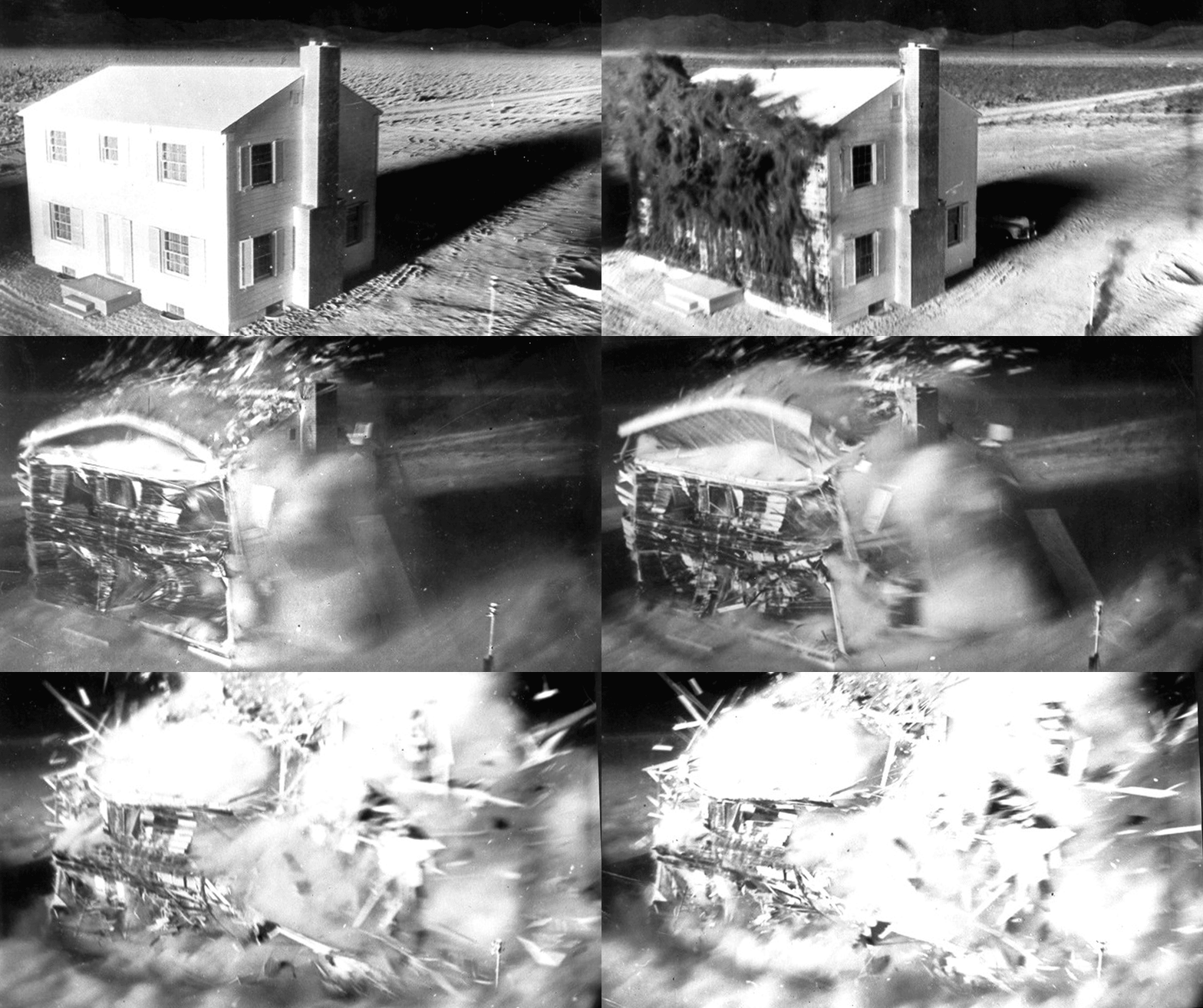
The below graphic shows the destruction of a test home by an atomic blast on March 17, 1953 at the Nevada Proving Ground. The structure was located 3,500 feet from ground zero, and the time from the first to last picture was 2.3 seconds. It shows the force of the blast wave then the radiating energy set it on fire.
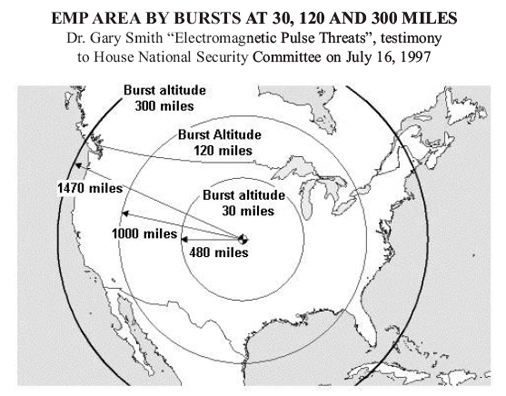
Also, if a nuke is launched over our continent and explodes miles above the earth, it could create an electromagnetic pulse (EMP). An EMP is a split-second silent energy burst (like a stroke of lightning) that can fry electronics connected to wires or antennas like cell phones, cars, computers, TVs, etc. Unless electronics are grounded or hardened, an area or nation could experience anything from minor interference to crippled power, transportation, banking and communications systems.
An EMP from a high-altitude nuke (where a nation or group succeeds in detonating a nuclear device carried miles into the atmosphere) could affect electronics within 1,000 miles or more as shown below. (Evidence suggests some countries and groups are working on enhanced and non-nuclear EMP weapons or e-bombs.)
What is the most dangerous part of a nuclear attack?
Both the initial nuclear radiation and residual nuclear radiation (also called radioactive fallout) are extremely dangerous.
Initial nuclear radiation is penetrating invisible rays that can be lethal in high levels.
Radioactive fallout (residual nuclear radiation) is created when the fireball vaporizes everything inside it (including dirt and water). Vaporized materials mix with radioactive materials in the updraft of air forming a mushroom cloud.
Fallout can be carried by winds for hundreds of miles and begin falling to the ground within minutes of the blast or take hours, days, weeks or even months to fall. The heaviest fallout would hit ground zero and areas downwind of that, and 80% of fallout would occur within 24 hours. Most fallout looks like grey sand or gritty ash and the radiation given off cannotbe seen, smelled, tasted or felt which is why it is so dangerous. But as the materials decay or spread out radiation levels will drop.
More about radiation
Types of radiation – Nuclear radiation has 3 main types of radiation…
- alpha – can be shielded by a sheet of paper or by human skin. If alpha particles are inhaled, ingested, or enter body through a cut, they can cause damage to tissues and cells.
- beta – can be stopped by skin or a thicker shield (like wood). Beta particles can cause serious damage to internal organs if ingested or inhaled, and could cause eye damage or possible skin burns.
- gamma – most dangerous since gamma rays can penetrate the entire body and cause cell damage throughout your organs, blood and bones. Since radiation does not stimulate nerve cells you may not feel anything while your body absorbs it. Exposure to high levels of gamma rays can lead to radiation sickness or death, which is why it is critical to seek shelter from fallout in a facility with thick shielding!
Radiation detection devices – You cannot see, smell, taste or feel radiation, but special instruments can detect even the smallest levels of radiation. Since it may take days or weeks before First Responders could get to you, consider having these devices handy during a crisis or attack since they could save your life.
Measuring radiation – Radiation was measured in units called roentgens (pronounced “rent-gens” and abbreviated as “R”) … or “rads” or “rem”. An EPA document called “Planning Guidance for Response to A Nuclear Detonation 2nd Edition June 2010” explains … 1 R (exposure in air) ≅ 1 rad (absorbed dose) ≅ 1 rem (whole-body dose). Although many measuring devices and older documentation use R and rem, officials and the media now use sievert (Sv) which is the System International or SI unit of measurement of radiation. The formula to convert sieverts to rems is quite simple … 1 Sv = 100 R (rem).
How many rads are bad? – High doses of radiation in a short span of time can cause radiation sickness or even death, but if that high dose is spread out over a long period of time, it’s not as bad.
According to FEMA, an adult could tolerate and recover from an exposure to 150R (1.5 Sv) over a week or 300R (3 Sv) over a 4-month period. But 300R (3 Sv) over a week could cause sickness or possibly death. Exposure to 30R (0.3 Sv) to 70R (0.7 Sv) over a week may cause minor sickness, but a full recovery would be expected. But radioactive fallout decays rapidly so staying in a shelter with proper shielding is critical!
The “seven-ten” rule – For every sevenfold increase in time after the initial blast, there is a tenfold decrease in the radiation rate. For example, a 500 rad level can drop to 50R in just 7 hours and down to 5R after 2 days (49 hours). In other words, if you have shelter with good shielding and stay put for even just 7 hours … you’ve really increased your chances of survival. Your detection devices, emergency radio or cell phone [if the last 2 are working, that is] can assist you in knowing when it’s safe to come out.
Coping with reality is the best way to beat it. Prepare. Most of us are. We are just waiting for the S to HTF, so to speak. Once it does, and it will again, we will be comfortable and unafraid while others won’t be able to function without submitting to their own enslavement in exchange for a can of corn.
So how do I protect myself and my family?
Basic shelter requirements – Whether you build a shelter in advance or throw together an expedient last-minute shelter during a crisis, the area should protect you from radiation and support you for at least 2 weeks. Some basic requirements for a fallout shelter include …
- shielding
- ventilation
- water and food
- sanitation and first aid products
- radiation monitoring devices, KI (potassium iodide), radio, weapons, tools, etc
Reduce exposure – Protect yourself from radioactive fallout with …
- distance – the more distance between you and fallout particles, the better
- shielding – heavy, dense materials (like thick walls, earth, concrete, bricks, water and books) between you and fallout is best. Stay indoors or below ground. (Taking shelter in a basement or a facility below ground reduces exposure by 90%. Less than 4 inches of soil or earth can reduce the penetration of dangerous gamma rays by half.)
- time – most fallout loses its strength quickly. The more time that passes after the attack, the lower the danger.
Indoor shelter locations – If you don’t have a fallout shelter, these options could provide protection from dangerous radiation by using proper shielding materials.

- basement – find the corner that is most below ground level (the further underground the better)
- 1-story home / condo / apartment – if no underground facility, find a spot in center of home away from windows
- trailer home – find sturdier shelter if possible (like a basement or brick or concrete building)
- multi-story building or high-rise – go to center of the middle section of building (above 9th floor if possible). Note: if rooftop of a building next to you is on that same floor, move one floor up or down since radioactive fallout would accumulate on rooftops. Avoid first floor (if possible) since fallout will pile up on ground outside.
Shielding materials – All fallout shelters must provide good protection from radioactive particles. FEMA suggests having a minimum of several inches of concrete or 1 to 2 feet of earth as shielding around your shelter, if possible, and the more the better. Per FEMA, the following shows examples of shielding materials that equal the protection of 4 inches (10 cm) of concrete …
- 5 – 6 inches (12 – 15 cm) of bricks
- 6 inches (15 cm) of sand or gravel
- 7 inches (18 cm) of earth
- 8 inches (20 cm) of hollow concrete block
- 10 inches (25 cm) of water
- 14 inches (35 cm) of books or magazines
- 18 inches (46 cm) of wood
Make an expedient shelter – Some very basic ways to build an expedient last-minute shelter in your home, apartment or workplace to help protect you from dangerous radiation include…
- Set up a large, sturdy workbench or table in location you’ve chosen. If no table, make one by putting doors on top of boxes, appliances or furniture.
- Put as much shielding (e.g. furniture, file cabinets, appliances, boxes or pillowcases filled with dirt or sand, boxes of food, water or books, concrete blocks, bricks, etc.) all around sides and on top of table, but don’t put too much weight on tabletop or it could collapse. Add reinforcing supports, if needed.
- Leave a crawl space so everyone can get inside and block opening with shielding materials.
- Leave 2 small air spaces for ventilation (about 4-6″ each) – one low at one end and one high at other end. (This allows for better airflow since warm air rises.)
- Have water, radiation detection devices, KI, battery operated radio, food and sanitation supplies in case you have to shelter in place for days or weeks.
In summary, those within the blast zone of Ground Zero (depending on the size of the nuke) won’t make it .. BUT .. if you are a few miles outside the zone your chances of surviving it are high but you MUST have detection devices to monitor levels of radiation and a plan to stay sheltered for at least 48 hours or up to a few weeks. First Responders will have to wait for the deadly fallout to decay before they enter a hot zone so the more you prepare, the better your odds of surviving a terrorist nuke.
The most shocking article can be found below.
Watch this video below to find out the great secrets hidden by the government.

-
What happens when billionaires own the zip code, and everything within it? Part two in our series on the future of living in America.
During the Industrial Revolution, company towns sprang up across the United States like dandelions after a downpour. Built by steel tycoons, coal barons, and chocolate magnates, these places were designed to allow workers to live close to where they work — keeping them away from the denigrating poverty of inner cities, and keeping them under close watch.
Some versions were brutal: Kentucky coal towns like Lynch, for example, were notorious for housing miners in shacks with no plumbing and paying them in company scrip that could only be spent on overpriced goods at the company store. Others tried to pass as idyllic: Hershey, Pennsylvania had neat lawns, bowling alleys, and a chocolate-fueled amusement park. Corning, New York had museums and libraries courtesy of the glass company. Pullman, Illinois had stylish worker housing until the company slashed wages but kept rents high, sparking a nationwide strike.
What they all had in common was control. Workers lived where their bosses told them, bought what their bosses sold them, and behaved how their bosses expected. The message was clear: if you want a paycheck, you play by the rules. Sometimes, that meant waking up to factory bells at 4:30 in the morning and attending mandatory church service. Sometimes, it meant not striking, not speaking up, and definitely not trying to unionize.
The company town model was supposed to fade away with the rise of public infrastructure and labor rights. But it didn’t — it just got rebranded.
Today’s version comes with better marketing. The factory bells have been replaced with free yoga, wellness apps and solar panels. “Moral behavior” now means staying within the parameters of a 15-minute city or a biometric security fence. The new company towns don’t just expect conformity — they engineer it.
In this article we look at the modern resurrection of the company town:
- Starbase, Elon Musk’s handpicked city, governed by his employees and gated from the public.
- Lāna‘i, a Hawaiian island once run by Dole Pineapple, now owned by one man.
- Belmont, Bill Gates’ planned desert city built around data centers.
- And Sidewalk Labs, Google’s failed attempt to privatize (and surveil) a piece of the Toronto waterfront.
In all these cases, the model is the same: a private entity builds the world it wants, sets the rules, and invites you to live in it — on its terms, not yours. While the new company town may be smarter, greener, and more connected — it’s just as rapacious and controlling as ever.
Starbase, Texas is Elon Musk’s 21st-century company town built on a sandy strip on the Gulf of Mexico formerly known as Boca Chica Village. It began, like so many Musk projects, with a tweet. In 2021, he announced plans to build a city around SpaceX’s rocket launch site and soon began buying up houses in the once-quiet coastal village, turning it into a restricted zone for private launches, tourists, and security patrols.
Some locals resisted, calling it rocket fueled gentrification, but Musk pressed on and in early May 2025, Starbase officially became a city after what may have been one of the strangest elections in modern American history. No campaign signs, no public debates — just 280 eligible voters, most of them SpaceX employees or their relatives. Roughly 90% of them registered to vote within the past year, and most of them were young men. When ballots were cast, the city’s incorporation measure passed 212 to 6. The new mayor is a SpaceX vice president and all the commissioners are also tied to SpaceX. In Starbase, corporate loyalty is literally a civic requirement.
The company has wasted no time consolidating control. Just weeks after incorporation, Starbase moved to adopt sweeping zoning ordinances. Residents received legal letters that noted, in all-caps letters no less, “YOU MAY LOSE THE RIGHT TO CONTINUE USING YOUR PROPERTY FOR ITS CURRENT USE.” Many properties — some held for decades by families who came to fish, hunt, or retire in peace — are now designated as “Mixed Use,” “Heavy Industrial,” or “Open Space.”
The letter informed recipients of a public hearing, which took place this past Monday, June 23, 2025. About 80 people showed up to voice their confusion and anger and ask why they were being strong-armed into new zoning rules they didn’t understand. Some asked how their property rights would be affected, or whether SpaceX might use eminent domain. The city attorney denied it — “not what this is,” he said — but to landowners who feel outnumbered and outmaneuvered, the writing’s on the wall. If SpaceX doesn’t own your land yet, it wants to control what you can do with it. One local said he felt “like a Native American, because these people are coming in… making their rules, and it’s a done deal, basically.” Another expressed amazement at the new map the city is proposing. “Have you seen it?” he said. “It looks like a spider web on LSD.”
And then there are the gates.
Citing “security concerns,” and “folks who aren’t necessarily here for the right reasons,” the city commission — staffed by SpaceX employees — approved the installation of four gated checkpoints, turning formerly public roads into controlled-access zones. Some gates were completed before the vote even took place, raising questions about whether the company was simply rubber-stamping its own decisions after the fact.
“That is a travesty,” said Mike Montes Jr., who attended the June 23 meeting. “I think they are trying to have a private interplanetarian community.”
Officials say residents will still be allowed in and first responders will get access codes. Visitors can be “screened.” But critics — including property owners and even the local district attorney — say blocking public roads violates Texas law.
Meanwhile, Starbase is operating on borrowed money — literally. The city took out a $1.5 million zero-interest loan from SpaceX to fund its startup budget through September 2025. No sales tax. No property tax yet. Just corporate credit from the only business in town.
If this all sounds a bit dystopian to you, you’re not wrong. Starbase is not the techno-utopia it pretends to be. It’s a municipal Halloween costume for a rocket company that wants legal cover to control land, people, and infrastructure without state interference. It’s also a legal loophole: by incorporating as a city, Starbase gains more power to shut down roads, access public funding, and operate with municipal authority — all without any meaningful democratic input.
This is not Musk’s first foray into privatized governance. He’s floated plans for Mars colonies governed by “direct democracy” — a term that sounds egalitarian until you realize his company will also own the oxygen supply. Starbase is, therefore, the test site for more than rockets. It’s a dry run for post-national corporate rule.
Then there’s Lāna‘i, Hawaii. If Starbase is a company town for the 21st-century, Lānaʻi is its mirror image: a place steeped in company-town tradition, now rebooted by one of Silicon Valley’s richest men. Once dominated by pineapples, Lānaʻi is a living case study in how private ownership of public life mutates with the times — and why it still matters.
Purchased in 1922 by pineapple magnate James Dole, Lānaʻi quickly transformed into the world’s largest pineapple plantation and a textbook example of a model company town. Dole built not just the fields and packing houses, but also Lānaʻi City — the central town with a movie theater, a park, and homes for thousands of workers and their families. But this was no tropical utopia. As with many plantation towns, workers toiled long hours, earned little, and lived in housing owned by the same company that employed them. Dole controlled the economy, infrastructure, and much of daily life — and when the pineapple business dried up, so too did the island’s economic base.
That is, until another tycoon came along.
In 2009, the island was included on the National Trust for Historic Preservation’s list of America’s most endangered historic places. Three years later, in 2012, Oracle cofounder Larry Ellison bought 98% of the island for $300 million. The purchase included two Four Seasons resorts, the water utility, much of the housing, the community pool, and even the island’s movie theater. And in 2019, Ellison added one more asset to his collection: Lanai Today, the island’s only newspaper.
That’s right — the billionaire landlord is now also the publisher of the local press.
Ellison has remade Lānaʻi in his image: a wellness-focused, ultra-elite retreat where tourists arrive on private jets, dine at Nobu, and soak in curated luxury. At the same time, residents live in what critics call a “plantation 2.0” system. They work at Ellison’s hotels, rent homes from his holding company, shop at his grocery store, and read his newspaper. And while many residents express gratitude for Ellison’s pandemic generosity — he waived rent and kept people on payroll — others say the cost is quiet compliance.
Maui County Councilman Gabe Johnson put it bluntly: “This is still a plantation town, it’s a one-company town. To speak out in public, there’s risks involved for anyone.”
Residents who speak up about housing shortages, shrinking public services, or the mysterious drone testing project have to weigh those complaints against their livelihood. For many, Ellison is their landlord, employer, infrastructure provider, and de facto government. Dissent becomes a gamble.
Ellison claims he wants to turn Lānaʻi into a model of sustainability — powered by hydroponic farms, Tesla solar panels, and “an adults-only, luxurious wellness enclave.” But critics note that sustainability in this context often means control: of food, housing, jobs, and now, information.
[As an interesting aside, that previously mentioned drone project involves assembling and shipping giant unmanned drones called Hawk30, which have a wingspan of 260 feet and a cruise speed of nearly 70 miles per hour. Propelled by 10 electric motors and onboard lithium ion batteries, the drones are designed to carry 5G transmitting equipment for up to 6 months at about 65,000 feet in the stratosphere.]
Meanwhile, housing on Lānaʻi is tight and what little is available comes with sky-high rents. As of mid-2025, only about two dozen homes are available for sale — ranging from $315,000 for a 400 square foot condo to $17 million for an 8,500 square foot, 7-bedroom mansion.
Ellison’s defenders say he saved Lānaʻi from decline. He fixed the pool. He restored the movie theater. He preserved the resorts. But these efforts, while real, come with a catch: centralized ownership of nearly every lever of island life. In a place with just 3,000 residents, there’s no anonymity — and no public space truly free from the touch of Ellison’s empire.
From Dole to Ellison, Lānaʻi remains a study in soft coercion — where power is quiet, but absolute. If modern technocracy demands centralized data, urban control, and seamless citizen management, Lānaʻi may be its testbed. But unlike NEOM’s mirrored city or Telosa’s blueprint fantasy, this one already exists.
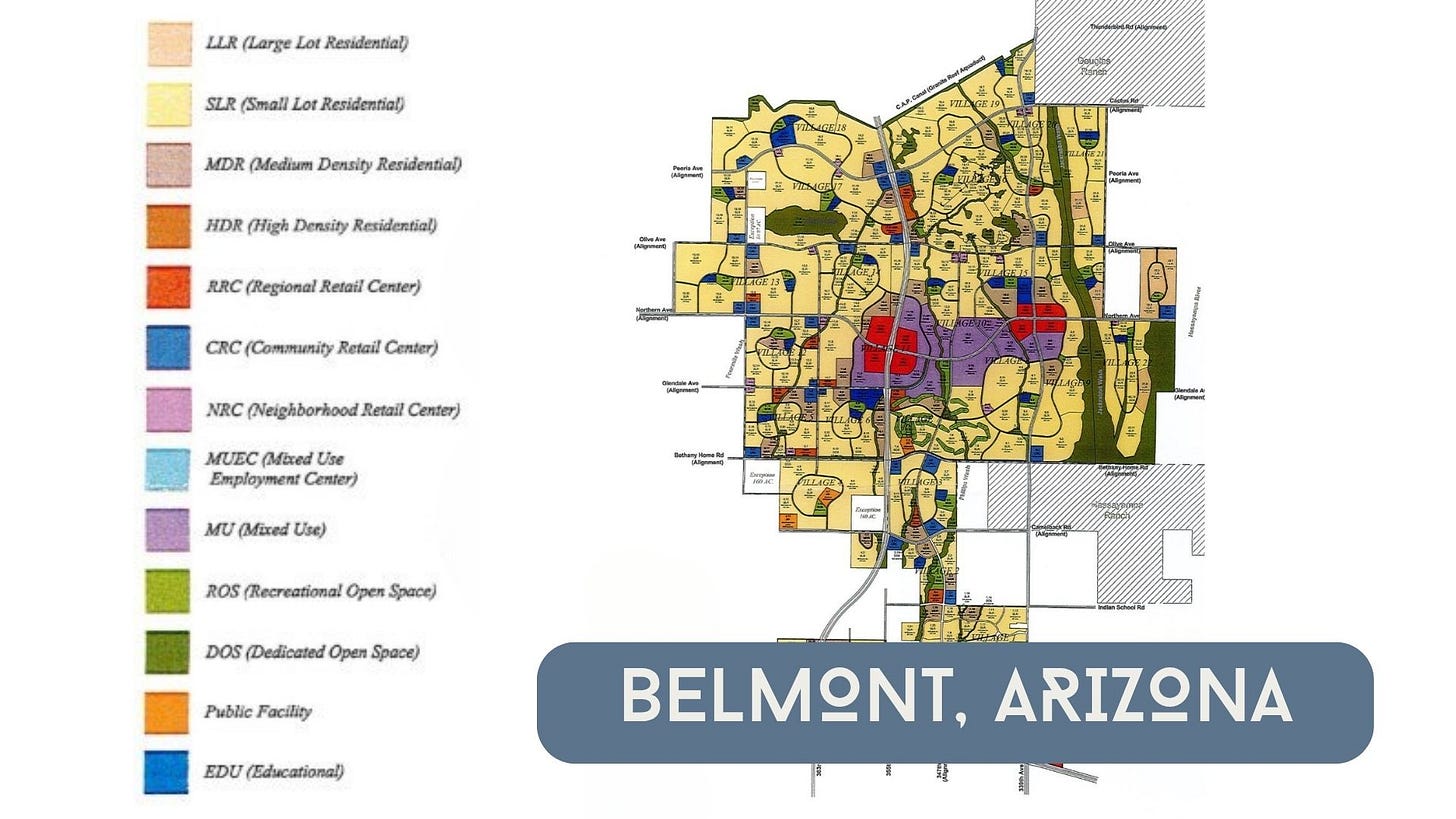
Belmont, Arizona, Bill Gates’ desert experiment, hasn’t even broken ground yet. Back in 2017, Gates quietly bought 24,800 acres of land west of Phoenix through his investment firm, Cascade, for $80 million. The plan is, by now, pretty obvious: Build a smart city with autonomous vehicles, sensor-stuffed homes, and traffic systems that think faster than you do. If it ever happens, the city will support 80,000 homes, 3,800 acres of industrial and office space, 470 acres for public schools, and enough infrastructure for around 180,000 people.
Nearly a decade later, Belmont remains an empty stretch of sand baking under the Arizona sun with no construction, no water, and just the vaguest promise that if you build a city around the internet of things, the people will come.
Perhaps Gates is wary of making the same mistakes Sidewalk Labs made when it set out to build the future of cities on Toronto’s waterfront. It had the backing of Alphabet, the parent company of Google, and a willing partner in Waterfront Toronto, a government agency responsible for redeveloping the lakeshore. But three years later, the $900 million project collapsed under its own weight — before a single shovel hit the ground.
On paper, Sidewalk Toronto offered all the usual utopian trimmings: heated sidewalks, robo-taxis, underground waste collection, dynamic buildings that shifted with the hour. But that was just the surface. Underneath was a far more radical proposition: to remake not just infrastructure, but governance. Data collection would be ubiquitous. Public systems — transportation, waste, energy, even benches — would be managed by software and sensors, with Sidewalk Labs at the helm.
That’s where it lost the public.
From the start, Toronto residents asked hard questions. Who would own the data? Who would make the rules? What kind of city turns public life into a private dataset? Sidewalk’s answers came too late — and rang hollow. The public wasn’t just wary of surveillance, they were wary of a tech company writing the rules of city life behind closed doors.
Waterfront Toronto tried to negotiate better terms, but it didn’t have the legal or political authority to manage what was, essentially, a transfer of public power to a private actor. The project wasn’t just a land deal — it was a Trojan horse for privatized governance.
And Toronto, in the end, said no.
This matters, because other companies are trying again elsewhere. Meta wants to build Willow Village in Menlo Park. Google has designs on Downtown West in San Jose. Each promises to solve the urban problems governments have failed to fix — housing, transit, climate — with data and design.
But if they don’t learn from Sidewalk Labs, they’re doomed to repeat its failure.
-
The Secret Exploitation Behind AI Training

As generative AI booms, an invisible workforce powers its rise – and pays the price. Platforms like Outlier.ai, DataAnnotation.tech, Remotasks (Scale AI), and industry veteran Appen promise freelance “AI trainers” flexible, high-paying work to help build advanced models. “
Earn up to $40 an hour… teaching AI models how to write,” one Outlier recruitment message said.

But behind the ads and testimonials lies a very different reality. Workers on these platforms describe algorithmic scoring systems that misjudge their work, mysterious account bans with no explanation, weeks of unpaid training, impossible task deadlines and being treated as disposable cogs in an AI assembly line. Support and accountability are non-existent – many freelancers have to turn to Reddit forums, LinkedIn posts or even lawsuits to get answers.
This investigative report goes beyond Outlier to show how the whole ecosystem of AI data annotation sites operates on the same tactics. DataAnnotation.tech, a platform run by Surge AI (serving clients like Anthropic and Microsoft) , and others like Remotasks (Scale AI’s gig-work arm for OpenAI, Meta, etc.inc.com) and Appen (a long-time data crowdsourcing firm) all do the same.
We’ll hear directly from contributors – via Reddit threads, Medium stories, LinkedIn posts, BBB complaints, Glassdoor/Indeed reviews – to see the human cost of training our machines.

AI trainers perform a range of tasks to fine-tune large language models — from writing prompts and correcting outputs to ranking AI-generated answers. This pie chart illustrates the estimated breakdown of typical responsibilities across major platforms. The AI Boom’s Invisible Workforce
Building an AI chatbot or image generator isn’t just about clever algorithms – it requires millions of human-labeled examples and constant human feedback. This work, known as data annotation, involves a range of tasks: writing or correcting model answers, labeling images or text, crafting prompts and responses, ranking outputs by quality, and flagging errors or toxic content.
“Workers complete tasks such as writing and coding, which tech companies then use to develop AI systems,” explains TIME, noting many AI models rely on supervised learning with labeled datatime.com.
Even cutting-edge “unsupervised” models often need a final human fine-tuning step. In other words, without legions of human annotators, large language models and generative AI would not achieve their impressive feats.
This work is usually outsourced to online platforms. Some, like Amazon Mechanical Turk or Upwork, operate openly. But many AI firms prefer stealth. Scale AI, for example, channels gig workers into Remotasks, a separate, worker-facing sitetime.com. Likewise, Surge AI reportedly runs Taskup.ai, DataAnnotation.tech, and Gethybrid.io as its crowd platformstime.com.
“Companies say secrecy is to protect sensitive R&D,” notes researcher Milagros Miceli, “but they also prefer secrecy because it reduces the chances they will be linked to potentially exploitative conditions.”
In practice, this means tech giants like OpenAI, Meta, Google, Anthropic, and Microsoft have an opaque supply chain of human labor labeling data behind their AI – often in far-flung countries with cheap labor and scant oversight.
The people doing this work are typically hired as independent contractors, paid by task or hour with no benefits or job security. Many are educated professionals or domain experts drawn by the promise of remote, flexible work in their field of knowledge.
“Outlier is a platform where experts in various fields…help build the world’s most advanced AI,” its site proclaims. Indeed, platforms seek out linguists, coders, writers, physicians, you name it – anyone who can help train AI in specialized areas.
In theory, it’s a new kind of high-skilled gig work. In reality, contributors often find themselves performing repetitive, rigidly controlled micro-tasks under intense surveillance. As we’ll see, the same technology they help improve is used to monitor and judge their every move.

This chart compares estimated onboarding hours versus actual compensated hours during the first month across Outlier.ai, DataAnnotation.tech, Remotasks, and Appen. Algorithmic Scoring: When AI Judges the Experts
One of the most common grievances across these platforms is the use of AI-driven or algorithmic scoring systems to evaluate contributor performance. Instead of consistent human oversight or feedback, workers are at the mercy of automated metrics that often misjudge quality and ignore human expertise.
On Outlier, for example, every task you submit is graded, and your “quality score” determines whether you can continue working.
“Instructions were extremely precise – a single misstep in formatting or failing to label an answer properly could lower my quality score,” wrote Shubhojeet Dey about his stint with Outlier.
If the score dips too low, *“I would be kicked off the project”*medium.com. Under such strict conditions, even highly knowledgeable contributors can be ousted over trivial issues.
A PhD-level contributor might craft a correct solution but get a low score for using an unexpected format or exceeding some arbitrary length. The system leaves no room for nuance or expert judgment – if you don’t match the hidden algorithmic criteria, you’re out.These scoring algorithms also create perverse incentives. Outlier tasks, for instance, impose tight time limits and then penalize workers for working “too slow.”
“Some tasks pay a ‘primary rate’ for a standard time limit. If you exceed that time, you earn a lower ‘secondary rate,’” Dey discoveredmedium.com. In practice, this means a project advertised at $35/hour might drop to effectively $20/hour if you take your time to ensure quality.
Rushing might keep your pay higher, but risks mistakes that tank your quality score – a Catch-22. Multiple reviewers have noted how Outlier’s pay system is tied to speed: “They want you to put in full-time hours… although they state ‘work when you want’,” one Glassdoor review observed, adding that “training is unpaid and often opaque.”
(In one case, a worker was even accused of using AI tools to do her task simply because she took an hour to carefully correct the model’s output, resulting in an automated 1/5 review and flag for supposed cheating.)
On Remotasks and Appen, algorithmic scoring is equally unforgiving. Appen’s search engine rating projects famously require raters to maintain an accuracy score (based on hidden gold-standard judgments); if your score falls below ~85%, you’re simply removed from the project – often without human appeal.
“Fired… no reason that I was told,” said one Appen web search rater, who called the company “a total scam and ripoff of your valuable time.”.
He had passed a difficult exam and worked diligently, only to be auto-terminated by the algorithm.
On Remotasks, too, low “accuracy” or client rating can trigger a suspension. Yet workers often receive little feedback on what they did “wrong,” making these systems feel arbitrary and unjust.
As one expert told TIME, these sites lean on “algorithmic management to keep their costs low,” which *“can result in the poor treatment that many workers experience.”
Errors or not, the platform can always find another contractor waiting in the wings.
Perhaps most emblematic is an Outlier project that tasked experts with “red-teaming” an AI – essentially trying to make the AI fail – under an impossible time crunch. Contributors were told to come up with prompts that expose the model’s weaknesses (e.g. producing harmful or nonsensical output) within just one hour.
According to multiple worker accounts, only a tiny fraction of participants managed to succeed; the rest “failed” the task and saw their quality ratings plummet. Ironically, those who did have deep expertise and a careful approach often refused to cut corners or submit half-baked prompts just to meet the timer – and were weeded out for it.
One Reddit contributor dryly observed that Outlier’s combination of tight time limits, constant retraining requirements, and pay rate cuts was “really becoming impractical”.
“Outlier is not the only AI training platform I am on, so I am well aware that a lot of these issues are just par for the course,” they added – a telling statement on industry-wide practices.

This chart contrasts advertised hourly pay with real-world effective rates after accounting for unpaid onboarding, task delays, and algorithmic deductions. Silent Removals and Shadowbans

This horizontal chart estimates relative complaint volume for shadowbans and silent terminations by platform. In a traditional job, if you underperform or violate a rule, you get warnings, perhaps a chance to correct course, or at least an explanation if you’re fired. On these AI gig platforms, workers often simply vanish from the system with zero explanation – a practice akin to shadowbanning or silent removal.
One day you’re working on tasks; the next day you’re locked out of your account or no new work appears, with no message from the company. Consider the experience of an educator on DataAnnotation.tech (a Surge AI site).
After diligently working on the platform and even being told they passed the initial assessment, they suddenly stopped receiving any tasks at all. Eventually they discovered their account had been deactivated – with $2,869 worth of completed work left unpaid.
“I emailed the companies’ support contacts, but did not hear back,” the worker reported in frustration. There was no explanation, no appeal; the door was just quietly shut.
Another contributor on a Surge-run platform recounted a similar story on Reddit: *“IME [In my experience] paid out $800 then my account disappeared with $2869 work sitting unapproved. Absolutely zero contact/reply from their support…”. Nearly $3k of his labor evaporated without a trace or response.
Outlier workers have faced the same. Multiple reviews on Glassdoor and Indeed describe accounts getting *“suspended”*or “disabled” out of the blue. One Indeed review titled “account banned for no reason” from April 2025 tells of a contributor who had “given my full patience to this platform” only to be accused by the system of “using third party software or automation tools”, resulting in instant account disablementindeed.com. “The fact is I never do that… I only use a laptop and a phone (for the camera),” the person lamentsindeed.com.
Similar stories abound on Reddit: “Out of the blue a week ago my account was suspended for violating their TOS with zero explanation. I’m always EXTREMELY careful not to do anything wrong,” wrote one Remotasks user.
Others were flagged for having “multiple accounts” or “misrepresentation” with no evidence provided.
This opaque ban hammer doesn’t just cut off future work – it often steals earned wages. A common allegation is that platforms intentionally suspend workers right before a payout is due.
“Scam company that will suspend your account so they don’t have to pay you for hours accrued,” one Glassdoor reviewer warned, claiming Outlier would “string [you] along” and then drop you.
On the Better Business Bureau, a November 2024 complaint from an Outlier contributor details how their account was suspended for alleged guideline violations (which they denied), and that Outlier refused to pay $525 owed for their services.
The user offered to provide proof of their innocence, “yet they want to take away my hustle,” they wrote, noting that even after “investigation,” Outlier support still wouldn’t release the funds. The BBB lists this case’s status as Unanswered, reflecting Outlier’s lack of response.
Even less dramatic scenarios feel like shadowbanning. Contributors often describe being “EQ’ed” (put in an endless Evaluation Queue) or simply not receiving new projects without explanation.
One day you have tasks; the next, the dashboard is blank. “Our system is unable to find a project for you… Please contact support,” read the message one Outlier freelancer saw after finishing a few tasks.
He reached out and *“now I am waiting to hear back… not holding my breath.”*glassdoor.co.nz In many cases, support never responds at all.
As one veteran worker observed, “there is no transparency about [gig] worker relations” – management simply does not communicateindeed.com.
This silent treatment extends to internal communication channels too. Outlier uses a private Discourse forum for project discussions; multiple workers reported being locked out of all forums and chats without notice after completing certain tasksbbb.orgbbb.org.
“Losing access to all communication channels and history… wiped clean without my consent,”one person described, saying projects and even direct messages vanished overnight.
It’s as if the companies want to erase any trace of the worker’s involvement the moment they decide to cut ties. The psychological toll of this sudden, silent ostracization is not trivial:
“This prolonged absence of communication has resulted in emotional distress that could easily be alleviated with a simple acknowledgment or update,” the BBB complainant wrote, “Instead, I am left without support or guidance.”

This chart highlights the estimated percentage of workers who report missing or delayed payments. Unpaid Onboarding and Unrealistic Tests
Before a contributor ever earns a dime, they typically must clear a gauntlet of onboarding steps, exams, and training modules – almost always unpaid. The length and complexity of these qualifications have ballooned as companies try to ensure “quality” (or filter out people unwilling to work for pennies).
The result is that many workers invest hours or even days of labor up front with no guarantee of any pay at all.
A BBB complaint against Outlier from late 2024 illustrates this “work-for-free” onboarding in detail. “Since joining Outlier, I have dedicated hundreds of unpaid hours to onboarding processes, training tutorials, assessment tasks, and project-specific modules,” the contributor wrote.
For every project, Outlier required a lengthy sequence: hours-long tutorials and webinars, extremely long guideline documents to read, lengthy training videos, followed by quizzes and exams on all that materialbbb.org. The complainant counted “over 80 onboarding processes, tutorials, and assessment tasks” they had completed for various projects – all unpaid.
In some cases, the “assessment tasks” were indistinguishable from real paid tasks, yet were compensated at only “a fraction of the offered hourly rate.” (In other words, the platform got essentially free labor by having newcomers do actual work as their “test.”)
Worst of all, this user experienced projects that “disappeared entirely” after they finished all required onboarding, meaning all that effort was for nothingbbb.org. It’s hard to imagine a more blatant example of dangling a carrot and then snatching it away.
Outlier is not alone. Remotasks’ training center requires users to pass a series of courses and exams before paid work opens up. “To access a paying task, I first had to complete an associated (unpaid) intro course,” a journalist who signed up for Remotasks reported.
Every specialization – say, labeling autonomous vehicle sensor data – had its own multi-hour tutorial and test. If the project ended or you failed the exam, tough luck.
“Annotators spend hours reading instructions and completing unpaid trainings only to do a dozen tasks and then have the project end,” The Verge found, describing Remotasks’ feast-or-famine workflow.
One Kenyan Remotasks worker said he avoided certain tasks entirely because the training was long and the pay too low to be worth it.
Appen too requires unpaid training. Many Appen contractors recall spending 20+ hours reading dense guidelines and taking a tough exam (sometimes split into 3 parts over several days) for roles like search engine evaluator – all unpaid. Those who fail simply get a form email weeks later, if that. “If a user isn’t accepted… they typically don’t hear anything after completion of the assessment,” TIME notes as a common scenariotime.com. Even those who pass may sit idle for weeks before any paying task appears. “I was accepted… then my recruiter disappeared,” reads one Glassdoor review titled in frustration.
The pattern is clear: these platforms demand free labor up-front, calling it “assessment” or “training.” Some workers tolerate it hoping it pays off. Others call it out as a scam. “They seek highly educated people under false pretenses for unpaid and nonexistent work,” one angry reviewer wrote, saying Outlier “lies and gaslights you”through the process. Another simply states: *“Training is unpaid and doesn’t cover what you actually need to do.”*glassdoor.com – after all that prep, you’re still thrown into tasks that differ from what was taught.
In some cases, workers do everything right in onboarding and still see little or no reward. “I have been working for [DataAnnotation] a couple of months now and made a couple thousand bucks. They test and train all kinds of AI,” one Reddit user posted, *“It’s definitely not a scam!”. But others on DataAnnotation report a long wait after passing the test with no projects.
“I was told I passed the assessment, but then never got any tasks,” is a common refrain.
The luck of the draw can determine if you start earning or just end up in limbo.Even when onboarding leads to paid work, initial pay rates don’t hold. Several Outlier contributors describe a bait-and-switch after training.
“Before completing the onboarding process, I was promised $25/hour… after a few training modules (long, redundant, unhelpful), it showed I would be making $15/hr,” wrote one workerglassdoor.co.nz.
They worked nearly 2 hours and earned only $17 total – far below minimum wage when you include the training time. Then the system promptly ran out of tasks and locked them out with a tech support messageglassdoor.co.nz. Others mention being offered higher pay for specialized tasks (e.g. $40/hr for psychology content), only to rarely or never get those tasks, effectively putting them on $10–15/hr general duties insteadmedium.commedium.com. It’s as if the platform sets an “up to $X/hour” headline rate to attract skilled applicants, then funnels most people into far lower effective pay once they’ve sunk time into onboarding.
To make matters worse, some tasks have unrealistic time or difficulty constraints clearly designed to winnow out the workforce. The aforementioned Outlier “make the AI fail in one hour” mission is one example. Another is the Remotasks “Traffic Direction” project reported by The Verge, which required workers to interpret aerial images for self-driving car training – a notoriously complex task – yet paid only around $1–2 per hour in Kenya.
“Everyone knew to stay away from that one: too tricky, bad pay, not worth it,” one annotator said.
These companies seem to have no qualms about setting up challenges that only a minuscule fraction of workers can succeed at under the constraints given. The rest either fail (providing free data in the attempt) or quit in frustration – filtering out those who won’t endure near-impossible demands.

The same AI training tasks pay vastly different wages depending on the contributor’s location. This chart shows average hourly earnings across five regions, exposing the stark global wage gap. Churn and Burn: Disposable Workers by Design

Behind all these practices is a mindset that treats contributors as disposable labor, fueling a constant churn of new sign-ups to replace those cast aside. Rather than cultivating a stable pool of experienced annotators, the platforms operate a high-turnover model more akin to a digital sweatshop assembly line.
The sheer scale of hiring is telling. Outlier, a startup barely known a year ago, had “nearly 5,000 available jobs on Glassdoor” earlier this year as it recruited en masseinc.com.
“They hire thousands to work on limited projects,” one Glassdoor review revealed bluntly.
Many of those projects end or dry up quickly, at which point those thousands of workers may be left with nothing – or find themselves axed over minor infractions as discussed. “The work is uneven… Training and feedback are a joke,” that same review added, highlighting chaotic management.
This churn is highly profitable for the platform owners. Scale AI (Remotasks/Outlier’s parent) and Surge AI (DataAnnotation’s parent) can brag about having huge on-demand workforces to win contracts from AI clients, yet keep individuals at arm’s length.
If a project needs 1,000 annotators for two weeks, they spin up 1,000 new “freelancers.” When it’s done, most will get no further work or will be trimmed down to a small core for maintenance – the rest effectively laid off (without ever being considered employees to begin with).
In fact, Scale AI and Outlier were hit with a class-action lawsuit alleging they illegally misclassified workers and laid off 500 people without notice or severance in August 2023 when projects slowed. Gig workers have no protections under labor law’s WARN Act, but plaintiffs argue they functioned as full-time employees in all but name. The geographic distribution of labor also encourages a “race to the bottom.”
These platforms recruit globally, finding ever-cheaper pools of labor. A LinkedIn post by Analytics India Magazine blew the whistle on how Outlier (Scale AI) was paying Indian engineers as little as $7.50 per hour while advertising $40/hr for U.S. workers doing the same job. Payment delays to non-US workers were common, it said, and called it *“the dark side of AI development.”
Scale AI’s billions in venture funding and lucrative contracts stand in jarring contrast to its gig workers in India, Kenya, the Philippines or Venezuela making a few dollars an hour labeling data.
The Register noted that by late 2022, Kenyan Remotasks workers saw their pay drop to just $1–3 per hour, even as U.S. annotators on similar tasks made $15–25. When workers in higher-paying regions push back or leave, the platform simply shifts more work to lower-cost regions. This constant churn and wage arbitrage keeps costs low – and workers perpetually insecure.
Performance surveillance further underscores the disposability. Every click, keystroke, and submission is tracked. The moment productivity dips or errors rise, the system flags you. Workers describe feeling like they’re always one mistake away from being removed, with no human manager to hear them out.
“People will literally put up with it because they know jobs are scarce,” one Reddit commenter noted.
“The crappy thing is [the platforms] know people don’t have a lot of job options right now and that’s why they likely do it.”
Fear and desperation become management tools in lieu of fair pay or support. Why invest in any single worker when another hundred are signing up tomorrow? As long as the AI companies keep needing more labeled data, the platforms will keep cycling through human labelers in an endless on-boarding, churn-out process. In the words of one disillusioned Glassdoor reviewer,
“I can’t find any hope for their future due to this poor… management.”
No Accountability:

Workers Left to Crowdsource Their SurvivalIf there is one theme that ties all these threads together, it is the complete lack of accountability and communication from the platforms to the workforce. Contributors find themselves in a feedback void: when things go wrong, the company is a brick wall. Outlier’s BBB profile shows multiple complaints marked “Unanswered” – the business simply never responded to the disputesbbb.org.
“Management, if it exists, does not communicate,”wrote an Indeed reviewer of DataAnnotation (or perhaps Appen), *“there is no transparency about… relations.”*
In practical terms, support tickets disappear into a black hole.
One BBB complainant waited five days, then two weeks with no response to urgent support inquiries about her locked account. “My inquiries seem to be ignored for unknown reasons,” she wrote, noting this was *“contrary to standard business practices.”*bbb.org That’s putting it mildly – in any normal job, being unable to log in and not getting help for weeks would be unthinkable.
Because official channels are unresponsive or unhelpful, workers are forced to crowdsource help and information.
The Outlier AI subreddit (r/outlier_ai) has over 3,600 members who regularly share tips, complain about issues and alert each other to red flagsinc.cominc.com.
“Difficulty in getting paid, arduous onboarding processes…and uncertainty regarding Outlier’s legitimacy,” are common topics, Inc. magazine observed of the subreddit discussionsinc.cominc.com.
On these forums and on platforms like Reddit’s r/WorkOnline or r/WFHJobs, you’ll find hundreds of threads about Remotasks suspensions, DataAnnotation account issues, Appen no-work dilemmas, and more.
Often, the only “support reps” who answer are fellow workers who may have figured out a workaround or just offer commiseration. In some cases, exasperated workers turn to Twitter/X or LinkedIn posts to publicly shame the company, hoping to get a response.
(Outlier’s own Twitter account is empty, but replies to its tweets show users asking why they were banned or unpaid – with no reply). Even the Better Business Bureau and media inquiries sometimes get no response – Surge AI declined to comment to TIME.com, and Outlier/Scale AI gave only generic statements when asked.
This lack of communication extends to the work itself. Because of NDAs and secrecy, contributors often don’t even know which company’s AI product they are building – they are given code names and siloed tasks.
And they’re told not to tell anyone about their work. This isolates workers and makes collective action or even sharing “best practices” difficult (which, of course, benefits the platforms).

Where do we want AI to be in our lives? In the absence of official information, rumor fills the void. Workers speculate on why a project ended or why a ban happened, trading anecdotes on Discord or WhatsApp groups. (Remotasks workers in Nairobi coordinate via unofficial WhatsApp groups to alert each other when a good-paying task becomes available.)
It’s an almost Kafkaesque environment where the true intentions and operations of the employer are obscured, leaving workers to guess at how to stay in good standing.
All of this serves to minimize the platforms’ accountability. If no one can pin down why they were fired or who made the call, it’s hard to hold the company responsible. If workers are scattered globally and can only share stories on Reddit, it’s hard to organize or demand better conditions.
And the platforms’ clients – the big tech companies – maintain plausible deniability about the labor issues, since they contract the work out to these middleman services.
As Privacy International noted, the vast scale of labeled data needed for AI has led companies to spread the work across many countries and contractors, “with cheaper and more [workers]” in each, making abuses harder to track. The result is a diffuse, atomized workforce with no leverage, at the mercy of each platform’s internal algorithms and policies.
From the perspective of Silicon Valley, this system has been a huge success: AI models get better and better, costs stay low and labor issues are out of sight, behind layers of outsourcing. But for the people on the other side of the screen, these AI training platforms are a new kind of digital sweatshop – one that harnesses human intelligence while denying human dignity.
The stories of Outlier, DataAnnotation.tech, Remotasks, Appen and others show a pattern of luring skilled workers into the AI boom with promises of high pay and flexibility, only to subject them to old-fashioned exploitation: unpaid work, erratic pay, constant surveillance, sudden terminations and zero voice or recourse.
It’s bitterly ironic that the same companies touting “AI for good” and revolutionary tech are, behind closed doors, running a playbook of labor practices worthy of the 19th century. The very algorithms these workers help refine are being used to manage and discard them. And the “AI boom” that promises to augment human potential is being built on a foundation of treating human workers as machine-like inputs – easily switched on and off.
The hidden exploitation of AI’s gig platforms calls into question the true cost of our smart new world. As we marvel at chatbots that can write poetry or cars that can (almost) drive themselves, it’s worth remembering the real intelligence behind these feats: the thousands of human contributors, clicking for hours in anonymity, uncredited and underpaid.
Bringing this labor out of the shadows is the first step towards reform. Regulators and AI companies need to acknowledge that quality AI isn’t possible without quality treatment of the people training it. Some are calling for transparency reports and labor standards for data annotation, just as there are for supply chains in manufacturingtheregister.comtheregister.com. Others advocate collective organizing of gig annotators across platforms.
At a minimum, these workers deserve fair pay for all hours worked (including training), clear communication and due process, and mental health support for the disturbing content some must handle. The alternative is to continue down the path we’re on – where the human cost of AI remains hidden in a cloud of NDAs and algorithms, and the people best equipped to improve AI are driven away by poor conditions. The next time you see an AI in action, think of the people in the shadows.
-
Politics in a Post-Apocalyptic World

Allow me a moment to preface what I want to say with a disclaimer. That is, I hate politics. Oh, I know I’ve written about politics in the past, talking about the actions of one politician or another and how that might affect you and I; but I certainly didn’t do that out of any love for politics or the political process. I’ve spent all my life voting against candidates, more than voting for them, because I really haven’t seen all that many candidates who truly embodied my beliefs. So, I find myself voting against the one who is furthest from where I stand, by voting for the other one. What a crazy way to run a railroad.
Watching this news can change your life…

This is not to say that I am against democracy, even though we’re not one (we’re a constitutional republic, which is not the same thing). Nor am I against our country. We’re still the greatest country on the face of the earth, despite our flaws. We didn’t become greatest by eliminating our flaws, but because our flaws pale in comparison to other countries, both past and present. We’re far from perfect, but at least we’re working on it.
Nonetheless, even though I hate politics, I see the need for it. One has to look no further than the many examples of countries where governments have fallen, to see the need for politics. Even with all it gets wrong, it is the political process that allows us to live together under a set of laws that have been created with the intent of treating all people equally.
As I look at the political landscape today, I can’t help but think that if there’s anything that will tear this country apart, it’s politics. We find ourselves living in a time where the political divide (which has always existed) is deeper and wider than ever before. Most people, on both sides, live in an echo chamber, only listening to voices which parrot their own political thoughts. The idea that I grew up with, that both sides sit down at the table and find a middle ground which works for everyone, is long gone.
We are probably headed towards another civil war and it will be just as ugly as the last one was. That one was over political issues as well (slavery was a political issue in those days). The big difference is that the lines between the two sides won’t be as clean cut as they were before. That will likely lead to many non-combatants falling victim to the battle. But the biggest casualty will be our nation itself.
What happens when that system collapses?

There have been a fair number of examples of political and economic collapse that we can find in history. Almost universally, the lack of a solid political system has led to anarchy, with warlords rising up to take control. Those warlords strive to gain territory, fighting between themselves for supremacy. Through that, it is the innocent people in the population who suffer.
It’s kind of funny that our news media even tries to make some of these warlords look good. They are no better off than a barbarian chieftain who invades and conquers. The occasional acts of mercy they might display are carefully crafted to make them look good, often with some personal benefit to the warlord at the same time. They are takers, even more so than our current crop of politicians.
There are many of us who look all but look forward with anticipation to a societal collapse. We want a release from the oppressive burden of our political overlords and want to put our survival knowledge to work, living as we’ve always dreamed; self-sufficient masters of our own fate.
Sadly, that’s a false image. While we would have to put our survival skills to use and be self-sufficient, we wouldn’t be living in an ideal world. That is, unless you happen to have the keys to the lost valley of Shanga La. Rather, we would find ourselves living in the midst of gang warfare, with constant battles all around. If any of the warring factions even suspected that we had a stockpile of supplies, they would attack us, over and over again, until they killed us. I know you probably think you can survive that; think again… there are more of them, than there are of us.
So, what’s the answer?
The more I’ve studied this out, the more I’ve realized that part of our survival strategy has to be the restoration of local government; the quicker, the better. I’m not sure yet what to do about higher levels of government and I’m not really all that sure that we can do anything; but if we want to live in any semblance of peace, we’re going to have to do something at the local level.
That means someone stepping up to take the place of leading the people, while talking about the need to reestablish the local government. If you and I don’t do that, someone will; and we might not be all that happy about who that someone is. They might be those very same warlords that I’m talking about avoiding and they might be socialist politicians, who are going to come after us, just because we have resources they need to redistribute, in order to make themselves look good. Either way, it won’t be good for us if they get into power.
According to NASA, we’re going to face a 100-YEAR LONG DROUGHT.
That leaves us with two viable options. The first is to take power ourselves and the second is to get behind someone we can trust, helping them to take power. The problem with supporting someone else, of course, is that we don’t really know how much we can trust them. Even our best friend could turn against us, wanting to redistribute our stockpile in order to garner political favor, as soon as they realize they don’t need us anymore.
Start in Your Neighborhood

The first place to start any rebuilding of the government is right there where you are. I’ve written before about working together with neighbors in a time of crisis. Being the one who brings order to your neighborhood and ensures your neighbors’ survival will naturally put you in a position of leadership within your neighborhood. As word gets out and more people join your neighborhood survival team, that leadership will naturally spread to include a broader area.
This won’t be hard to accomplish, as most people will be looking for some sort of leadership to rise up and tell them what to do. Your challenge in this case will be to make people realize that any help you offer comes with a price tag. That is, they’re going to have to work for the betterment of the survival group, doing their part to help make sure that everyone survives, even if that work is something that they consider to be beneath them.
Considering today’s entitlement society, this may be harder than it sounds. There will likely be plenty of people around, who are expecting the government to take care of them. These people may look at you as the government, even before there is any government in place, and thing that they are entitled to whatever help you can give them. the easy solution to that problem, is to just kick them out of the group. When they come back, and they likely will, they need to sign on the dotted line, indicating they understand that they need to work in order to receive anything.
Reestablish Law and Order

The main reason we need any government at all, is the establishment of law and order. While the federal government we have today may have gone far beyond this point, pretty much everything they do, especially all the overreaching regulations, can be described as a way of maintaining law and order. It’s just whether or not one accepts their right to have control over the things they are writing laws and regulations about.
On a much more basic level, laws aren’t about how much carbon dioxide a company can produce, but about whether or not one person can do harm to another. Theft, vandalism, rape and murder are all clear cases of one person doing something that brings harm to someone else. we need law enforcement to capture those who commit those acts and the court system to try and sentence them for committing those crimes.
At its core, our laws are based on the Old Testament Law established in the Bible, especially the Ten Commandments. Even the right to use deadly force in self-defense is established in the Old Testament Law. So, the Ten Commandments are a good starting place; making sure that people don’t do one another harm.
Before we had police or even much of a government here in the United States, we had local law enforcement in the form of vigilante groups. The same could easily be reestablished, using local civic organizations and church groups to create the vigilantes. While the skinny jeans crowd might not get it, most real men will quickly see the advantage of working together to ensure their families safe.
Vote in a Local Government
Creating a local work group to take care of neighborhood needs and reestablishing law and order lay the groundwork necessary to take on the next step; voting in a local government. In doing this, you’re actually just going back to the founding principles of our country and the documents that created it. That’s your legal precedence, should anyone argue what you’re trying to do.
Although we are not a democracy, but rather a republic, the election of our representative government is a democratic process; one which gives every citizen a voice. That’s important, as anything less gives people the idea that they have no say in what happens. Unfortunately, it makes voting a much harder process than we might think it would be. Before the actual vote can happen, voter rolls must be created, defining who has the right to vote and who doesn’t.
How that happens will be the biggest challenge in creating any sort of local government. Some will want to include everyone who is living in your town or city, regardless of citizenship. Others will want to take a more conservative route, limiting the vote to only citizens. But without any viable means of proving that citizenship, we might be forced to open the vote up to everyone, so as to prevent robbing a vote from someone who should have that right.
Regardless of how it happens, this should be out goal. As attractive as the idea of living alone, in a survival retreat might seem, the only way that we will have peace, is to ensure that we have government as well. That means inviting back all the old evils that government brings; but it is done in the hopes of avoiding even greater evils.

Source- survivopedia.com

-
Subscribe
Subscribed
Have a WordPress.com account? Log in now.

