-
Uncovered FEMA Report Warns: 4-10 Years WITHOUT ELECTRICITY After Major Solar Storm

A perfect solar storm similar to one that slammed into Earth in 1859 would knock out the United States electric grid for four to 10 years if it hit today, an unpublished report from the Federal Emergency Management Agency (FEMA) indicates.
The 36-page report was posted this month at GovernmentAttic.org, which uncovers old government documents that often are acquired via Freedom of Information Act requests. The 2010 document was titled, “Mitigation strategies for FEMA command, control, and communications during and after a solar superstorm.”
The storm that hit Earth in 1859 was dubbed the Carrington Event and caught telegraph machines – the most advanced technology of the day – on fire.
Are Your Prepared For A Downed Grid? Get Backup Electricity Today!
Predicting what would happen if that type of solar crashed into Earth in the 21st century, the document says: “Significant power grid collapses may occur in North America and elsewhere; could require 4-10 years to fully restore.”
But even a smaller storm, like the one that hit Earth in 1921, would “could cause large-scale power grid collapse” if it hit today.
The report predicts that Internet, cable TV and telephone service would shut down. Cell phone service also would quickly be lost.
“Approximately 60% of the cellular towers in the U.S. have battery backup only for 2-24 hours,” the report states. “As these towers lose power, large portions of the cellular network will begin to fail. Urban and populated suburban areas are more likely to have cell towers with generator backup with fuel reserves ranging from 1-7 days, depending on location and equipment owner.”
FEMA never published the report, which is dated December 2010. Off The Grid News reached out to an expert on the grid who has frequent contact with government agencies. This person said the report appeared to be legitimate.
“This paper recreates the 1859 event today using the latest research to explain and understand: 1) The nature and effects of radio blackouts, solar radiation storms, and geomagnetic storms; 2) their potential for cascading effects on global power and telecommunications systems; and, 3) the implications for FEMA …in planning for and responding to such an event,” the report reads.
A Carrington-type event would generate massive amounts of energy that would blow out transformers. It is the replacement of these transformers that is of concern to FEMA and other government agencies. Each transformer is custom-made; there are no backup parts. It is not known how many transformers there are in the U.S., but it likely is in the tens of thousands. Each one takes up to two years to build.
“Loss of key infrastructure for extended periods due to the cascading effects from a space weather event (or other disturbance) could lead to a lack of food, given low inventories and reliance on just-in-time delivery, loss of basic transportation, inability to pump fuel, and loss of refrigeration,” is how a 2008 report from the National Academy of Sciences described the aftermath of a major solar storm.
You can also access the latest news at this address: www.whatfinger.com
-
Most Economists And Financial Bloggers Are Doing Their Best to Keep Us Ahead Of Another Crash Like In 2008

Ever since the 2008/2009 housing crash, I’ve been hearing one financial guru after another talk about how the United States was heading into another financial collapse. Each had their reasons, all of which sounded plausible. But that didn’t necessarily make them true. There’s something different going on today though… this is, they’re all talking about the impending financial collapse; not just one or two of them.
The question for us, is whether this collapse is a real possibility, not whether it is a probability. We in the prepping movement deal in possibilities. If we only prepare for what we’re convinced is coming our way, we won’t do much prepping.
Of course, the answer to that question is a resounding yes and for a variety of reasons.
Inflation
There’s no question that we’re seeing high inflation, no matter how hard the administration tries to hide it. The official inflation figures of eight point something percent are based on the consumer price index, which the government is constantly changing to hide the true inflation rate. But even that is the highest inflation we’ve seen in more than four decades. That alone means that our money isn’t going as far, causing the average family to tighten their belts.
Regardless of how much they try to tell us that inflation is caused by greedy corporations, it’s not. Inflation is caused by the government; specifically, by the government spending money they don’t have. Every time Congress passes one of those trillion-dollar bills into law, the Federal Reserve issues the money. Where does that money come from? They pull it out of thin air, creating it themselves. Since the total value of our GNP hasn’t increased by that amount, what they are essentially doing is diluting the value of all the dollars that are out there by the amount necessary to make up for the new money they issued.
Once they’ve done that, making out money worth less, costs are automatically increased for business and industry, especially for anything imported from overseas. That results in those companies raising their prices, so that they can remain profitable. Hence, we end up with second-order inflation, adding to what the government has already done. However, had the government not started the inflationary cycle, those businesses would not have to raise their prices.
Nevertheless, inflation alone won’t create a financial collapse. The two big signs that people look for are high inflation, much higher than the 8+ percent we’re dealing with right now and high unemployment. During the Great Depression, unemployment topped out at about 25 percent. We’re nowhere near that point right now.
FOLLOW BELOW THIS NEWS CAREFULLY!!! IT CAN CHANGE YOUR LIFE.
Major sites such as: BBC, FOX5, CNN, CNBC, NBC NEWS and many more are warning of an imminent collapse in the coming years!!!
Final Collapse Review – Elon Musk TERRIFIES Church Leaders (proof inside)
The Dollar as the World’s Reserve Currency
Ever since 1945, the dollar has been the world’s reserve currency. That came about largely because the United States was the only major player who was still on their feet, financially speaking, after World War II. All the other major economies were in a shambles; most needing to be bailed out by the United States.
Being the world’s reserve currency mostly means that the US dollar is the currency used for international commerce. Countries who buy from other countries mostly pay in US dollars. This has led to the dollar receiving the monicker “petrodollar,” as the largest segment of international commerce is crude petroleum and petroleum products.
While the dollar isn’t the only reserve currency in the world, it’s by far the biggest one. That has allowed the United States Treasury Department to export much of our national debt overseas, selling it to others in the form of bonds and other debt instruments. That gives those countries the dollars they need to have for international commerce, while bringing money into the United States’ coffers.
Now, here’s the problem. There are several countries who are working hard at making their own currency the leading world currency, in place of the dollar. The European Union and their currency the “Euro” was created for this purpose. Countries within the European Union trade with each other using the Euro, rather than the dollar. Even so, they aren’t the economy we should be watching; China is in an active campaign to have their currency replace the dollar as the world’s reserve currency. They already have agreements with Russia to do business in their own currency and are working hard at forming such agreements with other countries.
Should the US dollar lose status as the world’s reserve currency, countries could call in their dept, requiring the US Treasury buy back their debt instruments at the current dollar value. If enough of that happens, it will cause the value of the dollar to crash. There are currently more than a dozen countries where China is calling in their debt, demanding that those countries pay China before anything else. This is causing the economies of those countries to fall. What makes us think they will treat us any better?
Economic Civil War
Here at home, we could be on the brink of an economic civil war. For years, the political left has attacked businesses which don’t toe the line with their ideology. The left has always been better at supporting their boycotts than the right and they have used that tactic very effectively.
But boycotts are nothing compared to what’s happening now. Companies are being forced to openly embrace such things as going work, forcing their employees to waste time in diversity training and adopt ESG principles in making what should be financial decisions. If they don’t, it’s not consumer boycotts that they face, but a run on their stock value, when major investors bail out.
We’ve recently seen just how dangerous focusing on ESG can be to banks and other businesses. Three major banks have failed, because of being forced to make lending decisions based on the applicant’s ESG score, rather than their financial statement. Just how is that going to hurt other banks and businesses as we go further down that road?
Sadly, there are those in this country who see it as their duty to shove their will down our collective throat. If they can’t pass their crazy ideas through Congress, they will use the courts. If that doesn’t work, they’ll use executive orders. One way or another, they fully intend to take away our freedom and force us to march in lockstep with their “progressive” philosophies.
But that may be changing. When Donald Trump was elected president, I saw it largely as a push back against political correctness, which was taking away our freedom of speech and forcing us to talk in agreement with left-wing terminology and talking points. With Trump no longer in office, the left has increased their assault on our freedom of speech; this time, by trying to force us to use made up gender pronouns.
The recent debacle at Budweiser is a great example of where this is taking us. Bud Light signed a contract with a “transgender woman” and made a special can, showing him/her/whatever on it. Why they would do such a thing is beyond me, considering that transgenders aren’t their market. Transgenders who drink are much more likely to drink a glass of wine, than a beer, and they certainly aren’t interested in the same sports and activities that the majority of Bud Light drinkers are.
This slap in the face against Bud’s customer base has cost the company though, with sales of Bud Light dropping by over 23%. The movement seems to have gained legs, with sales dropping in other Anheuser-Busch products as well. Miller Light, which made a less-serious blunder is seeing reductions in their sales as well. Other companies, who are “going woke” include Target stores, Levi Strauss, Starbucks, and the magazine Sports Illustrated. Can you imagine anyone thinking it’s a good idea to put a guy in a woman’s swimsuit on the cover of the Sports Illustrated cover?
Conservatives, basically just about everyone in what is known as “flyover country” are leaving these brands in droves. But that doesn’t mean that they are just keeping their money. No, they are seeking out companies who share their values, so as to do business with those companies.
Hershey’s recently had their own moment of gender confusion, offering the opportunity for Jeremy’s Chocolate to hit the market. Offered both with nuts and without (“And if you have to ask which is which, go back to Hershey’s”), they sold over half a million bars within their first few days. Another company by the same owner, Jeremy’s Razors, has taken on the very popular Harry’s Razors, who has also decided to go woke, and is taking a sizeable chunk of their clientele.
We can’t forget Hollywood in all this, which has been working overtime to produce movies to indoctrinate us on wokeism, especially how wonderful the LGBTXYZ+ movement is in general and transgenderism is in specific. Somehow, those movies seem to keep bombing at the box office, yet Hollywood keeps producing them.
While there’s a long way to go, before conservatives can say that they have their own marketplace, there is a definite trend in that direction. PublicSq is gaining ground as a conservative alternative for Amazon.com. Elon Musk has bought Twitter, destroying their severe left-wing bias, and Trump has started his own social media app, called Truth Social. While still new, it already has over 2 million users.
What I’m seeing here is what looks like the beginning of a trend. If progressives continue to try and control businesses with their ideology and if conservatives continue to open their own businesses to compete with those “woke corporations,” we could very easily reach a point where there are two retail economies in this country, one serving those on the political right and the other serving those on the political left.
Get Ready for a Rocky Financial Road
Where this all leaves you and I is facing a very rocky financial road. If we don’t have an actual financial collapse, we’ll come closer to it than any of us have seen in our lifetimes. We can expect the next 10 to 20 years to be rough, with high inflation, growing unemployment and ongoing shortages. And that’s if things don’t get bad.
What should you do?
The first and most important thing to do is to get out of debt as much as possible. The people who suffer the most during any financially hard time are those with debt. This will mean taking a close look at your life and how you spend your money. You’ll need to find ways to reduce spending to accomplish that. You may even need to downsize.
The second thing to do is to look at your job, from the viewpoint of how secure it is. As the economy gets worse, people will spend less and less money on luxuries and other things that aren’t necessary. Those working to provide those luxuries will likely be the first to lose their jobs, as the businesses which provide them will be forced to reduce their capacity or shut down.
If you don’t already have some sort of a side gig, now is a good time to start one. That side gig not only will provide you with money to help overcome the problems of inflation, but it will also give you something you can fall back on, should you lose your job.
For us, as preppers, the key, as always, is self-sufficiency. We need to be able to do as much as possible for ourselves, so that we don’t have to pay others to do it for us. That means growing our own food, harvesting our own water, and doing our own repairs. The more we can do for ourselves, the less we have to pay others to do. That will make our money go further.
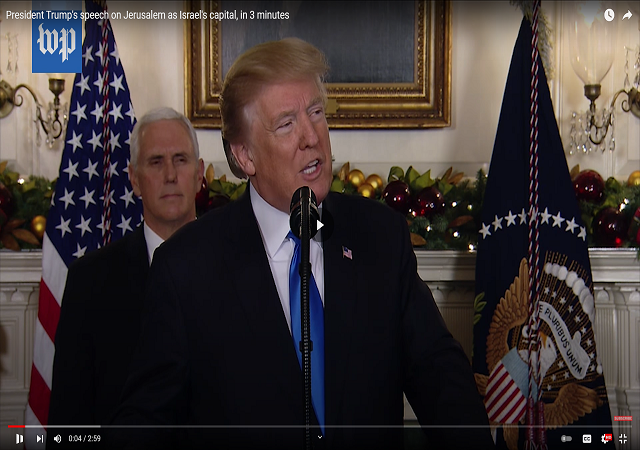
On December 6th President Trump’s words shook the world.
For the first time in over 2000 years, Jerusalem was recognized as the capital of Israel.
Whether he knows it or not, President Trump fulfilled his part in a frightening biblical prophecy exactly as the scriptures predicted.
Only the top church leaders and Bible scholars know the real meaning behind this great and terrible moment, yet no one is saying a thing about it…
So pay chose attention because this video will change your life forever for the good!
You can also access the latest news at this address: www.whatfinger.com
-
All Warnings Have Come True! Why Societies Grow More Fragile And Vulnerable to Collapse As Time Passes

MUST WATCH!!! First take a look at one of the most shocking videos in the world! This video actually shows us what the secret of the Trump family is related to their expressive health!!! –FULL VIDEO HERE
Even some of our brightest scientific minds are projecting that there is absolutely no positive future for our civilization if we stay on our current course. Perhaps one of the reasons why our society has become so obsessed with short-term results is because most of us can’t bear to think about the long-term consequences of our actions. I have a website that focuses on “economic collapse”, but it isn’t just the economy that is headed for catastrophe. Virtually every aspect of our society is coming apart at the seams all around us, and the era that we are moving into will be more nightmarish than most people would dare to imagine. But our political leaders continue to insist that everything is going to work out just fine somehow, and most people choose to believe them.
Also watch- In Venezuela, electricity has turned into a rare and unpredictable commodity.
This week, an old MIT study from 1972 that projected that our civilization will collapse at some point during the 21st century made headlines on several major news sites…
In 1972, a team of MIT scientists got together to study the risks of civilizational collapse. Their system dynamics model published by the Club of Rome identified impending ‘limits to growth’ (LtG) that meant industrial civilization was on track to collapse sometime within the 21st century, due to overexploitation of planetary resources.
In particular, the study identified a period of time “around 2040” when societal collapse would be very likely…
The study was published in the Yale Journal of Industrial Ecology in November 2020 and is available on the KPMG website. It concludes that the current business-as-usual trajectory of global civilization is heading toward the terminal decline of economic growth within the coming decade—and at worst, could trigger societal collapse by around 2040.
Of course events are not going to transpire exactly as they foresaw, but as far as the big picture is concerned they were right on the money.
Our society is now in the process of collapsing all around us, and you can see evidence of this everywhere that you look.
This week, civil unrest is causing widespread chaos in the streets in Cuba, South Africa, Beirut and Paris. We have entered a period of time when it seems like people are perpetually angry, and the wild scenes that are playing out around the globe are absolutely shocking.
Here in the United States, we are in the midst of a crazy crime wave. Murder rates in our major cities rose by an average of 30 percent in 2020, and they are up another 24 percent so far in 2024. Extreme violence has become a way of life in many of our largest metropolitan areas, and this is particularly true in the city of Chicago…
A Chicago rapper died after suffering as many as 64 bullet wounds to his head and other parts of his body in what police are calling an ambush shooting just as he was released from jail.
Londre Sylvester, 31, who is known by his stage name KTS Dre, was one of three people who were shot just outside Cook County Jail in the Little Village section of Chicago on Saturday.
Chicago police seem powerless to stop the endless violence, but of course the same could be said about many other police departments around the country.

The streets of our biggest cities are becoming war zones, and what we have experienced so far is just the beginning.
Meanwhile, we are dealing with the worst epidemic of illegal drugs in our history. If you can believe it, drug overdose deaths were up nearly 30 percent last year…
Drug-overdose deaths in the U.S. surged nearly 30% in 2020, the tragic result of a deadlier supply and the destabilizing effects of the Covid-19 pandemic, according to preliminary federal data and public health officials.
The estimated 93,331 deaths from drug overdoses last year, a record high, represent the sharpest annual increase in at least three decades, and compare with an estimated toll of 72,151 deaths in 2019, according to provisional overdose-drug data released Wednesday by the Centers for Disease Control and Prevention.
Drug overdose deaths were already at an all-time high coming into 2020.
So for the number of deaths to rise 30 percent above that level in just one year is really, really tragic.
Must watch- The US Army’s Forgotten Food Miracle And 126 Superfoods That You Can Store Without Refrigeration for Years
At the same time, our system of public education continues to rapidly deteriorate.
Earlier today, I was shocked to learn that 41 percent of all high school students in Baltimore have a grade point average that is below 1.0…
Project Baltimore obtained a chart assembled by Baltimore City Schools. The chart shows the average GPA for every high school grade in the city – freshman through senior. In the first three quarters of this past school year, according to the chart, 41% of all Baltimore City high school students, earned below a 1.0 grade point average. In other words, nearly half of the 20,500 public high school students in Baltimore earned less than a D average.
“It’s heartbreaking,” said Patterson. “If almost half of our kids are failing, what options do they have after high school? This is really disheartening. It’s sad to see this.”
I don’t just want to single out Baltimore, because that isn’t fair.
All across this once great country of ours, public schools are completely and utterly failing our kids. The vast majority of our high school graduates cannot read, write or speak coherently, and that simply should not be happening in the wealthiest nation on the entire planet.
Switching gears, authorities up in Canada are dealing with a different form of social decay. For years, I have been warning that Christians in the western world would soon face the same sort of extreme persecution that Christians in other parts of the globe are forced to endure, and now it is starting to happen.
In recent weeks, individuals that are apparently motivated by a deep hatred for Christians have been setting churches on fire all over Canada…
Terrorists are attacking and burning down churches across Canada with impunity.
It’s a reality most Canadians only thought possible for Middle Eastern countries like Syria, where ISIS has bombarded and razed dozens of Christian heritage sites in the name of Islam.
We haven’t seen anything quite like this before. According to Keean Bexte, a total of 45 Canadian churches have been burned just since the beginning of June…
The Counter Signal has kept a close eye on these terrorist attacks, reporting on the scene just hours after a fire in a refugee church.
Our information shows that since June, there have been 45 attacks on Christian and mainly Roman Catholic congregations. Of those, 17 of them have been scorched or burnt to a crisp in suspicious circumstances.
The corporate media should accept responsibility for their role in provoking these attacks.
For years, the corporate media has been relentlessly demonizing conservative Christians, and churches are the most visible symbols of conservative Christian culture in our society.

As the corporate media continues to blame conservative Christians for society’s ills, it is inevitable that there will be more attacks on churches in the future.
But of course there will be more violence everywhere around us as our society continues to steadily unravel.
I have never seen as much anger, frustration and hate as I am seeing right now, and there is no future for a society in which virtually everyone is filled with rage.
The years ahead are going to be extremely chaotic, and I would suggest that you plan accordingly.
You can also access the latest news at this address: www.whatfinger.com
-
5 Things That Will Happen if The Debt Ceiling Isn’t Lifted
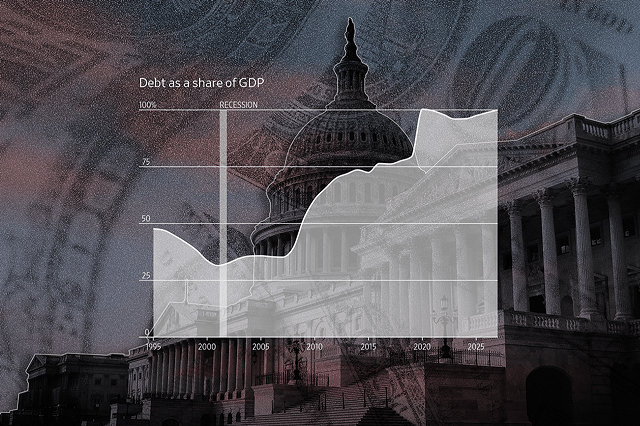
The debt ceiling is in the news again, and like all things in our mainstream media, there’s a spin depending on where you get your information. This alone can make it all the more confusing as to what exactly is going on. In this video, I will explain the five major things that will happen as this fight intensifies and we edge closer to the government not being able to pay its bills. Spoiler alert: if no resolution is found before the closely approaching deadline arrives on what Janet Yellen advises will be on June 1st of next year, it could propel us headlong, and I don’t say this lightly, into a depression or give a shot in the arm to a BRICS-based currency that could dethrone the dollar as a reserve currency. So before we jump into the specifics of what could happen, let me explain as quickly and unbiasedly as I can a little bit about what the debt ceiling is, what it is not, and why it should matter to you.
WHAT IS THE DEBT CEILING?
Almost every year, the government spends more than it collects in taxes — that’s the deficit. To make up the difference, it borrows money, which accumulates over time. That’s the debt. The debt limit is a legislative limit that caps the total amount of allowable outstanding U.S. federal debt. It was introduced in 1917 when Congress voted to give the Treasury the right to issue bonds for financing America participating in World War I. In other words, the Treasury can borrow money to pay for federal expenditures—but only as much as Congress lets it. Lifting the debt ceiling was once a fairly routine vote. Since 1960, Congress has raised the ceiling 78 times.
Since 2009, America’s national debt has nearly tripled, with annual federal deficits averaging nearly $1 trillion since 2001. The National Debt is sometimes driven by legislative or world actions which require the government’s response, including tax cuts under Presidents Bush and Trump, wars in Iraq and Afghanistan, entitlements like Medicare Part D, and spending in response to the Great Recession and the COVID-19 pandemic.
The debt ceiling is the budgeted limit of what the government can spend for every program, contract, person employed, building, road, or whatever. As we approach that limit, the Treasury takes measures to make sure we stay within that limit. With such deep divisions in government now, instead of simple passage, the arguments begin. The finger-pointing starts when each political party tries to paint the other as wanting to tax, spend, or cut programs. As the Treasury does its calculations, the actual point at which we cross the debt ceiling and can no longer authorize payments tends to move up. As we get closer to the exact dates, several things happen, each of which will affect you negatively.
On January 19, 2023, the United States hit its debt ceiling, beginning an ongoing debt-ceiling crisis. In response, Janet Yellen, the treasury secretary, began enacting various accounting maneuvers known as “extraordinary measures.” On May 1, 2024, Janet Yellen warned that the United States may run out of measures to pay its debt obligations by June 1, 2024. There have been debt-ceiling crises in 2011 & 2013, so we have a glimmer of what will occur with this 2024 crisis. Unfortunately, this current debt-ceiling crisis may be far worse than in previous years. This year, we find ourselves supplying a war overseas, still not recovered from a global economic downturn, suffering through unprecedented inflation, deep in a series of significant bank failures, and with a looming commercial real estate bubble. These influences and others will be fuel on the fire. Here’s what happens in this debt-ceiling limit debate and how bad it could get if we ever reach the point of default.
- TEMPORARY EXTRAORDINARY MEASURES

The first extraordinary measure the Treasury takes is to meet its spending obligations from the cash reserves on hand. As of January 17, 2023, the Treasury had a cash balance of $322 billion. That may seem like a lot, but your government spends a lot. Fish and Wildlife and Parks, Department of Homeland Security, Medicare Premiums, Social Security, Department of Agriculture, Federal Crop Insurance, Department of Justice, Railroad Workers Retirement, Federal Employee Retirement, Department of Veteran Affairs, the Postal Service, Unemployment Insurance, Defense Vendor Payments, Child Nutrition Program, Individual & Business tax refunds, barely scratch the surface of monthly expenditures. Hundreds of programs, contracts, and services are paid for each month, so simply surviving on reserves of cash on hand is like paying your bills with savings when you might lose your job in two months.
Still, these programs make up the first round of temporary extraordinary measures. The Treasury also halts the daily investments in the Exchange Stabilization Fund. Operated by the Treasury, the ESF stabilizes exchange rates by buying and selling foreign currencies. The suspension of daily reinvesting in this fund means the US has less influence on global exchange rates and the strength of the US dollar–the world’s reserve currency. Finally, the Treasury can suspend the sale of savings bonds and stop issuing State and Local Government Series Treasury securities. Once a debt ceiling impasse is resolved, these funds will be made whole so that beneficiaries are unaffected.
- PROGRESS IS PUT ON HOLD

Is your city repairing potholes or building a new traffic corridor? The chances are that it is being paid through Federal grants or with Federal money, so those projects get put on hold. Does your employer have a government contract or is trying to obtain one? Well, those are put on hold as well. New spending is suspended. Were you planning on retiring someday, but you work for the government, post office, or railways? No new money is going into that until the debt ceiling is lifted. Your state is going to have to wait on that Federal funding that may pay your salary in some small part. Nutrition programs and other social-safety programs get put on hold. Eventually, parks and other services close, and workers are furloughed several days per week or laid off.
In some ways, the government is forced to downsize and scale back operations. At this point, you start to realize all the little and big things the government provides you with. The economy, already struggling, suffers the most. The Treasury Department’s approach would be to postpone payments for all other liabilities until it accumulated sufficient funds to fulfill the whole day’s obligations. To clarify, it would postpone payments to agencies, contractors, Social Security beneficiaries, and Medicare providers rather than trying to selectively choose which payments to make on a specific day. If you work with any agency or under any contract with the federal government, expect cutbacks. If you remember the last significant debt-ceiling crisis, there were a lot of furloughed workers, national parks closed, and libraries adjusted their hours. Basically, everything slowed down, and many worried about their paychecks. Progress was put on hold.
- THE DOLLAR FALLS
The most detrimental related consequences are not as readily apparent as a closed sign at the post office or programs put on hold. The debt-ceiling debate is a self-inflicted wound on the US economy. One of the major consequences of this debt-ceiling debate and the temporary extraordinary measures is reduced household wealth and business confidence. These are the macroeconomic effects of debt-ceiling brinkmanship. Any potential default on US debt has the potential to be catastrophic: credit markets could freeze, the value of the dollar could plummet, and U.S. interest rates could skyrocket, potentially resulting in a financial crisis and recession that could echo the events of 2008 or worse. Your employer isn’t likely to take on that new contract or employee and expand the business in such a climate. Neither are you likely to want to buy a house or make a similar big purchase with the US economy about to collapse.
Other countries see this continued in-fighting and failure to come to terms with our debt and shy away from buying US debt. They start to look for other currencies to transact in, shedding their dollars held in reserve for more translatable and reliable currencies. Maybe that’s the Chinese Yuan, Russian Rouble, the Euro, British Pound, or some new BRICS currency. Over half of the foreign currency reserves globally are kept in U.S. dollars. Hence, an abrupt decrease in the currency’s value can impact the treasury market as the worth of these reserves goes down.
If a default occurs, the U.S. economy may face a recession more severe than the Great Depression. The international financial system heavily relies on the U.S. dollar and Treasury securities. If the impasse on the debt limit leads to a default on Treasury securities, it could be catastrophic, similar to or worse than the 2008 financial crisis. Even before we reach that point, other things can happen–like the slashing of America’s credit rating. That happened in 2011 when America’s credit rating was downgraded to AA+ from triple-A+ by Standards and Poor’s. As a result, American borrowing costs went up by $1.3 billion that year. When this slashing of America’s credit rating occurs, interest rates skyrocket, and people worldwide look for more stable investments outside America.
- MARKET INSTABILITY

Even if you don’t have your own stock portfolio, your retirement account and financial institution do. As the debt-ceiling debate continues and edges closer to the deadline that the Treasury cannot cross, the financial markets steel themselves up and shift their strategies to highly-conservative and stable investments. Not all of them are successful, as we just witnessed with the disparities in the balance sheets of Silicone Valley Bank, Signature Bank, and First Republic Bank, which collapsed this year. Venture capitalists are less likely to gamble in the future, so they withhold their funds. Goldman Sachs economists have estimated that a debt ceiling breach would immediately halt about one-tenth of U.S. economic activity.
Credit requirements tighten as interest rates increase, so business, home, car, and similar loans become too hard to obtain. Social Security beneficiaries, some 69.1 million people, would suddenly have difficulty paying rent and utilities. That means 11 million landlords aren’t receiving an income, nor are utility companies receiving the revenue they require to operate efficiently and maintain profits. Even grocers are selling fewer products as prices increase and federal food assistance programs get put on hold. Just these two groups of social security recipients and landlords represent nearly a quarter of the US population that would immediately feel the financial impact of a potential US debt default.
All businesses stop expanding and put projects on hold, and the real estate market takes a significant downward turn. Market conditions would likely worsen with each passing day, and the collective economy would slow to a crawl. Since we are already in a deepening recession where we aren’t exactly sure where the bottom is, this could be the push that propels us over the cliff into another Great Depression. Significant instability in any one market can dramatically impact other markets from wall street to main street, from your elderly neighbor next door to your kid’s school lunch program.
- UNEMPLOYMENT SURGE

Many estimates and studies have been conducted since 2013 to play out several different scenarios, from getting close to that debt-ceiling date to an impasse lasting more than two months where the Treasury only makes payments on interest. All the scenarios result in a loss of 1 to 5 million jobs across America. Many scenarios show only the slow recovery of those jobs over several months or even years. These unemployed people aren’t just federal workers. The ranks of the unemployed will come from all sectors and walks of life.
Businesses will protect their bottom lines by laying off some workers and tasking the remaining workers with extra work. Pay raises, and cost of living increases are put on hold. People spend less on services, entertainment, and manufactured goods. Construction slows. Restaurants lay off workers or close. Factories slow their production lines. Even the military will look to downsize operations and cut spending. A debt default would risk benefits for 2.4 million military members, retirees, and 400,000 survivors of fallen service members. Also, service members’ pay and benefits can be put on hold. In all sectors of the workforce, the rates of unemployment surge.
WHERE WE ARE AT NOW

In February, President Biden and Speaker McCarthy met for an hour in the Oval Office to discuss how to raise the debt ceiling. They couldn’t reach an agreement but agreed to continue discussions. In mid-April, the Limit, Save, Grow Act was presented by Speaker McCarthy, a 320-page House bill that proposed raising the debt ceiling by $1.5 trillion, which would have sufficed until at least March 31, 2024. This act narrowly passed the House but is deemed dead on arrival when it gets to the Senate.
There are only a few things that can occur here. First, the rancor could continue a little while until the public level of disgust becomes so great that the government is forced to let it go and raise the ceiling. Or, the debate could reach an impasse, and things begin to shut down, even as the rhetoric and blame game ramps up. Or, Congress could abolish the debt ceiling, but that’s so unlikely I won’t give it time here. None of these outcomes are suitable for the economy or regular consumers. The debt-ceiling debate is a shot in the arm for BRICS alternate currencies and diminishes the dollar’s strength globally. Rather than risking the full faith and credit of the United States, lawmakers should focus on the underlying reason we keep hitting the debt ceiling in the first place: the structural imbalance between spending and revenues. With the government functioning as it does right now, it isn’t likely that we will get the focus on the underlying reasons.
One thing is for sure. The margins are thin in this debt-ceiling debate. The Limit, Save, Grow Act may make it through Congress with Feinstein still out, but President Biden pledges to veto it. House Democrats are seeking a petition process allowing members to bring a bill directly to the floor without the cooperation of leadership. The critical date when the government can’t make its payments could arrive no earlier than the third quarter of 2023, which would begin in July. There’s considerable damage that will be done to the economy long before that deadline arrives.
As we collectively get closer to that critical date and the debate and blame game continues without any substantial change in how things are done, expect the accounting maneuvers of these extraordinary measures to become more sweeping and severe. Expect the US dollar and confidence in the US economy to decline, as will America’s global influence. Expect that progress will be put on hold, the recession will deepen, inflation will move to double-digits, and millions will suffer from employment insecurity. We are still in the early days of this, but the crisis is swiftly going to come to a head.
You can also access the latest news at this address: www.whatfinger.com
-
9 Scary FEMA Camp Facts You Must Know

Over the last decade or more, FEMA has become one more federal agency that everyone loves to hate. I wouldn’t say that it’s hated anywhere near as much as the IRS; but it could very well be in second place.
Sadly, the reason for this is the poor track record that FEMA has in doing what is supposed to be their main purpose; helping people and communities recover after a disaster.
As with preppers, FEMA doesn’t know what sorts of disasters they’ll be called on to deal with. Considering how wide a range of possibilities that can cover, they’ve been given an impressive “toolkit” of authority, allowing them to do things in an emergency that no other government agency can.
Apparently, all of FEMA’s authority comes from Executive Orders and not from legislation. That should be enough to give any sane person pause. But if it doesn’t, then exactly what some of those executive orders give FEMA authority to do should scare the socks off of them.
FEMA Camps
• Executive Order 10990 – FEMA can take over all modes of transportation, the highways and seaports
• Executive Order 10995 – FEMA can take over communications media
• Executive Order 10997 – FEMA can take over all electrical power, fuels and minerals
• Executive Order 10998 – FEMA camps can take over food resources and farms
• Executive Order 11003 – FEMA can take over airports and commercial aircraft
• Executive Order 11004 – FEMA camps can relocate communitiesThere’s a whole lot more than that; but those are some with the most far-reaching potential effect in a time of crisis.
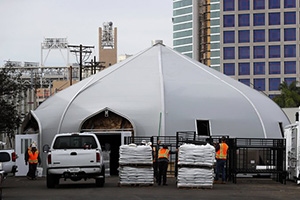
They are also empowered to set up refuge centers and relocation camps, of which there are currently over 800.
While those are ostentatiously intended to be used as emergency shelters in the case of crisis, FEMA has the power to use them in many other ways, including as detention centers and reeducation camps.
The thing we need to realize is, any power the government grants itself eventually is turned for evil, no matter how good the original intention. The “Law of Unintended Consequences” pretty much guarantees this, even without those in the government who have more nefarious purposes in their hearts and minds. Those people will create their own unintended consequences by manipulating the law.
Political Correctness
We are living in a time where political correctness rules the landscape. It’s even worse now, than it was during former President Obama’s tenure. Cancel culture is destroying any public figure who doesn’t agree with leftist doctrine.
While the average Joe on the street may not get cancelled, you can be sure that the woke mob, ANTIFA or some other leftist group will have their way with him, if they find out that he’s not in lockstep with their beliefs.
All it would take is for the sitting president to declare that the political polarization in our country is a national emergency and the full power of FEMA would be released.
Depending on direction out of the White House, FEMA would have the ability and authority to round up anyone and everyone who doesn’t agree with the current administration’s political ideology. All it would take is for them to declare those people (us) as “dangerous to the peace and tranquility of society.”
While there are many who are calling all this nothing more than conspiracy theories, I fall back on my original statement that any law which is passed is eventually used for nefarious purposes.
Therefore, any explanation given by the government or someone covering for the government doesn’t eliminate the risk to ordinary citizens. Someone in the government can always turn the tables on us.
If that happens, here are a few things we could expect:
Confiscation of Our Guns
It’s a well-established fact that FEMA doesn’t allow firearms in their “refugee camps.”

We first saw this during Hurricane Katrina, where people entering into the centers that FEMA set up were stripped of their guns upon entry. It didn’t matter to the people running the camp that those in the camps couldn’t defend themselves or that they were being attacked by others.
The Second Amendment enshrines one of our most important rights. Yet there are many in government today, who have the attitude that the Second Amendment is a government granted right, rather than a restriction on the government, preventing them from taking our right to keep and bear arms. Their viewpoint is wrong; but dangerous.
Curtailing of Freedom of Speech
One of the most likely scenarios for opening up those FEMA camps and filling them is that of “reprogramming” conservatives who don’t agree with leftist talking points. There are already those who are calling for such action and have been for several years. As time goes on, we can expect to hear more and more politicians talking like that.
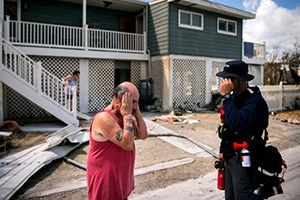
But the real danger is that they’re currently laying the foundation for such action, based upon the left calling words “violence.” That’s their justification for groups like ANTIFA being so violent. The way they explain it, those on the left who use violence are only responding to the violence of “hateful words.”
But then, to them, any words that don’t agree with their world view qualify as hateful words.
With this as a potential motive for rounding people up, you can be sure that when they do, they won’t be allowing those people who have been rounded up to have any freedom in what they say. As part of their “reeducation” their speech will be tightly controlled.
Rapes and Other Brutality in FEMA Camps
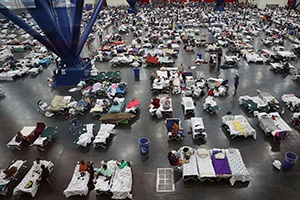
Going back to the refugee centers set up during Hurricane Harvey, we can see what the results of taking people’s guns away from there are.
With the people unable to defend themselves, they were easy pickings for the violent in society.
One of the reasons that firearms are so important for self-defense is that evil people are much more likely to use violence and even ugly brutal violence, in order to get their way.
Without firearms to defend ourselves with, we are at a serious disadvantage. Yet it is clear that there are many who don’t care about that. They would rather have us as victims, than people who can defend ourselves.
All of the “Defenses” are Pointing In, Not Out
Regardless of what the government tries to say about FEMA camps, one of the glaring truths about them is that they are designed to keep people in, not keep people out. Just as with any other prison, all the defenses are focused inwards, rather than outwards.
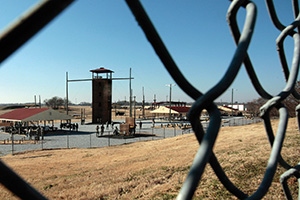
Perhaps the most obvious sign of this is the razor wire that’s placed on the tops of hurricane fences. When that’s done as a security measure, the brackets holding the wire are angled outwards. But in the case of prisons, it is angled inwards to help keep the prisoners from scaling the fence and getting out.
Of course, the government tries to say that those defenses are there to protect those who are housed in the camps; but it’s just a lie.
Yet with so many sheeple who are willing to accept what the government says, as long as they are given free stuff and otherwise left alone, it has ended up being an effective lie.
Once You’re In, You Can’t Get Out
This leads us to the next point; that is, once you’re in, you can’t get out. Those camps aren’t about a short-term solution to a disaster or they wouldn’t be configured the way they are. They are highly secure locations, designed to be used in an emergency.
The thing is that once the government has control over someone, they don’t want to let go. We don’t just see this with FEMA, but with every department of the government.
So there’s no reason to think that those running the camps will have a sudden change of heart and decide that justice is best served by setting all those “dangerous” people free to spread more verbal “violence.”
There are Plenty of Guards in FEMA Camps
I suppose someone out there could argue that the government doesn’t have enough people on the rolls who could serve as guards, should the order ever go out to use the FEMA camps. That argument is preposterous on several levels.
First, if FEMA posted jobs for guards, they would probably be overrun with applications. Depending on how picky they are, finding as many people as they need shouldn’t be a big deal.
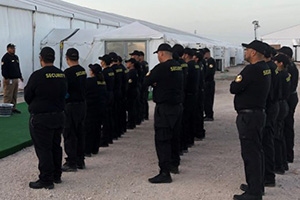
But that’s not the only card that FEMA has up its sleeve.
A large number of government agencies have been militarizing, creating what is essentially their own police force, armed and equipped on the level of SWAT teams, not armed and equipped like the cop on the beat.
This has been happening in a number of agencies which have previously had no need for any sort of armed personnel or law enforcement officers. So, what’s the difference? It appears that these agencies want the ability to be able to force their will upon the people. That means armed personnel; people who can be called upon to serve as guards for FEMA.
One good example of the militarization of federal agencies was the case of the Bureau of Land Management’s attack on Cliven Bundy in 2014. The dispute over land use escalated when 200 armed federal agents arrived at his ranch, taking it over and killing off his cattle. The armed federal officers who descended upon his ranch represented a wide variety of government agencies.
FEMA has Stocked Coffins
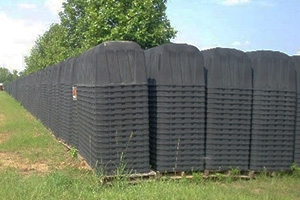
One of the things that came out a number of years ago is that FEMA had bought a billion dollars worth of “disposable” coffins. Those who have tried to debunk that as conspiracy theory have said that those weren’t coffins, but rather the waterproof vaults that coffins are placed inside.
Okay, so what? That doesn’t stop them from being able to be used as coffins. If anything, it verifies that’s what they are.
Why does the federal government need all those burial vaults? Why stockpile them? That seems even more sinister when you consider that FEMA doesn’t really stockpile much else in the way of emergency supplies.
When Superstorm Sandy hit the New Jersey coast, they didn’t even issue a Request for Quote (RFQ) until the day after the storm hit. If they are that cavalier about getting bottled water to people, why do they need a stockpile of burial vaults? It’s suspicious at the least.
No Privacy
Some of the sites maintained as FEMA camps are supposed to be able to house as many as 20,000 people. But that’s housing them in rather crowded circumstances. I’ve been in a couple of these, which are commonly used as reserve training centers. They can comfortably hold about 1,000 to 2,000 people.
What that means is that everyone will be in crowded barracks conditions, perhaps separated by sex and age and perhaps separated by family. There’s really no way of knowing. But considering the left’s take on “gender identity” today, I’m pretty sure that it won’t be anything that anyone will like.
I can’t say for sure, but this could be part of the plan in using these camps as reeducation centers. One of the more effective ways of brainwashing people is to put them under a lot of stress. Depriving people of the comfort of their family and thrusting them into crowded conditions are two clear ways of doing this.
Families Can Be Separated in FEMA Camps
As I just stated, families are very likely to be separated in these camps. The leftists in the government, as well as other organizations like the teachers’ unions, have already stated that the children belong to the government, not to their parents.
Taking those children away from their parents is a key part of indoctrinating them.
It also allows FEMA the opportunity to use the children as hostages for the “good behavior” of their parents.
Whether this means that good behavior will be required so that parents can see their children, or it means that some overt threat will be used is something that we’re going to have to wait to see. But it is clear that there are many advantages to a tyrannical government in separating families.
You can also access the latest news at this address: www.whatfinger.com
-
3 Reasons China Could Shock The World- An Early Warning For America . . .
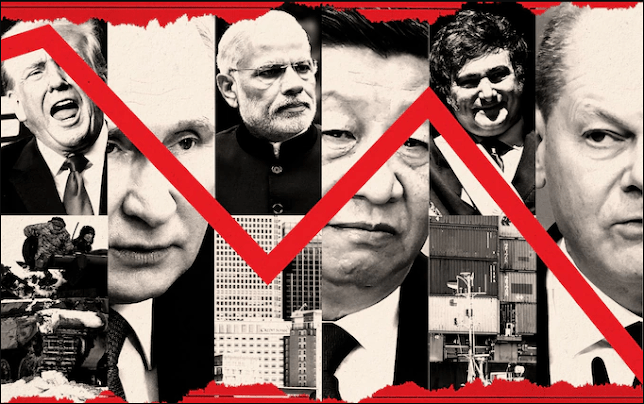
China’s economy is plunging into an unprecedented and dire phase, sounding deafening alarms that the Chinese government hopes to muffle, but they are growing too loud to ignore. This looming collapse is an ominous warning to America and the entire world as we are witnessing this unsettling unraveling in real-time. So, what do we need to know about this? China isn’t exactly transparent, most recently halting economic data releases to keep the world in the dark, which is just not a good sign. What they are hiding is that their state-controlled economy is unravelling due to debt, misguided investments, and eroding credibility. The question is, how bad could it get and what impact could it have on you? And most importantly, what can you do to prepare? Let’s talk about it.
3 REASONS CHINA COULD SHOCK THE WORLD
1) UNINFORMED POPULATION

The course and direction of a country are often determined by its citizens, and China’s citizenry is becoming increasingly upset and agitated, or are they? Some things we know, and some things we don’t. We know the suppression of information and censorship might keep them from blaming their problems on the Chinese government, and the government is keeping information from them. The Chinese Communist Party had a botched COVID response–Draconian lockdown of apartment complexes and factories; workers forced to work instead of going home, then suddenly all measures were lifted as if they never occurred.
China has ceased reporting economic data that could reveal its true economic health. For instance, they stopped publishing youth unemployment figures, citing a need to review their methodology. The most recent available data showed a record-high youth unemployment rate of 21.3% in June for those aged 16 to 24. It’s possible that it’s even higher now, possibly exceeding 25%, but we lack current information. In addition, China has limited access for foreign users to corporate registries and academic journals. They have also clamped down on due diligence firms, which are vital sources of information for overseas businesses interested in China. It’s evident that the Chinese government is actively suppressing information and engaged in extensive damage control.
The Chinese people don’t really understand how teetering their economy truly is because the government doesn’t want that to be known. Even today, if the ruling Chinese Communist Party doesn’t like data or it reflects negatively on them, they simply don’t report it. The world has to wonder what’s really going on in the people’s minds, what they actually know and don’t know, and whether their frustration level will ever be more potent than the government’s ability to hold them down.
2) OVERBUILDING & COLLAPSE

China has followed an investment-led economic growth model, heavily focusing on infrastructure and construction. However, this approach has led to significant overbuilding, with excess housing units that could house twice the entire Chinese population. Did you catch that? There’s two residences available for each of the 1.412 billion people. In China, home ownership for investment is favored over stocks. As a result, China has responded to this by building, and building, and building giving people to buy properties that are sitting vacant. Unlike the U.S., China’s stock market is less closely tied to the economy at individual and corporate levels. Chinese firms tend to rely more on bank loans and retained earnings rather than equity financing, in contrast to U.S. companies. Only around 7% of Chinese households own stocks, compared to 53% in the U.S. This leads to a liquidity issue, as it’s easier to sell stocks than vacant properties in a market with a surplus of available properties.
This has led to the citizenry purchasing homes enthusiastically as an investment vehicle leading them to invest in multiple apartments, accumulating second, third, and even fourth properties. As the economy suffers, however, they find themselves unable to make payments on some of these properties and unable to unload them to take a loss on them. Again, that’s two residences available for each person. This massive overbuild presents a problem that surpasses anything seen in the American subprime crisis.
This has been unraveling at a staggering pace, even as the government takes drastic measures to desperately try to stop the freefall. The collapse of Evergrande, a massive Chinese real estate company with over 1,300 projects in more than 280 cities, has sent shockwaves through China’s real estate market, one of the world’s largest, employing over 2.8 million people. As of 2021, Evergrande was grappling with $300 billion in liabilities, failing to meet its obligations to suppliers and offshore lenders, ultimately defaulting on its creditors. This default triggered a market panic, a cascade of defaults, and nationwide protests that were forcefully suppressed. The ongoing real estate crisis, now spanning two years, has raised concerns about financial system contagion risks and is likely contributing to job cuts, housing market declines, and an economic slowdown in China, the full magnitude of which remains uncertain and of global significance.
If the subprime real estate bubble collapse of 2008 in the U.S. that rippled worldwide and plunged many economies into a deep recession was bad, China’s overleveraged position in real estate is likely far, far worse. Foreign direct investment in China’s real estate market is quite extensive. Still, those investors are getting rather skittish as the Chinese Communist Party continues to demonstrate that it is having difficulty righting the ship that is its economy.
The government continues to struggle to radically adjust and prop the economy up, even as they crack down on billionaire tycoons and use them as scapegoats. Their desperation has lead China to seek and secure substantial resource deals with Russia during the conflict in Ukraine and Russia’s urgent quest for allies and markets. These agreements have the potential to entirely redirect global energy and grain sales, potentially leading to a profound transformation of longstanding trade agreements. These known and unknown deals are altering geopolitics and will have unknown future consequences worldwide.
3) SHIFTING MARKETS
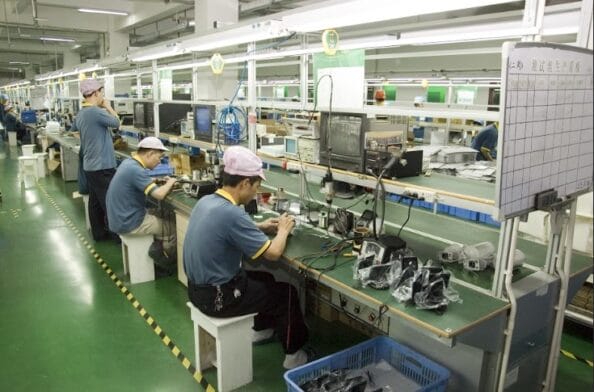
It’s a well-publicized fact that the U.S. has been at economic war with China as it decouples its economy from them. Whether that can be completely done and whether we even want to do that is still in question, but recent years have brought a host of economic moves. The U.S. has taken various financial measures, including imposing tariffs on Chinese imports and embargoing advanced technology sales. Most notable in this decoupling has been the CHIPS Act designed to boost domestic semiconductor manufacturing and research, enhance supply chain security, and promote workforce development to reduce reliance on foreign sources for critical semiconductor components. It has also put a significant drag on China’s production capabilities. These actions aim to reduce imports, protect or bring back U.S. jobs, and safeguard American infrastructure. However, despite these efforts, true decoupling remains more of a geopolitical goal than an economic reality, as China’s share in U.S. imports declined from 21.6% to 16.3% between 2017 and 2022. As a matter of fact, Mexico has surpassed China as the U.S.’s leading trade partner.
Also watch- COVID-19 returns in 2025!
How effective any of these measures has been, only time will tell. One thing that has been accomplished with certainty is that all these measures have driven China to explore other markets for its goods and resources. China has struck long-term energy resource deals with Russia, which will have far-reaching implications for global supplies and forever has altered the flow of global energy resources. The two countries have signed a 30-year, $400 billion gas supply deal called the Power-of-Siberia pipeline, which began in late 2019. This deal is expected to provide 22 billion cubic meters of gas in 2023 and reach a total capacity of 38 billion cubic meters by 2027, with gas flows increasing nearly 50% to 15.5 billion cubic meters in the previous year. China is working on a Central Asian pipeline to source gas from Turkmenistan, while Russia is also expanding its Siberian connection. Furthermore, Russia supplies oil to China through the East Siberia Pacific Ocean pipeline, resulting in an 8% increase in Chinese imports of Russian crude oil in 2022.
In the first four months of 2023, China imported about 6 million tons of wheat from Russia, greater than 60% more than the previous year. Of that, Russia supplied 30,000 tons.
This is all fine; who cares where they buy their grain or oil, right? Except these purchases significantly fund and prop up the Russian economy, solidifying new supply lines as other supply lines evaporate. If anything should happen to Russia, like Putin’s reign ending or large-scale crop failures, China suddenly has nowhere to turn to feed its people, and it lacks the fiscal resources to pay up to get the food it needs to feed its 1.4 billion people.
China has sought to bolster its markets in a new authoritarian-leaning world realignment, and a new world order is rapidly emerging. The Chinese government has managed to keep its economy afloat through savvy deals, maneuvering, and going from misrepresenting and misreporting numbers to simply not reporting them anymore. These temporary bouncebacks haven’t managed to flip the economy into the black but have kept it from free-falling. They haven’t fixed the underlying problems, and for years, with each, the rest of the world has wondered when the whole thing will fall apart.
Also watch- The most shocking weight loss secrets of the stars who manage to maintain themselves without much effort!
Let’s assume for a minute that the shaky economy, the risky deals with countries run by despots, the changing and new supply lines, or the people of China stop working nicely. Let’s assume that one of those fails, crashing the entire Chinese economy. What will that mean to you and me? What will that mean to the world?
CHINA IMPLODES. NOW WHAT?

If the Chinese economy were to implode suddenly, the consequences for the rest of the world would be substantial and multifaceted. Individuals and businesses should prepare for several potential scenarios. First, a collapse of the Chinese economy would trigger a global recession due to its significant role in the world economy. People should be prepared for possible job losses, reduced economic growth, and financial market volatility. If all the parts and ingredients in everything from medicines to Global Hawk unmanned surveillance drones carried labels as to where it was made, you would be shocked to learn that much of it still comes from China. Dependence on cheap Chinese manufactured items isn’t an addiction that is easily broken.
China is the world’s largest producer of pharmaceutical ingredients and produces and exports around 40% of the world’s active pharmaceutical ingredients (APIs). Those APIs predominantly flow to India, which is the world’s largest provider of generic medicines by volume, accounting for 20% of global pharmaceutical exports. India also manufactures 60% of all vaccines in the world. If China implodes, the world’s supply of medicines will immediately plunge to critically low levels.
China is a central manufacturing hub, and its production disruptions could lead to various product shortages. We caught a glimpse of that with the COVID lockdowns, but the country’s economic collapse would be magnitudes greater in impact. The U.S. imports massive quantities of manufactured goods from China, including 70 percent of Walmart’s store merchandise and 40 percent of the clothing sold domestically. It’s not just retail stores that would suddenly find themselves without inventory. In 2020, the United States imported machinery valued at $41 billion from China, making it one of the largest importers of Chinese machinery. Additionally, in 2021, the U.S. imported $13 billion worth of other electrical machinery, primarily sourced from China. These figures highlight the significant reliance on Chinese machinery and electrical equipment in the U.S. market.
Imagine farmers suddenly unable to repair or maintain their equipment. Imagine water companies unable to replace failing equipment. Imagine electrical companies without the necessary equipment and materials to maintain the grid. The quantity of these imports versus domestically manufactured products fluctuates yearly as these governments clash. However, they still find their way here to some degree, even if it is via India or some other intermediary country. No one is ready to see what happens if that supply suddenly seizes.
I have focused on the primary impact China’s economic implosion would have on the U.S., but emerging countries and trade partners worldwide will be impacted as well. Businesses, manufacturers, and distributors worldwide would immediately suffer to an extent large enough to perhaps even topple some countries. This year, We have seen how economic pressures and the application of foreign government influence can directly lead to rebellions and the toppling of established governments. The global dynamics can change considerably when critical food imports to starving countries suddenly stop.
The geopolitical ramifications of a Chinese economic collapse could lead to significant shifts in global power dynamics. People should be prepared for potential changes in international alliances and trade relationships, which could affect their countries’ foreign policy and economic strategies. China, forced into desperate measures to sustain its power and economy, could seek to deflect attention and blame by sparking a conflict in the South China Sea or with Taiwan. China could sell lethal arms and armaments to Russia in exchange for a more significant stake in the resources in the Siberian region. Any number of odd, desperate, and unfriendly alliances could be openly and secretly agreed to in an attempt to stay afloat.
WHAT CAN YOU DO?
When it blows, it’s going to be big, and it’s gonna be painful. Let’s be honest. If you were to stop what you’re doing right now and look around your room, I’d be willing to wager that the majority of what surrounds you somehow or another originated from China. We’ve become so reliant on China’s cheap manufacturing for so long that we’ve gotten addicted. So the short answer is that the stuff won’t be cheap any more.
But as a prepper, I always return to the critical items of food and water. I always suggest having a water supply and a means to treat and filter it ready to go. This is why we cover water storage on the channel and encourage you to begin learning how to produce your own food. I realize gardening is not easy and it requires your time and money. But, as you lessen your dependence on systems that will eventually fail, no matter if you’re starting out and have enough food for a week, you’re on the right path.
You may not be able to change China’s trajectory, but you can bolster your ability to make it through the economic fallout of China’s implosion by getting your own preps in order. Watch our video on building a 2 week essential food supply to start, because this could turn bad quickly. I’ll post a link here on the screen and you watch that video next. What’s your thoughts? What steps are you taking now to prepare for this issue and others that are on the horizon? Let us know in the comments section below.
-
A Study Suggests That there Is a Possibility that Society Will Collapse in 2040 (The Crisis is the New Normal – Can Society Survive the Current Crises?)

Will Society Collapse? Civilization seems to be lurching. A study suggests that there is a possibility that society will collapse in 2040. In this blog post, let’s explore why society might collapse and how we can prevent it.
We’ve all seen the movies where society collapses, and it’s every man for himself. The reality is that most people won’t know how to survive when this happens. Many things have been happening in the world lately. In light of all this, it’s vital to start thinking about surviving the collapse of society.
Many believe that it’s only a matter of time before something big happens. That could leave us without power or essential services for an extended time.
Will Society Collapse in 2040? The Reality of Our Societal Decline
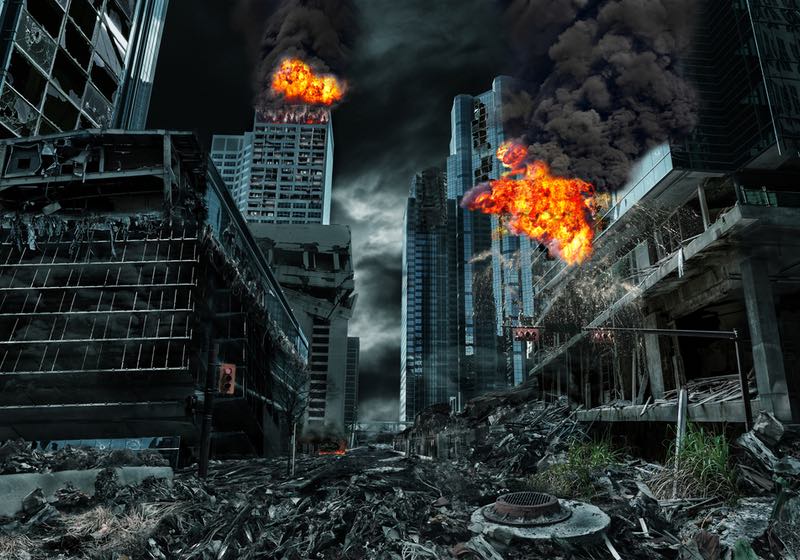
Many factors could lead to society collapsing in 2040. Some of the most likely reasons include:
- Economic Collapse
- Natural Disasters and Climate Change
- Foreign Invasions and Mass Migration
- Famine, Economic Depression, and Internal Strife
- Disease Outbreaks
- Demographic Dynamics
- Pandemics
- Social Unrest
- Water Scarcity
If any of these events happen, it could lead to a cascading effect that causes society to collapse. An economic collapse could lead to social unrest and a pandemic. These are possible reasons why society might collapse. Many other scenarios could play out.
Is Society Collapsing?
A new study is raising red flags about the future of society. The report finds that human society is right on track for a collapse.
Based on a 1970’s report reassessment, Society Collapse 2040 prediction is most likely. It warns that we are on track for disaster if we do not change our ways. So far, it seems like we haven’t heeded that warning. Society Collapse 2040 is right on track if there is no shift in global priorities.
The world population is booming, and the quality of life is declining. It’s looking more and more likely that society will collapse by 2040.
We’re on the brink of disaster, and we need to do something about it. If we don’t change our ways, society is collapsing. It’s time for us to wake up and take action. We need to find a way to save this world before it’s too late. We’re running out of time. We need to find a way to turn things around and save this world before it’s too late. The future of humanity is at stake.
When Will Society Collapse?
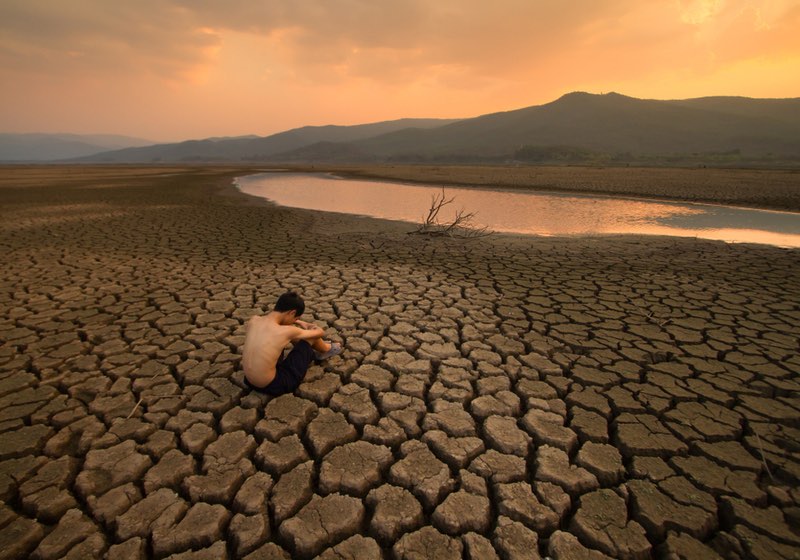
When will society collapse? Many people are asking, and new research has some disturbing answers.
A recent climate change analysis predicts that human civilization will collapse by 2050.
The analysis concludes that climate change poses a current existential national security risk. Not addressing the threat of climate change could lead to the extinction of humanity. Or the permanent destruction of our potential for future development.
In other words, the world is on a path to disaster, and we need to take urgent action before it’s too late!
The Crisis is the New Normal – Can Society Survive the Current Crises?
Any catastrophe on a global scale will almost result in a pandemic. The world might flip upside down in only a few days! The harsh fact is that many people would not survive a week without stored food, let alone 90 days.
Societies or advanced civilizations as we know them have existed for around 10,000 years. During this era of earth’s history, many rose to great power. Many collapsed as well, leaving only residues of their territories. Historians tried to analyze specific reasons leading to the collapse of civilizations. While most details remain unknown, we do see repeating patterns.
There is a timeline for every calamity. Even so, there is usually a pattern. Knowing this pattern can help you avoid the chaos and stay safe through it.
Society is a delicate thing. It’s something that we often take for granted until it’s gone. But, that doesn’t mean that we shouldn’t prepare for it. Knowing what happens when society collapses – is a must to survive the societal collapse.
To prepare for societal collapse, learn what happens when it collapses.
What Happens When Society Collapses?

Many think about societal collapse as a world where law and order have broken down. Gangs are running the streets. While this may be one possible outcome, it’s not the only one. Many different things could happen when society collapses. Many different scenarios could play out. But, here are some of the most common ones:
Infrastructure & Communication Breakdown
When society collapses, the systems that we rely on will likely go with it. Electricity and Internet will be no longer.
Water Scarcity
Water scarcity is a global crisis. It already affects every continent.
It affects around 2.8 billion people at least one month out of every year. This number is only going to increase as water resources become limited.
Because of global warming, water-related dangers are on the rise. Floods and droughts are two examples of water-related dangers.
You can expect water scarcity to increase because of population growth. Add to that decreasing water availability.
Food Shortage
Food shortage is one of the biggest concerns during a societal collapse.
Food and water shortage could happen due to a natural disaster. It could happen due to disruptions in food production and distribution too.
Without anyone growing or distributing food, there will be shortages. Without food or water, people will die.
Crime Rise
As we mentioned before, one of the most common outcomes of a societal collapse is the rise of crime. With no one to enforce the law, criminals will have free reign over the population.
Disease Outbreak
When society collapses, there is no longer any sanitation or healthcare. No sanitation or healthcare could lead to widespread disease and death.
Social Order Collapses
When the government collapses, law and order break down. Social order collapse could lead to looting, violence, and anarchy.
Economic Collapse
When society collapses, the economy goes with it.
An economic collapse could lead to mass unemployment and poverty.
Martial Law
In some cases, the government may declare martial law to restore order. Martial law could lead to restrictions on freedom (of movement and speech). Arbitrary arrests could result too.
How to Survive the Collapse of Civilization
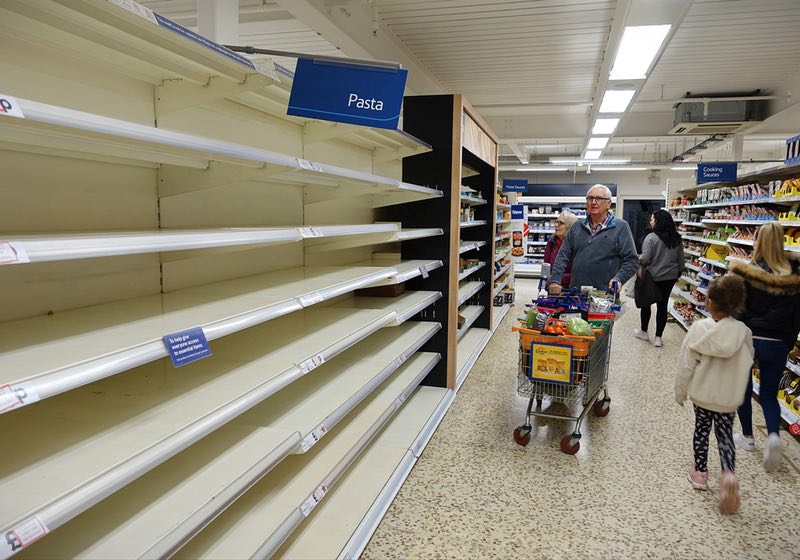
As a prepper and survivalist, surviving the collapse of society is a must skill to get.
A person can survive a week max without food or water. How can you expect to live three months without food or water? How do you plan for what might occur if something goes wrong?
If you want to survive a societal collapse, you need to:
Be Prepared
Be prepared for these things. That means having food, water, and medical supplies stored up.
Have a Plan for how you will survive.
- Find safe places to stay.
- Form alliances with like-minded people.
Learn primitive medical diagnosing.
Do not panic.
Surviving the collapse of society is something that we can all do if we prepare.
So, start thinking about what you would do if it happened and get started on your preparations today.Stockpile food and water
Stockpiling is one of the most crucial things to do to prepare for a societal collapse.
Stockpile enough food and water to last you at least three months.
Have a backup plan
If the worst happens and society collapses, don’t rely on your stockpile to keep you alive.
Make sure to have other means of survival, such as a bug-out bag or safe house.Stay informed
One of the best ways to prepare for a societal collapse is to stay informed about the potential risks.
Follow reliable news sources and keep up with what’s happening.While we can’t predict when or how society will collapse, it doesn’t mean that we shouldn’t prepare for it. Learn to survive the societal collapse to ensure that you and your family will be safe. No matter what happens.
Here’s an infographic guide that you can use. Feel free to download, save and share it with your loved ones:
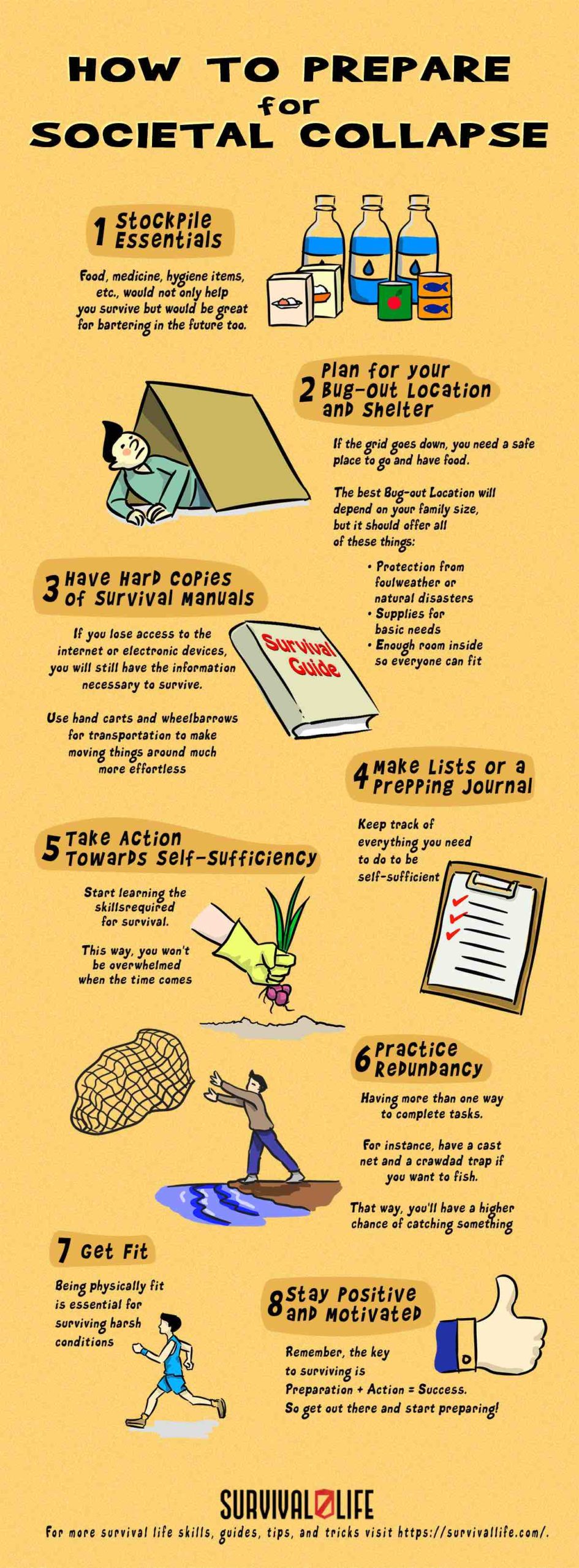
Is Society on the Verge of Collapse? 2040 Predictions
In 1972 a group of researchers at MIT concluded that society was on its way to a complete collapse. It predicted that by 2040, today’s modern world would end in absolute failure.
Watch this video of MHFIN about Society Collapse 2040:
Society Collapse 2030
KPMG made a follow-up study on MIT’s prediction. Instead of finding evidence to dismiss the previous findings. The study declares the world is ahead of schedule.
It’s time for us to face the facts and take action. We need to find a way to save society before it’s too late. To prevent societal collapse, we need to make changes fast! The future of the world is at stake.
You can also access the latest news at this address: www.whatfinger.com
-
Looking Back, A 2018 Warning Of Markets Overdone- The market can remain irrational longer than you can remain solvent.
While listening to a financial program recently I heard one of the participants mention and praise Fred Hickey, an analyst whom I was unfamiliar with. Upon researching this fella to get a feeling of his views, an interview he did years ago popped up. It appears that back in early 2018, Fred Hickey, a frequently cited expert on Bloomberg News and Barron’s Round-table was more worried about the state of the financial markets than he had ever been.
Hickey, known for publishing his extremely well-respected investment newsletter, The High-Tech Strategist, took the stand that asset prices were dangerously overvalued. Today, the same markets are much higher, in truth, they never really retrenched.
While his primary focus had been on analyzing Tech stocks, over the years he had expanded his research into macro trend analysis. This includes how central banks started increasingly intervening in world markets and distorting the price of money. Rather than taking this post as a criticism of Hickey, consider it solid proof that we have again witnessed the adageoften attributed to the famous economist John Maynard Keynes:
The market can remain irrational longer than you can remain solvent.
This saying is often cast out as a reminder that a person can be right but timing often determines our destiny. It also underscores why, capital preservation should be job one. The market will fail only when something breaks. It is only then that delusion and despair will overtake the optimist irresponsible central banks and the policies politicians continue to crank out. History indicates that efforts to postpone the day of reckoning only delay it.
As pointed out, Hickey, a lifelong expert in “all things technology” was railing against market trends as far back as 2018. Even then he concluded that gold (the “barbaric relic”) had become the sanest asset to put one’s capital. This was due to its safety factor and its current level of undervaluation. This is why Hickey was out warning about how we were in an everything bubble.
His warning included how companies such as Tesla were doomed to fail. This argument held some truth but over the years, forces have pushed the boulder up the hill. Today markets are at insane levels and much higher than many of us thought possible. This is a time whenit might be wise to remember trees, no matter how tall, do not grow to the sky.
In a very recent video on Thoughtful Money,Sven Henrich of NorthmanTrader.com reached out with the message that he closed out all his longs this week and moved to cash. While he has been a bit spooked by recent market action, he makes it clear be is not all that bearish. Based on his charts, he is cautious. This is due to the fact we are experiencing the most distorted markets in history. Whether this is a result of too much liquidity or passive investments driven by computer trading is an issue of debate.
The important thing is where the market goes from here. Having been bearish far longer than I ever wanted to be, every time I turn towards capitulating, I try to remember that two wrongs don’t make a right. This is particularly true in economics. When the numbers don’t work it is only a matter of time before reality hits hard and long. The idea that this time is differenthas throughout history proven untrue. Whether the market pullback that started a few days ago is a preamble to something greater has yet to be determined.
You can also access the latest news at this address: www.whatfinger.com
-
Best Water Sources for SHTF Scenarios- In Emergency Scenarios, Finding Safe Water Sources Can Mean Life or Death!

First take a look at one of the most shocking videos in the world! This video actually shows us what the secret of the Trump family is related to their expressive health!!! –FULL VIDEO HERE
Picture this. Communication lines are down, buildings are toppled over, roads are blocked, and crazed folks are looting supermarkets in your neighborhood.
At home, the power’s out, your stomach’s growling, and your thirst is gnawing at you like a pitbull on a chew toy.
Suppose you still have some food to ration over the next few days, but what about H2O? What happens after you down your last bottle of water?
Seems a bit much?
Don’t fret! In this blog, we’ll give you the rundown on finding viable sources of water in your area, plus some bonus tips on purifying and storing water with ease. So buckle up, grab a drink (preferably not contaminated), and let’s dive right in.
Identifying Potential Sources of Water
First things first, you’ll have to learn how to identify the potential water sources in your area. Depending on where you live, most homes rely on either a public water supply or a private well for potable water.
If you rely on public water utilities, treated water is pumped through underground pipes to your house. Natural disasters like earthquakes and floods often contaminate or damage these underground pipes, affecting public water supply in SHTF scenarios.
When this happens, it’s time to look for alternative sources of water. Below, we’ve listed some viable options you can find indoors and outdoors.
Indoor Water Sources
If you’re resourceful enough, you can skip the chaos outside because you won’t have to look elsewhere. There’s water in the most unlikely places inside your home.
Bottled Water and Beverages
Let’s start with the obvious. For emergencies, gather any beverages you have in stock at home. The following drinks will provide the most hydration:
- Bottled Water – If you’ve been a diligent prepper, you should have a decent supply of bottled water tucked away in your food pantry. As long as you’ve kept it hidden from direct heat and sunlight, unopened bottled water can have a shelf life of up to 2 years.
- Sports Drinks – Plain drinking water is best for hydration, but sports drinks are another great option if your bottled water is in short supply. The electrolytes in sports drinks help replenish your body, especially if you’ve worked up a sweat fighting off a hoard of zombies.
- Milk – It may have skipped your mind, but milk can also keep dehydration at bay. The calcium, vitamin D, and proteins in milk can supply your body with nutrients it’s missing from being in survival mode. Just be wary of drinking spoiled milk since a bad stomach will dehydrate you further.
To stay hydrated and healthy, skip carbonated, alcoholic, sugary, and caffeinated drinks altogether. These beverages might satiate your cravings but won’t quench your thirst! Instead, try light exercises in the morning if you need a pick-me-up in the absence of your usual cup of coffee.
And beware, the higher the alcohol content in drinks, the more dehydrating it is. For this reason, steer clear of all types of liquor. While we imagine the taste of an ice-cold beer would be heavenly in an apocalyptic wasteland, we suggest taking our advice if you don’t wanna end up like a shriveled-up raisin.
Swimming Pool
Obviously, not everyone has a swimming pool, but if your home has one, Lady Luck must be on your side. This body of water might not be what you had in mind, but it’s still a viable option — granted you’ve kept up with its maintenance.
Even a small swimming pool can hold 15,000 gallons of water. In times of scarcity, this could be your golden ticket to survival.
Now, we’re not asking you to drink pool water. However, it can be a valuable resource for washing the dishes, showering, and even doing laundry.
Most times, chores become an afterthought in tough situations, but you’ll have to do them at one point or another to maintain some sense of normalcy. We suggest keeping a separate water supply for these less exciting tasks.
Also watch this video- COVID-19 returns in 2024!
Melted Ice
When your power goes out, we recommend putting ice cubes inside your fridge in a clean container to melt. If you have enough of it, it might also help to scrape off some of the frost that’s collected in your freezer to melt in a separate container. It won’t be much, but anything counts when S hits the fan.
As long as it isn’t contaminated, water from the ice cubes should be safe for drinking. Meanwhile, you can boil the melted ice scrapings over a fire and use the water for cooking.
Water Heater Tank
A standard home water heater tank can easily hold 40-60 gallons. Since it already provides water for your tap and hot showers, draining your tank should provide a relatively clean water source for emergencies, regardless of whether your heater runs on gas or electricity.
Just don’t be surprised if you get funky, discolored water if you haven’t flushed out your water heater tank in years. Sediment collects at the bottom of the tank over time, so you’re supposed to drain your heater on a regular basis to maintain water quality.
If you’ve kept up with this maintenance, the water should come out clear, perfect for hygiene and cleaning purposes. This begs the next question:
Is It Safe to Drink?
People often debate whether or not water from the water heater can pass as potable. The answer depends on where you live and what plumbing system you’ve got. Below we’ve listed some things to consider before you take a sip of that water:
- The water in your heater may be treated, but it can still carry some built-up mineral deposits that can be unsafe and unpleasant to drink since hot water corrodes the metals inside the tank over time.
- Some pipes in older homes are still lined with traces of lead that can adversely affect health, especially in infants and children.
- It’s rare, but warm water can host legionella if your water heater isn’t keeping your water hot enough. Legionella is a type of bacteria that thrives in warm water systems with temperatures ranging from 25°C to 45°C. Inhalation of water vapor in infected water systems can cause a serious lung infection.
- Your water heater tank may also be contaminated if you fail to isolate it from the central water supply moments after a natural disaster.
Unless you have a relatively new and well-maintained water heater tank, go the safe route and use this water for anything but consumption purposes.
Liquid from Canned Fruits and Vegetables
This may seem like a reach, but if you have enough canned products in your pantry, you could end up with a fair amount of cooking liquids.
Instead of flushing the juice from canned fruits and vegetables down the drain, store them in separate jars and use the syrups for cooking desserts or sweetening up batters. Liquid from canned vegetables can also be added to soups or used to cook pasta and noodles.
And the good news is these liquids last forever. Well, not quite. But since they’re meant to preserve canned food, they’ll last you a long time.
Toilet Tank
Didn’t think we’d get here, did you? Now we’re not suggesting you drink from the toilet bowl. We assume you’re not that desperate.
However, the water inside your toilet tank is typically clean. Water in the flush tank is frequently cycled out, meaning water doesn’t sit there for days at a time. For this reason, it’s safe to be purified for drinking, provided it’s not mixed with chemical cleaning agents.
If you’re grossed out by any water source in close proximity to your toilet, don’t sweat. Water from your toilet bowl doesn’t back up into your flush tank. Once you’ve successfully squashed this mental hurdle, you’ll be happy to learn you’ve got an extra 3-5 gallons of water to use.
Trust us, we’re not beaming at the idea either, but it’s something to consider if you’re at your wit’s end, wracking your brain for potential water sources.
Outdoor Water Sources
Once you’ve exhausted all your options at home, it’s time to look to the Great Outdoors for more sources of water. Lucky for us, Mother Nature always provides. You just have to know where to look.
Rainwater
Whether you’re living off-grid or in an urban area, rainwater provides a renewable water supply that’s free and readily available. Plus, rainwater collection is inexpensive, easy to maintain, and once you get the hang of it, it partly cuts down your water bills.
You can use rain barrels to capture rainwater that flows through the downspouts of your gutter system. Rain barrels for residential use typically hold 50-90 gallons of rainwater.
Invest in filters for your rain barrel and keep them covered when not in use to prevent mosquitoes from breeding. Rainwater is typically clean, but it can still carry some of the dirt and bird droppings on your roof and gutter system, so we don’t recommend it for drinking.
You can use it, however, to water your lawn, wash your car, or clean your driveway and sidewalks.
Rainwater collected from off-grid areas is typically cleaner, so you might get away with purifying it for drinking if you have a good filtration system in place. If you want to take your rainwater collection up a notch, consider investing in a wet or dry catchment system for your home.
Fresh Water Systems
When S hits the fan, you’ll have more luck finding emergency water sources in the wild or off the grid than in urban areas. If you already happen to live near natural fresh water systems, then you’ve struck gold.
Most of our drinking water comes from fresh water systems like rivers, streams, and lakes. Out in the elements, try listening for sounds of running water or following signs of life and vegetation. You’ll eventually come across a body of water.
If you’ve found a fresh water source, you may be able to purify it for drinking. However, steer clear of stagnant water, as it can be a breeding ground for parasites and bacteria.
Always inspect the water for signs of contamination, discoloration, or odor. You wouldn’t want to down wastewater coming from urban factories, so clear running water will be your best bet.
Plants
This might shock you, but plant leaves are also viable water sources. When plants absorb water from the soil, whatever they don’t use up is evaporated through the leaves. This process is called transpiration.
To collect this water, you only need a clear plastic bag, a string to tie it with, and preferably a plant with large, green leaves. Below is a step-by-step guide to help you quench your thirst with plant transpiration:
- Select a branch with plenty of leaves and give it a good shake to remove any bugs or insect droppings on the leaves.
- Place the plastic bag over the branch, ensuring enough room for the leaves to hang loosely inside the bag. Putting up multiple bags at a time is ideal since you won’t be getting much water from a single branch.
- Tie the plastic bag securely with a string so the water vapor can’t escape and the condensation gets trapped.
- Leave it in the sun for approximately 3-4 hours to allow enough droplets to collect in the corners of the bag.
- Once time has elapsed, you’ll be left with about ⅓ cup of water. Run this water through a clean shirt or fabric to filter out any impurities that may have collected on the leaves.
- Reattach the plastic bag to another plant and restart the process to collect more water.
And there you have it! The great thing about transpiration is that plants remove much of the impurities from the water, so you’re left with clean, drinkable H2O. Just be sure to find clean leaves and non-toxic plants.
Good contenders for collecting transpiration include berry bushes and water-loving trees like willow and cottonwood. Try this with plants in your garden, too! You can do this multiple times because the process doesn’t hurt the plant. You’re just harvesting water that would have otherwise been evaporated.
Melted Snow
What better resource than frozen water that falls from the sky, right?
Freshly melted snow is safe to drink after boiling, but we’d like to stress the emphasis on melted snow. Don’t be fooled by survival movie cliches of eating handfuls of powder snow to hydrate.
Consuming snow straight off the ground will only put you in more danger of dehydration and hypothermia. It will require your body to expend more energy to melt the snow and regulate your temperature. That’s not very smart considering your body’s already working at capacity trying to keep you warm in a cold environment.
Not to mention, fresh snow can also bring contaminants with it. For this reason, steer clear of yellowing and discolored snow even if you plan to boil it.
We assume you won’t have advanced filtration systems when S hits the fan, so to err on the side of caution, pick fresh, white snow and boil in high heat for 10 minutes before drinking.
Purifying the Water
Once you’ve identified suitable sources of water, it’s time to make the water safe for use and consumption. Below we’ve outlined the easiest water purification methods you can do at home.
Boiling
Bringing water to a boil is the simplest way to purify water. The CDC recommends bringing water to a roiling boil for a full minute to make it safe for drinking. Time it from when the water starts boiling, not from the moment it is placed over a fire.
The boiling point of water is lower at higher altitudes, meaning you must compensate by extending your cooking time. At altitudes above 6500 feet, boil water for at least 3 minutes or more as needed.
Filtration
Physical filters work by straining fine particles and debris from the water. The more levels a filtration system has, the better it can eliminate impurities in the water. However, you don’t always need an industrial-grade filtration system to purify water.
You can create your own DIY filter for emergencies using materials from your backyard, like sand, charcoal, and small pebbles, as seen in the video below.
The finer your sand and charcoal are, the better your filter will work. Layer accordingly with the pebbles on top, charcoal in between, and sand at the bottom.
As you run water through this filter, the layer of pebbles on top gets rid of larger sediments and debris, while the sand at the bottom filters out smaller impurities. The fine charcoal in between works by absorbing contaminants in the dirty water. If you’ve done this right, the water should come out clear on the other end.
For an additional cost, you can also invest in portable water filters, perfect for finding water sources when you’re out in the wild.
However, note that physical filters cannot remove microorganisms from dirty water. Hence, it’s still best to sterilize the water via boiling or chemical treatments after running it through a filtration system.
Chemical Treatment
Public water systems use chemical treatments to make the public water supply safe for human consumption. To replicate the science that goes on in water treatment plants, you can also purify water at home using store-bought chlorine tablets, iodine drops, and even household bleach.
- Chlorine Tablets – As little as 1mg of chlorine can purify 1 liter of water, but the dosage can vary depending on your brand of chlorine tablets. Tablets also come in different sizes, so we highly recommend following the instructions on the container to know the appropriate dosage. Let the tablet dissolve and wait 30 minutes as it works its magic. If you’re bothered by the aftertaste, let it sit uncovered for a few more minutes as the chlorine evaporates.
- Iodine Drops – Iodine drops work similarly to chlorine tablets. Add five drops to each liter of water or 20 drops per gallon. Stir or shake the water afterward and wait for 30 minutes before drinking. Iodine also comes in tablet form and can be purchased at your local pharmacy.
- Household Bleach – Chlorine is the main active ingredient in most household bleaches, so you can also use Clorox to purify water for drinking. Two drops of 6% bleach should suffice to purify 1 liter of water or eight drops for 1 gallon of water.
Make sure to use only unscented and unexpired bleach. Per usual, let it sit for 30 minutes as the chlorine purifies the water and evaporates.
Note that no water purification methods can treat chemically contaminated water. You’d have better chances with green pond water than fresh water systems contaminated by a chemical spill.
Invest in home water testing kits for an added layer of security and as a last resort, use your senses to tell you whether or not the water is safe for consumption.
Managing Your Water Supply
After purifying water and making it safe for consumption, next comes collection, sanitation, and storage, which are equally important for maintaining water quality.
Collection
When stocking up on purified water, aim to store at least 1 gallon per person per day, as FEMA recommends. For the best odds, store at least a week’s emergency water supply per person. This should include water for consumption, hygiene, cooking, and cleaning.
To choose an appropriate water storage container, tick off the boxes in the checklist below:
Don’t wait for a disaster to strike before purchasing water containers for storage. Food-grade containers are readily available at your local grocery stores for an affordable price.
Sanitation
To sanitize your container, you’ll need one teaspoon of unscented bleach diluted in one quart of water. Toss the mixture into the container, seal it, and swish it around so that the solution coats the entire surface of the container. Drain the solution once you’re done and allow the container to completely air dry before pouring purified water.
Storage
After collecting water and sanitizing your containers, remember these tips when storing them for emergencies:
- Store the containers in an area that doesn’t receive heat and sunlight. Basements and cellars are preferable.
- Ensure that no chemicals are stored alongside your water containers.
- Drain and sanitize your containers every six months to keep bacteria from growing.
- If you’re storing water in a cylindrical container with a wide opening, refrain from using the same tool each time you scoop water out of the container.
- Don’t touch the water inside the container with your bare hands to avoid contaminating the entire water supply.
- Label the containers according to their use (e.g., drinking water, sanitation, etc.) and storage date.
- Replace the water in the containers at least once every six months.
For a more comprehensive guide on managing your emergency water supply, check out our feature on how to store water safely.
Final Thoughts
Whether you’re a seasoned prepper or a novice, finding, purifying, and storing water are essential skills that could save your life in times of disaster.
By making an effort to learn the various water sources in your area, practicing the different water purification techniques, and reproducing the best practices for water storage, you can ensure that you and your loved ones stay hydrated in any emergency.
Multiple water sources are at your disposal both inside your home and out in nature. You just gotta channel your inner Les Stroud and make the most of what’s available to you!
According to NASA, we’re going to face a 100-YEAR LONG DROUGHT.
A drought more devastating than the 1930s Dust Bowl that forced America to plunge into crisis and left millions of people without the basics of life… like water and food.
And this is not something that’s gonna happen in 50 years, in 20 years, or in 5. This is already HERE. It’s already started… over a decade ago.
You can access the entire video right here, or by watching it below!
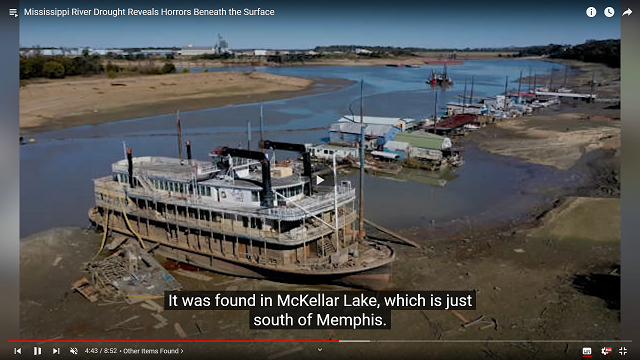
-
From Lockdown to Police State: the “Great Reset” Rolls Out
On August 2, lockdown measures were implemented in Melbourne, Australia, that were so draconian that Australian news commentator Alan Jones said on Sky News: “People are entitled to think there is an ‘agenda to destroy western society.’”
The gist of an August 13th article on the Melbourne lockdown is captured in the title: “Australian Police Go FULL NAZI, Smashing in Windows of Civilian Cars Just Because Passengers Wouldn’t Give Details About Where They Were Going.”
Another article with an arresting title was by Guy Burchell in the August 7th Australian National Review: “Melbourne Cops May Now Enter Homes Without a Warrant, After 11 People Die of COVID — Australia, This Is Madness, Not Democracy.” Burchell wrote that only 147 people had lost their lives to coronavirus in Victoria (the Australian state of which Melbourne is the capital), a very low death rate compared to other countries. The ramped up lockdown measures were triggered by an uptick in cases due to ramped up testing and 11 additional deaths, all of them in nursing homes (where lockdown measures would actually have little effect). The new rules include a six week curfew from 8 PM to 5 AM, with residents allowed to leave home outside those curfew hours only to shop for food and essential items (one household member only), and for caregiving, work and exercise (limited to one hour).
“But the piece de resistance,” writes Burchell, “has to be that now police officers can enter homes with neither a warrant nor permission. This is an astonishing violation of civil liberties…. Deaths of this kind are not normally cause for government action, let alone the effective house arrest of an entire city.” He quoted Victoria Premier Daniel Andrews, who told Victorians, “there is literally no reason for you to leave your home and if you were to leave your home and not be found there, you will have a very difficult time convincing Victoria police that you have a lawful reason.” Burchell commented:
[U]nder this new regime you can’t even remain in your house unmolested by the cops, they can just pop ‘round anytime to make sure you haven’t had Bruce and Sheila from next door round for a couple of drinks. All over a disease that is simply not that fatal….
Last year more than 310,000 Australians were hospitalised with flu and over 900 died. By all metrics that makes flu a worse threat than COVID-19 but police weren’t granted Stasi-like powers during the flu season. Millions of people weren’t confined to their homes and threatened with AUS$5,000 fines for not having a good reason for being out of their homes.
At an August 19th press conference, Australia’s second most senior medical officer said the government would be discussing measures such as banning restaurants, international travel, public transport, and withholding government programs through “No Jab No Pay” in order to coerce vaccine resisters.
An August 13 article on LifeSiteNews quoted Father Glen Tattersall, a Catholic parish priest in Melbourne, who said the draconian provisions “simply cannot be justified on a scientific basis”:
We have a curfew from 8 pm to 5 am, rigorously enforced including by the use of police helicopters and search lights. Is the virus a vampire that just comes out at night? Or the wearing of masks: they must be worn everywhere outside, even in a park where you are nowhere near any other person. Why? Does the virus leap hundreds of metres through the air? This is all about inducing mass fear, and humiliating the populace by demanding external compliance.
Why the strict curfew? Curfews have been implemented recently in the US to deter violence during protests, but no violence of that sort was reported in Melbourne. What was reported, at least on social media, were planes landing in the night from the Chinese province of Guandong carrying equipment related to 5G and the Chinese biometric social credit system, which was reportedly being installed under a blanket of secrecy.
Angelo Codevilla, professor emeritus at Boston University, concluded in an August 13th article, “We are living through a coup d’état based on the oldest of ploys: declaring emergencies, suspending law and rights, and issuing arbitrary rules of behavior to excuse taking ‘full powers’.”
Questioning the Narrative
Melbourne has gone to extremes with its lockdown measures, but it could portend things to come globally. Lockdowns were originally sold to the public as being necessary just for a couple of weeks to “flatten the curve,” to prevent hospital overcrowding from COVID-19 cases. It has now been over five months, with self-appointed vaccine czar Bill Gates intoning that we will not be able to return to “normal” until the entire global population of 7 billion people has been vaccinated. He has since backed off on the numbers, but commentators everywhere are reiterating that lockdowns are the “new normal,” which could last for years.
All this is such a radical curtailment of our civil liberties that we need to look closely at the evidence justifying it; and when we do, that evidence is weak. The isolation policies were triggered by estimates from the Imperial College London of 510,000 UK deaths and 2.2 million US deaths, more than 10 times the actual death rate from COVID-19. A Stanford University antibody study estimated that the fatality rate if infected was only about 0.1 to 0.2 percent; and in an August 4th blog post, Bill Gates himself acknowledged that the death rate was only 0.14 percent, not much higher than for the flu. But restrictive measures have gotten more onerous rather than less as the mortality figures have been revised downward.
A July 2020 UK study from Loughborough and Sheffield Universities found that government policy over the lockdown period has actually increased mortality rather than reducing it, after factoring in collateral damage including deaths from cancers and other serious diseases that are being left untreated, a dramatic increase in suicides and drug overdose, and poverty and malnourishment due to unemployment. Globally, according to UNICEF, 1.2 million child deaths are expected as a direct result of the lockdowns. A data analyst in South Africa asserts that the consequences of the country’s lockdown will lead to 29 times more deaths than from the coronavirus itself.
Countries and states that did very little to restrict their populations, including Sweden and South Dakota, have fared as well as or better overall than locked down US states. In an August 12th article in The UK Telegraph titled “Sweden’s Success Shows the True Cost of Our Arrogant, Failed Establishment,” Allister Heath writes:
Sweden got it largely right, and the British establishment catastrophically wrong. Anders Tegnell, Stockholm’s epidemiologist-king, has pulled off a remarkable triple whammy: far fewer deaths per capita than Britain, a maintenance of basic freedoms and opportunities, including schooling, and, most strikingly, a recession less than half as severe as our own.
Not restraining the populace has allowed Sweden’s curve to taper off naturally through “herd immunity,” with daily deaths down to single digits for the last month.

The Pandemic That Wasn’t?
Also bringing the official narrative into question is the unreliability of the tests on which the lockdowns have been based. In a Wired interview, even Bill Gates acknowledged that most US test results are “garbage.” The Polymerase Chain Reaction (PCR) technology used in the nasal swab test is considered the “gold standard” for COVID-19 detection; yet the PCR test was regarded by its own inventor, Nobel prize winner Kary Mullis, as inappropriate to detect viral infection. In a detailed June 27th analysis titled “COVID-19 PCR Tests Are Scientifically Meaningless,” Torsten Engelbrecht and Konstantin Demeter conclude:
Without doubt eventual excess mortality rates are caused by the therapy and by the lockdown measures, while the “COVID-19” death statistics comprise also patients who died of a variety of diseases, redefined as COVID-19 only because of a “positive” test result whose value could not be more doubtful.
The authors discussed a January 2007 New York Times article titled “Faith in Quick Test Leads to Epidemic That Wasn’t,” describing an apparent whooping cough epidemic in a New Hampshire hospital. The epidemic was verified by preliminary PCR tests given to nearly 1,000 healthcare workers, who were subsequently furloughed. Eight months later, the “epidemic” was found to be a false alarm. Not a single case of whooping cough was confirmed by the “gold standard” test – growing pertussis bacteria in the laboratory. All of the cases found through the PCR test were false positives.
Yet “test, test, test” was the message proclaimed for all countries by WHO Director General Tedros Adhanom at a media briefing on March 16, 2020, five days after WHO officially declared COVID-19; and the test recommended as the gold standard was the PCR. Why, when it had already been demonstrated to be unreliable, creating false positives that gave the appearance of an epidemic when there was none? Or was that the goal – to create the appearance of a pandemic, one so vast that the global economy had to be brought to a standstill until a vaccine could be found? Recall Prof. Codevilla’s conclusion: “We are living through a coup d’état based on the oldest of ploys: declaring emergencies, suspending law and rights, and issuing arbitrary rules of behavior to excuse taking ‘full powers’.”
People desperate to get back to work will not only submit to a largely untested vaccine but will agree to surveillance measures that would have been considered a flagrant violation of their civil rights if those rights had not been overridden by a “national emergency” justifying preemption by the police powers of the state. They will agree to get “immunity passports” in order to travel and participate in group activities, and they will submit to quarantines, curfews, contact tracings, social credit scores and informing on the neighbors. The emergency must be kept going to justify these unprecedented violations of their liberties, in which decision-making is removed from elected representatives and handed to unelected bureaucrats and technocrats.
A national health crisis also a necessary prerequisite for relief from liability for personal injuries from the drugs and other products deployed in response to the crisis. Under the 2005 Public Readiness and Emergency Preparedness Act (PREPA), in the event of a declared public health emergency, manufacturers are shielded from tort liability for injuries both from the vaccines and from invalid or invasive tests. Compensation for personal injuries is a massive expense for drug companies, and the potential profits from a product free of that downside are a gold mine for pharmaceutical companies and investors. The liabilities will be borne by the taxpayers and the victims.
All this, however, presupposes both an existing public health emergency and no effective treatment to defuse it. That helps explain the otherwise inexplicable war on hydroxychloroquine, a safe drug that has been in use and available over the counter for 65 years and has been shown to be effective in multiple studies when used early in combination with zinc and an antibiotic. A table prepared by the American Association of Physicians and Surgeons (below) found that the US has nearly 30 times as many deaths per capita as countries making early and prophylactic use of hydroxychloroquine.

The latest international testing of hydroxychloroquine treatment of coronavirus shows countries that had early use of the drug had a 79% lower mortality rate than countries that banned the use of the safe malaria drug. Lowering the US mortality rate by 79% could have saved over 100,000 lives. But an effective, inexpensive COVID-19 treatment would mean the end of the alleged pandemic and the vaccine bonanza it purports to justify.
The need to maintain the appearance of a pandemic also explains the inflated reports of cases and deaths. Hospitals have been rewarded with increased fees for reclassifying cases as COVID-19. As deaths declined in the US, the numbers of cases reported by the Centers for Disease Control were also gamed to make it appear that America was in a “second wave” of a pandemic. The reporting criterion was changed on May 18 from people who tested positive for the virus only to people who tested positive for either the virus or its antibodies. The exploding numbers thus include people who have recovered from COVID-19 as well as false positives. The Loughborough and Sheffield researchers found that when controlling for other factors affecting mortality, actual deaths due to COVID-19 are 54% to 63% lower than implied by the standard excess deaths measure.
Ushering in “The Great Reset”
Forcing compliance with global vaccine mandates is one obvious motive for maintaining the appearance of an ongoing pandemic, but what would be the motive for destroying the global economy with forced lockdowns? What is behind the “agenda to destroy Western society” suspected by Australian commentator Alan Jones?
Evidently it is this: destroying the old is necessary to usher in the new. Global economic destruction paves the way for the “Great Reset” now being promoted by the World Economic Forum, the Bill and Melinda Gates Foundation, the International Monetary Fund and other big global players.
Although cast as arising from the pandemic, the “global economic reset” is a concept that was floated as early as 2014 by Christine Lagarde, then head of the IMF, and is said to be a recharacterization of the “New World Order” discussed long before that. It was promoted as a solution to the ongoing economic crisis triggered in 2008.
The World Economic Forum – that elite group of businessmen, politicians and academics that meets in Davos, Switzerland, every January – announced in June that the Great Reset would be the theme of its 2021 Summit. Klaus Schwab, founder of the Forum, admonished:
The world must act jointly and swiftly to revamp all aspects of our societies and economies, from education to social contracts and working conditions. Every country, from the United States to China, must participate, and every industry, from oil and gas to tech, must be transformed.
No country will be allowed to opt out because it would be endangering the rest, just as no person will be allowed to escape the COVID-19 vaccine for the same reason.
Who is behind the Great Reset and what it really entails are major questions that need their own article, but suffice it to say here that to escape the trap of the globalist agenda, we need a mass awakening to what is really going on and collective resistance to it while there is still time. There are hopeful signs that this is happening, including massive protests against economic shutdowns and restrictions, particularly in Europe; a rash of lawsuits challenging the constitutionality of the lockdowns and of police power overreach; and a flood of alternative media exposés despite widespread censorship.
Life as we know it will change. We need to ensure that it changes in ways that serve the people and the productive economy, while preserving our national sovereignty and hard-won personal freedoms.
Why President Trump demands we bring supplies of drugs “home, where they belong.”
“The Great Healthcare Reset”
Discover the global conspiracy to snatch essential drugs from hard working patriots…and ship them to America’s greatest enemies. And what you must do now to survive a world without medications.
.png)
-
Subscribe
Subscribed
Already have a WordPress.com account? Log in now.
 Site Title