-
The secured funding engine behind modern markets.

For all the attention that stock markets and interest rates get, the real heartbeat of the global financial system ticks quietly in the background: the repo market.
Short for repurchase agreements, repos are short-term secured loans that underpin daily funding flows across the global financial system. Banks, dealers, money market funds, hedge funds, and insurers all rely on repos to borrow or lend cash against high-quality collateral, typically government bonds. It’s the mechanism that keeps liquidity circulating. Without it, credit markets would seize, central banks would lose control over short-term rates, and liquidity mismatches would surface across everything from derivatives desks to corporate treasuries.
Most of the time, the repo market operates quietly in the background, invisible to most. But in moments of stress (like the “repocalypse” of September 2019 or the crunch of March 2020), it becomes the centre of gravity. When repo markets break, the rest of the system feels it fast.
This primer runs through:
– Repo market basics (mechanics and visualisation)
– Why collateral is everything
– Repo’s role in monetary policy and liquidity transmission
– Historical stress events and market fragility
– Key participants in the ecosystem
– Trading strategies, from balance sheet engineering to funding arbitrage(If you like FX basis, STIRs, or balance sheet plumbing, you’ll feel right at home. If you don’t, grab a coffee and read it twice. This is the machinery behind the curtain.)

Note: When we refer to the “repo rate”, we’re generally referencing the overnight General Collateral (GC) rate on U.S. Treasury collateral. Bloomberg ticker: USRG1T.
Understanding Repo Markets
At its core, a repurchase agreement (or repo) is a short-term collateralised loan. One party sells securities (typically government bonds) to another, with an agreement to buy them back later at a slightly higher price.
There are two legs to every repo transaction:
– Initial Sale: The seller delivers securities and receives cash.
– Repurchase: The buyer returns the securities and is repaid with a small interest payment, known as the repo rate.From the cash lender’s perspective, the repo is a secured loan. From the borrower’s side, it’s short-term funding backed by liquid, high-quality collateral.
Repo transactions can be structured in various tenors. The most common are overnight, but term repos and open repos1 are also widely used. These agreements sit across a layered architecture—tri-party, interdealer, and bilateral—each with its own operational structures and risk conventions.
Basic Mechanics
Example: A dealer facing month-end balance sheet constraints enters an overnight repo. To manage its leverage ratio, the dealer pledges $1 billion of US Treasuries as collateral and borrows cash at the GC rate. The next morning, the dealer repurchases the securities at a slightly higher price, having secured short-term funding while temporarily reducing balance sheet usage.
Repo Seller (Borrower):
– Needs $X million in cash overnight.
– Sells $1 billion of Treasuries into the repo market.
– Agrees to repurchase the Treasuries the next day at a pre-agreed price (original notional + accrued interest).
– The implied interest, when annualised, reflects the repo rate.Example: A corporate treasury team managing excess liquidity allocates capital into overnight repos to preserve flexibility while earning a secured return. The company lends cash to the market and receives US Treasuries as collateral, which are returned the following day.
Repo Buyer (Lender/Reverse Repo):
– Has $1 billion in excess liquidity.
– Lends into the repo market and receives Treasuries as collateral.
– Sells the Treasuries back the next day and is repaid the original cash plus interest.
– The implied interest, annualised, gives the repo rate.In both cases, collateral is assumed to be US Treasuries. In practice, repo rates vary depending on the quality and scarcity of collateral, the tenor of the trade, and market liquidity conditions.
Repo Markets Visualised
Our good friend
Conks is well known for his infographics, with the below providing a great in-depth view of repo market participants and trade flow routes in the repo space:

Repo Rates Versus Other Types
Understanding how repo rates compare to other short-term interest rates is critical for interpreting funding dynamics. The secured nature of repos sets them apart from unsecured lending rates and gives rise to different benchmarks with varying market relevance.
Fed Funds
The federal funds rate is the benchmark for unsecured overnight lending between US depository institutions. It represents the rate at which banks with surplus reserves lend to banks facing shortfalls, typically on an overnight basis.
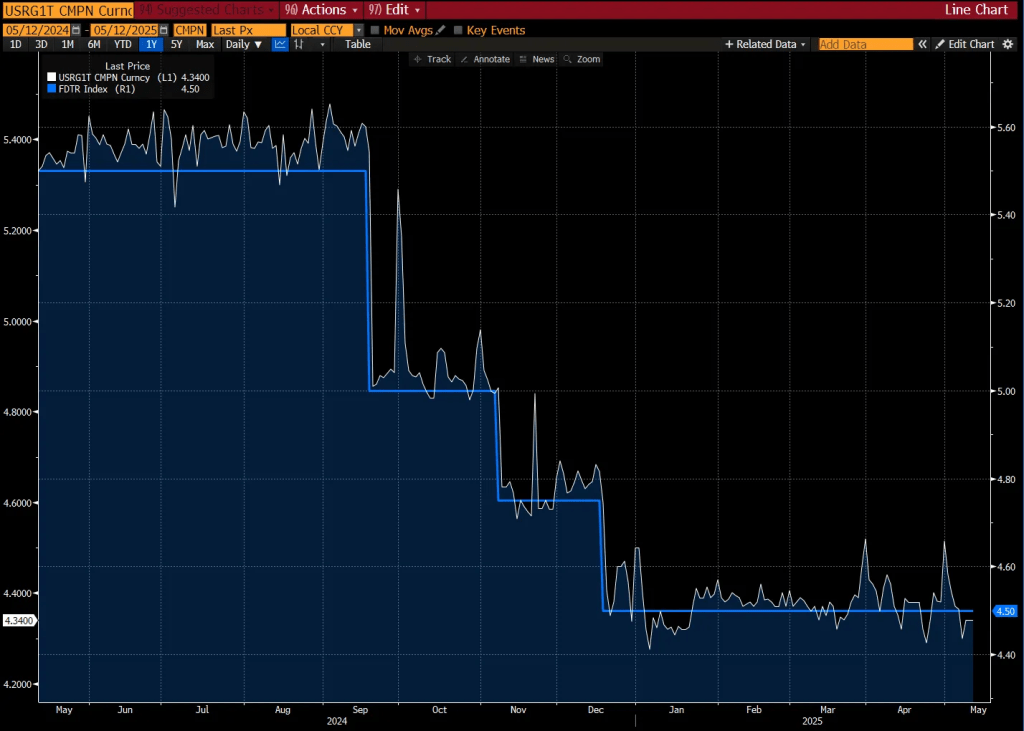
By contrast, repo transactions are secured by collateral, most often in the form of US Treasuries. This collateralisation significantly reduces counterparty risk, which is why repo rates tend to price below unsecured benchmarks in times of stability.
While the federal funds target range is set by the Federal Reserve, the effective fed funds rate (EFFR) floats within that corridor and reflects actual transactions. The secured GC repo rate (USRG1T) tracks differently, anchored by the value of collateral and broader liquidity conditions in the Treasury market.
In short, repo markets reflect the cost of secured overnight liquidity. Fed funds reflect unsecured interbank trust. The gap between the two becomes especially telling during stress events or regulatory year-end effects.
SOFR
The Secured Overnight Financing Rate (SOFR) is conceptually closer to the GC repo rate. Both are benchmarks for secured overnight borrowing using Treasury collateral. However, there are key differences.
SOFR is calculated and published by the New York Fed once daily, based on a volume-weighted median of overnight repo transactions across a broad segment of the market, including bilateral and tri-party trades. It is designed as a comprehensive, stable benchmark to replace LIBOR.

The GC repo rate (USRG1T), on the other hand, reflects live, tradeable quotes in the dealer market—updated throughout the day and directly observable on Bloomberg terminals. It represents where cash actually clears in the interdealer tri-party market at any given time.
While SOFR and GC repo typically trade in close alignment, divergences can appear during quarter-ends or episodes of funding strain, where GC repo may spike while SOFR remains more stable due to its averaging methodology.
Think of SOFR as a backwards-looking composite, while GC repo prints live at the point of execution. Both reflect secured funding, but one is a benchmark; the other is a market rate.
Bilateral vs Tri-party Repo
The structure of a repo transaction (whether bilateral or tri-party) shapes everything from margining conventions to the interest rate paid.
Bilateral repo involves a direct agreement between two counterparties. Terms are negotiated on a deal-by-deal basis, allowing for greater flexibility in collateral type, haircut, and maturity. However, this flexibility comes with increased operational and counterparty risk, as each trade must be separately managed and settled.
Tri-party repo, by contrast, introduces a third-party clearing agent (typically BNY) to manage collateral selection, valuation, margining, and settlement. This model dominates the general collateral (GC) space due to its efficiency, scale, and automation.
In normal conditions, tri-party repo typically clears at tighter spreads (lower funding costs) than bilateral repo. This is driven by operational streamlining, deeper liquidity, and the netting benefits of large dealer platforms.
However, when specific collateral is needed, such as a particular off-the-run Treasury, bilateral trades become dominant. These so-called “specials” carry a lower implied yield for the lender and a higher funding cost for the borrower, as participants compete to borrow the same issue.
Put simply, general collateral lives in tri-party. Special collateral lives in bilateral. And the cost of funding adjusts accordingly.
Collateral in Repo Markets
If there’s one concept that sits at the heart of repo pricing, it’s collateral.
In theory, repos are about funding. In practice, they’re about collateral—its quality, availability, and desirability. The type of collateral pledged in a repo not only determines the interest rate but also shapes how trades clear, how risk is managed, and where stress emerges.
Typical Collateral
The repo market runs on a collateral hierarchy.
At the top are government bonds: US Treasuries, German Bunds, and UK Gilts. These are the most liquid and lowest-risk assets available in global markets. If a borrower defaults, these securities can be sold with minimal friction, which is why they attract the tightest repo spreads and lowest haircuts. They’re the closest thing to money without being money.
Next are agency securities, issued by US government-sponsored enterprises (GSEs) like Fannie Mae and Freddie Mac. These instruments carry either implicit or explicit government backing, making them broadly acceptable as repo collateral, but with slightly wider spreads and higher haircuts than Treasuries. Their liquidity profile is strong, but not bulletproof.
Further down the stack are investment-grade corporate bonds. These can be repo’d, but usage is less common and much more selective. The credit risk is idiosyncratic, and the market liquidity is thinner. As a result, haircuts are wider, spreads are higher, and each trade tends to be bespoke.
Collateral eligibility and pricing are always a function of risk appetite, regulation, and market conditions, but this broad hierarchy remains intact across jurisdictions.

The Scarcity Factor
Not all collateral is equal. But sometimes, even among equals, one bond becomes more valuable than the rest.
This is where the concept of a “special” comes in. In repo terms, a bond goes “on special” when demand to borrow it overwhelms supply. This drives its repo rate below the GC rate, sometimes dramatically so.
A negative repo rate means the lender is effectively paying to lend the bond. Why would they do that? Because the borrower needs it badly enough to make it worthwhile, typically to cover a short, meet delivery obligations, or hedge a derivative.
The most common driver of specials is short positioning. If a hedge fund is short the 10-year Treasury future, for example, it may need to borrow the corresponding on-the-run 10-year note to deliver into settlement. When many funds crowd into the same trade, the pressure on that specific bond builds, and the repo rate collapses.
Example: March 2021. The most recently issued 10-year US Treasury note went sharply negative in repo. Hedge funds, betting on higher yields and higher inflation, had built significant short positions. To maintain those positions, they needed to borrow bonds. But quarter-end balance sheet constraints limited supply. Dealers, unwilling to lend freely, withheld inventory, tightening the squeeze. At the extreme, repo lenders were paying borrowers just to get access to the bond.
This dynamic made it more expensive to run short positions and signalled tension in the plumbing, despite no broader credit stress. The specialness eased as market positioning normalised, but it underscored how critical collateral dynamics are to funding stability.

Collateral Terms
When a repo trade is booked, the lender doesn’t fund 100% of the collateral’s face value. Instead, they apply a haircut—a discount that protects against market moves and counterparty default.
The size of the haircut depends on collateral quality:
– US Treasuries (on-the-run): ~1.00-2.00%
– Agency MBS or GSE debt: ~1.00%–5.00%
– Investment-grade corporates: 3.00% and aboveHaircuts are a crucial safeguard. If the borrower defaults, the lender needs a buffer to sell the collateral without incurring a loss. In times of market stress, haircuts can be raised, sometimes abruptly, forcing deleveraging and amplifying funding pressure.
Haircuts are also where repo intersects with regulation. Under Basel III, secured funding with high-quality collateral and low haircuts is treated favourably for capital and liquidity metrics. This has led to increased reliance on repo as a preferred form of bank funding.

Why Repo Markets Matter
Because retail investors don’t interact with the repo market, its importance is often overlooked. But make no mistake, this is the engine room of modern finance. Repo markets matter for three fundamental reasons:
Core Source of Short-Term Funding
Banks, dealers, and hedge funds depend on repo to fund bond inventories, deploy leverage, and manage day-to-day liquidity. For dealers, especially, repo enables financing of government securities positions without having to unwind them, preserving market liquidity and facilitating client flows.
It also allows institutions to optimise balance sheet usage. Under Basel III and similar regulatory frameworks, secured funding is treated more favourably than unsecured borrowing. Repo markets, particularly those backed by high-quality collateral, offer balance sheet-efficient access to liquidity.
In normal conditions, repo is deep, liquid, and relatively low-risk. But its role becomes even more vital during periods of stress, when unsecured markets freeze, repo often remains the last functioning funding route.
Anchor for Monetary Policy
Repo markets are one of the primary levers through which central banks transmit monetary policy.
Take the Fed’s policy corridor as an example: by conducting repo operations (injecting liquidity) or reverse repo operations (withdrawing liquidity), the Fed nudges overnight market rates toward its target range.
– In a liquidity squeeze, repos provide reserves, lowering short-term rates.
– In a glut, reverse repos soak up excess cash, lifting rates back toward target.Repo operations also serve as signalling tools. Adjustments in size, frequency, eligible collateral, or counterparty access can all communicate policy direction. And because repo rates influence a wide swath of short-term funding costs—from bank liabilities to commercial paper—they indirectly shape borrowing costs across the economy.
In effect, the repo rate doesn’t just track monetary policy. It helps enforce it.
Leading Indicator of Financial Stress
The repo market reflects the real-time price of cash and collateral. When tensions build—whether due to liquidity mismatches, balance sheet constraints, or collateral hoarding—repo rates move first.
– A sudden spike in GC repo can signal systemic funding stress.
– A deeply negative special rate might indicate positioning imbalances or collateral scarcity.
– A persistent divergence from central bank target rates suggests a breakdown in transmission.Repo dislocations are often the canary in the coal mine. In 2008, the withdrawal of repo funding preceded institutional failures. In September 2019, the Fed was forced to re-enter the market as GC rates spiked above 8%. In March 2020, even Treasury repo markets buckled under the strain.
When the repo market breaks, it’s not just a footnote, but often the first crack in the dam.
Notable Stress Events
While the repo market typically operates quietly in the background, it has been a central point of stress in several major financial episodes. Below are three examples where dislocations in repo funding revealed broader fragilities across markets.
September 2019
In September 2019, U.S. overnight repo rates experienced a sudden and sharp spike, from around 2% to over 6% in a single day. Some trades even cleared at higher levels intraday.

The dislocation was driven by a temporary shortfall in cash. A combination of corporate tax payments and large Treasury settlement flows drained reserves from the banking system. At the same time, balance sheet constraints prevented large institutions from stepping in to lend.
The Federal Reserve responded by launching a series of repo operations to restore liquidity. These injections calmed the market quickly, but the episode highlighted how little excess capacity existed in the post-crisis funding system. It also prompted a broader rethink of how reserve levels interact with repo market functioning.
Global Financial Crisis (2008–2009)
During the 2008 financial crisis, stresses in the repo market emerged well before the collapse of major institutions. As concerns about credit risk escalated, repo counterparties began demanding higher haircuts, particularly for lower-quality collateral such as mortgage-backed securities, or refusing to roll repo lines altogether.
Institutions like Bear Stearns and Lehman Brothers, which relied heavily on short-term repo funding to finance large securities inventories, found themselves unable to secure liquidity. The pullback in repo availability contributed to their rapid deterioration.
This episode underscored the repo market’s role as a transmission channel for systemic risk, especially when counterparties become unwilling to accept anything but the highest quality collateral.
March 2020
At the onset of the COVID-19 crisis, the US Treasury market—typically the most liquid in the world—experienced significant stress as investors rushed to raise cash. As Treasury securities were sold en masse, repo markets also came under pressure.
Market participants faced difficulty sourcing funding for even the most liquid collateral. Dislocations appeared in both general collateral and specials markets, and some firms were forced to unwind positions due to tighter margin conditions.
In response, the Federal Reserve reintroduced large-scale repo operations alongside a broader suite of liquidity measures. These efforts helped stabilise short-term funding markets and restore confidence in Treasury market functioning.

Key Participants in Repo Markets
The repo market brings together a wide range of participants, each with distinct roles depending on their funding needs, investment objectives, and access to infrastructure. While banks and non-bank financial institutions dominate in terms of daily activity, central banks play an outsized role in shaping the structure and pricing of the market.
– Banks and broker-dealers are the primary liquidity providers in the repo market. Dealers use repos to fund inventories of government securities, manage balance sheet liquidity, and intermediate between cash providers and borrowers. These desks often sit within broader short-term interest rate trading (STIRT) teams or as part of financing units under fixed income, currencies, and commodities (FICC) divisions.
In tri-party and bilateral repo markets, dealers act as both counterparties and facilitators. On the borrowing side, they finance their own positions or source collateral for client trades. On the lending side, they provide access to repo for institutional cash investors, often matching flows across books to run “matched repo” operations that generate spread income.
– Hedge funds are also active repo borrowers. They use repos primarily to obtain leverage for directional or relative value strategies, particularly in government bond markets. For example, hedge funds executing basis or curve trades often rely on repo financing to take on large bond positions while minimising capital deployment.
Because repo transactions are collateralised, they typically offer hedge funds a cheaper form of leverage than unsecured borrowing or derivatives margin funding. This makes repo a central component in leveraged fixed-income strategies.
– Money market funds (MMFs) are among the largest repo lenders. These funds seek secure, short-term investments, and repos meet both their liquidity and credit quality requirements.
MMFs routinely provide cash to dealers in the tri-party market, receiving high-quality collateral in exchange. This function supports market liquidity and provides a key funding channel for primary dealers.
– Central banks participate in repo markets to implement monetary policy, not to meet funding needs. Through repo and reverse repo operations, central banks manage short-term interest rates and influence liquidity conditions.
Facilities like the Federal Reserve’s Overnight Reverse Repo Program (ON RRP) allow eligible counterparties—primarily MMFs, government-sponsored enterprises (GSEs), and banks—to invest surplus cash securely at the administered rate, which acts as a floor for overnight rates. Conversely, standing repo facilities (SRF) allow banks and dealers to obtain liquidity against government collateral, acting as a ceiling on funding costs.
These operations help central banks steer money market rates within their policy corridors and ensure orderly market functioning during periods of stress.
– Large corporates with substantial cash holdings may access repo markets indirectly, typically via banks or investment in money market funds. While they are not major drivers of daily activity, corporate treasurers occasionally use repo to enhance returns on idle cash while preserving overnight liquidity.
This type of participation is more opportunistic and is generally limited to the most creditworthy counterparties and highly standardised repo structures.
Speculation in Repo Markets
While the repo market is primarily transactional—serving the day-to-day funding and liquidity needs of banks, funds, and dealers—there are instances where it facilitates sophisticated trading strategies. These cases are relatively niche and often involve exploiting dislocations in funding rates or market structure.
Specials Trading
When a specific bond becomes scarce in the market, often due to heavy short interest or its status as a benchmark issue, it may trade at a “special” repo rate, meaning it clears well below the GC rate. This dynamic creates opportunities for repo desks and traders with access to that security.
Example: A trader anticipates that a newly auctioned Treasury note will become “special” due to elevated short demand or benchmark index inclusion. They acquire the bond in the cash market and simultaneously lend it out via a repo agreement. If demand rises and the repo rate on that specific bond falls, the trader benefits from the spread between GC funding and the now-lower special rate, effectively earning a premium for supplying the scarce collateral.
This approach does not involve directional risk on rates or prices. It is purely an attempt to monetise the collateral premium embedded in specials pricing.
Basis Trading
Repo markets also play a supporting role in basis trades, where traders arbitrage the price difference between a cash bond and its corresponding futures contract. This typically involves buying the underlying bond and selling the futures contract short.
To execute the bond leg, traders need to fund the purchase, often done through repo. The repo provides efficient, secured financing and reduces the cost of carry, which is a key component in determining the profitability of the trade.
The repo rate directly impacts the implied basis and can influence trade entry levels. While the strategy itself is not about the repo market per se, successful execution often depends on reliable access to repo funding at known rates.
Conclusion
Repo markets form the foundation of modern market liquidity. They enable institutions to finance positions, manage balance sheets, and transmit monetary policy efficiently. When functioning normally, the system remains largely invisible, facilitating trillions in daily flows with little disruption. But when cracks appear, the effects are felt quickly and broadly, exposing just how critical this market really is.
Whether through stress events, dislocations in collateral, or subtle shifts in repo rate dynamics, the repo market offers a real-time lens into the financial system’s liquidity conditions. For those involved in trading, risk management, or macroeconomic strategy, understanding repo is not optional—it’s foundational.
-
First Places In America to Go During The Apocalypse

Where is the best place to live in the US during and after the apocalypse?
While trying to figure out the answer, I’ve looked inside of prepping blogs to find a consensus for the criteria known to be essential for any place to survive in during the wake of such an event. That is, any event that can potentially destabilize society to the point of no return to normal any time soon. It will be important for you to have whatever supplies you need ready ahead of time before you travel to your destination. So start getting ready.
Attention: The US is Facing The BIGGEST Threat Of The Century!
So pay chose attention because this video will change your life forever for the good!

That being said, the criteria for the best area to survive in can be broken into three categories:
1. Human factors, 2. Natural factors, and 3. Economic factors
Human Factors:
- Low population density (40 people per sq. mile or less)
- Distance to major/minor cities (50+ miles away)
- Distance to military bases (50+ miles away)
- Distance to nuclear power plants (100+ miles away)
- Distance to interstate highways
- Low poverty rate
- Low violent crime rate
Natural Factors:
- Easy access to fresh water
- Abundance of wild game
- Low natural disaster risk
- Dense forest cover
- Adequate soil textures
- Adequate rainfall
- Low drought risk
Economic Factors:
- Higher job growth
- High abundance of non-renewable natural resources available for extraction (coal, oil, natural gas, metals and minerals, lumber, etc.
- Higher educated citizens
Now that we know what to look for, I’ll narrow down a map of the U.S. by one category at a time using other maps I have compiled. The “Orange” counties are those disqualified, which will then become and remain dark gray when the next factor is applied. For simplicity reasons, we’ll focus on the continental U.S. But before starting I will say that the state of Hawaii is probably a fairly safe place to be considering its isolation, moderate climate, and the Polynesians have managed living there by themselves for millennia.
The first most important thing is population density or lack of it. This is common sense since you don’t wanna be around massive numbers of unprepared people when SHTF. Ideally anywhere under 40 people per square mile is best. The blue shaded counties are where to go.
Next is proximity to major and minor cities. A distance of at least 50 miles away is best.
Attention: The US is Facing The BIGGEST Threat Of The Century
War Is Just Around The Corner
You’re about to lose everything you’ve worked so hard for your entire life and it’s even not going to be your fault! – your house, your car, your credit card will be worthless…
So pay chose attention because this video will change your life forever for the good!
Stay out of counties that contain Interstate highways as the most desperate people will use them traveling in search of resources.
We are now isolated from any major threats from large populations and groups of people. But, there is still the possibility of martial law being put into effect. So it’s best to keep our distance from military bases.
And nuclear reactors, in case of meltdowns occuring during grid failures.
The last places to “watch out” from are areas with already high poverty and crime rates. When they no longer can depend on Uncle Sam for their existence, it will get ugly. Avoiding these areas may potentially eliminate our options in the Southern states but I would like to keep them open for now for climate reasons. We’ll use a 25% poverty rate limit for the south and 20% everywhere else. (The south includes WV, southern MO, and eastern half of OK and TX)
I won’t make any exception for violent crime rates. Those will be applied evenly across the board. Lighter counties are safer.
We are now looking at a map of what are probably the “safest” counties in the United States. But now that the potential for human threat is minimized, we must figure out where is the best place to settle down based on what resources there will be available. The most important thing is easy access to fresh water always within close proximity.
Next in my opinion is wild game abundance, which you need for food during winters and harsh growing seasons, and for protein in general.
EXPOSED: The most shocking VIDEO can be found below…
Food Confiscation: How to protect your food stores and production from government confiscation!
So pay chose attention because this video will change your life forever for the good!

You wanna be safe from natural disasters such as tornadoes and hurricanes. Given recent events I think it’s safe to eliminate the lone county remaining in Florida.
This is a potentially controversial assumption, but the amount of forest cover over an area may be a good indicator for how much local resources there will be for us to utilize for our way of life. Everything from ecosystems that support wild game and edible plants to having plentiful amounts of lumber if needed (especially in the winter). Forests are just as useful as farmland. At least 25% forest cover is beneficial.
We need to grow food. This requires a number of things. Most important of them are good soil textures and rainfall. Drought-prone areas must be avoided. Warm climate isn’t necessary and depending on your environment you can expect to have different lengths of growing seasons. I will subtract all these variables all at once from the next map.
The best soil textures are ones with a close to even mixture of sand, silt, and clay, together known as loam. This mixture holds nutrients best. Anywhere on the scale from sandy loam to clay loam will work for most vegetables, fruits, wheat, nuts, and other produce.
This map is just for reference. Knowing your plant hardiness zones is key to scheduling your growing seasons with which types of produce you can expect to grow based on the average climate of your zone. Generally speaking, your options get wider the more south you go with more varieties of produce able to grow in warmer climates. There is also the potential for yielding not just one but two or more crop yields in a year with longer growing seasons in warm climates.
Rain should be 20 inches or more a year. So anything from dark green (40″+) all the way to light orange (20″) is good. Of course avoid regions that most often experience drought.
With all agricultural factors considered, this is what’s left on the map.
A variety of choices are left spanning different parts of the US. These are places that have everything we “need” to survive. You can perhaps at this point choose to pick whichever is closest to where you currently live. It is arguable that depending on the nature of the apocalyptic event the local economy may or may not make a difference on your quality of life. But let’s see where factoring it leads us.
A strong local economy in a rural area can indicate the presence of a stable natural resource based economy be it agriculture, mining, logging, etc. These resources can potentially be very important for the economic growth of the area and in the rebuilding of other economies through the exporting of these resources. It’s best to pick the areas with current stable job growth with high natural resource reserves.
Areas with 2.5%+ job growth with heavy natural resource reserves and industries:
The culture of where you live can be rather important. To borrow from one commenter, “You need a community. No matter how much of a bad ass you are you have to sleep sometime. It is great to consider things like natural resources and growing conditions, but you also need people with the knowledge to put those attributes to work for the community.” Areas with a high concentration of college graduates can indicate the presence of a college or of other skilled service providers which can potentially contribute to the needs of a community in areas such as healthcare, engineering, agriculture, etc. Areas with a population of at least 20% college graduates would be good.
We have 5 finalists:
Archuleta Co., CO
Hinsdale Co., CO
San Juan Co., CO
Hubbard Co., MN
Highland Co., VA
At this point, let’s eliminate by comparing.
For extra isolation, eliminate Highland County, VA.
For better access to water, rain, and wild game, eliminate Archuleta County, CO.
For a place with less poverty and crime, stay out of San Juan County, CO.
At this point the decision for me comes down to the potential for future economic growth and a population that is more wilderness survival conscious, which leaves us our winner….
Hinsdale County, Colorado
I welcome any suggestions from you for additions, corrections, or edits to help accurately improve the results I have found and will perhaps make updates to everything based on them in the future.
-
34% of Americans Believe Civil War Is “Likely”
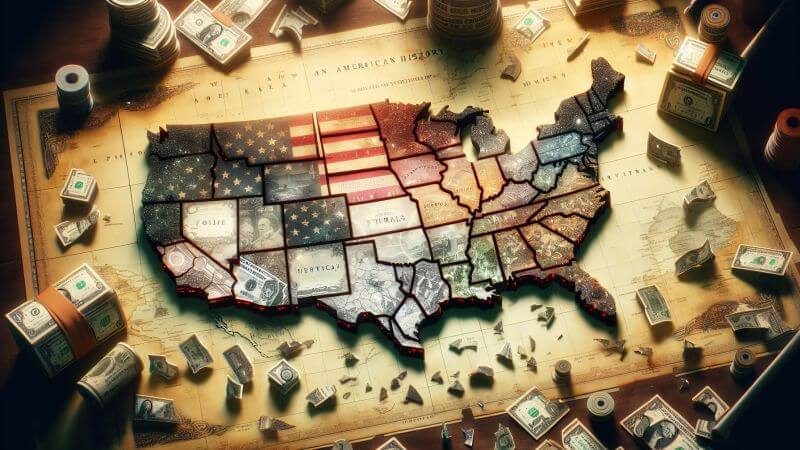
America is more polarized than ever. According to a recent poll 34% of Americans believe civil war is “likely” and 13% believe it is “very likely.” Luxury bunker sales are up with customers citing concerns of “civil unrest”. (DiMella, 2024) Could we be headed toward civil war? If so, how can we prepare for it?
When Societies Fracture
From studying and interviewing survivors of civil war, coups and unrest from different countries, all shared one thing in common. When societies fracture, they do so along political, geopolitical, religious, ethnic, tribal, racial or economic lines. People group up along these lines and those who are not in control (usually, but not always the minority), suffer terribly at the hands of those in control (usually, but not always the majority.) People group up and most of them avoid going outside. If you are in an area controlled by the opposing group, I strongly suggest getting to someplace that is controlled by your people before the checkpoints go up.
Those who fail to get to an area controlled by their people before checkpoints go up typically suffer. Their options for survival are often not good. If they want to survive, they often have to find someone who is not an enemy of those in power who is willing to hide them, or E&E to friendly lines, and the latter is extremely difficult to do in occupied cities. Those who do get out usually do so on foot, through rough terrain, with only what they can carry.
Ivory Coast
Some good friends of ours emigrated from Ivory Coast. Both of them came from well-to-do land owning, families that own farming and livestock concerns. Ivory Coast has experienced two civil wars, the first began in 2002 as the result of a military rebellion and ended in 2007. The second Ivorian Civil War began in 2010, ended in 2011 and was fought over election results. Thousand died in each war. 750K civilians were displaced by the fighting. (Wikipedia, 2024)
The husband told me that during the war, around 30 people took shelter in his home. That is a lot of mouths feed! Imagine cramming 30 people in your home.
The wife told me that she “got fat” because she was unable to go outside. Her home was also packed with people, but they had plenty of food because they own a mango large plantation that grows tons of fruits and vegetables all year round and her father ranches hundreds of head of cattle, as well as goats, sheep, chickens, and has other livestock.
The farmers had to be protected, or the people would starve, so they did what they could to help others. Unfortunately, very few American families own farms anymore, even hobby farms.
Civil War I vs Civil War II
Our last civil war killed 2.5 percent of the population of our nation or around 750,000 people. If the same percentage of people die in our next civil war, 7 million Americans will lose our lives. (Staff, 2016) That would be like losing the entire state of Arizona. However, it is possible that many more could die due to urbanization, globalization, the number of weapons in the hands of the people, the efficacy of modern weapons, and the next level zeal with which the hardcore radical left hates conservatives.
During my lifetime, we have gone from being able to sit down at the same table and share meal to liberals disowning family members they suspect might be conservative, openly calling for the death of conservative politicians, chanting “Death to America” (by Americans, in America!), and now the assassination attempt on former President Trump. (Sarah Rahal, 2024) It could be argued that the first shots have already been fired because the assassination attempt was clearly inspired by the incendiary rhetoric of extremists within the political left.
On some level, these events and this behavior are just incomprehensible to me because it’s so far outside the accepted norms of polite society. On another level, it’s not surprising at all to students of history, nature, and survival. We see it over and over. Cruelty, violence, and hatred resulting from incendiary rhetoric and propaganda. It must not be so hard to use these tools to get a certain type of people whipped up into a frenzy because it happens over and over.
How Does One Prepare for a Civil War?
We cannot know, of course, with any certainty, if or when Civil War II will happen. Mankind has a dismal track record when it comes to attempting to predict the future. Therefore, I’ll leave that to the realm of soothsayers, crystal balls, economics and other pseudoscience.
Sometimes Survival is About What You Don’t Do
So, how do we prepare if we can’t predict the future? The answer is to attain a state of general readiness and antifragility. Get ready for volatility and disruption by figuring our where you are fragile, work to become more resilient in those areas, and then don’t do anything stupid. It’s good to do the work and get prepared, but survival isn’t only about what you do. It’s also what you don’t do.
In a civil war, some of us will have to decide whether join up and fight for our side. Volunteering to go fight in a war may not increase your chances of survival, but sometimes the greater good trumps individual safety.
Another decision we may have to make is whether to shelter in place or bugout. One will improve your chances of survival and the other will diminish it.
Be Ready to Shelter in Place or Bug Out as the Situation Demands
The two main survival strategies are the same for a Civil War as they are for nearly everything else. Either you shelter in place or you bugout. Either one could be the only way to survive a particular threat, so the survivalist must be prepared to do both!
How do you know which to do? When society fractures, you will find yourself in the majority or the minority. Either way, you need to get to someplace your people are in control of. We can’t know precisely what we will be facing until it happens, but we know the general lines upon which societies break up and realign themselves, which I identified at the beginning of the article.
You may be able to see it coming or you may be living someplace where you are already a minority on virtually all counts. You are already in the political, economic, racial, ethic, and religious minority. Or you live someplace and it’s just obvious that the place will go to go sideways the moment the SHTF. If any of these are the case, I suggest relocating now. However difficult it is for you to move now; it will probably be easier than moving post-SHTF.
25 years ago, I lived in Arizona in the Phoenix-Metro area. There was no place for the populace of the Valley of the Sun to evacuate to because there was no place with the infrastructure to support millions of people that could be reached on one tank of gas. Emergency planners understood this, so they didn’t bother working on an evacuation plan. There simply wasn’t one and there may never be one.
Phoenix is low on water and has way more people than it can support. It’s basically an island surrounded by desert. Trying to get out would be like a scene from Mad Max. Staying could be worse. Either way, people would have to compete with each other for water and food in the Mecca of competitive shooting. It would be a bloodbath.
Understanding how easily things could all fall apart, I moved to a smaller community in dairy country in the Intermountain West that should be more stable and self-sufficient. Here, I am no longer in the political or religious minority. It should be more somewhat more stable in volatile times as the valley exports food, there is plenty of water (an anomaly in the West, water flows into Cache Valley from three sides), we are not downwind of any nuclear targets or reactors, and my family is part of the institution. In short, I relocated to a good homesteading location in the hope that it is less likely that I will have to bugout, but I have plans for that just in case.
Bugout
Many civilians are displaced during civil war. Entire towns empty ahead of or during fighting. So, be ready to move.
Being prepared to bugout requires more than a bugout bag.
One of the most important factors in a bugout is to bugout before everyone else does. To achieve that obviously takes a certain amount of preparation, planning, and practice. It also requires having predefined triggers. “If such and such happens, then we pack the truck, grab our gear, and leave.”
Another important factor is having someplace to go. “I’m grabbing my pack and my rifle and heading to the mountains.” Is not a bugout plan. You need a specific destination, and during a war, you may not know which direction you will be able to flee, so you should have multiple bugout destinations and routes in all directions, like the Apache had. They resisted the US Army for over 90 years, which makes their guerrilla campaign a good case study, in my opinion.
As a destination, a lifeboat property or retreat is ideal, but that’s not what most people do. That’s what the wealthy do, but of the cases I have studied, I have found that most people cannot afford that. Instead, they go and stay with family or friends. Those who are unable to do this, often become displaced persons, refugees. If possible, this should be avoided.
You might be more welcome when you arrive at your family member’s house if you show up towing a trailer full of food and medicine. It might also go more smoothly if the two of you had a mutual assistance agreement in place before the disruption.
Shelter in Place
I have read accounts of Ukrainians who left the relative safety of their homes to charge a cellphone, only to never return. The point of sheltering in place during a war is to not give anyone any reason to come into your home and hope that they do not. To do that you’ll need to stockpile supplies so you can stay inside.
Caching
My Viking ancestors prepared for battle by hiding their wealth, burying their hacksilver in the ground. Today people assume they did this as a practical consideration so their enemy wouldn’t capture their wealth if they battle didn’t go their way. They could go dig it up afterwards if they escaped or were ransomed.
After studying their religious beliefs and treasure hoards buried in Gotland, I think there is more to it than that. I think they also buried it to take it with them to the next life. The did the same thing on their farms. The father would bury a hoard, but the son wouldn’t dig it up, instead he buried his own, and this sometimes carried on for generations.
I agree that caching wealth and supplies in case of capture is a good idea.
You can also access the latest news at this address: www.whatfinger.com
-
The International Agenda works to establish a world-wide totalitarian dictatorship imposing “Global Tyranny”.

It is important to understand that the troubles, degeneration, depravity, hate and racism introduced into our country over the last 60 years have not happened accidentally, but have been the result of a carefully co-ordinated campaign. The Counter Revolution refers to this campaign as the “International Agenda”.
The International Agenda works to establish a world-wide totalitarian dictatorship imposing “Global Tyranny”.
The master-mind and driving force behind the International Agenda is a predatory and parasitic international grouping that has infested humanity for very many years. The Counter Revolution refers to this international grouping as the “International Hierarchy”.
The Global Tyranny to be imposed by the International Agenda results in the following:
* The destruction of all nation states and all democracy.
* The destruction of all present civilisation (particularly Western civilisation) with the annihilation of all existing social and economic conditions.
* The establishment of international, centralised, digital control systems run by AI algorithms (the “Infrastructure of Slavery”) which minutely monitor and control the following, on behalf of the International Hierarchy: all economies in the world; all global finance, all global energy, all global resources and all global property; every human being in the world, with total control of all their activities, emotions and thoughts.
The International Agenda is a long-standing process and has taken different forms over several centuries. It started in 1776 with the Rothschild-inspired Bavarian Illuminati, then continued in the form of Communism and Socialism from the 1840s, the Frankfurt School in the 1920s to 1970s, and now in the form of Global Tyranny with the Great Reset, Sustainability and the UN Emergency Platform with One Health.
The International Agenda is the direct opposite and rejection of all humanity’s religious, spiritual and moral teachings and in particular the Universal Spiritual Laws. It is a phenomenon of astonishing wickedness. It has torn down the structures of decency and humanity which were the crowning glory of British civilisation, and that had been painfully built up over centuries.
It is a process of deliberate and organised evil which is unprecedented in the known history of humanity. It is creating a hell on earth to destroy all present civilisation. None of the deliberate degeneration and destruction caused by the International Agenda would have been possible without the active support of the toxic British Ruling Elite, who are completely controlled by the International Hierarchy.The International Agenda is currently led in Britain by Keir Starmer who is a deeply dedicated Trilateral Commission man. He is directly controlled by the International Hierarchy and he is very dangerous to the people of this country.
The International Agenda is implemented in Britain in the following way:
* By destroying British civilisation and the British nation.
* By making white people a minority in their own homeland.
* By transferring control of the country to Muslims.
* By creating racial division and racial conflict in British society, where there had been none before.
* By decades of White Replacement. With overwhelming and destructive mass immigration of non-assimilable Muslims (whose loyalty will only ever be to Islam and who will never wish to be British) thus creating a terrible and fatal division in the country with the specific intention of destroying British cultural identity, social cohesion and national unity, as planned by Count Richard Coudenhove-Kalergi.
With Elite encouragement of the “Islamic” Culture of Conquest, Non-White Privilege, Hate Crimes affecting only white people, and enforced “multiculturalism”, “diversity” (ie the exclusion of white people) and racial quotas. With a malicious and outrageously unfair definition of “racism” whereby white people are penalised as “racists” and guilty of “hate” if they make any comment about any characteristic of non-whites, or the behaviour, culture, religion, clothing, language, practices or way of life of non-whites (even if not critical).
With removal of white people from employment, education, training, the media and advertising on grounds of race and replacing them with non-whites. With the creation of racial conflict and Anti-White Hate. With the intended extinction of the white race under the Kalergi Plan by Elite promotion of miscegenation of whites with blacks. With officially encouraging, organising and funding a deliberate flood of huge numbers of illegal military-age male African and Muslim mercenaries into the country—these mercenaries, who even now greatly outnumber the British Army, are clearly intended to be used in due course by the Elite to crush any opposition by white British people with all necessary brutality and savagery (as the Elite know that they could not rely on white soldiers or white policemen being willing to fire on their own race and countrymen).
* By causing self-hate and self-doubt in white people (“Malicious Criticism”); all their sense of identity and belonging was to be completely destroyed; they were to be made to believe that their existing and traditional values of what is right and what is wrong were out of date, unimportant, unacceptable, and even wicked; nothing about white people was ever to be admired, appreciated, built up or praised—all was to be criticised and destroyed; everything white people valued and treasured was to be given a label of accusation; everything decent, honourable and true in white societies was to be made to appear dirty and shameful, and was degraded, destroyed and discredited; ordinary, decent white people were to be made ashamed of themselves, their way of life, their culture, their heritage, their history, their society and their country which, they were told, were morally corrupt and rotten with “hate”, “racism”, “white privilege”, “white supremacism” and “xenophobia”. This attack on white people was devised and organised by the Frankfurt School on behalf of the International Hierarchy.
* By bribery and blackmail. Colossal funds from billionaires, think tanks, Foundations and other International Hierarchy institutions and organisations form a vast system of rewards, incentives, “philanthropy”, employment, lucrative deals, advantages, payoffs, bribery, “funding”, threats, coercion, intimidation, intensive lobbying and campaign finance which are used to entrap many people in the British Ruling Elite as individual career advancement so often depends on compliance with the International Agenda. Brownstoning blackmail operations are also used.
* By controlling all sources of information and opinion.
* By creating fear of fake world crises, such as non-existent man-made climate change.
* By causing intense fear of contagious diseases, and injecting the population with a poisonous “vaccine” which included (without the knowledge or consent of the people) self-assembling nanotechnology capable of transmitting personal data and receiving potentially mind-manipulating impulses via 5G.
* By imposing international centralised digital control systems run by AI algorithms which minutely monitor and control all the activities, emotions and thoughts of every human being (the “Infrastructure of Slavery”).
* By causing economic collapse and collapse of the financial system.
* By causing world-wide shortages of food with the destruction of food production and sabotage of food installations, making all people dependent on lab-grown fake “meat” and material made of insects supplied by International Hierarchy-controlled corporate monopolies.
* By causing disruption and reduction of energy supplies.
* By replacing spiritual awareness and traditional uplifting values of integrity, honesty, decency and selfless kindness to others—with the promotion and glorification of personal self-aggrandisement, domination of others, and the selfish manipulation and exploitation of others, and with the promotion of the “Destructive Values” (aka political correctness or woke) which are poisonous political values and concepts designed to destroy society.
* By requiring recruitment, selection and promotion to be on the basis of Non-White Privilege, Female Privilege, Homosexual Privilege and Transgender Privilege—and not on merit or ability.
* By destroying everything that unites white people including nationhood, religion and all existing structures, allegiances, group links, identities and loyalties in white society (cultural, social, political, spiritual, and now even relating to gender) so all the cohesion and glue that bound white society together was melted, and white people were made rudderless and disoriented.
* By destroying the white family and dividing white women from white men with institutionalised Female Privilege and Female Supremacy.
* By creating filth, degeneracy and depravity with official promotion of rampant homosexuality, sexual perversion, and the wickedness of gender confusion and transgenderism.
* By the deliberate lies, deceit and co-ordinated propaganda of the corrupt and controlled establishment media.
* By the tragic corruption, politicising and ruination of the education system, which was made into a mere brainwashing and indoctrination process of misinformation and political propaganda, specifically designed to prevent independence of mind, initiative and self-reliance in white children and to actively stunt their intellectual development, knowledge and skills—so the white race is progressively degenerated and unable to compete with non-white countries.
* By prohibiting traditional and familiar words and modes of expression, and insisting on the use of other politicised words (“Control by Language”).
* By an official terror campaign against free speech (including de-banking).
* By politicising and militarising the police.
* By breaking down the Rule of Law with a politicised judiciary and unfair two-tier anti- white administration of justice.
* By creating social decay, confusion, degeneracy, demoralisation, weakening, division, conflict, financial insecurity, resentment, fear and hate in countless different ways to divide people and set them against each other.
* By destroying democracy and preventing any democratic opposition to the fraud and cheat of a Uniparty.
* By destruction of the democratic nation state enabling rule by unrepresentative and undemocratic international institutions, and by “International Law”.
* By causing national suicide by fraudulent Net Zero Carbon.
* By Climate Engineering and airborne spread of toxic materials and nanotechnologies.
* By deliberately de-industrialising Britain under internationally controlled Monopoly Capitalism.
* By the deliberate destruction of the British armed services.
* By intentionally provoking international and military confrontation, even nuclear war. The Left-Right paradigm is a sham. The International Agenda’s policies for advancing the International Agenda and the dictatorship are the so-called “Left-wing” policies. They are coordinated and methodical policies of breakdown and disintegration, dressed up in the camouflage of Social Equity. On the other hand, virtually all so-called “Right-wing” policies are merely feeble ad hoc reactions to the International Agenda’s policies, and do not form any coherent stand-alone philosophy on their own. The Left-Right paradigm is simply a sham, and in reality meaningless. The only real issue now is between on the one hand those who promote the International Agenda, and on the other hand those who are resisting and reacting against it.
The only way of stopping the International Agenda is by removing the current British Ruling Elite from all positions of power, authority and influence in the country by constitutional reform, and specifically by the introduction of the New Parliamentary System.
-
Living in a World of Ongoing Shortages

The toilet paper shortages of 2020 may be behind us, but that doesn’t mean that everything is hunky-dory. Shortages continue to plague not only our land but the world as a whole. Entire industries are struggling to overcome the scarcity of parts and materials, while consumers are forced to forget about finding a good deal, settling for just the things they need.
As Americans, we are so accustomed to living in a world full of plenty that we’re a bit taken back by seeing store shelves that are poorly stocked. Even though our stores are better stocked right now than much of the world is accustomed to seeing, for us, it’s a bit hard to accept.
The most shocking videos in the world! (Full video below)

Yet this situation isn’t likely to change anytime soon. These are the long-term economic effects of the pandemic, which some warned about, but most of those in authority ignored. That wasn’t just here in the United States either; much of the world ignored those warnings. Because the supply chain for most products snakes its way through several countries, shutting down factories in one country can have a long-lasting impact on the other side of the world.
We weren’t the only country experiencing lockdowns in 2020. Some countries instituted them to a much greater extent than we did, to the point where people were going hungry because the food stores were closed. Our lockdowns were initiated in a rather selective manner, giving big businesses the advantage by calling them “essential” and their employees “essential workers.” While that was done mainly to keep food on people’s tables, it destroyed millions of small businesses while making the retail giants even stronger.
Now that businesses are supposedly open around the world again, we’re finding out the true impact of those lockdowns. Not only did it bankrupt millions of small businesses, but it shut down small parts manufacturers, keeping them from making the parts needed by assembly plants that manufacture the products you and I use every day. Manufacturing jobs can’t be done from home. And at the same time that was happening, there was a surge in the purchase of electronics, partly fueled by people working from home.
As of this writing, there are shortages of the following items:
- Computer chips
- Cars, including used cars and rental cars
- Gasoline
- Raw plastics
- Truck drivers
- Houses, including vacation houses
- Lumber
- Typical household and personal hygiene products
- Furniture
- Chicken, bacon, hot dogs, corn
- Imported foods
- Chlorine for swimming pools and fabric bleach
- Labor, although the unemployment rate is currently at 5.2%
- Nike shoes
- School supplies
Please note that not all of these shortages exist in all areas of the country. Likewise, I’m sure that I haven’t covered everything; there’s a good chance of a shortage of something in your area, which I have missed in this list.
Where’s this all Going?
While some might say that we Americans are spoiled and living with shortages will do us good, those shortages negatively affect the economy. Let me be clear, though; when many people hear the term “economy,” they think of major corporations and millionaires. But I’m not concerned about them; I’m worried about the average American, the ones who struggle to make ends meet every day. The people affected by a downturn in the economy are the middle class and poor, including retired people on a fixed income.
Before getting into what the market is doing to prices, let me say that our current inflation hasn’t been caused by the market forces but by the government. All those trillion-dollar-plus bills that Congress passed as “COVID relief” (and which contained a lot that wasn’t COVID relief) were paid for with money borrowed from the Federal Reserve Bank. Whenever that happens, it dilutes the value of the existing money pool, starting the inflationary cycle.
The law of supply and demand applies here. As product shortages continue, we can expect the price of those products to rise. That’s on top of already existing inflation, the highest we’ve seen in several decades. This boils down to less disposable income for families, as wages won’t increase to make up for higher prices.
We already see higher prices on some items, like lumber and meat. While the lumber industry claims that lumber prices will come back down again, it’s unlikely they’ll come back down to pre-pandemic prices. Historical data shows that when prices surge due to shortages, they rarely come back down all the way once the product is abundant.
I just recently read a report on meat prices which finally admits this, stating that the rise in meat prices we’ve seen since the beginning of COVID isn’t going to go away. If anything, we can expect to see meat prices continue to rise as costs for farmers rise as well.
Adding to the higher costs of products, shipping costs are going up as well. The global shortage of shipping is causing rising prices as well. A standard shipping container that could have been sent overseas for about $3,500 a year ago now costs $11,000 to ship. While that increase is spread out across the entire contents of that container, it’s still another addition to the product cost, adding to inflation.
That’s the thing about inflation; once prices go up on essential commodities, it forces others to raise their prices to compensate. A manufacturer of item A who has to pay more to buy material B, a product component, has to raise prices to make up for their additional costs. As they sell their products, others who need to buy them find themselves in the same predicament and raise their prices. Before long, everyone is raising their prices, causing inflation to keep growing cyclically.
If this wasn’t bad enough, we’re also looking at a worldwide shipping shortage. There is a logjam of ships sitting off the California coasts, waiting to offload. Similar sighs can be seen at many of the ports in the far east, where the ships need to be loaded. Part of the problem is that distributors are trying to make up for shortages in their warehouses caused by the lockdowns at the factories. This is causing a massive amount of orders, to the point where there are not enough shipping containers available. But those shipping containers come from a limited number of manufacturers, who can’t increase their volume.
Attention: The US is Facing The BIGGEST Threat Of The Century
War Is Just Around The Corner
You’re about to lose everything you’ve worked so hard for your entire life and it’s even not going to be your fault! – your house, your car, your credit card will be worthless…
So pay chose attention because this video will change your life forever for the good!
The problem doesn’t stop there. Once the ships are offloaded, there’s a shortage of truck drivers to take those loads to their intended locations. So not only are ships stacking up offshore, containers are stacking up in US ports. It will take months, or even longer, for this all to be straightened out again.
In other words, we can expect prices to keep getting higher and higher, making it harder for us to buy the things we need.
Dealing with those Higher Prices and Product Shortages
With higher prices and product shortages a given, you and I need to figure out how we’re going to make it through the next several years without our families suffering. There are a lot of things that we can do, some conventional and some not so conventional. Each of us will have to figure out what works best for ourselves, as we each have a unique set of circumstances.
Increase Your Income
Probably the best thing that any of us can do to deal with rising costs is to increase our income. No, I’m not joking about that. While many people think that their income is outside their control, in many ways, it isn’t. You can’t control what your employer pays you, but that doesn’t mean you can’t control your income.
Today, most financial gurus will tell you that you should have multiple income streams, including some side hustle. If you depend on just your job for your income, you are highly vulnerable to what happens to that job and that company. Should the company face a downturn in its revenue, your job could be one of the victims of that downturn.
With ready access to the internet, it’s easier to start some side business than ever before. A fair number of very successful online companies began as someone’s side hustle and have now grown to the point where those people have given up their “day job,” as the revenue from their online business outgrew what they were making on the job.
Of course, it takes time to get any side business to show a profit. Don’t expect to start a YouTube channel today and be making a fortune tomorrow. As with anything else in life, the more you put into it, the more you’ll get out of it. There is no “magic” to making money online, despite what all those ads say.
If you’re already self-employed, either through a side hustle or as your full-time job, then there are always ways of increasing your income, primarily by increasing the hours you work and the number of contracts you take on. That means less free time, but then, so does running some side-hustle.
Cut Out Unnecessary Expenses
The other common thing that financial gurus talk about is cutting expenses, specifically unnecessary costs. Many tools can be used to reduce debt, reevaluate existing budgets, and make the hard decisions about what you need to spend money on and what you don’t.
Let’s be honest, though; most of us spend whatever we get. Therefore, as we find our money not going as far, there are things which we will stop spending money on or not spending as much money on. The only real difference between what the financial gurus are suggesting and what most of us do is that they are saying we should sit down and do that rationally, rather than as an impulse decision when we find that there isn’t enough money to go around. All in all, that’s a much less stressful way of going about things.
Do Things Yourself
One of my favorite ways of dealing with rising costs is doing things myself. In addition to being a survivalist, I’m a consummate do-it-yourselfer. I’ve done everything from significant remodeling jobs on my own to rebuilding my vehicle’s engine. If I don’t know how to do something, it doesn’t matter; I learn how to do it.
A generation ago, this attitude wasn’t all that uncommon. Dads taught their sons how to do a little bit of everything; carpentry, plumbing, auto mechanics, etc. While they might not be experts in any of those fields, they would at least know enough to do basic repairs. This saved the average family a lot of money, as they didn’t have to call a plumber or mechanic for the little stuff.
As one’s ability increases from doing things themselves, one can take on more significant, more complicated projects. I have some rather large projects going on right now, including replacing the 30 feet of countertop in my kitchen with an end-grain butcher block in three different types of wood. That’s going to save me a few thousand dollars over buying granite or marble and give me a unique countertop to boot.
We have to remember that any time we’re paying for something, we’re paying for a combination of materials, labor, and overhead (including profits). Considering that contractors and manufacturers typically get a better price on materials than you and I do, we’re often paying a higher percentage of that cost for labor than we are for materials. And when we do it ourselves, we’re paying ourselves the profits, not someone else.
Doing things yourself goes far beyond repairs, though. It can include making things for yourself as well. If there’s some sauce that you love to cook with, consider making your own and canning it rather than buying it. Not only will your homemade probably taste better, but it will be more nutritious as well. Just be sure to calculate your costs to make sure you’re not raising the quality to the point where it costs you more than buying does.
Don’t Wait to Buy
With the current shortages we’re experiencing, it makes a lot more sense to buy when we see an item available than wait. That’s not to say that we shouldn’t think about major purchases before committing to them. It means that when it comes to buying things that we already know we’re going to be buying, we should go but them when we can, rather than waiting.
This applies in many different places, such as things we use every day, like paper towels. But it also applies to things we might not use every day but still need regularly, like clothing for our kids. We know our kids will need school clothes for next year, so why wait until a month before school starts to buy them? It is better to buy them when they are available and on sale, buying a size that will be big enough for the next year, rather than waiting until everyone else is trying to purchase those items.
The same can be said for Christmas presents. The “Christmas shopping season” officially starts on Black Friday, the day after Thanksgiving. But what says that we have to wait till then to do our shopping? Why can’t we start shopping earlier, buying things when we see them? That will not only make sure we can get what we want, but we might manage to get them at a better price.
Utilize Your Stockpile for “Float”
One advantage we preppers have over everyone else in this time of shortages is that we already have a stockpile of food and supplies in our homes. If the stores are out of something, the rest of the world has to do without. But we don’t have to. If we have that item in our stockpile, we can always use what we have, with the intent of replacing it later.
I realize that the current situation may not look like the TEOTWAWKI event we were imagining, but all through 2020, we were talking about “the disaster of the month.” The problems we have been facing have become so pervasive that people outside the prepping community are openly speculating about the next disaster that’s going to come. That’s not conspiracy theories; it’s that people have become accustomed to facing disaster every day. The current shortages and inflation are just the latest in a long string of things we’ve had to face.
Don’t get me wrong here; I’m not suggesting that you use up your stockpile. What I’m suggesting is quite different than that. I’m suggesting that you borrow from your stash, taking note of what you’ve removed. Then, the next time you see that item, buy it and replenish your stock.
This doesn’t work if you don’t keep track of what you’ve removed. What will happen then is that you will gradually diminish what’s in your stockpile without replenishing it. The human memory isn’t all that great, and we’re all susceptible to forgetting that item if it isn’t written down; or, as I usually say it, “If it’s not written down, it doesn’t exist.” I’d instead make sure it exists so that my stockpile will continue to exist as well.
EXPOSED: The most shocking VIDEO can be found below…
Food Confiscation: How to protect your food stores and production from government confiscation!
So pay chose attention because this video will change your life forever for the good!
Source- survivopedia.com
-
The Worst Places In The US You Wouldn’t Want to be If You Live In Or Are Going Through It

More recent figures suggest that violent crime seems to be decreasing from the recent peaks, with the local police department using new camera technologies such as ‘Flock’ cameras to bring rates down. These cameras can detect license plates of cars that are of interest to law enforcement and alert the police instantly.
I study these trends, so I can give you the real statistics. Too many writers focus on the most populated cities and fail to consider all U.S. cities.
Readers often ask me such a question- which are the most dangerous places in America?
Of course, since I am asked such a generic question, it depends on what you consider dangerous. You’re probably thinking of crime rates. But I once wrote a about why Miami, Florida, is statistically the city in which you are most likely to die an untimely death, including characteristics such as vehicular accidents, weather, and crime. East St. Louis ranked second, largely based on crime.
How to best answer the question
The following research confirms that East St. Louis is probably the most dangerous place in the U.S. for criminal activity, which I’ve often written about. It dispels the common myth that Camden, New Jersey, and neighboring Philadelphia are among the most dangerous American cities (but they certainly have their problems). New York and Los Angeles aren’t even close to the most dangerous U.S. cities based on crime rates, which debunks another widely held myth.
Murder rates
If you only want a list of the top 10 U.S. cities with the highest homicide rates (based on the most recent data), here they are. East St. Louis is double Gary’s murder rate!

1.) East St. Louis, Illinois (164.88 homicides per 100,000)
2.) Uvalde, Texas (144.58 homicides per 100,000)
3.) Jackson, Mississippi (102.16 homicides per 100,000)
4.) Gary, Indiana (83.42 homicides per 100,000)
5.) St. Louis, Missouri (66.48 homicides per 100,000)
6.) Baltimore, Maryland (58.46 homicides per 100,000)
7.) New Orleans, Louisiana (57.83 homicides per 100,000)
8.) Detroit, Michigan (48.86 homicides per 100,000)
9.) Baton Rouge, Louisiana (38.26 homicides per 100,000)
10.) Philadelphia, Pennsylvania (35.65 homicides per 100,000)
Of course, the tragic massacre at Robb Elementary School in Uvalde, Texas, has skewed their homicide data over the past 365 days. But if you weren’t in that building on May 24, 2022, your chances of being killed in Uvalde are practically 0%. This actually serves as a metaphor when it comes to American crime, something that is very centralized and almost never puts the average American at risk, nor visitors from other cities, states, or countries.
Violent crimes
If you consider danger to include murders and non-fatal assaults, here are the top 10 U.S. cities with the highest violent crime rates (again, mostly occurring in localized areas):

1.) Detroit, Michigan (2,475 violent crimes per 100,000)
2.) East St. Louis, Illinois (2,155 violent crimes per 100,000)
3.) St. Louis, Missouri (2,145 violent crimes per 100,000)
4.) Baltimore, Maryland (2,021 violent crimes per 100,000)
5.) Memphis, Tennessee (2,003 violent crimes per 100,000)
6.) Kansas City, Missouri (1,724 violent crimes per 100,000)
7.) Milwaukee, Wisconsin (1,597 violent crimes per 100,000)
8.) Cleveland, Ohio (1,557 violent crimes per 100,000)
9.) Stockton, California (1,415 violent crimes per 100,000)
10.) Albuquerque, New Mexico (1,369 violent crimes per 100,000)
Random violence

In a typical year, about 91% of the homicides in the U.S. are committed by someone the victim knew. In general, if you don’t consort with nefarious characters, your chances of being murdered, or even attacked, are extremely low. Even when crime skyrocketed in 2020 during the pandemic, only 1 in 170,000 Americans were killed by a stranger. The vast majority of those deaths by stranger occurred in impoverished neighborhoods, while very few American citizens living outside those neighborhoods ever become a victim of a violent crime. It’s an unfortunate issue.
On that note, one of the scariest statistics is to rank the top 10 U.S. cities with the highest rate of random attacks by an unknown assailant, eliminating the majority of crimes which are committed by individuals known to the victim and focusing on our worst fears, the unexpected random assault. I’ve estimated the rate of assaults, rapes, robberies, and carjackings committed by assailants unknown to the victim. This data changes dramatically from the previous list of cities with high violent crime rates.
1.) Baltimore, Maryland (1,021.0 violent crimes by strangers per 100,000)
2.) Cleveland, Ohio (828.9 violent crimes by strangers per 100,000)
3.) Oakland, California (723..9 violent crimes by strangers per 100,000)
4.) St. Louis, Missouri (719.7 violent crimes by strangers per 100,000)
5.) Memphis, Tennessee (620.0 violent crimes by strangers per 100,000)
6.) Albuquerque, New Mexico (606.2 violent crimes by strangers per 100,000)
7.) Milwaukee, Wisconsin (563.4 violent crimes by strangers per 100,000)
8.) Minneapolis, Minnesota (556.8 violent crimes by strangers per 100,000)
9.) Chicago, Illinois (504.4 violent crimes by strangers per 100,000)
10.) Cincinnati, Ohio (497.5 violent crimes by strangers per 100,000)
When crime between family members and affiliates is eliminated, Baltimore and Cleveland rocket to the top, Chicago and Oakland jump into the top 10, and Detroit drops to 11th. Most surprisingly, East St. Louis and Gary plummet beyond the top 25. Although, I suspect much of that is influenced by the fact that few outsiders in their right mind would intentionally travel into East St. Louis or Gary, both notorious places for citywide danger with essentially no safe sections. So maybe it isn’t a surprise that two smaller towns where few people dare to go has crimes that predominantly involve individuals who know one another.
Poor health
All of the rankings above take into account places that are dangerous for anyone, including both residents and visitors. I consider that true danger. But if you’re curious about the cities that are most dangerous for only their residents, with visitors not necessarily incurring any sort of elevated risk, we can analyze the top 10 U.S. cities that are most dangerous for their residents based on the probability of heart disease, the number one reason for death in the U.S.
1.) Flint, Michigan
2.) Camden, New Jersey
3.) Reading, Pennsylvania
4.) Youngstown, Ohio
5.) Detroit, Michigan
6.) Cleveland, Ohio
7.) Dayton, Ohio
8.) Trenton, New Jersey
9.) Canton, Ohio
10.) Gary, Indiana
Even more shocking, these are the 10 U.S. cities with the lowest life expectancy for their residents.
1.) Beckley, West.Virginia (average resident loses 6.14 years from the American life expectancy)
2.) Gadsden, Alabama (average resident loses 6.12 years from the American life expectancy)
3.) Anniston, Alabama (average resident loses 6.11 years from the American life expectancy)
4.) Charleston, West Virginia (average resident loses 5.83 years from the American life expectancy)
5.) Pine Bluff, Arkansas (average resident loses 5.52 years from the American life expectancy)
6.) Ashland, Kentucky (average resident loses 5.49 years from the American life expectancy)
7.) Springfield, Ohio (average resident loses 5.22 years from the American life expectancy)
8.) Florence, South Carolina (average resident loses 5.03 years from the American life expectancy)
9.) East St. Louis, Illinois (average resident loses 5.02 years from the American life expectancy)
10.) Alexandria, Louisiana (average resident loses 4.54 years from the American life expectancy)
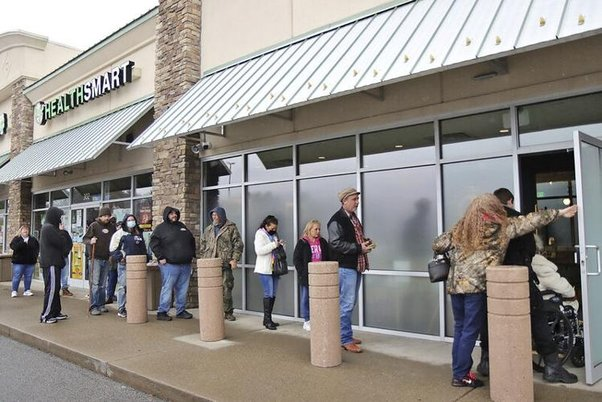
Conclusion- Typically within the U.S., the farther you can stay from the mega-cities, the safer you are. These seem to be the locations of the majority of violent crimes, property crimes, and murders.
All in all, if we can boil it all down to one point, it would be this: It’s safer away from the city.
What are your thoughts on all this? Are there other variables you believe we should have analyzed? Do you think this is a pretty fair shot given the current data at hand? Let us know your thoughts in the comments below!
-
Global Control and Dystopian Future

We are immersed in an era dominated by misinformation and the constant noise of fabricated narratives. Rarely does a testimony as disturbing and charged with implications emerge as that found in The Great Taking, written by David Webb. This book not only unravels the invisible threads of global financial power, but also raises profound questions about who—or what—is truly in charge of this world, an idea also echoed by World Bank CEO Karen Judes. Is the architect of this oppressive system human? Or, as David Webb suggests, could it be something darker and more complex, something beyond our understanding?

What is The Great Taking?
David Webb, an Oxford mathematician, investor, activist, and programmer, has spent decades studying the hidden mechanisms of power. His work explores what he describes as “the expropriation of collateral,” that is, the systematic confiscation of all financial assets, property, assets, and even intellectual property. According to Webb, this process is not an accident or an unintended consequence of the modern economy, but a meticulously designed plan to consolidate absolute control in the hands of a few. These words are not far-fetched at all; let us recall, at the beginning of the False Pandemic, the famous Great Reset proposed by the former president of the International Economic Forum, Mr. Klaus Schwab, and his famous phrase that “in 2030 you will own nothing and be happy.”
You’ll Understand Everything After Watching This VIDEO!

It is the end of a globally synchronized cycle of debt accumulation. Now everything is debt. This has been initiated through a very clever, well-planned, and long-term plan. It is an audacious project, with a scope that is difficult to comprehend. The structure is complex and only a few minds understand it in its entirety.
It includes all assets: financial assets, bank deposits, stocks, bonds, and all underlying property of public corporations, including inventories, plants, equipment, land, mineral deposits, inventions, intellectual property, and absolutely everything. Private assets and real estate, financed by any level of debt, will also be expropriated. Private companies financed by debt will have even less chance, forming part of a larger strategy by a secret group seeking the greatest subjugation in world history.
In reality, this is a kind of hybrid war, conducted by deception, designed to achieve very broad objectives. Previously, conventional wars were the norm; today, it is about systems of control with minimal energy expenditure. The enemy is no longer states, but all of humanity.
The strict private control of all central banks and monetary creation has allowed a few individuals to control political parties, governments, intelligence agencies, armed forces, police forces, large corporations, and the media. These people, primarily the instigators of this plan, have operated for decades and in complete secrecy.
But here comes the most disturbing part: Webb suggests that those orchestrating this grand takeover may not be human. Citing figures like George Soros, who once said, “You don’t know what these beings can do!“, the author suggests that there is something beyond the visible. Superhuman intelligences? Beings operating from the shadows, using people as mere puppets? The questions remain, but the implications are profound.
These beings are hidden behind those who control this war against humanity. We may never know who they really are, even those in high command, as they could be other intelligences or entities using public figures and media to give the appearance of control. In reality, those at the top are not the true perpetrators. What they seek is to seize all your property, even the ones you thought were yours, through their centralized digital currency, limiting your purchases and freedoms.
The Mechanism of Financial Control
Webb explains how money has been turned into an extremely efficient tool of social domination. Through monetary incentives, people self-manage without the need for direct physical coercion. This allows the powers that be to maintain their influence with minimal energy expenditure. However, when this system fails—as in financial crises—physical control comes into play.

Great powers always talk about the media, states, and governments that depend on them, and use the phrase: “the right to security.” As Machiavelli said, “Never attempt to gain by force what you can achieve by deceit.” The greatest historical manipulation has been based on that lie, on the concept of “security.” We are told: “For your security, we will do this or that.” In future financial panics, it will be like a game of musical chairs: when the music stops, many will not have seats. Uncontrolled financing seeks to create the threat of collapses and offer continuous profits, controlling nations in the process. A historical example Webb uses is the Great Depression of 1933 in the United States. During that period, banks were closed by decree, leaving millions of people without access to their savings. Here’s an anecdote Webb tells:
My Aunt Elizabeth was 10 years old when the banks were closed by decree in 1933. When I asked her to tell me about that Great Depression, she told me that suddenly no one had any money. That even wealthy families had no money and had to take their children out of private schools because they couldn’t afford the tuition. I also asked her why even those wealthy families couldn’t send their children back to school after the banks reopened. And the answer she gave me was this: only Federal Reserve banks and banks selected by the Federal Reserve were allowed to reopen. People with money in banks that weren’t allowed to reopen lost everything. However, their debts weren’t canceled. They were assumed by other banks. That is, they take away all your savings, all your property, and leave you with debts.
Only those banks selected by the Federal Reserve were able to reopen, while the rest collapsed. The wealthy families who had accounts in those banks lost everything, but their debts remained intact. These debts were absorbed by the surviving banks, which then foreclosed and seized property en masse.
EXPOSED: The most shocking VIDEO can be found below…
Food Confiscation: How to protect your food stores and production from government confiscation!
So pay chose attention because this video will change your life forever for the good!
This strategy not only allowed the banks to consolidate, but also transformed the former owners into perpetual tenants. It was a massive upward transfer of wealth, disguised under the guise of “stabilizing the economy.” Today, according to Webb, we are witnessing a repeat of this pattern, but amplified on a global scale.” (Something we have discussed in other articles on this Substack.)
The Gold Prohibition and the Birth of Absolute Control
Seemingly, the entire American public was now the enemy. One of the most revealing episodes mentioned in the book is the gold ban in the United States during the 1930s. At that time, any citizen who owned gold was considered a criminal. The gold had to be turned over to the Federal Reserve, and those who violated this order faced fines or imprisonment.
Why did they take this measure? The answer is simple: to expand credit and ensure that no one could escape the financial system. With gold out of circulation, the value of money became completely tied to trust in the state and central banks. This change marked the beginning of a new economic paradigm based on debt, where people became prisoners of a system designed to keep them indefinitely in debt.
Now we can understand the purpose of the construction of the Federal Reserve. In 1923, that is, years before, the world’s largest bank vault was erected along with a fortified building. I’m referring to the vault where the United States National Treasury is currently kept, located at 33 Liberty Street in Manhattan, as well as Fort Knox, where all the gold is said to be stored. It’s important to note that these facilities were built before the ban on gold holdings. This suggests that these hidden intelligences were already planning everything in advance.
The Coming Financial Collapse
Webb warns of an upcoming global financial collapse, comparable to that of 1929, but far more devastating due to the current magnitude of debt. The current low interest rates are part of the bait used to lure people into the debt trap. When rates rise again, millions of individuals and businesses will be unable to meet their financial obligations, triggering a wave of foreclosures and mass confiscations.
The architects of this great plunder have planned and prepared to utilize this dynamic to the fullest. They are confident in their knowledge that, just as night follows day, a massive and prolonged deflation can be produced.
This process is no accident; it has been planned for decades. The architects of the Great Plunder know exactly how to play with economic cycles to maximize their profits and consolidate their power. Prolonged deflation will be used as a weapon to ruin the middle and lower classes, leaving them completely dependent on the state and corporations.
The debt is not real, but an invention designed to seize tangible assets. The powers that be have created a complex legal system that prevents states from issuing money, justifying it by protecting depositors, even though in reality private banks are being bailed out with trillions of dollars. The same logic does not apply to depositors, revealing an agenda of privatization and control. This “Great Reset” seeks to establish a perpetual feudal system, plunging the population into privatization and fear, disguised by promises of security. Those who supposedly protect us from the bad guys, are the bad guys.
What these powers seek to establish is, in essence, technological feudalism. In this new order, the population will be reduced to a precarious existence, living under constant security threats and total surveillance. The promise of protection and well-being will be used as an excuse to justify each new control measure. Remember Machiavelli’s words: “Never try to win by force what you can obtain by deception.”
The use of fear is key to this strategy. We have already seen signs of it in recent years, with massive media campaigns, censorship, arbitrary arrests, and draconian measures disguised as “public safety.” All of this is part of a larger plan to dehumanize society and prepare it for total submission.
How to Fight This?
These people, or perhaps beings, do not reflect true human development or the future of humanity. They lack essential human qualities and are aberrant. Their antipathy toward humanity is unprecedented.
Faced with such a formidable adversary, what can ordinary citizens do? According to Webb, the key lies in education and organization. Although it may seem impossible to defeat a 1% that controls practically everything, we are actually talking about a much smaller group: the 0.01%. Their resources are vast, but their numbers are limited. It is very difficult to achieve anything when everything is bought by these beings. In a system where they control the flow of capital, accumulating wealth can become counterproductive. The important thing is to build resilient, self-sufficient communities that are aware of the mechanisms of manipulation we face.
The message of “The Great Taking” is clear: we are living in a crucial moment in human history. The events that lie ahead will determine whether we remain free or fall into perpetual digital slavery.
David Webb offers us a warning, but also an opportunity. By exposing the mechanisms of the Great Taking is clear: we are living in a crucial moment in human history. The events that lie a, he gives us the tools to resist. It’s up to us to decide whether we want to be part of the problem or part of the change needed to rebuild a just and humane world.
The most shocking videos in the world! (Full video below)
Source- covidproject.substack.com
-
Here’s How a Cashless Society Will Impact the World

Aside from economic collapse scenarios, many countries are in the process of eliminating physical cash and coins. Instead, everyone has an account that holds their money. You cannot purchase goods or services without access to government-based cryptocurrency. Even if the currency itself is still backed by faith in the government, you have to use this electronic system.
The result is multiple problems that could leave you in a situation where you have the money in the bank to pay your bills and purchase goods and services, yet you cannot do so.
These threats include:
Attacks Sponsored by Foreign Governments

These hacks usually affect the bank or primary clearinghouse rather than a specific person’s account. You may be unable to purchase goods or services for hours or days. While this is inconvenient, it isn’t as bad as a full collapse, where the banks close for good.
There’s only so much you can do about this kind of hack other than make sure you can go two weeks without buying anything at any given time. It is also essential to keep a paper-based address book with phone numbers and account information so that you can contact utility companies or others who may be expecting payments from you while the bank or clearinghouse is down.
Let’s say you can connect to Wi-Fi independently of the SIM Card. Your phone app may not work with Wi-Fi. This is why I recommend having an app on your phone that doesn’t use the SIM card to dial out on Wi-Fi so that you can make the necessary calls.
The secrets of a woman who decided to live in the wilderness!
By watching the video below you will come across: 40 Bizarre Home Remedies Our Grandparents Taught Us That Actually Work

Attacks Sponsored by Non-government Groups

If the hacker was able to steal money from your accounts, it could take weeks to years before you recover the money. In the short term, you will have to shut down credit cards and so on, then wait for new ones to come in the mail. You may also have to manage restoring devices and regaining access to your accounts.
Here again, make sure you can go at least 2 weeks without buying anything so that you can manage your basic necessities.
Merchant Category Codes and Social Credit Scores

Merchant Category Codes are unique identifiers that put different products into separate categories. For example, food has one set of numeric identifiers, while clothing has other identifiers.
Even without looking at your receipt, the bank and transaction clearinghouse may have some ideas about what you bought. The transaction cost can then give some estimates about quantity and item type. One day, data from all banks and clearinghouses may pool into a central government computer.
Social credit scores work like your financial-based credit scores. Consider how your financial credit score enables businesses to “reward” you with credit or better interest rates if you pay your bills on time and have an optimal debt-to-income ratio. Your social credit score looks at how you act in society. For example, China has a system that rewards things like donating blood.
This same system “punishes” people who drive drunk or engage in other activities that aren’t “beneficial to society.” People with good social credit scores may get tax breaks, an increased chance of getting a promotion, or other benefits.
When vaccines became available for COVID-19, governments worldwide were concerned because people hesitated to embrace mRNA vaccines. This led to people not complying with recommendations to get vaccinated. Social credit scores can be paired with cashless systems that will block purchasing from specific merchant category codes. It could become possible to deny people the ability to buy food, gas, and other essentials if they aren’t vaccinated.
Gone Viral! The most shocking videos in the world… 7 Hidden Signs That Martial Law Will Be Declared

Many of these signs point to an increased risk of the government preparing to declare martial law.

The video below will shock you because you will be among the first to watching this secret!
When you can’t use cash, pressure campaigns like this will be almost 100% effective because you will have to comply or do without the necessities of life.
The only way to outlast a pressure campaign like this is to have a stockpile of food and other essentials that will last until the pressure tactics are stopped.
Moving Away From Hard Cash to Fiat Cryptocurrency

At first, you might think merchant credit codes will only come into play when the government seeks to limit, slow down, or prevent purchasing certain goods and services. The problem is that modern networks aren’t safe from hackers, including those who seek to disrupt trade for ethical reasons.
For example, the Internet Archive was recently targeted by a hacktivist group, Blackmeta. They claim they attacked this non-profit library site because it is based in the USA and, therefore, is aligned with Israeli activities. Ironically, the Internet Archive has been locked in multiple court battles with publishers that may be far more aligned with Israel. These publishers, in turn, are trying to shut down the Internet Archive because when people don’t buy from the publisher, it cuts into their profits.
Now imagine this kind of situation happening with the information stolen from the Heritage Foundation, and then used to target more granular data in banks and merchant clearinghouse systems. You could very easily see transactions declined for what appears to be “government” or other legislative curbs, when in fact, it’s some group attacking you because of a “social credit score” known only to them.
If you want to buy something right now, you can just put your credit card away and use cash. This won’t be possible once the only fiat currency available is electronic in nature. No matter how much you want to look at the potential for excess government imposition, the fact remains any group with sufficient skills and interest can cause serious problems.
AI-Based Curbing Impositions
AI can keep track of billions of records and patterns of activity. This includes determining if what you buy is “normal” for your location as well as for you as a consumer within a particular category.
Right now, that’s likely beyond the implementation of the cashless centralized government cryptocurrency systems.
At some point, though, someone on something like the “no-fly list,” etc., could wind up unable to buy certain items or in certain quantities and not realize there is a curb based on a government-based list. Considering how many lists there are, it may be difficult, if not impossible, to resolve the problem and purchase goods in a timely manner.
This includes lists that may be compiled based on estimated political slant. Consider that even now, traffic cameras can match license plates with bumper stickers and yard political signs to determine your likely preferences.
When you factor in non-governmental groups, the situation gets even worse. Technologically speaking, it’s within the scope of foreign agents and hacktivists to bring together limits on how you spend your money and non-financial activities.
As we are seeing in various hacks, there is certainly a “social credit score” being applied to businesses that can be scaled to target individuals who may want to purchase extra supplies to manage an emergency.
Use Multiple Banks to Store Your Money
Right now you can protect your money while it is still in your control. First, it is very important to keep your money in different banks. Even if one goes down, the others may still be functioning.
This applies to credit and debit cards. If you have only Visa cards, ensure you have at least one Mastercard. You can do this with prepaid cards as well as more permanent accounts.
This method won’t work if every transaction must go through a centralized clearinghouse that includes every possible bank or other institution. At this point, it’s impossible to say whether that kind of system exists and how various groups would use or misuse it.
Second, if you routinely buy from certain stores, you can purchase gift cards and have the money ready and waiting in your account. If you cannot access your bank account, you can still buy from that store. This won’t necessarily prevent you from running into rationing or other limits that may be imposed by the government through the store or at the store level.
Bartering: An Alternative to Using Fiat and Non-Government Currency
Preparing for small—and large-scale disasters is essential for your well-being and that of your family. You can still use bartering, provided you have a clear sense of the value of what you will offer and whether or not the other party needs what you have.
Make consistent contacts with small or local farmers and others who may be willing to take something in exchange for food. The trade could be anything from assisting with mechanical repairs to making garments. Everything will depend on the relationship you develop and the situation.
You can make barter arrangements for just about anything from tangible goods to training in various skills. Look for small businesses and local groups, as they may be more open to these kinds of arrangements. Spending a few dollars extra and supporting these people now may be very useful later on.
This is also a good time to form relationships with established flea markets and others with different kinds of products. These people may be very helpful when you find a way to barter for tools or other goods that you can no longer purchase using money. Here again, you have to know what their needs are and how you can meet them.
As hacks on banks, hospitals, water purification plants, and the government itself become more common, it should be obvious that a cashless society can pose significant risks if you aren’t prepared. Taking a few simple measures now may help you get through these situations as painlessly as possible.
Attention: The US is Facing The BIGGEST Threat Of The Century
War Is Just Around The Corner
You’re about to lose everything you’ve worked so hard for your entire life and it’s even not going to be your fault! – your house, your car, your credit card will be worthless…
So pay chose attention because this video will change your life forever for the good!
-
First Signs We’ll Soon Be Eating Depression-Era Foods
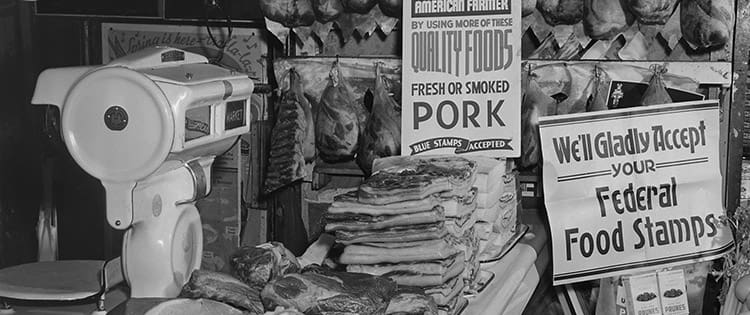
First take a look at one of the most shocking videos in the world! This video actually shows us what the secret of the Trump family is related to their expressive health!!! –FULL VIDEO HERE
I remember my grandma’s stories about the Great Depression – tales of scraping by on whatever food they could get their hands on.
Never thought I’d see anything like that in my lifetime. But lately? I’m not so sure.
“Out of stock.”
Three words that have become my grocery store nemesis. From sriracha to baby formula, it seems like nothing is sacred anymore.
My veggie patch which started as a pandemic project, is now my edible insurance policy.
With food prices doing the cha-cha skyward, it got me thinking – are we heading towards a time when Depression-era foods become our new normal?
You’ll Understand Everything After Watching This VIDEO!
The signs are becoming hard to ignore:
The Pinch at the Checkout
Let me tell you, my weekly grocery runs have become quite the rollercoaster ride lately. Just when I thought prices couldn’t climb any higher, they’ve taken a breather – but don’t break out the champagne just yet.
Back in ’23, I nearly choked on my coffee when egg prices skyrocketed. Now, they’re still up by a whopping 19.1% compared to last year.
It’s enough to make a hen blush! And don’t get me started on lettuce – it’s jumped 10.3% in just six months.
According to the number crunchers at the Bureau of Labor Statistics, food prices have risen by 2.2% in the past year. That’s a darn sight better than the 4.4% we saw the year before, but it’s still pinching our pockets.
Here’s a quick breakdown of some increases I’ve noticed:
- Eggs: +19.1% (and they’re predicting another 2.4% hike in 2024)
- Beef and Veal: +4.5% (with a meaty 5.6% increase expected next year)
- Food-at-home: +1.2% (looks like home cooking’s still the way to go)
- Food-away-from-home: +4.1% (ouch, those restaurant bills are getting spicy)
Now, I’m no economist, but I’ve got eyes in my head and a wallet in my pocket. And let me tell you, over 80% of us regular folks feel like food prices have shot up more than these numbers suggest.
Maybe it’s because we’re at the store more often than those statisticians, or maybe it’s all the chatter about inflation on the news.
Either way, I’ve found myself getting crafty with my shopping. I’m eyeing those sales like a hawk, giving generic brands a chance, and cutting back on the fancy stuff.
Supply Chain Disruptions

Remember the great toilet paper shortage of 2020? Well, that was just the tip of the iceberg. I’ve seen firsthand how global events can wreak havoc on our food supply.
Last summer, I couldn’t find my favorite brand of pasta for weeks. The store manager told me it was due to supply chain issues. It got me thinking about how interconnected our food system is – and how fragile it is.
From pandemic lockdowns to the conflict in Ukraine disrupting grain exports, it seems like we’re constantly playing whack-a-mole with food shortages. It’s eerily reminiscent of the scarcity folks faced during the Depression.
EXPOSED: The most shocking VIDEO can be found below…
Food Confiscation: How to protect your food stores and production from government confiscation!
So pay chose attention because this video will change your life forever for the good!
Food Shortages
I never thought I’d see the day when I’d have to ration mustard, of all things. But there I was last week, staring at an empty condiment shelf, feeling like I’d stepped into a time warp.
It’s not just mustard that’s been hard to find lately. Over the past year, I’ve had trouble getting my hands on baby formula, Sriracha sauce, popcorn, canned pet food, and even cream cheese.
Each shortage has its own story – from factory closures to climate-related crop failures. It’s a stark reminder of how precarious our food system can be.
Changing Consumer Behavior- See video!
I’ve noticed a shift in my own shopping habits, and I’m not alone. Chatting with neighbors and friends, I’ve heard similar stories of belt-tightening and creative cooking.
I’ve noticed a few trends in my own habits recently. Bulk buying has become a go-to strategy, especially when non-perishables are on sale. I’ve also been leaning more toward generic brands, as the fancy labels just don’t seem worth the extra cost. My family has started incorporating at least two vegetarian dinners a week to cut down on meat expenses.
And as for takeout, it’s turned into a rare treat rather than the usual convenience it once was, with home cooking taking center stage.
It’s funny how these changes echo the resourcefulness of the Depression era. My grandma would probably nod approvingly at my newfound frugality.
A Scoop on the Depression-Era Diet
The Great Depression wasn’t just about empty wallets – it was about empty stomachs too. From 1929 to the late 1930s, America faced an economic downturn that left millions jobless and struggling to put food on the table.
It was rough. Soup kitchens popped up in cities, while rural folks relied on what they could grow or forage. Money was tight, and creativity in the kitchen became a necessity, not a hobby. This is what we are seeing bit by bit these days.
Preparing for a Potential Shift
Gardening
Let me tell you about my backyard. It used to be a patchy lawn that I’d mow begrudgingly every other weekend. Now? It’s my own little victory garden, and I couldn’t be prouder.
For beginners, I’ve picked up a few helpful tips along the way. Start small—there’s no need to overwhelm yourself. Even a few pots on a sunny windowsill can make a difference. Opt for high-yield plants like zucchini, tomatoes, and beans, which give you the most return for your effort.
Learning to compost is a game-changer too, as it provides free fertilizer while cutting down on waste. If space is an issue, consider joining a community garden; it not only solves the space problem but also connects you with like-minded people.
I’ll never forget the first time I made a salad entirely from my garden. It tasted like independence.
Preserving Food
Canning used to sound like something only my grandma would do. Now? I’ve got more Mason jars than I can count, and I’m not ashamed to admit it.
Here’s a quick rundown of preservation methods I’ve tried:
Method Best For Difficulty Level Canning Fruits, vegetables, sauces Moderate Freezing Most fruits and vegetables Easy Dehydrating Fruits, herbs, some veggies Easy Fermenting Vegetables Moderate My latest project? Learning to make sauerkraut. It’s a bit stinky, but hey, it’s packed with probiotics and lasts forever.
Creating a Sustainable Food System

While I love my little garden, I know it’s not enough to feed my family year-round. That’s why I’ve started looking at the bigger picture of food sustainability.
I’ve joined a local food co-op, where I can buy directly from farmers in my area. It’s opened my eyes to the importance of supporting local agriculture.
Plus, the eggs taste way better than anything I’ve ever bought at a supermarket.
To build a more resilient food system, I’m exploring several strategies. I’m supporting community-supported agriculture (CSA) programs, which help connect local farmers and consumers directly. I’m also advocating for urban farming initiatives to bring food production closer to home.
Learning about permaculture principles is helping me understand sustainable farming techniques while participating in seed-saving networks, which ensures I’m contributing to long-term food security. Finally, reducing food waste through composting and creative cooking has become a key part of my approach to minimizing waste.
Who would’ve thought that the lessons of the Great Depression would become so relevant in our modern world?
Remember, our grandparents and great-grandparents didn’t just survive those times – in many ways, they thrived.
They learned skills that served them for a lifetime. Why not do the same?
The most shocking videos in the world! (Full video below)
SOURCE- selfsufficientprojects.com, by Michael B.
-
The Betrayal of 2020 Was More Than Just an Election Stolen, It Was an Act of War Against the American People

It’s Happening.
For years, patriots have waited, watched, and prayed for the truth to come to light. The betrayal of 2020 was more than just an election stolen, it was an act of war against the American people. Foreign actors worked hand-in-glove with domestic traitors to subvert the will of the nation. Now, we’re finally seeing the first major move in the unraveling of this treachery.
According to high-level sources close to the operation, the Q team has secured several of the whistleblowers involved in the operation that hijacked the 2020 election, with confirmed links to both China and Venezuela.This isn’t conjecture. This isn’t a theory. This is the prelude to exposure on a scale the world has never witnessed.
Make no mistake: coordinating with foreign adversaries to subvert an American election is an act of war. It’s not merely treason, it’s an assault on the very fabric of our republic. And unlike the pardons handed out like candy during the swamp’s desperate last days, these criminals won’t find sanctuary. The U.S. Military will be handling these prosecutions under military law, where the Constitution provides clear authority in times of war and insurrection.
And where will these traitors go?
GITMO.
Yes, Guantanamo Bay, the notorious military prison long whispered about in the backdrop of global conflicts, will reportedly house those responsible for this assault on our sovereignty. No amount of political cover, media spin, or backroom deals can shield them now. The days of bureaucratic immunity are over.
What Comes Next?
Expect a carefully staged public reveal. These aren’t arrests meant for silent erasure. The military tribunal system operates under strict rules of evidence, and when the time comes, the world will see, and hear, exactly what happened in those fateful months of 2020.
The consequences will be seismic. Institutions will collapse. Narratives will implode. The controlled media will attempt to spin and suppress, but truth is a force of nature, and its moment has arrived.
To the doubters: you laughed. You dismissed. You scorned those who dared to suggest something deeper was at play. In the coming weeks, you’ll watch as the pieces fall into place.
For those who have kept the faith: stand firm. The storm is not coming — it’s here.
And justice will be served.
-
Subscribe
Subscribed
Have a WordPress.com account? Log in now.

